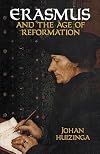
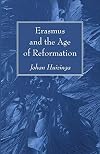
Erasmus and the Age of Reformation
by Johan Huizinga
On This Page
Description
Johan Huizinga had a special sympathy for the complex, withdrawn personality of Erasmus and for his advocacy of intellectual and spiritual balance in a quarrelsome age. This biography is a classic work on the sixteenth-century scholar/humanist.Originally published in 1984.The Princeton Legacy Library uses the latest print-on-demand technology to again make available previously out-of-print books from the distinguished backlist of Princeton University Press. These editions preserve the show more original texts of these important books while presenting them in durable paperback and hardcover editions. The goal of the Princeton Legacy Library is to vastly increase access to the rich scholarly heritage found in the thousands of books published by Princeton University Press since its founding in 1905. show lessTags
Recommendations


















Member Reviews
Summary: An elegantly written biography of Desiderius Erasmus describing his life, thought and character as a scholar who hoped to awaken "good learning" and to bring about a purified Catholic church, and the tensions resulting from being caught between Reformers and Catholic hierarchy.
It is surprising to me how few biographies I can find of Desiderius Erasmus in online searches, and most of these older works. The good news is that Huizinga's very readable account of Erasmus' life is available in either low cost reprints or for free digitally due to its passing into the public domain. There are also free versions of many of Erasmus' works in various digital formats. I found the edition that was the basis of this review in the bargain show more shelves of my local used book store. If you want to readable introduction to the life of Erasmus, this is a great place to start to understand the life of this humanist scholar overshadowed in some ways by the Reformers.
We learn about the early life of this out-of-wedlock son of a Catholic priest, forced by poverty to take monastic vows. Yet from early on it was clear that Erasmus was a scholar, not a monk, who found a way through the Bishop of Cambrai for whom he served as secretary, to pursue theological studies at the University of Paris in 1495. Huizinga portrays a man who was something of a rolling stone, moving between England, Paris, Louvain, Italy, and Basle in search of patrons, peace, and publishers. He would be a restless man all his life. He works for a time with the famed Aldus Manutius (after whom the Aldus font is named) and later collaborates with Johan Froben in the publication of a number of his later works including his Greek and Latin version of the New Testament. During one of his travels, he pens In Praise of Folly, the work for which he is most famous. He also assembles a collection of adages in Latin (Adagia) that serves as a compendium of the best of the ancient classics.
Huizinga shows us a scholar deeply committed to the value of "good learning", believing the recovery of the classic texts along with careful biblical scholarship would result in a Catholic church purified from the accretions of the centuries. There is a brief, shining moment, around 1517, where profits from publications, renown of scholarship, and sympathies with many other reformers brought him into the limelight at the same time as he is finally released from his monastic vows. All too briefly does he enjoy the life of scholarship, pleasant conversation, and freedom from want.
Soon he is chased from Louvain by those objecting to his efforts toward a purified church. He is courted by Luther and the Reformers only to keep his distance and eventually and reluctantly engage Luther in a dispute over the freedom versus bondage of the will. As he grows older he writes against the excesses of both the humanists (in Ciceronianus) and against the Reformers.
As I commented in my post on "The Challenge of the 'Third Way,' " Erasmus fault was that he was a moderate, who preferred quiet to a fight. He was not an ideologue, but one who cared for clarity in expression, careful scholarship, and purity of morality. Huizinga traces this out in successive chapters on Erasmus' thought and character. For many years, Catholics thought he had given too much aid and comfort to the Reformers. Protestants thought him a sell out, who remained loyal to the church he never wanted to leave. Yet to the last he was a scholar, returning to Basle to wrap up his affairs, entrusting his scholarly legacy to the house of Froben to publish his complete works. And it is as a scholar in the humanist tradition that he is most remembered.
More recent scholarship has raised questions about Erasmus sexuality, particularly his relationship with Servatius and his dismissal as tutor of Thomas Gray. Huizinga, a scholar in an age less concerned with matters sexual and more open to the expressions of spiritual friendship in letters, raises no questions about such things.
Huizinga also provides us with a selection of his letters. Two stand out. One is his letter to Servatius, arguing for why he should not return to the monastic length at such length that I suspect Servatius gave in to gain relief. The second is a finely drawn verbal portrait of Thomas More. We see his early correspondence with Luther, and the later deterioration of the relationship.
So, for both style and substance, I would highly recommend this biography. It leaves one wondering about the might-have-beens of what would have occurred had Erasmus not been overshadowed by Luther, Calvin, and others. My own hunch is that in the end, he would have been opposed and simply withdraw as was his want, and little would be changed. As it was, he refused to "lead the charge", leaving this to Luther and the Catholic hierarchy in turn. If he had influence at all, it was through his translation of the New Testament, used by Luther for a vernacular translation and through his other scholarly works, works that enriched individual minds rather than galvanized movements. show less
It is surprising to me how few biographies I can find of Desiderius Erasmus in online searches, and most of these older works. The good news is that Huizinga's very readable account of Erasmus' life is available in either low cost reprints or for free digitally due to its passing into the public domain. There are also free versions of many of Erasmus' works in various digital formats. I found the edition that was the basis of this review in the bargain show more shelves of my local used book store. If you want to readable introduction to the life of Erasmus, this is a great place to start to understand the life of this humanist scholar overshadowed in some ways by the Reformers.
We learn about the early life of this out-of-wedlock son of a Catholic priest, forced by poverty to take monastic vows. Yet from early on it was clear that Erasmus was a scholar, not a monk, who found a way through the Bishop of Cambrai for whom he served as secretary, to pursue theological studies at the University of Paris in 1495. Huizinga portrays a man who was something of a rolling stone, moving between England, Paris, Louvain, Italy, and Basle in search of patrons, peace, and publishers. He would be a restless man all his life. He works for a time with the famed Aldus Manutius (after whom the Aldus font is named) and later collaborates with Johan Froben in the publication of a number of his later works including his Greek and Latin version of the New Testament. During one of his travels, he pens In Praise of Folly, the work for which he is most famous. He also assembles a collection of adages in Latin (Adagia) that serves as a compendium of the best of the ancient classics.
Huizinga shows us a scholar deeply committed to the value of "good learning", believing the recovery of the classic texts along with careful biblical scholarship would result in a Catholic church purified from the accretions of the centuries. There is a brief, shining moment, around 1517, where profits from publications, renown of scholarship, and sympathies with many other reformers brought him into the limelight at the same time as he is finally released from his monastic vows. All too briefly does he enjoy the life of scholarship, pleasant conversation, and freedom from want.
Soon he is chased from Louvain by those objecting to his efforts toward a purified church. He is courted by Luther and the Reformers only to keep his distance and eventually and reluctantly engage Luther in a dispute over the freedom versus bondage of the will. As he grows older he writes against the excesses of both the humanists (in Ciceronianus) and against the Reformers.
As I commented in my post on "The Challenge of the 'Third Way,' " Erasmus fault was that he was a moderate, who preferred quiet to a fight. He was not an ideologue, but one who cared for clarity in expression, careful scholarship, and purity of morality. Huizinga traces this out in successive chapters on Erasmus' thought and character. For many years, Catholics thought he had given too much aid and comfort to the Reformers. Protestants thought him a sell out, who remained loyal to the church he never wanted to leave. Yet to the last he was a scholar, returning to Basle to wrap up his affairs, entrusting his scholarly legacy to the house of Froben to publish his complete works. And it is as a scholar in the humanist tradition that he is most remembered.
More recent scholarship has raised questions about Erasmus sexuality, particularly his relationship with Servatius and his dismissal as tutor of Thomas Gray. Huizinga, a scholar in an age less concerned with matters sexual and more open to the expressions of spiritual friendship in letters, raises no questions about such things.
Huizinga also provides us with a selection of his letters. Two stand out. One is his letter to Servatius, arguing for why he should not return to the monastic length at such length that I suspect Servatius gave in to gain relief. The second is a finely drawn verbal portrait of Thomas More. We see his early correspondence with Luther, and the later deterioration of the relationship.
So, for both style and substance, I would highly recommend this biography. It leaves one wondering about the might-have-beens of what would have occurred had Erasmus not been overshadowed by Luther, Calvin, and others. My own hunch is that in the end, he would have been opposed and simply withdraw as was his want, and little would be changed. As it was, he refused to "lead the charge", leaving this to Luther and the Catholic hierarchy in turn. If he had influence at all, it was through his translation of the New Testament, used by Luther for a vernacular translation and through his other scholarly works, works that enriched individual minds rather than galvanized movements. show less
I’m glad I went back and picked up Huizinga’s, Erasmus and the Age of Reformation. This popular biography was originally written in 1924, so it’s very old. I read a reissued edition of 2002 which also includes some letters of Erasmus. Huizinga died in 1945.
Huizinga is more critical of Erasmus than Augustijn (the other biography I read, Erasmus: His Life, Works, and Influence), and he offers some cutting criticism. For one, he calls Erasmus “weak” and talks of his “weakness”. While Luther obviously confronted the powers-that-be of his time, and did that quite vigorously, Erasmus kept aloof. Huizinga thinks Erasmus’ weakness was “… the study of a recluse bending over his books,” which, “did more than anything else show more to prevent Erasmus from understanding the true nature and purport of the Reformation.” (p. 138). It may be that Erasmus did not even read Luther’s most important writings until well after they were published. According to Huizinga, Erasmus thought the conservative reaction to the Reformation was about resistance to learning. There was much more to it than that, and Erasmus never faced up to the singular issues of his day.
Having said that though, I have some reservations about getting rid of Erasmus so easily. Not everyone has the ability, as Luther certainly did, of calling forth inner powers and confronting all the evil of one’s own age. Erasmus did confront evil, but when he did so it was as if behind a veil of language and learning. In fact, this is another of Huizinga’s criticisms of Erasmus. (p. 43) But must Erasmus be judged solely by this standard? Erasmus towards the latter part of his life says, “The essentials of our religion are peace and equanimity. These can hardly exist unless we make definitions about as few points as possible and leave many questions to individual judgement.” (p. 116) Elsewhere he says, “Let us resist not by taunts and threats, not by force of arms and injustice, but by simple discretion, by benefits, by gentleness and tolerance.” (p.152) This almost turns Huizinga’s criticism on its head. In my view, “gentleness” is not always the same thing as “weakness”. Erasmus and Luther were likely after two different things.
In the end, Erasmus remained a Catholic while Luther did not. Erasmus writes to Luther during the freedom of the will controversy in 1526, “I have never been an apostate from the Catholic Church. I know that in this Church, which you call the Papist Church, there are many who displease me, but such I also see in your Church. One bears more easily the evils to which one is accustomed. Therefore I bear with this Church, until I shall see a better, and it cannot help bearing with me, until I shall myself be better. And he does not sail badly who steers a middle course between two several evils.” (p. 165)
There is more criticism of Erasmus here in Huizinga, as well as more insights. I was glad to read this book because it gave me a feeling for the reality of Erasmus, the man. Even the criticism of Erasmus’ weakness has its place, if taken as part of a more holistic view of him. show less
Huizinga is more critical of Erasmus than Augustijn (the other biography I read, Erasmus: His Life, Works, and Influence), and he offers some cutting criticism. For one, he calls Erasmus “weak” and talks of his “weakness”. While Luther obviously confronted the powers-that-be of his time, and did that quite vigorously, Erasmus kept aloof. Huizinga thinks Erasmus’ weakness was “… the study of a recluse bending over his books,” which, “did more than anything else show more to prevent Erasmus from understanding the true nature and purport of the Reformation.” (p. 138). It may be that Erasmus did not even read Luther’s most important writings until well after they were published. According to Huizinga, Erasmus thought the conservative reaction to the Reformation was about resistance to learning. There was much more to it than that, and Erasmus never faced up to the singular issues of his day.
Having said that though, I have some reservations about getting rid of Erasmus so easily. Not everyone has the ability, as Luther certainly did, of calling forth inner powers and confronting all the evil of one’s own age. Erasmus did confront evil, but when he did so it was as if behind a veil of language and learning. In fact, this is another of Huizinga’s criticisms of Erasmus. (p. 43) But must Erasmus be judged solely by this standard? Erasmus towards the latter part of his life says, “The essentials of our religion are peace and equanimity. These can hardly exist unless we make definitions about as few points as possible and leave many questions to individual judgement.” (p. 116) Elsewhere he says, “Let us resist not by taunts and threats, not by force of arms and injustice, but by simple discretion, by benefits, by gentleness and tolerance.” (p.152) This almost turns Huizinga’s criticism on its head. In my view, “gentleness” is not always the same thing as “weakness”. Erasmus and Luther were likely after two different things.
In the end, Erasmus remained a Catholic while Luther did not. Erasmus writes to Luther during the freedom of the will controversy in 1526, “I have never been an apostate from the Catholic Church. I know that in this Church, which you call the Papist Church, there are many who displease me, but such I also see in your Church. One bears more easily the evils to which one is accustomed. Therefore I bear with this Church, until I shall see a better, and it cannot help bearing with me, until I shall myself be better. And he does not sail badly who steers a middle course between two several evils.” (p. 165)
There is more criticism of Erasmus here in Huizinga, as well as more insights. I was glad to read this book because it gave me a feeling for the reality of Erasmus, the man. Even the criticism of Erasmus’ weakness has its place, if taken as part of a more holistic view of him. show less
Erasmus loved books, he collected them, he wrote them, he printed them and he doodled in them. His interest and fascination with the early printing process enabled him to take control of the publication of his books to such an extent that for Latin readers (he wrote in Latin) he became influential in shaping intellectual opinions in Europe. Those opinions were in tune with the humanist movement and the Italian renaissance: Erasmus seemed to want to bring about a perfect fusion between antiquity and Christianity, he wanted to take the Christian church back to its roots. He believed that a wilful and at times ignorant misreading of the scriptures had resulted in a catholic church that relied on ceremony, fasting, indulgences, pilgrimages show more and a veneration of saints and their relics which was full of superstition and foolishness. He was attacked by conservative churchmen, but always managed to find favour with the Pope, however when Luther burst onto the scene heralding the Reformation, which challenged the church in the very areas that Erasmus had highlighted, Erasmus could not support the protestant movement and ended his life opposed to the new church. Huizinga's biography carefully explores the character and mind of one of the most eloquent writers of the renaissance, to present us with a study that explains and at times excuses Erasmus's actions.
The book is first and foremost a biography of Erasmus and only delves into the Reformation movement as it affected Erasmus himself and as he spent his latter years ducking and diving from the controversy it largely takes place in the background. The biography falls into four distinct parts. Firstly Huizinga examines Erasmus early life, his credentials as a humanist, his desire to be free of the monastery to which he was attached, his need to earn money to make himself independent so that he could devote more time to his studies and his writing. The Colloquies and In Praise of Folly were published at this time and Huizinga teases out their flavour and importance, giving a fine sketch of their content. Their follows three chapters on the character and mind of Erasmus and the man himself is brought vividly to life by some excellent and thoughtful writing. It is no surprise that this man who ranked peace and harmony above all other considerations and used these as guiding principles should be the man sitting on the fence when the storm of the Reformation broke around him.
Erasmus story is taken up again with his sojourn at Louvain where he again came under attack from the conservative's, this was at a time when Erasmus was hard at work correcting the misinterpretations he discovered in the New Testament, making his version which he believed was error free and which could be understood by all learned men ready for publication. He travelled to Basle to the printing works where he stayed to oversee the publication, he was in his element making corrections surrounded by printers and books. Now however the first waves of the reformation broke around him, he was badgered by both sides for his support and his letter to Luther is a typical example of Erasmus's position, begging him not to include him as one of his supporters, yet not condemning his stance. You can almost hear him saying "for goodness sake leave me alone to write my books" Huizinga also points to a more fundamental difference between the two men, saying that Erasmus did not understand the depth of Luther's faith he was unaware of the deeper mysteries that fuelled the movement. As he came towards the end of his life Erasmus finally lent his support to the catholic church, but by this time the world had moved on and he was yesterdays man. Huizinga concluded this section with a chapter on Erasmus's influence on the period of enlightenment in the 17th and 18th centuries.
The final section is a selection of letters written by Erasmus. These letters were written in the foreknowledge that they would be collected and published and in themselves are fine pieces of literature. There is a long panegyric on Erasmus's friend Sir Thomas Moore, there is his famous correspondence with Luther. There is a letter to the head of the monastery to which he was trying to extricate himself explaining just why he was not suited to monastic life. There is also a long letter explaining the vicissitudes of travelling in the early sixteenth century as Erasmus journeys from Basle to Louvain almost convinced that a sickness that develops is the plague. Everything that Erasmus writes seems wonderfully convincing, full of gentle humour and written by a man who cares for others as much as himself. The letters alone are more than enough to lead me to read [In praise of Folly] and [The Colloquies].
Huizinga's biography published in English in 1924 does not have the advantage of modern scholarship, but that hardly seems to matter as his portrait of Erasmus is so convincing and well written that I do not feel the need to read another. A Five Star Read. show less
The book is first and foremost a biography of Erasmus and only delves into the Reformation movement as it affected Erasmus himself and as he spent his latter years ducking and diving from the controversy it largely takes place in the background. The biography falls into four distinct parts. Firstly Huizinga examines Erasmus early life, his credentials as a humanist, his desire to be free of the monastery to which he was attached, his need to earn money to make himself independent so that he could devote more time to his studies and his writing. The Colloquies and In Praise of Folly were published at this time and Huizinga teases out their flavour and importance, giving a fine sketch of their content. Their follows three chapters on the character and mind of Erasmus and the man himself is brought vividly to life by some excellent and thoughtful writing. It is no surprise that this man who ranked peace and harmony above all other considerations and used these as guiding principles should be the man sitting on the fence when the storm of the Reformation broke around him.
Erasmus story is taken up again with his sojourn at Louvain where he again came under attack from the conservative's, this was at a time when Erasmus was hard at work correcting the misinterpretations he discovered in the New Testament, making his version which he believed was error free and which could be understood by all learned men ready for publication. He travelled to Basle to the printing works where he stayed to oversee the publication, he was in his element making corrections surrounded by printers and books. Now however the first waves of the reformation broke around him, he was badgered by both sides for his support and his letter to Luther is a typical example of Erasmus's position, begging him not to include him as one of his supporters, yet not condemning his stance. You can almost hear him saying "for goodness sake leave me alone to write my books" Huizinga also points to a more fundamental difference between the two men, saying that Erasmus did not understand the depth of Luther's faith he was unaware of the deeper mysteries that fuelled the movement. As he came towards the end of his life Erasmus finally lent his support to the catholic church, but by this time the world had moved on and he was yesterdays man. Huizinga concluded this section with a chapter on Erasmus's influence on the period of enlightenment in the 17th and 18th centuries.
The final section is a selection of letters written by Erasmus. These letters were written in the foreknowledge that they would be collected and published and in themselves are fine pieces of literature. There is a long panegyric on Erasmus's friend Sir Thomas Moore, there is his famous correspondence with Luther. There is a letter to the head of the monastery to which he was trying to extricate himself explaining just why he was not suited to monastic life. There is also a long letter explaining the vicissitudes of travelling in the early sixteenth century as Erasmus journeys from Basle to Louvain almost convinced that a sickness that develops is the plague. Everything that Erasmus writes seems wonderfully convincing, full of gentle humour and written by a man who cares for others as much as himself. The letters alone are more than enough to lead me to read [In praise of Folly] and [The Colloquies].
Huizinga's biography published in English in 1924 does not have the advantage of modern scholarship, but that hardly seems to matter as his portrait of Erasmus is so convincing and well written that I do not feel the need to read another. A Five Star Read. show less
I have been interested in Erasmus for years and read several of his works in translation. I wanted to find a newer biography and came across Huizinga's 1924 work Erasmus and the Age of Reformation. It was very readable in places and dragged in others. I wanted more than I got out of Erasmus of Rotterdam by Stefan Zweig. Both books were about on the same level so I am still looking for more. Huizinga gave a clear view of Erasmus's wanderings and his search for a permanent place in the world, which sadly Erasmus never found. One of the best points of Erasmus and the Age of Reformation was the inclusion of many letters sent by Erasmus to many influential people of his time. Letter that showed his friendship with Sir Thomas More, show more Bishop(later Saint) John Fisher and even Martin Luther though Erasmus broke off his contact with Luther in later life. For those letters alone the book is worthwhile. In one letter Erasmus reflected on being placed in a monastic setting when he was too young to make a life commitment. He recognized that he was not suited for the monastic life but he remained as faithful as he could within the promises he made. This book is available for free at Amazon or the Gutenberg Project as a free e-book. show less
In 1923, at the height of his fame as a historiographer, Scribner commissioned Johan Huizinga to write a biography of Desiderius Erasmus, to be published as the third volume in Scribner's series Great Hollanders (Volume 1 was William the Silent by Frederic Harrison and Volume 2 was Vondel by A.J. Barnouw. In 1919, Huizinga's seminal work, The Waning of the Middle Ages had appeared in Dutch, and in 1924, it was first published in English. Huizinga's biography of Erasmus, was scheduled to be published in the same year, in March 1924.
Huizinga wrote each chapter in Dutch, which was then sent to New York, to be translated by
Frederik Jan Hopman into English. The English-language edition appeared first, followed in the same year by the Dutch show more edition, published by Tjeenk Willink in Haarlem.
For many years, Huizinga's biography on Erasmus was considered to be the best in the field, and despite its age, it is still considered one of the best.
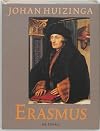
The Dutch edition, published by Ad Donker in 2001 is a luxury edition, containing all known portraits of Erasmus in large, A5-size full-colour photos, as well as reproductions of all known etchings, and photos of (commemorative) coins bearing his portrait, facsimile (cover) pages of all his works, and other photos of objects from his heritage, statues, etc.
In 1928, Huizinga had objected to a similar type of publication in Germany, claiming that in such a publication the illustrations would be considered more important than the text. Huizinga is right in that assertion, as even I was often distracted by the illustrations during my reading. In the Dutch edition, that happens because the text is printed in columns, undoubtedly a concession to the unusual size of the book.
Huizinga's Erasmus is not a very thick book, the original edition was published having just 276 pages. What made Huizinga's book so unique was that he had consulted all known correspondence of Erasmus for bibliographical details. In 1936, Huizinga added and verified this concordance by consulting with the 12-vols Opus Epistolarum Des. Erasmi Roterodami by Percy Stafford Allen and Helen Mary Allen (Eds.) published between 1906-1958, containing all known and preserved letters by Erasmus.
Erasmus by Johan Huizinga is a very readable biography. Highly recommended. show less
Huizinga wrote each chapter in Dutch, which was then sent to New York, to be translated by
Frederik Jan Hopman into English. The English-language edition appeared first, followed in the same year by the Dutch show more edition, published by Tjeenk Willink in Haarlem.
For many years, Huizinga's biography on Erasmus was considered to be the best in the field, and despite its age, it is still considered one of the best.
The Dutch edition, published by Ad Donker in 2001 is a luxury edition, containing all known portraits of Erasmus in large, A5-size full-colour photos, as well as reproductions of all known etchings, and photos of (commemorative) coins bearing his portrait, facsimile (cover) pages of all his works, and other photos of objects from his heritage, statues, etc.
In 1928, Huizinga had objected to a similar type of publication in Germany, claiming that in such a publication the illustrations would be considered more important than the text. Huizinga is right in that assertion, as even I was often distracted by the illustrations during my reading. In the Dutch edition, that happens because the text is printed in columns, undoubtedly a concession to the unusual size of the book.
Huizinga's Erasmus is not a very thick book, the original edition was published having just 276 pages. What made Huizinga's book so unique was that he had consulted all known correspondence of Erasmus for bibliographical details. In 1936, Huizinga added and verified this concordance by consulting with the 12-vols Opus Epistolarum Des. Erasmi Roterodami by Percy Stafford Allen and Helen Mary Allen (Eds.) published between 1906-1958, containing all known and preserved letters by Erasmus.
Erasmus by Johan Huizinga is a very readable biography. Highly recommended. show less
James S. Holmes and Hans van Marle
Naarmate je vordert in het boek krijg je verdacht meer en meer de indruk dat Huizinga niet altijd objectief of tenminste vooringenomen oordeelt. Zo vermeldt hij weinig ter zake doende dat Erasmus aan de basis ligt van het ontstaan van de wederdopers.
Na wat opzoekingswerk blieek al vlug dat Huizinga op dezelfde leest geschoeid is als Ian Buruma en ook Francis Fukuyuma die ook beiden een mentaliteit van gereformeerden weergeven. Huizinga en Buruma zijn zonen van wederdoperpredikers. Fukuyama zoon van een andere sekteprediker.
Of dit boek een grondige en waardevolle biografie van Erasmus is kan moeilijk worden beoordeeld. Daartoe zouden we eerst moeten kunnen vergelijken met een andere biografie. Het is alleszins een goede eerste show more kennismaking met Erasmus.
Consequent is de schrijver ook niet in het weergeven van plaatsnamen. Plaatsen die in de tijd van Erasmus nog in de lage landen liggen en die nog Nederlandstalig waren zoals St. Omaars geeft hij met de Franse benaming terwijl sommige plaatsen die nooit Nederlandstalig waren dan weer wel in het Nederlands worden weergegeven. show less
Na wat opzoekingswerk blieek al vlug dat Huizinga op dezelfde leest geschoeid is als Ian Buruma en ook Francis Fukuyuma die ook beiden een mentaliteit van gereformeerden weergeven. Huizinga en Buruma zijn zonen van wederdoperpredikers. Fukuyama zoon van een andere sekteprediker.
Of dit boek een grondige en waardevolle biografie van Erasmus is kan moeilijk worden beoordeeld. Daartoe zouden we eerst moeten kunnen vergelijken met een andere biografie. Het is alleszins een goede eerste show more kennismaking met Erasmus.
Consequent is de schrijver ook niet in het weergeven van plaatsnamen. Plaatsen die in de tijd van Erasmus nog in de lage landen liggen en die nog Nederlandstalig waren zoals St. Omaars geeft hij met de Franse benaming terwijl sommige plaatsen die nooit Nederlandstalig waren dan weer wel in het Nederlands worden weergegeven. show less
Nov 5, 2023 (Edited)Dutch
Members
- Recently Added By
Talk Discussions
Past Discussions
Erasmus according to Huizinga in Reformation Era: History and Literature (March 2023)
Author Information

81+ Works 6,404 Members
Some Editions
Series
Belongs to Publisher Series
Work Relationships
Contains
Common Knowledge
- Canonical title*
- Erasmus
- Original title
- Erasmus
- Alternate titles
- Erasmus and the Age of Reformation
- Original publication date
- 1924; 1953 (suomennos) (suomennos)
- People/Characters
- Erasmus, Desiderius, ca. 1469-1536
- Epigraph
- « Si quis Erasmum non potest amare ut Christianum infirmum, sumat in eum quem volet affectum : ego alius quam sum esse non possum ».
Erasmo a Marco Laurino, 1º febbraio 1523 - Dedication
- A P. S. e H. M. Allen
- First words
- Verso la metà del secolo XV l'Olanda faceva parte solo da vent'anni del territorio che i Duchi di Borgogna eran riusciti a riunire sotto il loro dominio, territorio composto per metà di terre abitate da francesi, come la Bo... (show all)rgogna, l'Hainaut, il Namur, e per metà da terre abitate da neerlandesi, come le Fiandre, il Brabante, la Zelanda, l'Olanda.
- Quotations
- L'Elogio della pazzia è effettivamente la migliore delle sue opere. Altre egli ne scrisse, più dotte, più devote forse, e che forse esercitarono un'uguale o maggiore influenza sull'epoca in cui visse Ma hanno fatto ... (show all)il loro tempo. Imperituro non resterà che il Moriae Encomium. Solo quando l'umorismo l'illuminava, quella mente diveniva veramente profonda. Con l'Elogio della pazzia Erasmo diede al mondo ciò che nessun altro all'infuori di lui avrebbe potuto dare.
Come tipo intellettuale Erasmo appartiene al gruppo, indubitabilmente piccolo, di coloro che sono nello stesso tempo assoluti idealisti e pur tuttavia moderati. Essi non possono sopportare l'imperfezione del mondo e devono op... (show all)porvisi; ma quando si giunge agli estremi, non si sentono a loro agio, hanno paura dell'azione, perché sanno che essa distrugge altrettanto quanto costruisce, e si ritirano; continuano a gridare che tutto deve cambiare, ma quando viene la crisi esitano, e scelgono il partito della tradizione e della conservazione. Anche questo è uno degli aspetti tragici della vita di Erasmo: aver visto meglio di ogni altro il nuovo che stava per venire, e non averlo potuto accettare, pur essendo entrato in conflitto col vecchio. Volle rimanere nella vecchia Chiesa dopo averla straordinariamente danneggiata, e rinnegò la Riforma, ed in un certo senso anche l'umanesimo, dopo aver favorito straordinariamente l'una e l'altro.
Era stato un iniziatore ed un pioniere. Poteva scomparire soltanto dopo aver detto la sua parola.
Egli non fu un anello nello sviluppo delle scienze naturali o della nuova filosofia, e non primi certamente vie nuove nel campo delle dottrine politiche, della storia e dell'economia. Ma finché qualcuno professerà l'ideale ... (show all)che l'educazione morale e la generale tolleranza possano far felice l'umanità, questa ne dovrà essere grata a Erasmo. - Last words
- (Click to show. Warning: May contain spoilers.)L'umanità civile ha ragione di tenere in onore il nome di Erasmo, se non altro perché egli fu il predicatore intimamente sincero di quella mitezza di costumi di cui il mondo oggi ha ancora tanto bisogno.
- Original language
- Neerlandese
*Some information comes from Common Knowledge in other languages. Click "Edit" for more information.
Classifications
- Genres
- Nonfiction, History, Biography & Memoir, Religion & Spirituality, Philosophy, General Nonfiction
- DDC/MDS
- 199.492 — Philosophy & psychology Modern western philosophy Philosophy in other geographic areas Europe Other European Countries Netherlands
- LCC
- PA8518 .H83 — Language and Literature Greek language and literature. Latin language and literature Medieval and modern Latin literature Individual authors
- BISAC
Statistics
- Members
- 612
- Popularity
- 47,496
- Reviews
- 9
- Rating
- (3.71)
- Languages
- 13 — Chinese, Czech, Dutch, English, Finnish, French, German, Hungarian, Italian, Japanese, Lithuanian, Portuguese, Spanish
- Media
- Paper, Ebook
- ISBNs
- 38
- UPCs
- 1
- ASINs
- 19