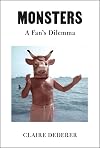
Monsters: A Fan's Dilemma
by Claire Dederer
On This Page
Description
"In this unflinching, deeply personal book that expands on her instantly viral Paris Review essay, "What Do We Do With the Art of Monstrous Men?" Claire Dederer asks: Can we love the work of Hemingway, Polanski, Naipaul, Miles Davis, or Picasso? Should we love it? Does genius deserve special dispensation? Is male monstrosity the same as female monstrosity? Does art have a mandate to depict the darker elements of the psyche? And what happens if the artist stares too long into the abyss? She show more explores the audience's relationship with artists from Woody Allen to Michael Jackson, asking: How do we balance our undeniable sense of moral outrage with our equally undeniable love of the work? In a more troubling vein, she wonders if an artist needs to be a monster in order to create something great. And if an artist is also a mother, does one identity inexorably, and fatally, interrupt the other? Highly topical, morally wise, honest to the core, Monsters is certain to incite a conversation about whether and how we can separate artists from their art"-- show lessTags
Recommendations





Member Reviews
Less an act of reading and more a submission to commiseration.
Claire Dederer reflects on how we process the art we love when we discover that the author, painter, singer, filmmaker, etc. who created it has done something monstrous in their personal life.
Do we cancel them? Purge our collections? Jump through hoops of rationalizations seeking exceptions? Shrug and move on?
Dederer examines the nature of genius and how the myths we've built around it often resulted in get out of jail free cards for white males. She pokes at the different standards we hold for women creatives and the role motherhood (or lack thereof) frequently plays in their condemnation.
It's a thinking aloud type of work with no real answers but lots of opportunities to show more examine your own feelings on the matter: where your personal red line might be drawn, whether you are open to redemption, how your own biases might play a role in the process.
FOR REFERENCE:
Contents:
• Prologue. The Child Rapist (Roman Polanski)
• Chapter 1. Roll Call (Woody Allen)
• Chapter 2. The Stain (Michael Jackson)
• Chapter 3. The Fan: (J. K. Rowling)
• Chapter 4. The Critic
• Chapter 5. The Genius (Pablo Picasso, Ernest Hemingway)
• Chapter 6. The Anti-semite, the Racist, and the Problem of Time (Richard Wagner, Virginia Woolf, Willa Cather)
• Chapter 7. The Anti-monster (Vladimir Nabokov)
• Chapter 8. The Silencer and the Silenced (Carl Andre, Ana Mendieta)
• Chapter 9. Am I a Monster?
• Chapter 10. Abandoning Mothers (Doris Lessing, Joni Mitchell)
• Chapter 11. Lady Lazarus (Valerie Solanas, Sylvia Plath)
• Chapter 12. Drunks (Raymond Carver)
• Chapter 13. The Beloveds (Miles Davis)
• Acknowledgments
• Notes
• A Note about the Author
• A Note on the Type show less
Claire Dederer reflects on how we process the art we love when we discover that the author, painter, singer, filmmaker, etc. who created it has done something monstrous in their personal life.
Do we cancel them? Purge our collections? Jump through hoops of rationalizations seeking exceptions? Shrug and move on?
Dederer examines the nature of genius and how the myths we've built around it often resulted in get out of jail free cards for white males. She pokes at the different standards we hold for women creatives and the role motherhood (or lack thereof) frequently plays in their condemnation.
It's a thinking aloud type of work with no real answers but lots of opportunities to show more examine your own feelings on the matter: where your personal red line might be drawn, whether you are open to redemption, how your own biases might play a role in the process.
FOR REFERENCE:
Contents:
• Prologue. The Child Rapist (Roman Polanski)
• Chapter 1. Roll Call (Woody Allen)
• Chapter 2. The Stain (Michael Jackson)
• Chapter 3. The Fan: (J. K. Rowling)
• Chapter 4. The Critic
• Chapter 5. The Genius (Pablo Picasso, Ernest Hemingway)
• Chapter 6. The Anti-semite, the Racist, and the Problem of Time (Richard Wagner, Virginia Woolf, Willa Cather)
• Chapter 7. The Anti-monster (Vladimir Nabokov)
• Chapter 8. The Silencer and the Silenced (Carl Andre, Ana Mendieta)
• Chapter 9. Am I a Monster?
• Chapter 10. Abandoning Mothers (Doris Lessing, Joni Mitchell)
• Chapter 11. Lady Lazarus (Valerie Solanas, Sylvia Plath)
• Chapter 12. Drunks (Raymond Carver)
• Chapter 13. The Beloveds (Miles Davis)
• Acknowledgments
• Notes
• A Note about the Author
• A Note on the Type show less
A meditation on how the personal lives of artists impact our view of them as fans. Once we know horrible things about a person, how can we still enjoy their art? The author questioning both herself and others in the way to process the hardest contradictions. It’s complicated and doesn’t shy away from the conflicting things we feel. The chapter on abandoning mothers was particularly fascinating. I was left thinking about the debate for days.
“Bad memoir happens when an author is a little in love with herself, when she can’t see her own faults. The same thing can be said for audience members. We think we’re fantastically enlightened, but are we really better than the people who came before us?”
“Bad memoir happens when an author is a little in love with herself, when she can’t see her own faults. The same thing can be said for audience members. We think we’re fantastically enlightened, but are we really better than the people who came before us?”
This is a very thought-provoking book. This review discusses Dederer's arguments in detail, so if you would rather get the thesis in detail from her instead of me, you might not want to read this review.
In the first half of the book, Dederer takes on the familiar question of "how do we respond to art by monstrous people?" She starts with Roman Polanski, who created some amazing movies, but also anally raped a teenager. Especially in the wake of #MeToo, we want a formula for whether it is "okay" to enjoy art by people who have done horrible things. These are not new questions, and have been examined to death for decades if not centuries, so Dederer takes a new approach: instead of thinking about the biography of the artist, she wants to show more think about the biography of the audience. She starts by talking about the audience rather generically, as an anonymized "we," which she acknowledges is a way of hiding her own personal responsibility in a collective cloak. However, as the book progresses, it gets much more personal, and by the end, the "we" has been entirely replaced with "I," and Dederer's personal biography overtakes the audience's biography in ways that made it hard for me to follow her to the same conclusions.
Dederer examines one of the common responses to the question of how to respond to good art by terrible people: many people (mostly men) will tell you to ignore the artist's biography and judge the work on its own merits. Dederer argues that this isn't possible or even desirable. Despite what (mostly male) critics would have you think, there is no objective measure of what makes art good or bad: ultimately, our response to art is emotional and subjective, and that is what makes art pleasurable. Likewise, our response to knowing the artist's biography is emotional, often visceral, and just like we can't ignore the sheer joy that some art evokes, we also can't ignore the disgust or horror that some artists evoke.
The second half of the book gets far more personal, and Dederer's vocation as a memoirist takes over. She examines the sins of women artists: while men can be labelled "geniuses" and thus excuse their violence and rape, women don't have such an easy get-out-of-jail-free card. For women artists (and, I would argue, women of all walks of life), the ultimate sin isn't violence, it is the abandonment of children. Dederer looks at Doris Lessing and Joni Mitchell, two women who abandoned children in the pursuit of art. However, it becomes clear that in writing this chapter, Dederer is really examining her own guilt about being a writer, and taking time away from her own children to write. I wish she had taken the time to examine another kind of monstrous woman: the woman who enables the monstrosity of men. She could have written a chapter about Marion Zimmer Bradley and Alice Munro (although Munro's sins were not known until after this book was published): two feminist writers and icons who condoned and abetted their husbands' abuse of other women. I think Dederer skips over this kind of monstrosity because she is more interested in answering her own personal questions about how monstrous it is for a woman to prioritize her art over her children, even just a little bit.
Dederer really gets to the crux of her own personal issues when she admits that she has been an alcoholic. She talks about her own slide into alcoholism, and her own realization that she is herself a monster and she needs to fix it. In this chapter, it becomes clear that the question that is really driving this book for Dederer isn't "how do we respond to art by monstrous people?" but "am I a monster?" In the final chapter, she focuses on Miles Davis, and particularly the writing of Pearl Cleage, a Black woman who grappled with her own love of Miles's music and her own hatred of his shameless abuse of women. Ultimately, Cleage still loves the music, and for her, the hatred of the man does not eclipse the hatred of the music. Here, then, is the answer to the question of "how should we respond to art by monsters?": it's personal. It's up to you, and how much you love the art.
However, Dederer completely reframes the question in the final chapter. She says that really, the question of what we do about art we love by horrible people is really a stand-in for the bigger question of what we do about the horrible people we love. Here is where Dederer lost me, because I think her own biography has changed the question for her in ways that don't work for everybody. I think these questions are actually a stand-in for Dederer's own personal question of "am I a horrible person for being an alcoholic and sometimes prioritizing writing over my children, and can people love me anyway?" She says "What do we do about the terrible people in our lives? Mostly we keep loving them.... Families are hard because they are monsters (and angels, and everything in between) that are foisted upon us. They're unchosen monsters... And yet somehow we mostly end up loving our families anyway." As someone who has had to cut off contact with an abusive father, I disagree with this. Not only do I disagree with the assertion that "we mostly end up loving our families anyway," I also do not think that continuing to love people who are monsters is healthy. Dederer sees herself as a monster and wants her family to continue to love her, so I think she ends the book with this platitude as a way to find her own redemption.
I also disagree with the premise that the question of how we respond to art by monsters is a smaller part of the bigger question about what do we do about the monsters we love. I think they are separate questions. The reason the question about art is so difficult to answer is that the art is, in some ways, separate from the artist. It is possible, if one is naive or oblivious, to experience art with no awareness of the artist and their biography. Once you know the biography, it is very hard to separate the art from the artist, but they are, ultimately, two different things. Family, by definition, cannot be separated from biography. You can have a different relationship between yourself and the art and yourself and the artist, but with a family member, there is only one relationship, only one thing to relate to. Also, with art, you have a choice about what art you engage with. With family members, you don't get a choice.
Even if I disagree with where Dederer goes in the last few chapters, this is an excellent book. Her writing is witty and engaging, and there is a lot of excellent food for thought here. show less
In the first half of the book, Dederer takes on the familiar question of "how do we respond to art by monstrous people?" She starts with Roman Polanski, who created some amazing movies, but also anally raped a teenager. Especially in the wake of #MeToo, we want a formula for whether it is "okay" to enjoy art by people who have done horrible things. These are not new questions, and have been examined to death for decades if not centuries, so Dederer takes a new approach: instead of thinking about the biography of the artist, she wants to show more think about the biography of the audience. She starts by talking about the audience rather generically, as an anonymized "we," which she acknowledges is a way of hiding her own personal responsibility in a collective cloak. However, as the book progresses, it gets much more personal, and by the end, the "we" has been entirely replaced with "I," and Dederer's personal biography overtakes the audience's biography in ways that made it hard for me to follow her to the same conclusions.
Dederer examines one of the common responses to the question of how to respond to good art by terrible people: many people (mostly men) will tell you to ignore the artist's biography and judge the work on its own merits. Dederer argues that this isn't possible or even desirable. Despite what (mostly male) critics would have you think, there is no objective measure of what makes art good or bad: ultimately, our response to art is emotional and subjective, and that is what makes art pleasurable. Likewise, our response to knowing the artist's biography is emotional, often visceral, and just like we can't ignore the sheer joy that some art evokes, we also can't ignore the disgust or horror that some artists evoke.
The second half of the book gets far more personal, and Dederer's vocation as a memoirist takes over. She examines the sins of women artists: while men can be labelled "geniuses" and thus excuse their violence and rape, women don't have such an easy get-out-of-jail-free card. For women artists (and, I would argue, women of all walks of life), the ultimate sin isn't violence, it is the abandonment of children. Dederer looks at Doris Lessing and Joni Mitchell, two women who abandoned children in the pursuit of art. However, it becomes clear that in writing this chapter, Dederer is really examining her own guilt about being a writer, and taking time away from her own children to write. I wish she had taken the time to examine another kind of monstrous woman: the woman who enables the monstrosity of men. She could have written a chapter about Marion Zimmer Bradley and Alice Munro (although Munro's sins were not known until after this book was published): two feminist writers and icons who condoned and abetted their husbands' abuse of other women. I think Dederer skips over this kind of monstrosity because she is more interested in answering her own personal questions about how monstrous it is for a woman to prioritize her art over her children, even just a little bit.
Dederer really gets to the crux of her own personal issues when she admits that she has been an alcoholic. She talks about her own slide into alcoholism, and her own realization that she is herself a monster and she needs to fix it. In this chapter, it becomes clear that the question that is really driving this book for Dederer isn't "how do we respond to art by monstrous people?" but "am I a monster?" In the final chapter, she focuses on Miles Davis, and particularly the writing of Pearl Cleage, a Black woman who grappled with her own love of Miles's music and her own hatred of his shameless abuse of women. Ultimately, Cleage still loves the music, and for her, the hatred of the man does not eclipse the hatred of the music. Here, then, is the answer to the question of "how should we respond to art by monsters?": it's personal. It's up to you, and how much you love the art.
However, Dederer completely reframes the question in the final chapter. She says that really, the question of what we do about art we love by horrible people is really a stand-in for the bigger question of what we do about the horrible people we love. Here is where Dederer lost me, because I think her own biography has changed the question for her in ways that don't work for everybody. I think these questions are actually a stand-in for Dederer's own personal question of "am I a horrible person for being an alcoholic and sometimes prioritizing writing over my children, and can people love me anyway?" She says "What do we do about the terrible people in our lives? Mostly we keep loving them.... Families are hard because they are monsters (and angels, and everything in between) that are foisted upon us. They're unchosen monsters... And yet somehow we mostly end up loving our families anyway." As someone who has had to cut off contact with an abusive father, I disagree with this. Not only do I disagree with the assertion that "we mostly end up loving our families anyway," I also do not think that continuing to love people who are monsters is healthy. Dederer sees herself as a monster and wants her family to continue to love her, so I think she ends the book with this platitude as a way to find her own redemption.
I also disagree with the premise that the question of how we respond to art by monsters is a smaller part of the bigger question about what do we do about the monsters we love. I think they are separate questions. The reason the question about art is so difficult to answer is that the art is, in some ways, separate from the artist. It is possible, if one is naive or oblivious, to experience art with no awareness of the artist and their biography. Once you know the biography, it is very hard to separate the art from the artist, but they are, ultimately, two different things. Family, by definition, cannot be separated from biography. You can have a different relationship between yourself and the art and yourself and the artist, but with a family member, there is only one relationship, only one thing to relate to. Also, with art, you have a choice about what art you engage with. With family members, you don't get a choice.
Even if I disagree with where Dederer goes in the last few chapters, this is an excellent book. Her writing is witty and engaging, and there is a lot of excellent food for thought here. show less
Should we stop engaging with the art of bad people, monsters? Claire Dederer, like many of us, has wrestled with this question, whether with respect to her love for the films of Roman Polanski and Woody Allen (her discussion of the cringefest that is Manhattan is fantastic) and the writing of Raymond Carver, regard for Picasso, Wagner, Doris Lessing and others. Dederer brings us the answer to the quandary. The answer is, "it is up to you" Whether we do or don't consume the work of bad people is our choice, a choice guided by our unique life experiences. This is not one-sided, she takes down the people who attack people for not separating the art from the artist, for not just looking at form, she does that really well, and she show more illustrates how gendered that perspective is. Nearly all girls and women have felt the impact of bad men like Allen and Polanski, if not raped at least groped or made to feel insecure through verbal abuse or physical threat. It is easy to only look at the camera work in Manhattan if you were never sexualized by a man twice your age. If you want an answer more cut and dried than that you came to the wrong place.
Dederer, who is delightful, brilliant and funny, provides a framework for our personal consumption considerations (and a reminder that consumption or non-consumption is less important than we like to pretend.) Perhaps most important is the reminder that we all contain monstrosity and we all contain goodness. The thought journey is seeded with her own experiences, which she uses very well. The discussion is rooted in feminism and feminist critical theory, but in the way those things are deployed in conversation by smart people, not in academic papers. Though I agree with a lot of what Dederer presents here, there are points on which we diverge and that is great. I don't have to be the choir to be challenged and energized by the take on the liturgy.
So yeah, big fan, huge. show less
Dederer, who is delightful, brilliant and funny, provides a framework for our personal consumption considerations (and a reminder that consumption or non-consumption is less important than we like to pretend.) Perhaps most important is the reminder that we all contain monstrosity and we all contain goodness. The thought journey is seeded with her own experiences, which she uses very well. The discussion is rooted in feminism and feminist critical theory, but in the way those things are deployed in conversation by smart people, not in academic papers. Though I agree with a lot of what Dederer presents here, there are points on which we diverge and that is great. I don't have to be the choir to be challenged and energized by the take on the liturgy.
So yeah, big fan, huge. show less
I have mixed feelings. First of all, much of this is literary criticism, and I read books like eating potato chips, stuffing myself with one after another not fully tasting any of them, so I am inadequate at literary criticism. We're all wondering now about what to do about artists who turn out to be monsters, can we still consume their work? Can we still love them? Dederer analyzes these monsters but includes people who are not active defilers of other people but are just imperfect. So she has Roman Polanski, Miles Davis, and Picasso mixed in with J. K. Rowling and women who don't devote their entire attention to their children because they want also to pursue art. Then way at the end of the book, we realize that the reason she show more includes herself in the monster category is not that she left her teenage son for a month in order to attend a wonderful artist workshop but that she is a recovering alcoholic. It's hard to own our own monstrosity, but at last, she does. For me, the most meaningful part of the book was the part emphasizing economics. Capitalism wants us to think that we as individuals have to judge the monsters. Our paltry consumption or refusal to consume their art will make a difference just as our recycling can manage global warming. Capitalism and the patriarchy are the ones in charge, so she ends by saying, as does Woody Allen, "the heart wants what the heart wants." show less
I have mixed feelings. Just about the first half of the book was pretty great - setting up questions (and I'm fine that the author doesn't give any definitive answers to them) that are quite important to consider. I did like the Nabokov chapter, though maybe the assumptions about his psyche less so, but I think the angle on Lolita was important and broadened the context, discussing the removal of the victim's voices and personhood from the narrative, illustrating the ruined lives and wasted potentials - the full destruction caused by the abusers.
That said, I think the chapters about mothers as monsters belong in a different book altogether. It just doesn't sit right with me to shelve so closely together abusers - people who use their show more wealth, status, or platform to actively harm others - with people who were themselves victims, who at worst - and I don't mean it in a way of diminishing the pain caused by their actions, but I have to admit it's very different - cause passive harm to others while trying to escape the systems which perpetuate the abuse and enable the actual monsters in those stories (*presumably* abusive husbands, the demands of patriarchal society, etc). I also can't bring myself to see the pursuit of a career, or addiction - an illness - as anything remotely close to grooming, or rape, or torture. Yes, the addict often causes suffering to their family and loved ones, and yes, alcohol or drug addiction can contribute to heinous crimes, but I think the line between the two is not that difficult to find. I find it pretty dangerous to conflate those things, and in my view, it seems like that's what the author kinda does. Too close for comfort.
The memoir bits - take it or leave it, I expected more critical theory, but I guess that doesn't bother me as much. I disliked the conclusion; I think it's quite unearned. I'm not quite sure if love is the answer to the problem of art made by monsters. At least not in my world. show less
That said, I think the chapters about mothers as monsters belong in a different book altogether. It just doesn't sit right with me to shelve so closely together abusers - people who use their show more wealth, status, or platform to actively harm others - with people who were themselves victims, who at worst - and I don't mean it in a way of diminishing the pain caused by their actions, but I have to admit it's very different - cause passive harm to others while trying to escape the systems which perpetuate the abuse and enable the actual monsters in those stories (*presumably* abusive husbands, the demands of patriarchal society, etc). I also can't bring myself to see the pursuit of a career, or addiction - an illness - as anything remotely close to grooming, or rape, or torture. Yes, the addict often causes suffering to their family and loved ones, and yes, alcohol or drug addiction can contribute to heinous crimes, but I think the line between the two is not that difficult to find. I find it pretty dangerous to conflate those things, and in my view, it seems like that's what the author kinda does. Too close for comfort.
The memoir bits - take it or leave it, I expected more critical theory, but I guess that doesn't bother me as much. I disliked the conclusion; I think it's quite unearned. I'm not quite sure if love is the answer to the problem of art made by monsters. At least not in my world. show less
I thought this was going to be more of a catalog of recent transgressors and how to reconcile consuming their work. It actually goes deeper than that, examining the trope of people tolerating awful behavior from “genius” artists (Picasso, Hemingway, etc), how women are rarely given this privilege, do you always judge people by their worst action and other ethical concerns.
Members
- Recently Added By
Published Reviews
Dederer has seemingly spent years working on Monsters and yet it is so thin, so ill-researched and, frequently, so crude. Part of her problem is that she struggles to convey the beauty and greatness of much of the art she describes, which makes it all the easier for the reader who disapproves of its makers simply to refuse to engage with it.
added by Nevov
Lists

Best Autobiographies and Memoirs
370 works; 67 members

Feminism
167 works; 4 members

Books Read in 2023
5,547 works; 145 members

Books Read in 2024
4,623 works; 126 members

Books recommended by Calgary Public Library staff
1,588 works; 4 members

Club Read's Recommended Nonfiction Written by Women
618 works; 30 members

Books We Discovered On LibraryThing
530 works; 130 members
Author Information

6+ Works 1,315 Members
Awards and Honors
Awards
Distinctions
Observer Book of the Week (2023-05-07)
Common Knowledge
- Canonical title
- Monsters: A Fan's Dilemma
- Original title
- Monsters: What Do We Do with Great Art by Bad People?
- Original publication date
- 2023-04-25
- People/Characters
- Roman Polanski; Samantha Gailey; Woody Allen; Soon-Yi Previn; Dylan Farrow; Diane Keaton (show all 38); Donald Trump; Bill Cosby; Claire Dederer; Michael Jackson; J. K. Rowling; David Bowie; Lori Mattix; PWR BTTM (musical group); Pablo Picasso; Ernest Hemingway; Kanye West; Jackson Pollock; Paul Gauguin; Richard Wagner; Virginia Woolf; Willa Cather; Stephen Fry; Winifred Wagner; Vladimir Nabokov; Carl Andre; Ana Mendieta; Doris Lessing; Joni Mitchell; Muriel Spark; Anne Sexton; Linda Gray Sexton; Jenny Diski; Valerie Solanas; Sylvia Plath; Raymond Carver; Miles Davis; Pearl Cleage
- Important places
- USA; New York, New York, USA
- Epigraph
- Who has not asked himself at some time or other: am I a monster or is this what it means to be a person?
—Clarice Lispector
It is always tempting, of course, to impose one's view rather than to undergo the submission required by art—a submission, akin to that of generosity or love. . .
—Shirley Hazard - Dedication
- For Lou Barcott and Wil Barcott, my best teachers
- First words
- It all began for me in the spring of 2014, when I found myself locked in a lonely—okay, imaginary—battle with an appalling genius. I was researching Roman Polanski for a book I was writing and found myself awed by his mon... (show all)strousness. It was monumental, like the Grand Canyon, huge and void-like and slightly incomprehensible. -Prologue, The Child Rapist
I started keeping a list.
Roman Polanski, Woody Allen, Bill Cosby, William Burroughs, Richard Wagner, Sid Vicious, V.S. Naipaul, John Galliano, Norman Mailer, Ezra Pound, Caravaggio, Floyd Mayweather, though if we ... (show all)start listing athletes we'll never stop. And what about the women? The list becomes much more tentative: Anne Sexton? Joan Crawford? Sylvia Plath? Does self-harm count? Okay, well it's back to the men, I guess: Pablo Picasso, Lead Belly, Miles Davis, Phil Spector. Add your own; add a new one every week, every day. Charlie Rose. Carl Andre. Johnny Depp. -Chapter 1, Roll Call - Last words
- (Click to show. Warning: May contain spoilers.)We can just hope.
- Blurbers
- Hornby, Nick; Offill, Jenny; Calhoun, Ada; Jonas, Julia May; Filer, Nathan
- Original language
- English
- Canonical DDC/MDS
- 700.1
- Canonical LCC
- NX180.E8
Classifications
Statistics
- Members
- 785
- Popularity
- 35,072
- Reviews
- 32
- Rating
- (3.90)
- Languages
- 5 — Dutch, English, German, Italian, Spanish
- Media
- Paper, Audiobook, Ebook
- ISBNs
- 12
- ASINs
- 7