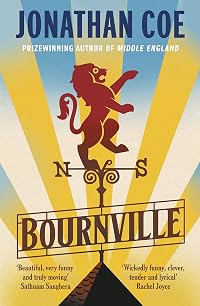
Bournville
by Jonathan Coe
On This Page
Description
A tender and wickedly funny portrait of England told through four generations of one family. Bournville is a quiet village in the heart of England famous for its chocolate. For eleven-year-old Mary, it is the center of her world, the place where most of her family's friends and neighbors have worked for decades and where the streets smell faintly of chocolate. During the next three-quarters of a century, Mary will have children and grandchildren and great-children. She will live through the show more Coronation of Queen Elizabeth II and the 1966 World Cup final (the last time England won), royal weddings and royal funerals, Brexit and Covid-19. Parts of the chocolate factory will be transformed into a theme park, and Bournville itself will gradually disappear into the sprawl of the growing city of Birmingham. As we travel through seventy-five years of social change, from James Bond to Princess Diana, and from wartime nostalgia to the World Wide Web, one pressing question starts to emerge: will these changing times bring Mary's family-and their country-closer together, or leave them more adrift and divided than ever before? Bournville is a rich and poignant new novel from the bestselling, Costa award-winning author of Middle England. It is the story of a woman, of a nation's love affair with chocolate, of Britain itself. show lessTags
Recommendations













Member Reviews
This book is set in Bournville in Birmingham where the famous Cadbury's factory produced some of the nation's favourite chocolate bars. It follows four generations of a family in seven sections which cover some of the most famous events of the last 75 years including the coronation, a royal wedding and funeral, the 1966 World Cup and the covid pandemic. As somebody who enjoys reading about 20th century history and loves social history, this book was a dream for me to read.
Although the four generations start with Doll, it's her daughter Mary who is the hub of the story, and her children and grandchildren who experience alongside her some of the most memorable times in recent history. I liked how their own family situations were woven in show more with these events. Whilst they went about their own business and had their own personal family experiences, they were encountering the same historical happenings as the rest of us which fostered a kind of solidarity with me as a reader.
I was enthralled by this book really and just soaked up the social detail. I always enjoy a good family drama. Whilst the Lamb family have their ups and downs, Bournville is just as much about the everyday and the way we all experience the ebbs and flows of life against a backdrop of constant evolution. I found it fascinating to follow the family through the years and to witness the changes they saw. I smiled, laughed and cried - the ending felt particularly poignant and the author's note at the end only added to that.
Bournville is a superb novel. It could be about any one of us and our family history and that's what makes it such a strong and engaging read. Changing attitudes, the rise of technology, the end of a war, Brexit, it's all contained between the covers and it had me engrossed from start to finish. show less
Although the four generations start with Doll, it's her daughter Mary who is the hub of the story, and her children and grandchildren who experience alongside her some of the most memorable times in recent history. I liked how their own family situations were woven in show more with these events. Whilst they went about their own business and had their own personal family experiences, they were encountering the same historical happenings as the rest of us which fostered a kind of solidarity with me as a reader.
I was enthralled by this book really and just soaked up the social detail. I always enjoy a good family drama. Whilst the Lamb family have their ups and downs, Bournville is just as much about the everyday and the way we all experience the ebbs and flows of life against a backdrop of constant evolution. I found it fascinating to follow the family through the years and to witness the changes they saw. I smiled, laughed and cried - the ending felt particularly poignant and the author's note at the end only added to that.
Bournville is a superb novel. It could be about any one of us and our family history and that's what makes it such a strong and engaging read. Changing attitudes, the rise of technology, the end of a war, Brexit, it's all contained between the covers and it had me engrossed from start to finish. show less
Bournville, Coe's most recent novel, takes us back, as the title suggests, to the Birmingham of his Rotter's Club novels, and to the kind of ironic analysis of cultural values in post-war provincial Britain that he is best at. He follows the life of his central character, musician, mother and PE teacher Mary, through a series of "national landmarks" from VE Day in May 1945 through to Covid lockdown in May 2020. Mary is some sort of cousin of Sylvia Foley, and the Foley family and various characters from the Rotter's Club novels pop up on the peripheries of the story, but it's Mary and her children who are at the centre of the narrative. She's a strong and captivating character, whom Coe obviously cares deeply about. We don't really need show more his endnote to work out that he's writing about his own mother, but he assures us that the other characters are pure fiction, especially that irritating and incompetent tousled-haired old-Etonian Brussels reporter who improbably ends up running the country.
I felt that this was a very strong novel, with a good balance between story and historical background. But of course I'm reading it as someone who grew up at the same time as Coe and in a similar place, so he is putting his finger on a lot of things that have strong resonances for me. Especially the crass xenophobia of the WWII-obsessed atmosphere we grew up in during the sixties. Which started to dissolve a bit in the seventies, but came back with a vengeance after Thatcher came to power, and doesn't seem to have let off since. Coe's point seems to be that there's a specifically English way of avoiding serious engagement with the things that have gone wrong in our lives, echoed by the sheltered atmosphere of the Bournville planned community and by Mary's determined efforts to prevent family quarrels at the cost of allowing nastiness (specifically, her husband's intolerance to any kind of cultural or political difference) to continue indefinitely below the surface of family life. show less
I felt that this was a very strong novel, with a good balance between story and historical background. But of course I'm reading it as someone who grew up at the same time as Coe and in a similar place, so he is putting his finger on a lot of things that have strong resonances for me. Especially the crass xenophobia of the WWII-obsessed atmosphere we grew up in during the sixties. Which started to dissolve a bit in the seventies, but came back with a vengeance after Thatcher came to power, and doesn't seem to have let off since. Coe's point seems to be that there's a specifically English way of avoiding serious engagement with the things that have gone wrong in our lives, echoed by the sheltered atmosphere of the Bournville planned community and by Mary's determined efforts to prevent family quarrels at the cost of allowing nastiness (specifically, her husband's intolerance to any kind of cultural or political difference) to continue indefinitely below the surface of family life. show less
Jonathan Coe is a chronicler of Britain’s past and present. His novels fuse the factual and the fictional, the political and the personal, and combine well-drawn characters and a strong narrative drive with an approach to the construction of the novel that is, well, novel.
Bournville is a family saga spanning four generations and constructed around seven key events in modern British history: VE Day, 8th May 1945, the 1953 Coronation of Queen Elizabeth II, the 1966 World Cup final, the Investiture of Charles, Prince of Wales in 1969, the Royal Wedding of 1981, the funeral of Diana, Princess of Wales, 1997 and the 75th anniversary of VE Day in 2020. It also grapples with the metaphysical question of whether British chocolate is show more chocolate.
The Lamb family are a microcosm of British social and political attitudes as we move from the reformist optimism of the post-war Labour Government to Thatcherism, as Britain becomes multicultural, as it joins and leaves Europe, as factories turn into theme parks, as the Covid lockdown descends, as everything changes, and everything stays the same.
Coe has achieved a pleasing and deceptively effortless synthesis of the conventional and unconventional novel. He plays all kinds of stylistic and formal games while always keeping you engaged with the emotional heart of the story. He has written funnier books and the satirical anger of What a Carve Up! is almost entirely absent, but you wouldn’t want a novelist in his early sixties to rewrite the novels of his thirties. Bournville is thoughtful, formally inventive and ultimately deeply moving. show less
Bournville is a family saga spanning four generations and constructed around seven key events in modern British history: VE Day, 8th May 1945, the 1953 Coronation of Queen Elizabeth II, the 1966 World Cup final, the Investiture of Charles, Prince of Wales in 1969, the Royal Wedding of 1981, the funeral of Diana, Princess of Wales, 1997 and the 75th anniversary of VE Day in 2020. It also grapples with the metaphysical question of whether British chocolate is show more chocolate.
The Lamb family are a microcosm of British social and political attitudes as we move from the reformist optimism of the post-war Labour Government to Thatcherism, as Britain becomes multicultural, as it joins and leaves Europe, as factories turn into theme parks, as the Covid lockdown descends, as everything changes, and everything stays the same.
Coe has achieved a pleasing and deceptively effortless synthesis of the conventional and unconventional novel. He plays all kinds of stylistic and formal games while always keeping you engaged with the emotional heart of the story. He has written funnier books and the satirical anger of What a Carve Up! is almost entirely absent, but you wouldn’t want a novelist in his early sixties to rewrite the novels of his thirties. Bournville is thoughtful, formally inventive and ultimately deeply moving. show less
“Past, present and future: that was what she heard….Everything changes, and everything stays the same.”
I’m sure my request for Bournville by Jonathan Coe was inspired by the passing of Queen Elizabeth II. Promising a portrait of Britain as experienced by a middle class family over a period of seventy five years, I felt a tug of nostalgia tied to the end of an era.
After a prologue set in 2020, Coe begins with VE Day in 1945 where the residents of Bournville, a Birmingham village built around the Cadbury chocolate factory, simply known as the Works, are celebrating the end of the war. It’s here that eleven year old Mary lives with her parents Sam and Doll, and over the next seven decades, coinciding with seven memorable events show more in British history, Coe revisits Mary and her growing family.
The unique structure works well to reflect the national and individual experience of the changes in culture, attitudes, politics, technology and economics. I enjoyed the sojourn through each ‘occasion’ which includes the coronation of Queen Elizabeth II in 1953, the World Cup Final between England v. West Germany in 1966, the investiture of Prince Charles in 1969, his wedding to Lady Diana Spencer in 1981, and then the Princess’s tragic death in 1997, ending with 2020, which marks the 75th Anniversary of VE Day, and the start of the CoVid pandemic, but it is the journey of the characters that illustrate their meaning. Coe charts the family’s joys and griefs, triumphs and regrets, gains and losses, creating a history of their own as time marches on.
Written with tenderness, humour, and insight, Bournville evokes life’s ordinary and extraordinary moments. Enjoy with a block of Cadbury chocolate. show less
I’m sure my request for Bournville by Jonathan Coe was inspired by the passing of Queen Elizabeth II. Promising a portrait of Britain as experienced by a middle class family over a period of seventy five years, I felt a tug of nostalgia tied to the end of an era.
After a prologue set in 2020, Coe begins with VE Day in 1945 where the residents of Bournville, a Birmingham village built around the Cadbury chocolate factory, simply known as the Works, are celebrating the end of the war. It’s here that eleven year old Mary lives with her parents Sam and Doll, and over the next seven decades, coinciding with seven memorable events show more in British history, Coe revisits Mary and her growing family.
The unique structure works well to reflect the national and individual experience of the changes in culture, attitudes, politics, technology and economics. I enjoyed the sojourn through each ‘occasion’ which includes the coronation of Queen Elizabeth II in 1953, the World Cup Final between England v. West Germany in 1966, the investiture of Prince Charles in 1969, his wedding to Lady Diana Spencer in 1981, and then the Princess’s tragic death in 1997, ending with 2020, which marks the 75th Anniversary of VE Day, and the start of the CoVid pandemic, but it is the journey of the characters that illustrate their meaning. Coe charts the family’s joys and griefs, triumphs and regrets, gains and losses, creating a history of their own as time marches on.
Written with tenderness, humour, and insight, Bournville evokes life’s ordinary and extraordinary moments. Enjoy with a block of Cadbury chocolate. show less
This is the first Jonathan Coe I’ve read, recommended to me by a friend. I enjoyed it.
It’s a lot of different things.
At the heart of it all is Coe writing in the pandemic grieving his mother. The book is a series of vignettes from the life of Mary Lamb, from her aged 11 when the war ends, to herdying alone in the first lockdown aged 86. He says in the afterword her character is based on the character of his own mother. The section where she dies is raw and angry and bitterly sad, and lifted almost wholecloth from a speech he wrote on his own mother’s death at the time.
Woven around this are observations of era defining events of the last 75 years - the end of the war, the World Cup victory, the Royal Wedding, etc. And wry show more observations about the darker side of Britishness, the racism, the snobbery, the relationship with Wales and Germany, the casual homophobia.Bridget’s final rant at the end that if you never challenge the bad guys you are taking their side landed awkwardly with me - maybe it is a message that I need to hear! But for all Geoffrey’s racism and awkwardness and the hints that Mary should have gone the other way, it makes me sad to hear him written off, they have built such things, with their children and their grandchildren and the world they lived through together. And the book shows occasional flashes of his passions, his love for new technology, his love of the classics - it is just so sad he lives his life nervously quiet and full of disapproval.
Oh, and chocolate! The history of Cadburies, and the EU chocolate wars, it is definitely also a book about chocolate
I can see it makes for a lot of cheap laughs to have one of the brothers solidly obnoxious, and I enjoyed the laughs. But it felt clumsy when the other bits of the family were so nicely nuanced.
Books are like maps, they have different scales. Ulysses focused on a single day is different to multi-generational family epics. 75 years in 300 pages feels like a nice scale, and one I don’t read at very often. A lot happens and is well drawn, but lightly sketched to fit the space.
The writing is witty and made me laugh out loud with some delicious snark and wry observations. Nothing in it is wildly exciting or unexpected - although perhaps the fact that Mary doesn’t have an affair with her alternative beau when she meets him again is a surprise! but it is beautifully and skilfully drawn. I can’t work out if I liked it because it is in a comfortable spot of mostly agreeing with me on politics and Englishness, but maybe it’s not that terrible if that was my reason! show less
It’s a lot of different things.
At the heart of it all is Coe writing in the pandemic grieving his mother. The book is a series of vignettes from the life of Mary Lamb, from her aged 11 when the war ends, to her
Woven around this are observations of era defining events of the last 75 years - the end of the war, the World Cup victory, the Royal Wedding, etc. And wry show more observations about the darker side of Britishness, the racism, the snobbery, the relationship with Wales and Germany, the casual homophobia.
Oh, and chocolate! The history of Cadburies, and the EU chocolate wars, it is definitely also a book about chocolate
I can see it makes for a lot of cheap laughs to have one of the brothers solidly obnoxious, and I enjoyed the laughs. But it felt clumsy when the other bits of the family were so nicely nuanced.
Books are like maps, they have different scales. Ulysses focused on a single day is different to multi-generational family epics. 75 years in 300 pages feels like a nice scale, and one I don’t read at very often. A lot happens and is well drawn, but lightly sketched to fit the space.
The writing is witty and made me laugh out loud with some delicious snark and wry observations. Nothing in it is wildly exciting or unexpected - although perhaps the fact
This is a thoroughly entertaining, but nonetheless, revealing story of an extended family from 1945 to 2020. The book is set around seven celebrations during this period and recounts how members of the family are moulded by their era, backgrounds and circumstances, but also, how they change with the passage of time. Coe explores sympathetically the relationship between the three brothers, Jack, Martin and Peter, who grow into very different lives and beliefs from each other, yet are kept together through their family links. Coe’s writing is full of humour and captures the essence of the events that he describes and how they affect the members of the family across the different generations.
Set near Birmingham, England, over the period 1945 to 2020, this book follows a middle-class family with ties to the Cadbury chocolate factory. It begins with Mary, daughter of Sam and Doll, living in Bournville, where they are celebrating the end of World War II in Europe. The narrative follows Mary’s life over the course of seventy-five years, set against the backdrop of many major events in British history. It records the changes over time in culture, politics, technology, and more. The ending captures the experience of the pandemic.
I found it easy to get caught up in revisiting milestones, including the coronation of Queen Elizabeth II, the World Cup Final between England and West Germany, Investiture of Prince Charles, wedding show more of Prince Charles and Lady Diana Spencer, Diana’s funeral, Brexit, and the 75th Anniversary of VE Day. The family marks these events by gathering together. Over time, we watch the ups and downs of family life. Mary’s three sons grow up, get married, and two of them have kids of their own. Some lose touch, others fall out over racial or political issues. I particularly enjoyed the satirical chapter about the “chocolate wars.” Coe’s views on recent history come across pointedly. It is written with subtle humor and great insight into human nature. It will appeal to those interested in family sagas or British history and how it has evolved over the years.
I received an advance reader’s copy from the publisher via NetGalley. show less
I found it easy to get caught up in revisiting milestones, including the coronation of Queen Elizabeth II, the World Cup Final between England and West Germany, Investiture of Prince Charles, wedding show more of Prince Charles and Lady Diana Spencer, Diana’s funeral, Brexit, and the 75th Anniversary of VE Day. The family marks these events by gathering together. Over time, we watch the ups and downs of family life. Mary’s three sons grow up, get married, and two of them have kids of their own. Some lose touch, others fall out over racial or political issues. I particularly enjoyed the satirical chapter about the “chocolate wars.” Coe’s views on recent history come across pointedly. It is written with subtle humor and great insight into human nature. It will appeal to those interested in family sagas or British history and how it has evolved over the years.
I received an advance reader’s copy from the publisher via NetGalley. show less
Members
- Recently Added By
Published Reviews
ThingScore 100
Jonathan Coe’s 14th novel opens with a snapshot of recent history that will stir fresh and uncomfortable memories. As the Covid pandemic is descending on Europe in early 2020, thirtysomething Lorna, a struggling jazz musician, is on tour in Austria and Germany. Lorna’s exhilaration at gigging overseas for the first time is tempered by a growing sense that the world is menaced by something show more extraordinary. It is both ominous and comic. Arriving in Vienna, Lorna can barely squeeze into her host’s car beside the stockpiled toilet rolls. For the reader, there’s an additional and more worrying dramatic irony: we can see that Lorna’s overweight musical partner, Mark, will be particularly vulnerable to the virus.
In Vienna, Lorna and Mark are taken to dinner by Ludwig, the owner of a small independent record label. A jazz fan and passionate anglophile, Ludwig is struggling to figure out what has happened to a nation he once admired for its tolerance, humour and self-awareness. “And now this same generation is doing … what? Voting for Brexit and for Boris Johnson? What happened to them? … What’s going on?”
Events since 2020 have only sharpened the urgency of Ludwig’s questions. And the loving, funny, clear-sighted and ruminative examination of recent British history that follows might be considered an attempt to answer them. Bournville travels back in time from March 2020 to stage a series of tableaux in which we witness key moments in the lives of the nation and Lorna’s extended family. The successive set-piece events show this family – and Britain – changing.
Our first stop is 1945, where we meet Lorna’s grandmother, Mary, as a child, on the eve of the VE Day celebrations. Mary’s parents, Doll and Sam, live in the chocolate-manufacturing suburb of Birmingham that gives the book its title. There is warmth and humour in the portrait of lower middle-class life presented, but it’s not sanitised. A strain of xenophobia bubbles up throughout the episode and climaxes in an act of violence that will echo throughout the book.
This sets the pattern of the novel, which tracks Doll, Sam, Mary and other members of the family through six further landmarks: the 1953 coronation, the 1966 World Cup final, the investiture of Charles as Prince of Wales, the 1981 royal wedding, the death of Princess Diana, and the scaled-down anniversary of VE Day in 2020.
As ever, prizing clarity over verbal fireworks, Coe’s writing draws the reader into the family dramas as they unfold over the decades. He has the great gift of combining plausible and engaging human stories with a deeper structural pattern that gives the book its heft.
We see young Mary as child and then return eight years later to find her a young woman, struggling with a romantic dilemma and then settling into motherhood. We then join her children on family holidays in Wales, follow them into adulthood and watch all their lives intersect with the larger national events. Beat by beat, we’re invested in their stories: which of her suitors will Mary choose? How will her own offspring fare? And although we know it’s going to happen all along, it’s still poignant and strange to watch young Mary gradually becoming Lorna’s elderly Gran.
Bittersweet as the eponymous bar of plain chocolate, the book ranges over a huge span of time, includes a large cast of characters, yet never flags nor confuses. It manages to squeeze in, among other things, the history of Bournville, European disputes over the labelling over chocolate, Welsh nationalism, the Festival of Britain, the launch of the Austin Metro and tensions over the European Union. As we leaf through the family album, there are touching jolts of recognition. It’s hard not to be stirred by your own memories of the events portrayed and thoughts of your own family.
Like the moving images in a zoetrope, Coe’s snapshots invite us to notice changes and continuities, track growth and decay; the strengthening of some relationships, the failure of others. There are striking reverberations along the book’s long passageways: unregarded turning points whose importance only becomes clear much later, echoes of behaviour, incidents that recur in a world that is the same but different.
As the nation changes and the racial makeup of the family alters, it’s not so much that bigotry gives way to tolerance, but that the ambiguities deepen. All along, we are reminded of the contradictory facets of the nation and of each individual character: the snobbishness that coexists with kindness, humour and narrow-mindedness, rationality and unexamined prejudices.
When one of Mary’s son’s starts dating a non-white girlfriend, his grandmother Doll is disquieted. “‘Do you treat her the same?’ Doll wanted to know. ‘I mean … do you treat her the same as you would any other girl?’” This striking line is an unsettling and plausible combination of compassion and racism.
The book also builds a deeper integrity out of echoes and motifs, like a piece of music. The phrase “all that caper”, a particular corner of a Birmingham pub, a yellow cravat, a line of Latin verse, the sound of laughter in a school playground – all set off chains of associations that ripple throughout the novel. A piece of casual homophobia will be recalled decades later by a son trying to come to terms with his sexual orientation.
Subtle, considered, but not programmatic, Coe doesn’t stick to any consistent aesthetic principle. He uses omniscient narration for some sections, first-person narration for others. There are bits in the past tense, bits in the present tense, chunks of news reports, extracts from a diary, a long reminiscence by a recurring character from one of his other novels. None of this sophistication makes the book less pleasurable – quite the reverse. It combines a welcoming accessibility with a box of clever narrative tricks.
It struck me that there is something hopefully British about the book’s flexible approach to narrative. There’s no theoretical doctrine underlying it. The decisions are made, moment by moment, on the basis of what works, what is clear, what is engaging, and what best serves the story. In the end, while the novel can’t explicitly allay Ludwig’s disquiet, its compassionate and undogmatic approach to its characters and craft embodies a set of values that give some grounds for optimism. show less
In Vienna, Lorna and Mark are taken to dinner by Ludwig, the owner of a small independent record label. A jazz fan and passionate anglophile, Ludwig is struggling to figure out what has happened to a nation he once admired for its tolerance, humour and self-awareness. “And now this same generation is doing … what? Voting for Brexit and for Boris Johnson? What happened to them? … What’s going on?”
Events since 2020 have only sharpened the urgency of Ludwig’s questions. And the loving, funny, clear-sighted and ruminative examination of recent British history that follows might be considered an attempt to answer them. Bournville travels back in time from March 2020 to stage a series of tableaux in which we witness key moments in the lives of the nation and Lorna’s extended family. The successive set-piece events show this family – and Britain – changing.
Our first stop is 1945, where we meet Lorna’s grandmother, Mary, as a child, on the eve of the VE Day celebrations. Mary’s parents, Doll and Sam, live in the chocolate-manufacturing suburb of Birmingham that gives the book its title. There is warmth and humour in the portrait of lower middle-class life presented, but it’s not sanitised. A strain of xenophobia bubbles up throughout the episode and climaxes in an act of violence that will echo throughout the book.
This sets the pattern of the novel, which tracks Doll, Sam, Mary and other members of the family through six further landmarks: the 1953 coronation, the 1966 World Cup final, the investiture of Charles as Prince of Wales, the 1981 royal wedding, the death of Princess Diana, and the scaled-down anniversary of VE Day in 2020.
As ever, prizing clarity over verbal fireworks, Coe’s writing draws the reader into the family dramas as they unfold over the decades. He has the great gift of combining plausible and engaging human stories with a deeper structural pattern that gives the book its heft.
We see young Mary as child and then return eight years later to find her a young woman, struggling with a romantic dilemma and then settling into motherhood. We then join her children on family holidays in Wales, follow them into adulthood and watch all their lives intersect with the larger national events. Beat by beat, we’re invested in their stories: which of her suitors will Mary choose? How will her own offspring fare? And although we know it’s going to happen all along, it’s still poignant and strange to watch young Mary gradually becoming Lorna’s elderly Gran.
Bittersweet as the eponymous bar of plain chocolate, the book ranges over a huge span of time, includes a large cast of characters, yet never flags nor confuses. It manages to squeeze in, among other things, the history of Bournville, European disputes over the labelling over chocolate, Welsh nationalism, the Festival of Britain, the launch of the Austin Metro and tensions over the European Union. As we leaf through the family album, there are touching jolts of recognition. It’s hard not to be stirred by your own memories of the events portrayed and thoughts of your own family.
Like the moving images in a zoetrope, Coe’s snapshots invite us to notice changes and continuities, track growth and decay; the strengthening of some relationships, the failure of others. There are striking reverberations along the book’s long passageways: unregarded turning points whose importance only becomes clear much later, echoes of behaviour, incidents that recur in a world that is the same but different.
As the nation changes and the racial makeup of the family alters, it’s not so much that bigotry gives way to tolerance, but that the ambiguities deepen. All along, we are reminded of the contradictory facets of the nation and of each individual character: the snobbishness that coexists with kindness, humour and narrow-mindedness, rationality and unexamined prejudices.
When one of Mary’s son’s starts dating a non-white girlfriend, his grandmother Doll is disquieted. “‘Do you treat her the same?’ Doll wanted to know. ‘I mean … do you treat her the same as you would any other girl?’” This striking line is an unsettling and plausible combination of compassion and racism.
The book also builds a deeper integrity out of echoes and motifs, like a piece of music. The phrase “all that caper”, a particular corner of a Birmingham pub, a yellow cravat, a line of Latin verse, the sound of laughter in a school playground – all set off chains of associations that ripple throughout the novel. A piece of casual homophobia will be recalled decades later by a son trying to come to terms with his sexual orientation.
Subtle, considered, but not programmatic, Coe doesn’t stick to any consistent aesthetic principle. He uses omniscient narration for some sections, first-person narration for others. There are bits in the past tense, bits in the present tense, chunks of news reports, extracts from a diary, a long reminiscence by a recurring character from one of his other novels. None of this sophistication makes the book less pleasurable – quite the reverse. It combines a welcoming accessibility with a box of clever narrative tricks.
It struck me that there is something hopefully British about the book’s flexible approach to narrative. There’s no theoretical doctrine underlying it. The decisions are made, moment by moment, on the basis of what works, what is clear, what is engaging, and what best serves the story. In the end, while the novel can’t explicitly allay Ludwig’s disquiet, its compassionate and undogmatic approach to its characters and craft embodies a set of values that give some grounds for optimism. show less
added by kleh
Lists

Books Read in 2023
5,547 works; 145 members

Anticipated 2022 & Early 2023 Releases
209 works; 4 members

Maybe This Year? Books to Look Forward To
412 works; 9 members

Borrowed Books 2024 (Books We Have Read BUT do NOT Own)
20 works; 1 member

Books Read in 2024
4,623 works; 126 members

Novels with a city or town in the title
61 works; 1 member

Books With Place Names in the Title
257 works; 11 members
Author Information

Awards and Honors
Awards
Distinctions
Series
Belongs to Publisher Series
Gallimard, Folio (7338)
Common Knowledge
- Canonical title
- Bournville
- Original title
- Bournville
- Original publication date
- 2022
- People/Characters*
- Geoffrey Lamb; Mary Lamb; Jack Lamb; Martin Lamb; Peter Lamb; Thomas Foley (show all 12); Sylvia Foley; David Foley; Paul Trotter; Carl Schmidt; Bridget Lamb; Paul Trotter
- Important places
- Bournville, Birmingham, England, UK; Birmingham, England, UK
- Dedication
- For Graham Caveney
- First words
- The arrivals hall at Vienna airport was so quiet that Lorna had no difficulty picking her out, even though they had never met before.
- Last words
- (Click to show. Warning: May contain spoilers.)Like a murmurous river, like the incomin wash of the tide, a distant counterpoint to the swish, swish, swish of her broom on the step, a disembodied voice whispering in her ear, over and over, the mantra: Everything changes, and everything stays the same.
- Blurbers
- Sanghera, Sathnam; Joyce, Rachel
- Original language
- English
- Canonical DDC/MDS
- 823.914
*Some information comes from Common Knowledge in other languages. Click "Edit" for more information.
Classifications
Statistics
- Members
- 346
- Popularity
- 91,385
- Reviews
- 25
- Rating
- (3.78)
- Languages
- 7 — Dutch, English, French, German, Greek, Italian, Spanish
- Media
- Paper, Audiobook, Ebook
- ISBNs
- 17
- ASINs
- 10