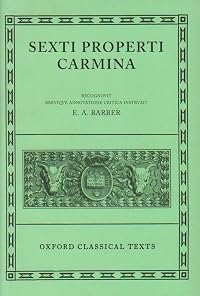
Carmina
by Sextus Propertius
On This Page
Description
A radical new edition of the Augustan poet Propertius, based on the latest research into the manuscript tradition. The English preface contains important comments on the way texts are edited and read. Some important emendations discovered in the papers of A. E. Housman are published here for the first time. - ;Propertius is a poet of the Augustan period, a successor of the great Hellenistic elegiac poets Callimachus and Philitas, and a precursor of Ovid. His account of his fictionalized show more affair with his beloved alter ego Cynthia is the purest expression of the spirit of love elegy, setting them show lessTags
Recommendations






Member Reviews
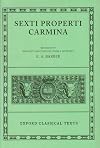
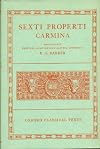
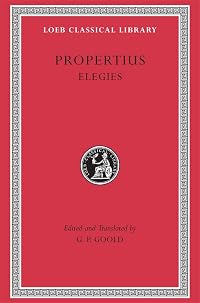
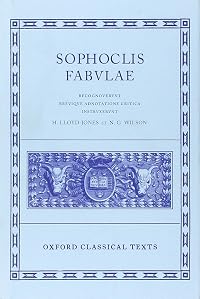
I am reading Heyworth's Oxford Classical Text, which is the pictured book. I am not sure why so many translations have been attached and reviewed under it! Heyworth's is a radical edition, with many emendations, transpositions, and deletions (these are all discussed in a companion volume, Cynthia). He does tend to go overboard with unnecessary transpositions of lines. It is often more readable than its more conservative predecessors, but those familiar with them will find the text quite different; quot editores, tot Propertii.
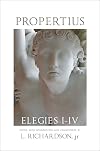
Richardson provides a very solid commentary on his version of Propertius. His text includes a number of emendations, recombinations, and transpositions, not all found in other editions. He makes an effort to produce a readable text that does not have a lot of hanging fragments. His commentary focuses on literary issues more than textual ones (and many of his textual alterations are driven by his literary readings/interpretations). I am not sure that he is always right (understatement) but he produces a readable and attractive Propertius. I think Heyworth's OCT is a better text from a philological standpoint, both more radical (printing more emendations) and more conservative (in not moving around text quite as much and recognizing more show more fragments). show less
I really don't like Propertius, but you can't blame the book for that, which has good introductions and commentary (though no dictionary in the back).
Ratings
Members
- Recently Added By
Author Information

53+ Works 1,353 Members
Propertius was deprived of his Umbrian estate in the confiscation of the civil war. He applied his rhetorical education not to the courts, but to poetry. His first book of elegies to "Cynthia" won him the patronage of Maecenas and established his reputation as a passionate, witty, self-absorbed, and learned poet. The three books that followed show more invoke Cynthia, but also carry tributes to Maecenas, to Roman greatness, addresses to friends, and antiquarian fragments. (Bowker Author Biography) show less
Some Editions
Series
Belongs to Publisher Series
Common Knowledge
- Canonical title
- Carmina
- Alternate titles
- Elegiarum Libri IV
- Disambiguation notice
- This is Propertius' Carmina (Songs) or Elegiarum Libri IV (Four Books of Elegiacs) in a LATIN edition.
Classifications
Statistics
- Members
- 241
- Popularity
- 135,297
- Reviews
- 3
- Rating
- (3.83)
- Languages
- 5 — Catalan, English, German, Latin, Russian
- Media
- Paper, Ebook
- ISBNs
- 16
- ASINs
- 15