On This Page
Description
A boy cleans up his messy room to try to find his baseball mitt.Tags
Recommendations




Member Reviews
i did not much enjoy the majority of the first books that i was able to read competently and independently. only a few provoked true aversion or derision (like the berenstain bears), most merely seemed empty and unsettling
i remember the little critter series for the distinct sense of difficult-to-place discomfort; so much abt the series is immediately and intuitively upsetting, but on second glance it is so profoundly banal as to defy any emotional reaction whatsoever. the distance bw the initial discomfort and the utterly banal surface of the world of little critter is itself a source of anxiety and tension--how could this thing make me so uncomfortable when it is "in fact" so normal and usual? the world's symbolic facade thus makes show more the reader question the rational basis of their initial emotional reaction, indeed makes the reader question their own sanity
there are two elements of the textual world of little critter that i think warrant special attention: the physiognomy of the characters, and the reader's process of moral interpretation
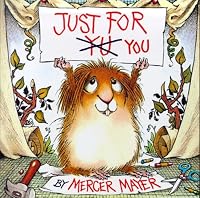
the eponymous "critter" is not identifiable as any one species. thus it is not only different from us (humans) in terms of species, but in terms of its symbolic embedding in the world. we are confronted as readers with these bizarre creatures which are similar enough to other familiar species as to b somewhat imaginable, but still inextricably different. furthermore most anthropomorphic animals obtain the shape and structure of the human body relatively closely and consistently (though before the meteoric rise of the global online furry community this was less consistent). in many of the books of the little critter series this might appear to also be the case for "the critters," but if one is familiar with the greater series then it is clear that "the critters" have a strange body structure not reminiscent of humans at all (this can be seen most clearly in [b: Just For You|386234|Just for You (Little Critter)|Mercer Mayer|https://images.gr-assets.com/books/1388332030s/386234.jpg|375913]). neither human nor animal, nor following the implicit rules for anthropomorphic animals, the critter inhabits a liminal space that is neither here nor there, unimaginable and yet understandable, clearly a mammal and yet outside the sphere of imaginable mammals.
all critters (at least in "Just a Mess") also have identical facial features. the characters are distinguished by clothing, overall body size (age), minor variations in their (head) hair, and moment-to-moment are distinguished by their comportment and emotionality. but they are otherwise identical
speaking of emotionality--the world of little critter is full of strong emotions, usually those regarded as "negative." anger, frustration, and spite can be found on many of the covers of little critter books, and are some of the more common emotions seen on the pages of this book. indeed some of the most positive emotions displayed are indifference and invidious or mischievous satisfaction. this could b understood as a form of sympathetic realism--"its ok to b angry, see these characters are angry sometimes too!" but the depth of negative emotion runs far deeper
its not just the frequency or intensity of negative emotions that is unnerving, but the consequences as well. extreme, unjustified anger or frustration, despite appearing on half the pages, is simply part of the journey for little critter and co. based on its frequency and intensity one can only imagine the seething rage and resentment building up in the children. and the total indifference of the parents is also striking--this seems to b little critter's first time cleaning his room, and yet neither parent wants to bother themselves helping him. cleaning your room is an incredibly important and deep life skill, and a habit to b cultivated! one would think that if it is a child's first time cleaning their room, a parent would want to b involved!! especially if they can detect the horrifying scorn on their child's face.
but as little critter cleans his room alone and without help, he of course misses the entire point of the room cleaning exercise--he simply moves the mess from a place where it is seen but easy to clean or tolerate (the floor) to a place where it is unseen but MUCH more difficult to clean or tolerate (jammed, disorganized, overflowing into the closet, chest, under the bed). little critter does indeed find the missing object he seeks, but it is entirely by chance, and is found WHILE looking for another missing object which might never be found!
the troubling emotional lives of the children, concerning indifference of the parents, and total misunderstanding of cleanliness and organization in the end lead to... a resolution of the central conflict. little critter lost a glove, and his floor was covered in things. at the end, he has found his glove, his floor is cleared, and there is finally a smile on his face. all those troubling or concerning elements ultimately are rewarded when little critter accomplishes his goal, and in a certain shallow sense has learned a lesson (hide the mess to please your mom). all of this unfolds as in any other children's picture book, but the moral logic is upended as undesirable, irresponsible, and antisocial traits are depicted as normal, usual, alright, and in fact good and proper! one could try to read this as subversive or disruptive if it wasnt for the lack of any sort of compassion, care, or justice in the book; its merely a disgusting world without morals. and its all the more confusing as the book will likely be read AS a children's book, in which undesirable traits lead to consequences and are corrected, and a moral lesson is learned abt proper behavior according to some normative morality. if one enters the world of little critter with this assumption, only bewilderment and discomfort will follow
the characters, their presentations, and their interactions are given to the reader as a sort of symbolic expanse. the reader uses their working knowledge of the world around them to interpret this symbolic realm of the book into an imaginable and understandable world of personal meanings and identifications. thus the fit bw the symbolic world of the book and the symbolic world of the reader is key, as this fit is what makes the book accessible to the reader's imaginary realm.
the fit between the symbolic world of little critter and the symbolic realm of our 21st c american world is haphazard and uneven. the result is a nauseating vertigo as the symbolic floor of the imaginary realm falls out from underneath the Ego of the reader, and they plunge crashing into the traumatic soup that is the unintelligible realm of The Real. the juxtaposition of the bizarre species of "the critters" with their near lack of individuation destabilizes the already challenging image of The Big Other, or the actual Other. the Other defies identification, like the species of "the critters," but in this defiance it is utterly unique beyond imagining. but the identical faces of the critters portray a horrifying solipsistic world not unlike that seen in "Los Parecidos" (2015), where the subject is confronted with a wholly alienated world of undifferentiated and unending Other-ness into which the subject may never be truly welcomed or accepted unless they die by subsuming themselves. thus the critters defy the logic of self-other that composes the symbolic and imaginary realms, being neither small other nor Big Other, mercer mayer undoes the work of the conscious and unconscious mind by cutting straight to the unmovable Reality of the world
the twisted emotionality and upended moral logic contribute to this vertiginous fall off the brink of sanity. the reader desperately searches for some understandable grain of humanity, something warm and stabilizing, something that might confirm that yes, the reader IS reading a normal childrens book and everything IS just fine! instead the reader find a sick inversion of Deleuze's "desiring machines"--all the characters are like antagonizing machines, all hooked up to each other and powering each other with mutual resentment, indifference, and spite. while Deleuze sought to escape the prison that is Lacan's symbolic realm through a compassionate schizoanalysis, this route is even denied to our reader who is unmoored without Lacan's signifiers or Deleuze's desiring machines to orient oneself towards others. and just as the worst elements of psychosis are manifested in paranoid perceptions of ill-will, so does the entire world of little critter seem to be inhabited and powered entirely by confrontational ill-will. one SHOULD be constantly paranoid of everyone and everything around, because they all harbor nothing but hate or cruel indifference
thus the world of little critter cuts holes into the symbolic foundation of the ego, not necessarily sending it tumbling entirely into the psychotic pit of insanity in The Real, but opening up fissures that invite the reader to remember The Real, that invite the reader to be just slightly retraumatized
i do not kno why Mercer Mayer would wish this upon children unless he himself has a twisted conception of the lifeworld of american children and the trauma that brings them into the world
still not as bad as the berenstain bears tho show less
i remember the little critter series for the distinct sense of difficult-to-place discomfort; so much abt the series is immediately and intuitively upsetting, but on second glance it is so profoundly banal as to defy any emotional reaction whatsoever. the distance bw the initial discomfort and the utterly banal surface of the world of little critter is itself a source of anxiety and tension--how could this thing make me so uncomfortable when it is "in fact" so normal and usual? the world's symbolic facade thus makes show more the reader question the rational basis of their initial emotional reaction, indeed makes the reader question their own sanity
there are two elements of the textual world of little critter that i think warrant special attention: the physiognomy of the characters, and the reader's process of moral interpretation
the eponymous "critter" is not identifiable as any one species. thus it is not only different from us (humans) in terms of species, but in terms of its symbolic embedding in the world. we are confronted as readers with these bizarre creatures which are similar enough to other familiar species as to b somewhat imaginable, but still inextricably different. furthermore most anthropomorphic animals obtain the shape and structure of the human body relatively closely and consistently (though before the meteoric rise of the global online furry community this was less consistent). in many of the books of the little critter series this might appear to also be the case for "the critters," but if one is familiar with the greater series then it is clear that "the critters" have a strange body structure not reminiscent of humans at all (this can be seen most clearly in [b: Just For You|386234|Just for You (Little Critter)|Mercer Mayer|https://images.gr-assets.com/books/1388332030s/386234.jpg|375913]). neither human nor animal, nor following the implicit rules for anthropomorphic animals, the critter inhabits a liminal space that is neither here nor there, unimaginable and yet understandable, clearly a mammal and yet outside the sphere of imaginable mammals.
all critters (at least in "Just a Mess") also have identical facial features. the characters are distinguished by clothing, overall body size (age), minor variations in their (head) hair, and moment-to-moment are distinguished by their comportment and emotionality. but they are otherwise identical
speaking of emotionality--the world of little critter is full of strong emotions, usually those regarded as "negative." anger, frustration, and spite can be found on many of the covers of little critter books, and are some of the more common emotions seen on the pages of this book. indeed some of the most positive emotions displayed are indifference and invidious or mischievous satisfaction. this could b understood as a form of sympathetic realism--"its ok to b angry, see these characters are angry sometimes too!" but the depth of negative emotion runs far deeper
its not just the frequency or intensity of negative emotions that is unnerving, but the consequences as well. extreme, unjustified anger or frustration, despite appearing on half the pages, is simply part of the journey for little critter and co. based on its frequency and intensity one can only imagine the seething rage and resentment building up in the children. and the total indifference of the parents is also striking--this seems to b little critter's first time cleaning his room, and yet neither parent wants to bother themselves helping him. cleaning your room is an incredibly important and deep life skill, and a habit to b cultivated! one would think that if it is a child's first time cleaning their room, a parent would want to b involved!! especially if they can detect the horrifying scorn on their child's face.
but as little critter cleans his room alone and without help, he of course misses the entire point of the room cleaning exercise--he simply moves the mess from a place where it is seen but easy to clean or tolerate (the floor) to a place where it is unseen but MUCH more difficult to clean or tolerate (jammed, disorganized, overflowing into the closet, chest, under the bed). little critter does indeed find the missing object he seeks, but it is entirely by chance, and is found WHILE looking for another missing object which might never be found!
the troubling emotional lives of the children, concerning indifference of the parents, and total misunderstanding of cleanliness and organization in the end lead to... a resolution of the central conflict. little critter lost a glove, and his floor was covered in things. at the end, he has found his glove, his floor is cleared, and there is finally a smile on his face. all those troubling or concerning elements ultimately are rewarded when little critter accomplishes his goal, and in a certain shallow sense has learned a lesson (hide the mess to please your mom). all of this unfolds as in any other children's picture book, but the moral logic is upended as undesirable, irresponsible, and antisocial traits are depicted as normal, usual, alright, and in fact good and proper! one could try to read this as subversive or disruptive if it wasnt for the lack of any sort of compassion, care, or justice in the book; its merely a disgusting world without morals. and its all the more confusing as the book will likely be read AS a children's book, in which undesirable traits lead to consequences and are corrected, and a moral lesson is learned abt proper behavior according to some normative morality. if one enters the world of little critter with this assumption, only bewilderment and discomfort will follow
the characters, their presentations, and their interactions are given to the reader as a sort of symbolic expanse. the reader uses their working knowledge of the world around them to interpret this symbolic realm of the book into an imaginable and understandable world of personal meanings and identifications. thus the fit bw the symbolic world of the book and the symbolic world of the reader is key, as this fit is what makes the book accessible to the reader's imaginary realm.
the fit between the symbolic world of little critter and the symbolic realm of our 21st c american world is haphazard and uneven. the result is a nauseating vertigo as the symbolic floor of the imaginary realm falls out from underneath the Ego of the reader, and they plunge crashing into the traumatic soup that is the unintelligible realm of The Real. the juxtaposition of the bizarre species of "the critters" with their near lack of individuation destabilizes the already challenging image of The Big Other, or the actual Other. the Other defies identification, like the species of "the critters," but in this defiance it is utterly unique beyond imagining. but the identical faces of the critters portray a horrifying solipsistic world not unlike that seen in "Los Parecidos" (2015), where the subject is confronted with a wholly alienated world of undifferentiated and unending Other-ness into which the subject may never be truly welcomed or accepted unless they die by subsuming themselves. thus the critters defy the logic of self-other that composes the symbolic and imaginary realms, being neither small other nor Big Other, mercer mayer undoes the work of the conscious and unconscious mind by cutting straight to the unmovable Reality of the world
the twisted emotionality and upended moral logic contribute to this vertiginous fall off the brink of sanity. the reader desperately searches for some understandable grain of humanity, something warm and stabilizing, something that might confirm that yes, the reader IS reading a normal childrens book and everything IS just fine! instead the reader find a sick inversion of Deleuze's "desiring machines"--all the characters are like antagonizing machines, all hooked up to each other and powering each other with mutual resentment, indifference, and spite. while Deleuze sought to escape the prison that is Lacan's symbolic realm through a compassionate schizoanalysis, this route is even denied to our reader who is unmoored without Lacan's signifiers or Deleuze's desiring machines to orient oneself towards others. and just as the worst elements of psychosis are manifested in paranoid perceptions of ill-will, so does the entire world of little critter seem to be inhabited and powered entirely by confrontational ill-will. one SHOULD be constantly paranoid of everyone and everything around, because they all harbor nothing but hate or cruel indifference
thus the world of little critter cuts holes into the symbolic foundation of the ego, not necessarily sending it tumbling entirely into the psychotic pit of insanity in The Real, but opening up fissures that invite the reader to remember The Real, that invite the reader to be just slightly retraumatized
i do not kno why Mercer Mayer would wish this upon children unless he himself has a twisted conception of the lifeworld of american children and the trauma that brings them into the world
still not as bad as the berenstain bears tho show less
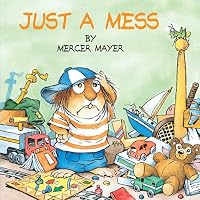
Little Critter can't find his baseball mitt. When he asks his mom to help him find it, she directs him to his room. But his room is just a mess! He can't find anything. Of course, his mom tells him he can clean up his own mess, but that doesn't stop the little critter from trying to get out of it by asking everyone else in the family. When he realizes he is on his own, Little Critter cleans up the mess in his own way: stuffs a bunch of stuff in the closet and under the bed, tries to use the hose to clean the floor, and ends by vacuuming up more than he bargained for. True to the style of this series, each page has a small amount of text and detailed illustrations that add depth and meaning to the words. The story is told with show more understated humor. Little Critter is adorable, and captures a child's thinking and emotion. Every parent will appreciate a story about the child cleaning their messy room, and kids will relate to his immature understanding of the situation. This book is fun and sweet, and wonderful to read aloud. show less
Little Critter is big here. We pick them up cheap (well, cheaper than they already are) at the local used book store.
This book follows just the plot you'd expect - Little Critter loses his baseball glove and is told by his mother to clean his room. He does a dubious job at that and finally, just when he's almost forgotten why he started, he finds his glove!
Here's the thing. You can buy these books for $4 anywhere (or, if you get them used, probably under a buck). You could stock your child's library primarily with these. Don't expect great literature, but they're good standbys, short for bedtime and "just one story" times.
The one really attractive feature they have is that they are a great example of the unreliable narrator. Whatever show more Little Critter *says* he's doing, you can be sure the picture shows just the opposite. This is a good narrative convention, and it's never too early to have your kid learn about it through blatant demonstration.
And kids like them. Little-little ones can sit through them, and older-little ones, just learning to read, still find them interesting enough to sit down for. show less
This book follows just the plot you'd expect - Little Critter loses his baseball glove and is told by his mother to clean his room. He does a dubious job at that and finally, just when he's almost forgotten why he started, he finds his glove!
Here's the thing. You can buy these books for $4 anywhere (or, if you get them used, probably under a buck). You could stock your child's library primarily with these. Don't expect great literature, but they're good standbys, short for bedtime and "just one story" times.
The one really attractive feature they have is that they are a great example of the unreliable narrator. Whatever show more Little Critter *says* he's doing, you can be sure the picture shows just the opposite. This is a good narrative convention, and it's never too early to have your kid learn about it through blatant demonstration.
And kids like them. Little-little ones can sit through them, and older-little ones, just learning to read, still find them interesting enough to sit down for. show less
What I remember most vividly about this book is the illustrations. Mr. Mayer certainly put a lot of detail into the messes that Little Critter made, lol.
Little Critter has lost his glove, and his mom tells him to go look in his messy room. He gets there and cleans it up, and at the very end he finds his glove, after he's forgotten what he's looking for.
It's a cute story, and it definitely makes the point that you can find things better if everything's not all jumbled together, though it doesn't really do a good job of teaching how to clean. I enjoyed reading it, and my kids enjoyed me reading it to them. Good book.
It's a cute story, and it definitely makes the point that you can find things better if everything's not all jumbled together, though it doesn't really do a good job of teaching how to clean. I enjoyed reading it, and my kids enjoyed me reading it to them. Good book.
A wonderful realistic fiction. Although the book exemplifies extraordinary personification with the "little critters", I still consider it realistic fiction because it is very easy for kids to empathize with the situations within this book. The point of view in which the main character speaks is perfect for young children. Since children are very egocentrically minded it is really great for them to read from the first person perspective.
Good and bad things always happen to this little critter. He doesn't want to clean his room when he is asked to and when he does he throws stuff under the bed and in the closet just as any other kid would do. But he finally finds his baseball mit on the other side of his pillow he realizes that his mom may be right.
Members
- Recently Added By
Author Information

531+ Works 131,708 Members
Mercer Mayer was born December 30, 1943 in Little Rock Arkansas. While attending school at the Honolulu Museum of Art, Mayer decided to enter the field of children's book illustration. He created a portfolio of sketches and peddled them wherever he could. He moved to New York City in 1964, pursuing further instruction at the Art Students League of show more New York, where he met an artist named Marianna who became his first wife. He soon created a new portfolio and with these new sketches persuaded editors at Dial Press and Harper & Row to give him some illustration work. Mayer published his first book, A Boy, a Dog, and a Frog, at Dial Press in 1967. It was notable for being a completely wordless picture book one that tells its story entirely with pictures. Mayer was one of the first illustrators to be credited for using this format. Five more books in this series were to follow. Mayer joined Golden Publishing, creators of Little Golden Books, in 1976. Through them he has sold his "Little Critter" and "Little Monster" series, which are popular with beginning readers. His title Just Me and My Dad made The New York Times Best Seller List for 2012. In 2015, his title Little Critter: Just a Little Love, also made the list. His holiday book, Merry Christmas Mom and Dad, is also a bestseller. (Bowker Author Biography) show less
Series

Work Relationships
Common Knowledge
- Canonical title
- Just a Mess
- People/Characters
- Little Critter
- Canonical DDC/MDS
- 813
Classifications
Statistics
- Members
- 2,302
- Popularity
- 8,566
- Reviews
- 25
- Rating
- (3.88)
- Languages
- English
- Media
- Paper
- ISBNs
- 10
- UPCs
- 1
- ASINs
- 6