Life of Thomas Hardy
by Florence Emily Hardy, Thomas Hardy (Author)
On This Page
Description
With an Introduction by Michael Irwin, Professor of English Literature, University of Kent at Canterbury Originally published as a biography of Thomas Hardy by Florence, his widow, this 'Life' is now known to have been essentially the work of Hardy himself. There has been much critical discussion of its hybrid status, and of Hardy's motives for contriving what some have seen as a deception. This controversy has tended to obscure a much more important issue - the oddity, attractiveness and show more diversity of the work in question. It does give an account of Hardy's life, from the very moment of birth when he was 'thrown aside as dead' till rescued by the midwife. But more than that it offers a wonderful miscellany of reminiscences, anecdotes, folk-tales, personal insights, diary entries and intriguing reflections on art in general and fiction and poetry in particular. It reveals a good deal about Hardy the man, and still more about Hardy the writer. No lover of his novels or poems should be without it. show lessTags
Recommendations






















Member Reviews
I am a great fan of Thomas Hardy. I will shortly be embarking on my fourth reading of The Mayor of Casterbridge for my on-going Hardy reading challenge. I was therefore looking forward to reading this book, not at all sure why I had left it so long.
Possibly one of the most interesting and intriguing things about this book is its rather odd history. The authorship is now firmly credited to be that of Thomas Hardy himself and his second wife Florence Hardy. However that was not what was originally intended. First published after Hardy’s death it was presented to the world as a biography, written by his wife Florence. Written in the third person, containing many letter and diary extracts it has the appearance of a biography. However show more within a fairly short period of its publication, it was generally accepted that it was in fact almost entirely the work of Thomas Hardy himself. Florence Hardy is credited with some of the early parts of the finished book, as well as some later insertions. So it is obvious that Hardy fully intended to practise what many have seen as a deceit in the publishing of his life. Presumably he wanted to exercise full control over what was left behind.
I found reading this book a very mixed experience – there were parts I enjoyed a lot, there were parts I found rather tedious and overall I found it quite frustrating. Hardy the man remains very much in the shadows. I did find it very peculiar to read excerpts of Hardy’s letters and diary entries obviously written in the first person – and therefore presented to us the reader as “straight from the horse’s mouth” interspersed with the 3rd person voice of the “biographer” who we now know to have been Hardy himself. I did enjoy the sections about Hardy’s early life and strangely his later life – which I found rather poignant. I also enjoyed reading some of Hardy’s diary entries and letters and some of things pertaining to the novels I found fascinating – although sometimes frustratingly brief despite this book’s length. The writer that emerges is a surprisingly unambitious man, although often irritated by criticism; he was frustrated by how his poetry was received, once he had finished with prose completely after publishing The Well Beloved. Hardy was a poet at heart, it was something he had always written, this was something his readers at the time were largely unaware of; some saw his sudden switch to poetry as peculiar and didn’t treat it seriously at first.
I suppose the Thomas Hardy I carry with me in my head and my heart – is the young man who wrote Under the Greenwood Tree – the young many who travelled to Cornwall and there met his first wife Emma.
It is hard to remember that he was also a man who lived through the First World War. Along with other literary giants of the time, Hardy was asked to attend a conference at the time the war broke out. The conference was intended to aid with the organisation of public statements by well-known men of letters. In the 1920’s Hardy was an elder man of letters who a visiting manager of the Oxford Dramatic society met with, and remembered..
“There was in him something timid as well as something fierce, as if the world had hurt him and he expected it to hurt it him again. But what fascinate me above all was the contrast between the plainness, the quiet rigidity of his behaviour, and the passionate boldness of his mind, for this I had always believed to be the tradition of English genius, too often and too extravagantly denied”
I will continue to love Hardy – but I can’t say I find him a reliable chronicler of his own life. There is too much missing, no doubt they are things he considered too private to talk about – and yet because of that he remains still something of an enigma for me. show less
Possibly one of the most interesting and intriguing things about this book is its rather odd history. The authorship is now firmly credited to be that of Thomas Hardy himself and his second wife Florence Hardy. However that was not what was originally intended. First published after Hardy’s death it was presented to the world as a biography, written by his wife Florence. Written in the third person, containing many letter and diary extracts it has the appearance of a biography. However show more within a fairly short period of its publication, it was generally accepted that it was in fact almost entirely the work of Thomas Hardy himself. Florence Hardy is credited with some of the early parts of the finished book, as well as some later insertions. So it is obvious that Hardy fully intended to practise what many have seen as a deceit in the publishing of his life. Presumably he wanted to exercise full control over what was left behind.
I found reading this book a very mixed experience – there were parts I enjoyed a lot, there were parts I found rather tedious and overall I found it quite frustrating. Hardy the man remains very much in the shadows. I did find it very peculiar to read excerpts of Hardy’s letters and diary entries obviously written in the first person – and therefore presented to us the reader as “straight from the horse’s mouth” interspersed with the 3rd person voice of the “biographer” who we now know to have been Hardy himself. I did enjoy the sections about Hardy’s early life and strangely his later life – which I found rather poignant. I also enjoyed reading some of Hardy’s diary entries and letters and some of things pertaining to the novels I found fascinating – although sometimes frustratingly brief despite this book’s length. The writer that emerges is a surprisingly unambitious man, although often irritated by criticism; he was frustrated by how his poetry was received, once he had finished with prose completely after publishing The Well Beloved. Hardy was a poet at heart, it was something he had always written, this was something his readers at the time were largely unaware of; some saw his sudden switch to poetry as peculiar and didn’t treat it seriously at first.
I suppose the Thomas Hardy I carry with me in my head and my heart – is the young man who wrote Under the Greenwood Tree – the young many who travelled to Cornwall and there met his first wife Emma.
It is hard to remember that he was also a man who lived through the First World War. Along with other literary giants of the time, Hardy was asked to attend a conference at the time the war broke out. The conference was intended to aid with the organisation of public statements by well-known men of letters. In the 1920’s Hardy was an elder man of letters who a visiting manager of the Oxford Dramatic society met with, and remembered..
“There was in him something timid as well as something fierce, as if the world had hurt him and he expected it to hurt it him again. But what fascinate me above all was the contrast between the plainness, the quiet rigidity of his behaviour, and the passionate boldness of his mind, for this I had always believed to be the tradition of English genius, too often and too extravagantly denied”
I will continue to love Hardy – but I can’t say I find him a reliable chronicler of his own life. There is too much missing, no doubt they are things he considered too private to talk about – and yet because of that he remains still something of an enigma for me. show less
Members
- Recently Added By
Author Information

5 Works 98 Members

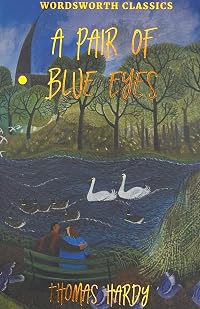
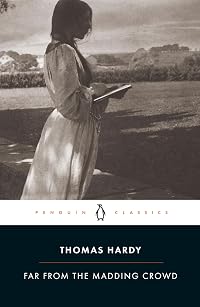
Thomas Hardy was born on June 2, 1840, in Higher Bockhampton, England. The eldest child of Thomas and Jemima, Hardy studied Latin, French, and architecture in school. He also became an avid reader. Upon graduation, Hardy traveled to London to work as an architect's assistant under the guidance of Arthur Bloomfield. He also began writing poetry. show more How I Built Myself a House, Hardy's first professional article, was published in 1865. Two years later, while still working in the architecture field, Hardy wrote the unpublished novel The Poor Man and the Lady. During the next five years, Hardy penned Desperate Remedies, Under the Greenwood Tree, and A Pair of Blue Eyes. In 1873, Hardy decided it was time to relinquish his architecture career and concentrate on writing full-time. In September 1874, his first book as a full-time author, Far from the Madding Crowd, appeared serially. After publishing more than two dozen novels, one of the last being Tess of the d'Urbervilles, Hardy returned to writing poetry--his first love. Hardy's volumes of poetry include Poems of the Past and Present, The Dynasts: Part One, Two, and Three, Time's Laughingstocks, and The Famous Tragedy of the Queen of Cornwall. From 1833 until his death, Hardy lived in Dorchester, England. His house, Max Gate, was designed by Hardy, who also supervised its construction. Hardy died on January 11, 1928. His ashes are buried in Poet's Corner at Westminster Abbey. (Bowker Author Biography) show less
Common Knowledge
- People/Characters
- Thomas Hardy
Classifications
Statistics
- Members
- 66
- Popularity
- 472,133
- Reviews
- 1
- Rating
- (3.00)
- Languages
- English
- Media
- Paper, Ebook
- ISBNs
- 7
- ASINs
- 3