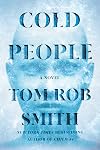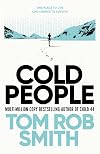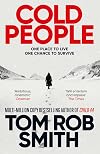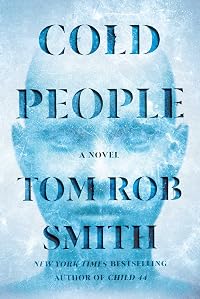
Cold People
by Tom Rob Smith
On This Page
Description
The world has fallen. Without warning, a mysterious and omnipotent force has claimed the planet for their own. There are no negotiations, no demands, no reasons given for their actions. All they have is a message: humanity has thirty days to reach the one place on Earth where they will be allowed to exist, Antarctica.Tags
Recommendations


Member Reviews
I read The Farm by Tom Rob Smith in 2014 and I can still remember the gasp I made when I realised the predicament the main character was in. In 2014, I published my first ever Top 5 Books list and The Farm was proudly featured.
Next came Child 44, later made into a movie on the big screen starring Tom Hardy, Gary Oldman and Noomi Rapace. I gave this 4 stars in my review and went on to become the first Australian blogger to interview Tom Rob Smith.
So, when a copy of Cold People arrived in my mailbox, I knew the author could convincingly set a plot in the harshest climate in the world, as the freezing Russian conditions in Child 44 were expertly conveyed to the reader. I also knew that Tom Rob Smith could spin a terrific yarn - as he did show more in The Farm - so I rugged up and started reading.
By page 8, he was off to a cracking start with this description of a ship's captain living 150 years ago:
"...[Captain] Moray was an expert in choosing his crew from the variety of outcasts on offer, his preference being for the melancholic, the sexual deviants and the thieves. For the thieves there was nothing to steal, for the melancholic there was the ocean to meditate upon and for the deviants there were other deviants. Moray never shared the secrets of his own past, cultivating the appearance of a forceful but fair man, a bastion of order in this otherwise barbarous industry. There was room for only one murderer on this ship." Page 8
Wow! I was hooked right there and then! The premise of Cold People is that all of humanity has to relocate to Antarctica in 30 days in order to survive. The 'event' that kicks off the action was very well written and I enjoyed experiencing it from a few character's points of view, in the same way we did when the dome dramatically came down in Under the Dome by Stephen King.
The plotting style reminded me of Matthew Reilly, and I know you'll be thinking "that's probably because of Ice Station", but actually it's because of the action in The Great Zoo of China. Cold People felt cinematic in scale at times and if you enjoy Matthew Reilly, I think you'll enjoy this too.
It's probably relevant to acknowledge that I don't read many dystopian novels or books set in a post apocalyptic world. Just as I followed Maggie O'Farrell blindly into her memoir based purely on my love of her writing, Tom Rob Smith beckoned me into his glacially cold dystopian future and I'm glad I followed.
Cold People by Tom Rob Smith is inventive and optimistic about humanity while pointing out our flaws and I'm glad I stepped into this frightening futuristic portrayal.
* Copy courtesy of Simon & Schuster * show less
Next came Child 44, later made into a movie on the big screen starring Tom Hardy, Gary Oldman and Noomi Rapace. I gave this 4 stars in my review and went on to become the first Australian blogger to interview Tom Rob Smith.
So, when a copy of Cold People arrived in my mailbox, I knew the author could convincingly set a plot in the harshest climate in the world, as the freezing Russian conditions in Child 44 were expertly conveyed to the reader. I also knew that Tom Rob Smith could spin a terrific yarn - as he did show more in The Farm - so I rugged up and started reading.
By page 8, he was off to a cracking start with this description of a ship's captain living 150 years ago:
"...[Captain] Moray was an expert in choosing his crew from the variety of outcasts on offer, his preference being for the melancholic, the sexual deviants and the thieves. For the thieves there was nothing to steal, for the melancholic there was the ocean to meditate upon and for the deviants there were other deviants. Moray never shared the secrets of his own past, cultivating the appearance of a forceful but fair man, a bastion of order in this otherwise barbarous industry. There was room for only one murderer on this ship." Page 8
Wow! I was hooked right there and then! The premise of Cold People is that all of humanity has to relocate to Antarctica in 30 days in order to survive. The 'event' that kicks off the action was very well written and I enjoyed experiencing it from a few character's points of view, in the same way we did when the dome dramatically came down in Under the Dome by Stephen King.
The plotting style reminded me of Matthew Reilly, and I know you'll be thinking "that's probably because of Ice Station", but actually it's because of the action in The Great Zoo of China. Cold People felt cinematic in scale at times and if you enjoy Matthew Reilly, I think you'll enjoy this too.
It's probably relevant to acknowledge that I don't read many dystopian novels or books set in a post apocalyptic world. Just as I followed Maggie O'Farrell blindly into her memoir based purely on my love of her writing, Tom Rob Smith beckoned me into his glacially cold dystopian future and I'm glad I followed.
Cold People by Tom Rob Smith is inventive and optimistic about humanity while pointing out our flaws and I'm glad I stepped into this frightening futuristic portrayal.
* Copy courtesy of Simon & Schuster * show less
When an omnipotent force suddenly takes claim to the planet, humanity is given thirty days to journey to the extremes of Antarctica, the only place humans are permitted to exist after the deadline.
COLD PEOPLE blew me away. Its nonlinear timeline was fast paced but easy to follow as each chapter delineates date/time/place at the beginning. I was immediately and intensely absorbed in the story and found so many thought-provoking moments that will ultimately lead to this book haunting me for some time. It’s not explained why the omnipotent force suddenly appears or why the planet is claimed, however, I didn’t even care to question this as the characters’ journey to Antarctica and struggles to rebuild civilization were so compelling show more to read. This is the kind of book that can prompt you to reflect on how you relate to others and what you do with your life. The ending provides some conclusion while also leaving things open to the possibility of a sequel. I had a really hard time putting this book down.
I absolutely loved COLD PEOPLE and would highly recommend to fans of science fiction/speculative fiction/post-apocalyptic books. This is the first book I’ve read of Tom Rob Smith’s and I will definitely be adding his others to my ‘To Read’ list.
Thank you to Scribner for the giveaway ARC. show less
COLD PEOPLE blew me away. Its nonlinear timeline was fast paced but easy to follow as each chapter delineates date/time/place at the beginning. I was immediately and intensely absorbed in the story and found so many thought-provoking moments that will ultimately lead to this book haunting me for some time. It’s not explained why the omnipotent force suddenly appears or why the planet is claimed, however, I didn’t even care to question this as the characters’ journey to Antarctica and struggles to rebuild civilization were so compelling show more to read. This is the kind of book that can prompt you to reflect on how you relate to others and what you do with your life. The ending provides some conclusion while also leaving things open to the possibility of a sequel. I had a really hard time putting this book down.
I absolutely loved COLD PEOPLE and would highly recommend to fans of science fiction/speculative fiction/post-apocalyptic books. This is the first book I’ve read of Tom Rob Smith’s and I will definitely be adding his others to my ‘To Read’ list.
Thank you to Scribner for the giveaway ARC. show less
On a pleasant summer day, aliens arrive and tell humankind that they have one month to move to Antarctica or else. It's quite a beginning for a novel, and an interesting one, but that's all we get of that. Everyone either moves south or prepares to die without question or resistance. The waters around Antarctica are filled with boats of every description, people are huddled on the shores of the most hostile continent in the middle of its winter, lacking fuel, shelter or clothing, which gives the great real start to the novel, seeing how people came together to...oh, never mind. As soon as people are huddled on shore, the book jumps forward twenty years.
This book is by Tom Rob Smith, who wrote Child 44 and a few other novels centered show more around the Soviet Union and its sphere of influence during the Cold War. They were thrillers, but ones well anchored in their historical setting, had interesting and plausible plots, and well-developed and complex characters. None of those elements make an appearance in this book.
So what is this book about, since it didn't care to waste time on the alien invasion or in polar survival? Well, since humankind is crowded onto a hostile area with very few resources and no interest in what is happening elsewhere, since people are living in extremely crowded and squalid conditions with barely enough of anything to survive, with all resources strictly controlled and rationed, with any surviving supplies from the rest of the world accessible only to the well-connected, with the end of any sort of representative government, and society controlled by a group of unelected elites, you'd expect that the story would finally gel around a resistance movement. You would be wrong. In this world, scarcity and over-crowding bring docility and contentment to the masses because, the author tells us several times, libertarianism has ended criminality. Also, there are draconian punishments for not being content and happy, but mostly it's a libertarian paradise, don't look to closely at how it works, that's not what this book is interested in.
So what is this book about? Well, because survival is so precarious, and the population dropping, all the scientists left have come together to create weird and terrifying hybrid animals that want to kill the remaining people. Yes, this was the consensus of the the best and brightest -- with aliens occupying most of the world, maybe, although no one has seen any sign of them, with humans desperately in need of a sustainable way to produce the things they need for survival, all the remaining wealth and resources is dedicated to building an enormous underground laboratory to make what they first intended to be small adjustments to the genetic code to make people better adapted to this new harsh environment, but now that all ethical considerations are considered moot, the scientists get over-excited and just keep one-upping themselves creating new animal hybrids, each one smarter, stronger and more able to survive and kill everyone. Do I need to tell you how this ends? Because, honestly, I gave up 85% of the way through. None of this was interesting, except, as it was written, the scientists weren't the bad guys. Also, since there was no more representative government, all the various world leaders opened a bar together. That was kind of interesting. show less
This book is by Tom Rob Smith, who wrote Child 44 and a few other novels centered show more around the Soviet Union and its sphere of influence during the Cold War. They were thrillers, but ones well anchored in their historical setting, had interesting and plausible plots, and well-developed and complex characters. None of those elements make an appearance in this book.
So what is this book about, since it didn't care to waste time on the alien invasion or in polar survival? Well, since humankind is crowded onto a hostile area with very few resources and no interest in what is happening elsewhere, since people are living in extremely crowded and squalid conditions with barely enough of anything to survive, with all resources strictly controlled and rationed, with any surviving supplies from the rest of the world accessible only to the well-connected, with the end of any sort of representative government, and society controlled by a group of unelected elites, you'd expect that the story would finally gel around a resistance movement. You would be wrong. In this world, scarcity and over-crowding bring docility and contentment to the masses because, the author tells us several times, libertarianism has ended criminality. Also, there are draconian punishments for not being content and happy, but mostly it's a libertarian paradise, don't look to closely at how it works, that's not what this book is interested in.
So what is this book about? Well, because survival is so precarious, and the population dropping, all the scientists left have come together to create weird and terrifying hybrid animals that want to kill the remaining people. Yes, this was the consensus of the the best and brightest -- with aliens occupying most of the world, maybe, although no one has seen any sign of them, with humans desperately in need of a sustainable way to produce the things they need for survival, all the remaining wealth and resources is dedicated to building an enormous underground laboratory to make what they first intended to be small adjustments to the genetic code to make people better adapted to this new harsh environment, but now that all ethical considerations are considered moot, the scientists get over-excited and just keep one-upping themselves creating new animal hybrids, each one smarter, stronger and more able to survive and kill everyone. Do I need to tell you how this ends? Because, honestly, I gave up 85% of the way through. None of this was interesting, except, as it was written, the scientists weren't the bad guys. Also, since there was no more representative government, all the various world leaders opened a bar together. That was kind of interesting. show less
A huge suspension of disbelief will be needed for this book. If you have trouble with unrealistic science, give this one a pass. Not only that, but it starts with an invasion by aliens in spaceships, which one might think would be part of the plot. Wrong. It follows the reactions of various humans as they attempt to figure out what to do. They are told by the alien presence that they must relocate to Antarctica or be destroyed. So, the plot follows a few central characters as they travel by ship, stopping in Portugal and Mauritania, before arriving in Antarctica. Of course, not everyone is able to complete such a trip, and there are many casualties prior to arrival.
Once several groups arrive in Antarctica, it becomes unbelievably easy show more to inhabit. Another suspension of disbelief is required, especially since the supply chain has been completely disrupted and they seem to be able to cobble together whatever is needed while surviving in brutal cold. A key plot element is genetic manipulation to create the “cold people” of the title, who are able to survive the Antarctic weather. These cold people have abilities that humans have not anticipated, which lead to a chaotic scenario (which I will not spoil).
I like the premise of this book, the opening few chapters, and the journey. It is unusual to find a book that features Mauritania. The main characters at the beginning are people I could root for, but unfortunately, their role diminishes, and they disappear for long stretches of the narrative. The ending is particularly unsatisfying and an obvious setup for a sequel. (I really dislike these types of endings.) From the description, this book sounded like something I would enjoy. Unfortunately, it proved to be a misstep. show less
Once several groups arrive in Antarctica, it becomes unbelievably easy show more to inhabit. Another suspension of disbelief is required, especially since the supply chain has been completely disrupted and they seem to be able to cobble together whatever is needed while surviving in brutal cold. A key plot element is genetic manipulation to create the “cold people” of the title, who are able to survive the Antarctic weather. These cold people have abilities that humans have not anticipated, which lead to a chaotic scenario (which I will not spoil).
I like the premise of this book, the opening few chapters, and the journey. It is unusual to find a book that features Mauritania. The main characters at the beginning are people I could root for, but unfortunately, their role diminishes, and they disappear for long stretches of the narrative. The ending is particularly unsatisfying and an obvious setup for a sequel. (I really dislike these types of endings.) From the description, this book sounded like something I would enjoy. Unfortunately, it proved to be a misstep. show less
I have a fondness for apocalyptic and post apocalyptic fiction. I'm always fascinated by an author's take on what might be in the cards for the world as we know it.
Tom Rob Smith's new novel, Cold People, is a novel that takes on that question of 'what might be...'
2023. An alien force has dictated the planet is theirs and humanity has a month to reach the one place they will be allowed to survive - in Antarctica. If you're not an 'alien' person, don't worry. Their mandate is simply the catalyst of the migration and what follows. We never meet them.
I was drawn into Smith's worldbuilding. He has picked one of the most remote and inhospitable places on earth for the survivors to land. Where will they live, what will they eat, how will they show more survive the cold? And the burning question - who will 'run' this new society?
We see what has transpired as Smith takes us to Antarctica twenty years on - in 2043. What ethical decisions were made? How do genetics fit into the story? I'm not going to expand on that as its a key part of the plotting.
We meet a select few of the characters in the 'before' times and follow them to the 'after'. Liza was my favorite - her grit, drive and compassion make her a standout protagonist. Smith's players are very well drawn. Their detailed thoughts, actions, reasoning and more that will have the listener wondering what they themselves would do. What is best for a society intent on saving humanity?
I did choose to listen to Cold People. The reader was Rebecca Lowman and she did a stellar job of interpreting and presenting Smith's novel. As I've said before, I find myself more in a story when I listen rather than read. This was most definitely the case this time. Lowman has a smooth, well modulated tone to her voice that draws the listener in. She varies her voice for each player's appearance and they are believable. She speaks clearly and her pace of speaking is just right. A great performance of a very different book that I quite enjoyed. show less
Tom Rob Smith's new novel, Cold People, is a novel that takes on that question of 'what might be...'
2023. An alien force has dictated the planet is theirs and humanity has a month to reach the one place they will be allowed to survive - in Antarctica. If you're not an 'alien' person, don't worry. Their mandate is simply the catalyst of the migration and what follows. We never meet them.
I was drawn into Smith's worldbuilding. He has picked one of the most remote and inhospitable places on earth for the survivors to land. Where will they live, what will they eat, how will they show more survive the cold? And the burning question - who will 'run' this new society?
We see what has transpired as Smith takes us to Antarctica twenty years on - in 2043. What ethical decisions were made? How do genetics fit into the story? I'm not going to expand on that as its a key part of the plotting.
We meet a select few of the characters in the 'before' times and follow them to the 'after'. Liza was my favorite - her grit, drive and compassion make her a standout protagonist. Smith's players are very well drawn. Their detailed thoughts, actions, reasoning and more that will have the listener wondering what they themselves would do. What is best for a society intent on saving humanity?
I did choose to listen to Cold People. The reader was Rebecca Lowman and she did a stellar job of interpreting and presenting Smith's novel. As I've said before, I find myself more in a story when I listen rather than read. This was most definitely the case this time. Lowman has a smooth, well modulated tone to her voice that draws the listener in. She varies her voice for each player's appearance and they are believable. She speaks clearly and her pace of speaking is just right. A great performance of a very different book that I quite enjoyed. show less
I'm still not 100% sure how I feel about this one; it feels like the kind of book I need to read a couple more times to truly get it. (It's unfortunate that circumstances dictated that I read it quickly, without time to pause to digest some parts for their meaning.) There was the overwhelming sense of a lot happening at once, though the events were actually presented non-sequentially, and many different players with different motivations and feelings. In order for me to really become immersed to the level I might have liked, I would have needed to spend more time getting deeper into each of their heads, but as it was, things began to blur for me and fade in favor of the "focus" on the gestalt. I enjoyed the beginning (the travel to show more Antarctica) and the end (Echo's choice-making) more than the middle, which lagged for me.
I feel like there were points and messages that I missed, but they were there, just needing me to spend more time thinking. Perhaps subsequent rereads, when I get the opportunity, will change my opinions. show less
I feel like there were points and messages that I missed, but they were there, just needing me to spend more time thinking. Perhaps subsequent rereads, when I get the opportunity, will change my opinions. show less
I really wanted to like this book as the premise was interesting. An alien invasion forces humans to relocate to Antarctica or else they will be eliminated. The survivors must learn to live in the vast coldness that is the continent. After twenty years, those remaining are trying to find a way to create humans that are adaptable to the extreme cold. The beginning of the novel had me until the main characters are forced to move and survive in Antarctica. Always on the back of mind, was who are these aliens and why do they need our planet? Never to find out, so that sucked. The different storylines and the survival of each was intriguing, but the creation of said new human species was a letdown. Not what I expected. I finished the book show more and was expecting more. show less
Members
- Recently Added By
Lists

Stories set in the Polar Regions
33 works; 3 members

2024 Tournament of Books
18 works; 9 members
Author Information

26+ Works 9,099 Members
Awards and Honors
Common Knowledge
- Original publication date
- 2023
Classifications
Statistics
- Members
- 226
- Popularity
- 143,852
- Reviews
- 12
- Rating
- (3.29)
- Languages
- English
- Media
- Paper, Audiobook, Ebook
- ISBNs
- 11
- ASINs
- 4