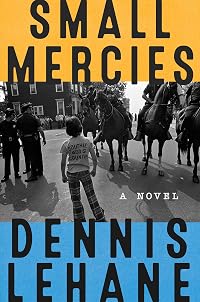
Small Mercies
by Dennis Lehane
On This Page
Description
"One night Mary Pat's teenage daughter Jules stays out late and doesn't come home. That same evening, a young Black man is found dead, struck by a subway train under mysterious circumstances. The two events seem unconnected. But Mary Pat, propelled by a desperate search for her missing daughter, begins turning over stones best left untouched--asking questions that bother Marty Butler, chieftain of the Irish mob, and the men who work for him, men who don't take kindly to any threat to their show more business"-- show lessTags
Recommendations

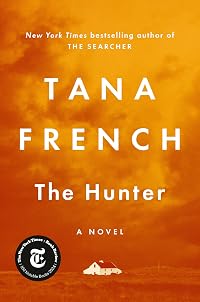
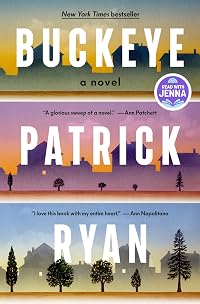
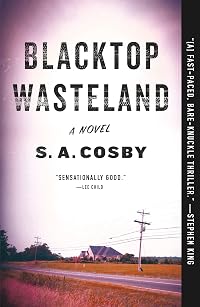
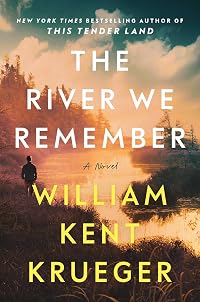


Member Recommendations
Member Reviews
This was another Lehane that made me think a lot. Please don't get me wrong, I am against any form of racism, but the way the solutions were implemented in Boston to bring about mixing was doomed to failure in my eyes. How is this supposed to work when children are bussed across the city to attend a school where there are mixed races? The question that should have been asked is how to mix neighbourhoods so that different ethnicities can live together and the school would also be mixed. This is hardly possible in America because rich parents send their children to private schools and the public schools (as it seems here in Switzerland) do not have the best reputation.
The second focus is drug dealing and consumption. How easy it is as an show more Irish population that is against the mixing of the races, but big in the drugs business, to blame all misdeeds on the weak population. They are often supported/covered up by the 'white' police.
Sometimes I felt really sick while reading, with so much injustice. And I ask myself, when I look at today's American politics from a distance, why after so many years the USA has somehow still not come up with a solution to racism. show less
The second focus is drug dealing and consumption. How easy it is as an show more Irish population that is against the mixing of the races, but big in the drugs business, to blame all misdeeds on the weak population. They are often supported/covered up by the 'white' police.
Sometimes I felt really sick while reading, with so much injustice. And I ask myself, when I look at today's American politics from a distance, why after so many years the USA has somehow still not come up with a solution to racism. show less
I fell in love with Lehane's writing when I picked up Mystic River, and enjoyed the hell out of him through Shutter Island and his Kenzie & Gennaro series. I still believe The Given Day is one of the best novels I've ever read.
But then something happened. Lehane kept the Coughlins going through a couple of more books after The Given Day that felt like diminishing returns. And he put out a couple of standalones that also didn't seem to have that same bite and grit of his earlier stuff.
Still, every time I see a new Lehane novel—based on my adoration of those first nine novels—I get a thrill of anticipation.
And this one? This one did not let me down. I devoured this book.
I often complain, in my reviews, of authors who create unlikeable show more characters, but don't have the skill or ability to get the reader to root for them. I actually quite enjoy unlikeable characters, because the reading experience—when the book is done right by an author with skill—is a more challenging and fun one.
And in Mary Pat, we are given someone that, within a couple of pages, you feel her fierceness, but also her racism.
And, a side note here...this book is set in south Boston during the very real, and very racially charged period when the schools became integrated in 1974. And I had to laugh, because one reader noted her DNF of the book, because the author dared used the word "n*gg*r"...because, you know, back in south Boston in 74, during all this racial strife, NOT ONE PERSON would have ever used that vile word.
Some readers...JFC.
Anyway, so, here we are, with Mary Pat facing the prospect of her daughter going to school with black kids for the first time. In 1974. And I've gotta say, it's seriously been less than 50 years since this has been a thing? Unbelievable.
But now, here's the thing with Lehane. He's a writer's writer. He's an absolute master of dialogue. I'd go so far as to say that, if anyone can lay claim to Elmore Leonard's crown as King of Dialogue, it's Lehane. He gets more across by having a character not say the answer than most do through three pages of characters telling the reader exactly what they need to know. His dialogue is simply gorgeous.
Add to that his characters. I've read other reviews where they complain all the characters are "stock" characters. But are they, though? Did we read the same book? Because, yes, Lehane may start with a stock character, but he always subverts the readers' expectations by throwing a curve ball in there. He certainly did that here, but I won't get into spoiler territory to explain. But I will say that Mary Pat's ongoing parental suffering was a horrible, well-written, ungodly-awful thing to experience.
Then take a look at Lehane's plot. It may be safe to say Lehane has a bit of a formula where he sets up a situation, then gives it a twist, then one more twist, then brings it to a rather violent end, but he does it well, and those twists are beautiful things to behold. Even when I knew what was going to happen, still, as Lehane laid it out, it was always breathtaking. And heartbreaking.
And finally, Lehane has this way of dropping real-life realizations or observations into his characters' minds that are visceral truths about the human condition. There's very few other authors I've read that can do this, and even less that do it well.
This is a gorgeous, painful novel to read. And I adored every single second of it.
And now there are ten books of Lehane's that I think are fantastic. show less
But then something happened. Lehane kept the Coughlins going through a couple of more books after The Given Day that felt like diminishing returns. And he put out a couple of standalones that also didn't seem to have that same bite and grit of his earlier stuff.
Still, every time I see a new Lehane novel—based on my adoration of those first nine novels—I get a thrill of anticipation.
And this one? This one did not let me down. I devoured this book.
I often complain, in my reviews, of authors who create unlikeable show more characters, but don't have the skill or ability to get the reader to root for them. I actually quite enjoy unlikeable characters, because the reading experience—when the book is done right by an author with skill—is a more challenging and fun one.
And in Mary Pat, we are given someone that, within a couple of pages, you feel her fierceness, but also her racism.
And, a side note here...this book is set in south Boston during the very real, and very racially charged period when the schools became integrated in 1974. And I had to laugh, because one reader noted her DNF of the book, because the author dared used the word "n*gg*r"...because, you know, back in south Boston in 74, during all this racial strife, NOT ONE PERSON would have ever used that vile word.
Some readers...JFC.
Anyway, so, here we are, with Mary Pat facing the prospect of her daughter going to school with black kids for the first time. In 1974. And I've gotta say, it's seriously been less than 50 years since this has been a thing? Unbelievable.
But now, here's the thing with Lehane. He's a writer's writer. He's an absolute master of dialogue. I'd go so far as to say that, if anyone can lay claim to Elmore Leonard's crown as King of Dialogue, it's Lehane. He gets more across by having a character not say the answer than most do through three pages of characters telling the reader exactly what they need to know. His dialogue is simply gorgeous.
Add to that his characters. I've read other reviews where they complain all the characters are "stock" characters. But are they, though? Did we read the same book? Because, yes, Lehane may start with a stock character, but he always subverts the readers' expectations by throwing a curve ball in there. He certainly did that here, but I won't get into spoiler territory to explain. But I will say that Mary Pat's ongoing parental suffering was a horrible, well-written, ungodly-awful thing to experience.
Then take a look at Lehane's plot. It may be safe to say Lehane has a bit of a formula where he sets up a situation, then gives it a twist, then one more twist, then brings it to a rather violent end, but he does it well, and those twists are beautiful things to behold. Even when I knew what was going to happen, still, as Lehane laid it out, it was always breathtaking. And heartbreaking.
And finally, Lehane has this way of dropping real-life realizations or observations into his characters' minds that are visceral truths about the human condition. There's very few other authors I've read that can do this, and even less that do it well.
This is a gorgeous, painful novel to read. And I adored every single second of it.
And now there are ten books of Lehane's that I think are fantastic. show less
If you lived in Boston during the busing crisis of the mid 1970's, this will be a familiar story to you, and you'll understand why Dennis Lehane of Dorchester said it was a necessity for him to write it, finally. Even after all this time, even after all the misery, even after Whitey Bulger was caught and killed in prison, even if thousands of school children were cheated out of their educations, even if you remember ROAR and Pixie Palladino and Louise Day Hicks and Dapper O'Neill, and even if working class and poor white and Black families are now being forced from their former segregated neighborhoods by wealthy renovators, you'll need to read this. If you come from anywhere else and weren't even born yet, you'll be stunned by Mary Pat show more Fennessy, 42, of the Southie projects, raised in hatred and violence, brought up in the code of omerta, that snitches get stitches, who loves fighting with her fists more than relaxing with a cup of coffee and a cigarette, whose breaking point is when her teenage daughter disappears and no one saw anything and no one knows anything, this after losing her son to an overdose, and after two divorces. And Mary Pat will meet Bobby Coyne, BPD detective, Dorchester native, who runs up against her when he finds out that her missing daughter Jules may have been involved in the murder of a young Black man at an MBTA station. This novel brings back all the ugliness, but the pain of the reader dims before the authority and command of Lehane’s writing. show less
Mary Pat lives in a poor white neighborhood in South Boston in the 1970s, where she is a single mother of a teenage daughter. Boston has just mandated bussing to desegregate the schools, and Mary Pat's daughter is one of the students who will be bussed to a black neighborhood. Mary Pat is racist, and she and her racist neighbors are fighting against the bussing laws. Against this racial tension, a young black man is found dead in a subway station, and Mary Pat's daughter is missing. The story is about Mary Pat's desperate search for her daughter, and the mystery of who killed the black man.
Lehane paints a very vivid picture of South Boston in the 70s. He manages to make Mary Pat a sympathetic character, despite her blatant racism, which show more is the especially ugly type of racism that poor white people have toward Black people, the need to look down on someone from the bottom rung of the ladder. Mary Pat acts from a fierce love for her daughter, and there is a lot of schadenfreude at watching this middle-aged woman single-handedly take on Boston's organized crime rings. show less
Lehane paints a very vivid picture of South Boston in the 70s. He manages to make Mary Pat a sympathetic character, despite her blatant racism, which show more is the especially ugly type of racism that poor white people have toward Black people, the need to look down on someone from the bottom rung of the ladder. Mary Pat acts from a fierce love for her daughter, and there is a lot of schadenfreude at watching this middle-aged woman single-handedly take on Boston's organized crime rings. show less
This is easily one of Dennis Lehane's best, right up there with Mystic River. It’s a mystery about a daughter who goes missing from the projects on the eve of Boston’s 1974 busing crisis, but Lehane takes it to a deeper level. It becomes a tragic story about the tensions of a racially divided community exploding into acts of violence and the rage of a mother with nothing left to lose forcing her to confront the values she’s lived with all her life. Although the racial slurs and graphic violence in this could be triggering, it wouldn’t have the same impact without them.
Here is some of the best character-driven fiction I have ever read. Now at the end of 2023, I may be changing my choice for "best of the year" to Dennis Lehane's SMALL MERCIES.
Background: the summer of 1974 in the housing projects of (Lehane's favorite) Boston, Southie to be exact. Everyone's upset about the new busing plan, that many white children will be forced to go to schools in black neighborhoods and that many black children will be forced into schools in their neighborhoods. This background is true.
The story: Mary Pat Fennessy's 17-year-old daughter, Jules, goes missing after meeting with friends one evening. So Mary Pat looks for her, and she's not afraid of anyone. As time goes by and we learn along with Mary Pat what has show more probably become of Jules, we see how tough Mary Pat can be. And she's just beginning.
During her search, Mary Pat learns of the death, maybe accidental, maybe not, of her black coworker's 20-year-old son. Little by little, she hears about Jules' possible involvement.
Working this case of possible murder is Homicide Detective "Bobby" Coyne. Separately, he and Mary Pat both come to know what really happened. They each are examples of a parent's love for their child. And she is an example of a mother's vengeance.
SMALL MERCIES is great character-driven fiction in part because it also has plot. Plus, I've read few authors who can write a character-driven story as well as Dennis Lehane. show less
Background: the summer of 1974 in the housing projects of (Lehane's favorite) Boston, Southie to be exact. Everyone's upset about the new busing plan, that many white children will be forced to go to schools in black neighborhoods and that many black children will be forced into schools in their neighborhoods. This background is true.
The story: Mary Pat Fennessy's 17-year-old daughter, Jules, goes missing after meeting with friends one evening. So Mary Pat looks for her, and she's not afraid of anyone. As time goes by and we learn along with Mary Pat what has show more probably become of Jules, we see how tough Mary Pat can be. And she's just beginning.
During her search, Mary Pat learns of the death, maybe accidental, maybe not, of her black coworker's 20-year-old son. Little by little, she hears about Jules' possible involvement.
Working this case of possible murder is Homicide Detective "Bobby" Coyne. Separately, he and Mary Pat both come to know what really happened. They each are examples of a parent's love for their child. And she is an example of a mother's vengeance.
SMALL MERCIES is great character-driven fiction in part because it also has plot. Plus, I've read few authors who can write a character-driven story as well as Dennis Lehane. show less
A powerful novel set in Boston in the summer of 1974, with a fierce main character in Mary Pat, a woman from Southie whose daughter, Jules, doesn't come home one night - the same night that a young Black man, Augustus Williamson, is found dead on the tracks in the Columbia T station. Coincidentally, Auggie's mother Calliope is Mary Pat's co-worker, which forces Mary Pat to question some of her assumptions and knee-jerk reactions to the news. Mary Pat has been involved in anti-integration activities, along with the rest of her neighbors, but her concern for Jules - and everyone else's apparent lack of concern - galvanizes her and takes precedence.
Meanwhile, Detective Michael Coyne (a.k.a. Bobby), a Vietnam vet, is working to discover show more what really happened to Auggie, and whether, when he finds the four suspects, any of his charges will stick, or whether they'll be protected by those who really run Southie - Marty Butler, Frankie "Tombstone" Toomey, and Brian Shea.
*Spoiler alert*
Jules and her friends were the four white kids who chased Auggie and ultimately killed him. Jules herself, then, was killed because she was pregnant and threatened Frankie's home life. When Marty Butler tries to pay off Mary Pat, she grieves, then goes ballistic, determined to take down the people who killed her daughter - even if it means working with the police. A final, violent standoff on Castle Island leads to Mary Pat's death, but she doesn't go down alone.
Quotes
"...you ever have the feeling that things are supposed to be one way but they're not? And you don't know why because you've never known...anything but what you see?" (Jules to Mary Pat, 11)
"Whatta ya gonna do."
It's a refrain they all hold dear. Goes alongside It is what it is and Shit happens. (18)
AS a project rat herself, Mary Pat knows all too well what happens when the suspicion that you aren't good enough gets desperately rebuilt into the conviction that the rest of the world is wrong about you. And if they're wrong about you, then they're probably wrong about everything else. (34)
It feels good for a moment to remember who they were before they again have to sit with who they are. (64)
But [Bobby] knew they were really dead because they were in the way. Of profit. Of philosophy. Of a worldview that said rules apply only tot he people who aren't in charge of making them.
...call them whatever you want as long as you call them something - anything - that removes one layer of human being from their bodies when you think of them. That's the goal. If you can do that, you can get kids to cross oceans to kill other kids, or you can get them to stay right here at home and do the same thing. (113)
...he considers the possibility that maybe the opposite of hate is not love. It's hope. (123)
"I'm not afraid to go to Roxbury High, Ma. It's you parents making it a nightmare, not us kids. We're fine." (Cecilia to Joyce, 141)
She's happiest when she's opposed, most ecstatic when she's been wronged. (148)
"You raised a child who thought hating people because God made them a different shade of skin was okay. You allowed that hate. You probably fostered it. And your little child and her racist friends, who were all raised by racist parents just like you, were sent out into the world like little fucking hand grenades of hate and stupidity..." (Calliope "Dreamy" Williamson to Mary Pat at Augustus' funeral, 252)
"When you're a kid and they start in with all the lies, they never tell you they're lies. They just tell you this is what it is....And they tell you that's the Way....I sold my daughter lies. And before she ended up swallowing them? She knew it. They always know it. They know at five. But you keep repeating the lies until you wear them down. That's the worst of it - you wear them down until you scoop all the good out of their hearts and replace it with poison." (Mary Pat to Bobby, 267) show less
Meanwhile, Detective Michael Coyne (a.k.a. Bobby), a Vietnam vet, is working to discover show more what really happened to Auggie, and whether, when he finds the four suspects, any of his charges will stick, or whether they'll be protected by those who really run Southie - Marty Butler, Frankie "Tombstone" Toomey, and Brian Shea.
*Spoiler alert*
Jules and her friends were the four white kids who chased Auggie and ultimately killed him. Jules herself, then, was killed because she was pregnant and threatened Frankie's home life. When Marty Butler tries to pay off Mary Pat, she grieves, then goes ballistic, determined to take down the people who killed her daughter - even if it means working with the police. A final, violent standoff on Castle Island leads to Mary Pat's death, but she doesn't go down alone.
Quotes
"...you ever have the feeling that things are supposed to be one way but they're not? And you don't know why because you've never known...anything but what you see?" (Jules to Mary Pat, 11)
"Whatta ya gonna do."
It's a refrain they all hold dear. Goes alongside It is what it is and Shit happens. (18)
AS a project rat herself, Mary Pat knows all too well what happens when the suspicion that you aren't good enough gets desperately rebuilt into the conviction that the rest of the world is wrong about you. And if they're wrong about you, then they're probably wrong about everything else. (34)
It feels good for a moment to remember who they were before they again have to sit with who they are. (64)
But [Bobby] knew they were really dead because they were in the way. Of profit. Of philosophy. Of a worldview that said rules apply only tot he people who aren't in charge of making them.
...call them whatever you want as long as you call them something - anything - that removes one layer of human being from their bodies when you think of them. That's the goal. If you can do that, you can get kids to cross oceans to kill other kids, or you can get them to stay right here at home and do the same thing. (113)
...he considers the possibility that maybe the opposite of hate is not love. It's hope. (123)
"I'm not afraid to go to Roxbury High, Ma. It's you parents making it a nightmare, not us kids. We're fine." (Cecilia to Joyce, 141)
She's happiest when she's opposed, most ecstatic when she's been wronged. (148)
"You raised a child who thought hating people because God made them a different shade of skin was okay. You allowed that hate. You probably fostered it. And your little child and her racist friends, who were all raised by racist parents just like you, were sent out into the world like little fucking hand grenades of hate and stupidity..." (Calliope "Dreamy" Williamson to Mary Pat at Augustus' funeral, 252)
"When you're a kid and they start in with all the lies, they never tell you they're lies. They just tell you this is what it is....And they tell you that's the Way....I sold my daughter lies. And before she ended up swallowing them? She knew it. They always know it. They know at five. But you keep repeating the lies until you wear them down. That's the worst of it - you wear them down until you scoop all the good out of their hearts and replace it with poison." (Mary Pat to Bobby, 267) show less
Members
- Recently Added By
Lists

Best Crime Fiction
262 works; 39 members

Books recommended by Barack Obama
295 works; 28 members

Netgalley Reads
468 works; 3 members

Books Read in 2023
5,638 works; 147 members

Top Five Books of 2023
767 works; 317 members
Dublin Literary Award 2024 Longlist
66 works; 4 members

Barack Obama's Summer Reading List 2023
9 works; 1 member
Author Information

48+ Works 40,982 Members
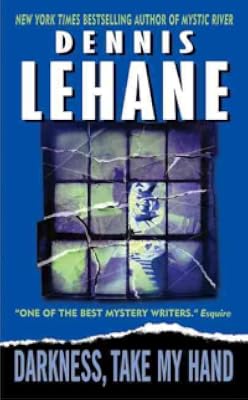
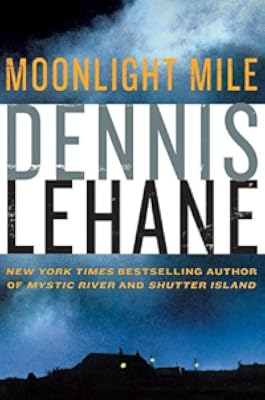
Dennis Lehane was born in Dorchester, Massachusetts on August 4, 1965. He graduated from Eckerd College and the graduate program in creative writing at Florida International University. He has written several mystery novels including Darkness, Take My Hand; Sacred; and Shutter Island. A Drink Before the War won the 1995 Shamus Award for Best First show more Novel by the Private Eye Writers of America. Mystic River won the Anthony Award and the Barry Award for Best Novel, the Massachusetts Book Award in Fiction, and France's Prix Mystère de la Critique. Three of his novels, Mystic River; Gone, Baby, Gone; and Shutter Island were made into feature films. He also wrote, produced, and directed the film, Neighborhoods. His lbook, Moonlight Mile, concerns the mystery of finding a missing 16-year-old girl in Boston. Lehane's book, World Gone By, made several 2015 Bestseller lists including The New York Times, Publisher's Weekly, and USA Today. (Bowker Author Biography) show less
Awards and Honors
Awards
Distinctions
Common Knowledge
- Canonical title
- Small Mercies
- Alternate titles
- Sekunden der Gnade; Seconds of Grace
- Original publication date
- 2023
- Important places
- Boston, Massachusetts, USA
- Important events
- School busing in Boston, Massachusetts
Classifications
Statistics
- Members
- 1,125
- Popularity
- 22,512
- Reviews
- 65
- Rating
- (4.14)
- Languages
- 8 — English, French, German, Hungarian, Italian, Portuguese, Spanish, Swedish
- Media
- Paper, Audiobook, Ebook
- ISBNs
- 31
- ASINs
- 12