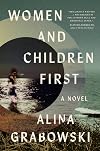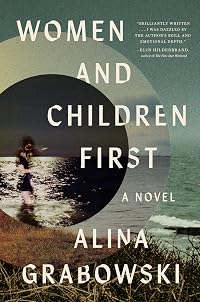
Women and Children First
by Alina Grabowski
On This Page
Description
"Nashquitten, MA, is a decaying coastal enclave that not even tourist season can revive, full of locals who have run the town's industries for generations. When a bright young woman dies at a house party, the circumstances around her death suspiciously unclear, the tight-knit community is shaken. As a mother grieves her daughter, a teacher her student, a best friend her confidante, the events around the tragedy become a lightning rod: blame is cast, secrets are buried deeper. Some are left show more to pick up the pieces, while others turn their backs, and all the while, a truth about that dreadful night begins to emerge"--Dust jacket flap. show lessTags
Recommendations







Member Recommendations

Member Reviews
In a Nutshell: A literary mystery surrounding the death of a young girl in a small town. Presented as a series of vignettes from the perspective of ten local women. Great idea, but too disjointed in execution. Might work better if you read it as a small-town drama and like slower-paced narratives with no resolution.
~~~~~~~~~~~~~~~~~~~~~~~
Plot Preview:
In terms of imagination, this debut novel hits the right mark. Major events in a small town somehow end up on everyone's lips, whether people know the victim or not. So the idea of exploring a tragedy through gossip and ruminations is fascinating. The implementation of this concept though is not that smooth.
The ten perspectives in this book come from local women who hear of Lucy's death. Five of these POVs begin from prior to her death, and the remaining five come from after the tragedy. Each perspective doesn't continue from where the earlier one ends. As such, the plot development of the story isn’t progressive.
Every woman narrator is connected to Lucy, but not necessarily in an intimate way. For instance, one connection could just be that she was known to someone the narrator knew. As such, many of the perspectives don't directly talk about Lucy but about their own personal challenges, which are numerous. Their narration isn't necessarily linear, and contains plenty of flashbacks even in between ongoing conversations. All this makes the plot slow in pace and tedious to keep track of.
Moreover, unlike something like ‘Thirteen Reasons Why’, where each fresh narrative begins with and focusses on the dead person, the chapters here are more about the narrator's life, with Lucy making an appearance only when needed. So it takes a long time to keep adjusting to a new story with new (and apparently unrelated) characters when we are still waiting to know what happened to Lucy.
To top it all, each narration is from a woman and in first person. So getting tuned into the new "I" after each chapter takes time, especially as the narrators themselves don't return as narrators in subsequent chapters, but they do pop up as characters in the other first-person perspectives. We never get Lucy's direct perspective.
All this would have still been fine and the book could have been enjoyed as a challenging literary work. However, as the crux of the plot is a murder mystery, what readers love most at the end of such stories is the reveal of the whats and whys and hows of the incident. But do we learn what happened by the end? Nope! The story ends with many unfinished plot threads, including the main one. As such, if you read this book as a mystery, you certainly won't be satisfied. We can take a guess about the guilty party (Actually, this is clear right from the first chapter due to the meagre number of potential suspects) but we don't get any confirmation of the same, nor do we get a clear idea of the sequence of events that led to the tragedy.
The only thing I liked about this book was that it has some excellent quotes. This was one of the memorable ones: "That's the thing about people. You see only your interpretation of them and not what they actually are."
All in all, I admire this atypical attempt at a literary mystery, especially as this is a debut work. But the writing approach didn't work too well for me. I enjoy character-driven literary fiction, but in a story about a death, I expect closure.
Recommend to literary fiction readers who don't mind open endings. Not for those looking for a small-town murder mystery.
2 stars.
My thanks to Zando Projects and SJP Lit for providing the DRC of “Women and Children First” via NetGalley. This review is voluntary and contains my honest opinion about the book. Sorry this didn’t work out better.
~~~~~~~~~~~~~~~~~~~~~~~
Connect with me through:
My Blog || The StoryGraph || Instagram || Threads || X/Twitter || Facebook || show less
~~~~~~~~~~~~~~~~~~~~~~~
Plot Preview:
In a small town in Massachusetts, a young woman named Lucy dies at a house party. The circumstances surrounding her death are unclear, and as happens in such a situation, there's speculation and gossip and conspiracy about what would have happened.show more
The story comes to us from ten points of view, each of a local woman who either knows or has heard of Lucy. Through each perspective, we get a
glimpse of their own lives as well as their opinion on the tragedy.
In terms of imagination, this debut novel hits the right mark. Major events in a small town somehow end up on everyone's lips, whether people know the victim or not. So the idea of exploring a tragedy through gossip and ruminations is fascinating. The implementation of this concept though is not that smooth.
The ten perspectives in this book come from local women who hear of Lucy's death. Five of these POVs begin from prior to her death, and the remaining five come from after the tragedy. Each perspective doesn't continue from where the earlier one ends. As such, the plot development of the story isn’t progressive.
Every woman narrator is connected to Lucy, but not necessarily in an intimate way. For instance, one connection could just be that she was known to someone the narrator knew. As such, many of the perspectives don't directly talk about Lucy but about their own personal challenges, which are numerous. Their narration isn't necessarily linear, and contains plenty of flashbacks even in between ongoing conversations. All this makes the plot slow in pace and tedious to keep track of.
Moreover, unlike something like ‘Thirteen Reasons Why’, where each fresh narrative begins with and focusses on the dead person, the chapters here are more about the narrator's life, with Lucy making an appearance only when needed. So it takes a long time to keep adjusting to a new story with new (and apparently unrelated) characters when we are still waiting to know what happened to Lucy.
To top it all, each narration is from a woman and in first person. So getting tuned into the new "I" after each chapter takes time, especially as the narrators themselves don't return as narrators in subsequent chapters, but they do pop up as characters in the other first-person perspectives. We never get Lucy's direct perspective.
All this would have still been fine and the book could have been enjoyed as a challenging literary work. However, as the crux of the plot is a murder mystery, what readers love most at the end of such stories is the reveal of the whats and whys and hows of the incident. But do we learn what happened by the end? Nope! The story ends with many unfinished plot threads, including the main one. As such, if you read this book as a mystery, you certainly won't be satisfied. We can take a guess about the guilty party (Actually, this is clear right from the first chapter due to the meagre number of potential suspects) but we don't get any confirmation of the same, nor do we get a clear idea of the sequence of events that led to the tragedy.
The only thing I liked about this book was that it has some excellent quotes. This was one of the memorable ones: "That's the thing about people. You see only your interpretation of them and not what they actually are."
All in all, I admire this atypical attempt at a literary mystery, especially as this is a debut work. But the writing approach didn't work too well for me. I enjoy character-driven literary fiction, but in a story about a death, I expect closure.
Recommend to literary fiction readers who don't mind open endings. Not for those looking for a small-town murder mystery.
2 stars.
My thanks to Zando Projects and SJP Lit for providing the DRC of “Women and Children First” via NetGalley. This review is voluntary and contains my honest opinion about the book. Sorry this didn’t work out better.
~~~~~~~~~~~~~~~~~~~~~~~
Connect with me through:
My Blog || The StoryGraph || Instagram || Threads || X/Twitter || Facebook || show less
This is a bifurcated novel (pre/post) event. The narrative is fragmented among several observers with varying degrees of distance from "the incident". That made it hard going in someways but it also kept it interesting. It took a little while to figure the relationship with Lucy that each character had at first. It has a Rashomon-like quality. Men are marginal in this novel, so is the protagonist. I did notice a significant quantity of the characters really came off as pretty selfish, but still an interesting novel which is less about ideas than how we interact with each other.
"No one protected her. And this is something our own daughter will never understand. That we were never girls, not really. For a moment we were children, yes. But a girl and a child are not the same. A child is a pet. A girl is prey."
I am so torn on this one. It's a fascinating story. Something has happened and a girl is dead. The story is told from 9 different perspectives - each person somehow tied to the girl or the night she died and their different connections. Think of a drop of water and the ripple effects that go out - each ripple being a different POV.
Except that was just the first half of the book. The second half felt disjointed. The perspectives no longer seemed to tie the same way and there was even one perspective that I show more still don't know why it was included.
But the writing was so good. The character studies were so well done. There are so many lines that took my breath away, half the book is highlighted on my kindle from all the amazing lines. I think this could have been an amazing study about women and girls and the difficult parts of growing up - but that plot, I think, is different than the one we got. Neither possible plot felt fully explored or developed and I ended the story shocked there wasn't another chapter. It left me hanging in the worst kind of way because I'd been hoping for more.
If you like character studies, you just might like this one. It just wasn't for me.
A huge thank you to the author and publisher for providing an e-ARC via Netgalley. This does not affect my opinion regarding the book. show less
I am so torn on this one. It's a fascinating story. Something has happened and a girl is dead. The story is told from 9 different perspectives - each person somehow tied to the girl or the night she died and their different connections. Think of a drop of water and the ripple effects that go out - each ripple being a different POV.
Except that was just the first half of the book. The second half felt disjointed. The perspectives no longer seemed to tie the same way and there was even one perspective that I show more still don't know why it was included.
But the writing was so good. The character studies were so well done. There are so many lines that took my breath away, half the book is highlighted on my kindle from all the amazing lines. I think this could have been an amazing study about women and girls and the difficult parts of growing up - but that plot, I think, is different than the one we got. Neither possible plot felt fully explored or developed and I ended the story shocked there wasn't another chapter. It left me hanging in the worst kind of way because I'd been hoping for more.
If you like character studies, you just might like this one. It just wasn't for me.
A huge thank you to the author and publisher for providing an e-ARC via Netgalley. This does not affect my opinion regarding the book. show less
There are dozens of small towns in America encircling large cities where industry has departed for greener pastures. Their declining economies now service commuters and, in a few instances, tourists. Many of the long-term inhabitants of those communities are poorer than the newcomers and have interconnected, frequently dark, histories. Grabowski splendidly captures the insular nature of these psychosocial dynamics in her novel. The adults are flawed and challenged by their own problems while the kids seem to be left to their own devices. Nashquitten, MA is just such a place.
In her novel (really a collection of interconnected short stories), Grabowski explores multiple themes engendered by a small-town setting. These include age, gender, show more class, ambition, education, isolation, and responsibility. These swirl around the tragic death of Lucy Anderson at a high school party. Each chapter is narrated by a different female character with some set before Lucy’s death and others after. The varied perspectives suggest that Lucy may have been truly an enigma, or this may just reflect who’s talking. In any event, this structure provides some mystery to a plot that is essentially character-driven.
Although the novels structure admirably captures the mood of townies in a small bedroom community, it presents with some problems that Grabowski fails to fully overcome. The novel is quite disjointed and her choice of immersing the reader into each chapter with little to signal context can be jarring. Moreover, the shear number of voices and the brevity of their time on stage make it difficult to fully engage with any of them.
Whether Grabowski meant to make Lucy into a cipher is not entirely clear. However, her failure to resolve the question of cause in Lucy’s accident is not very satisfying. Did she slip? Was she pushed? Did she have a seizure before the fall? Was it suicide? Grabowski makes a plausible case of each of these but leaves the resolution to the imagination. show less
In her novel (really a collection of interconnected short stories), Grabowski explores multiple themes engendered by a small-town setting. These include age, gender, show more class, ambition, education, isolation, and responsibility. These swirl around the tragic death of Lucy Anderson at a high school party. Each chapter is narrated by a different female character with some set before Lucy’s death and others after. The varied perspectives suggest that Lucy may have been truly an enigma, or this may just reflect who’s talking. In any event, this structure provides some mystery to a plot that is essentially character-driven.
Although the novels structure admirably captures the mood of townies in a small bedroom community, it presents with some problems that Grabowski fails to fully overcome. The novel is quite disjointed and her choice of immersing the reader into each chapter with little to signal context can be jarring. Moreover, the shear number of voices and the brevity of their time on stage make it difficult to fully engage with any of them.
Whether Grabowski meant to make Lucy into a cipher is not entirely clear. However, her failure to resolve the question of cause in Lucy’s accident is not very satisfying. Did she slip? Was she pushed? Did she have a seizure before the fall? Was it suicide? Grabowski makes a plausible case of each of these but leaves the resolution to the imagination. show less
Touching upon themes of social class and inequality, ambition, family, friendship, gender identity and sexuality, abuse, guilt and grief, I found Women and Children First by Alina Grabowski is an impressive debut novel.
“Your choices have to mean something, even if they mean something terrible.”
The tragic death of a local teenager at a house party sends shockwaves through the small (fictional) town of Nashquitten, Massachusetts.
Structured in ten chapters ( each from a different character’s perspective) in total, divided into five “pre” and five “post” Lucy’s death, this is a slow-moving yet immersive character-driven novel. Among the voices we here from are : a sixteen-year-old who went to school with Lucy and worked with show more her cousin and was in a romantic relationship with a teacher; a guidance counselor who tries to do right by her students only to have her concerns dismissed by the school principal who is unaware or rather chooses to ignore the possibility that her own daughter might have been abused by an authority figure; the president of the PTA who hides her daughter’s misdeeds; Lucy’s best friend who was away when the tragedy occurred; Lucy’s schoolmate who witnessed the tragedy and is haunted by the events of that night; a young woman from an affluent family in the community who is the housemate of the school’s guidance counselor; and her childhood friend who witnessed Lucy’s father’s grief on the night of Lucy’s death; and Lucy’s mother for whom Lucy’s death was a turning point in her life in more ways than she had anticipated. Of the ten voices, not all were close to Lucy. However, in a small town, you know people who know people – there is a sense of interconnectedness despite the apparent disconnect – less than six degrees of separation. Those who knew Lucy personally grapple with their loss on a personal level - Lucy’s mother, her teachers, her friends and her peers struggling with grief, guilt, and regret while those who know of her are either compelled to draw parallels and take stock of their own lives or choose to remain indifferent beyond a certain point. We do get to know these characters intimately – their ambitions, their personal struggles, and their secrets. The characters are flawed and thus realistic and though you might question their actions and their reactions, the author gives us enough insight into the characters to attempt to understand them.
The powerful prose and the emotional depth with which each of these characters is explored renders this an impactful read. I will admit that I found the “post” chapters more impactful than the preceding section, which felt a tad disjointed. It should be noted that though the narrative revolves around the death of Lucy Anderson, she does not feature as a main character – yes, we can attempt to create a portrait from the fragments provided through the limited perspectives of our narrators and piece together the events that led to the tragic events on that fateful night, but the focus of this novel is the impact of tragedy on certain individuals, and the community, from the perspectives of its female members – women and children.
What keeps me from giving this novel a higher rating is the fact that the ending felt abrupt and left me with quite a few unanswered questions. However, this is an impactful read and I look forward to reading more from this author in the future.
Many thanks to Zando for the digital review copy via NetGalley. All opinions expressed in this review are my own.
“I used to think that everyone was on the same page, that we agreed being human meant taking care of one another. But now I understand that a lot of people—maybe most people—think that being human just means taking care of yourself and those you’ve already decided have value.” show less
“Your choices have to mean something, even if they mean something terrible.”
The tragic death of a local teenager at a house party sends shockwaves through the small (fictional) town of Nashquitten, Massachusetts.
Structured in ten chapters ( each from a different character’s perspective) in total, divided into five “pre” and five “post” Lucy’s death, this is a slow-moving yet immersive character-driven novel. Among the voices we here from are : a sixteen-year-old who went to school with Lucy and worked with show more her cousin and was in a romantic relationship with a teacher; a guidance counselor who tries to do right by her students only to have her concerns dismissed by the school principal who is unaware or rather chooses to ignore the possibility that her own daughter might have been abused by an authority figure; the president of the PTA who hides her daughter’s misdeeds; Lucy’s best friend who was away when the tragedy occurred; Lucy’s schoolmate who witnessed the tragedy and is haunted by the events of that night; a young woman from an affluent family in the community who is the housemate of the school’s guidance counselor; and her childhood friend who witnessed Lucy’s father’s grief on the night of Lucy’s death; and Lucy’s mother for whom Lucy’s death was a turning point in her life in more ways than she had anticipated. Of the ten voices, not all were close to Lucy. However, in a small town, you know people who know people – there is a sense of interconnectedness despite the apparent disconnect – less than six degrees of separation. Those who knew Lucy personally grapple with their loss on a personal level - Lucy’s mother, her teachers, her friends and her peers struggling with grief, guilt, and regret while those who know of her are either compelled to draw parallels and take stock of their own lives or choose to remain indifferent beyond a certain point. We do get to know these characters intimately – their ambitions, their personal struggles, and their secrets. The characters are flawed and thus realistic and though you might question their actions and their reactions, the author gives us enough insight into the characters to attempt to understand them.
The powerful prose and the emotional depth with which each of these characters is explored renders this an impactful read. I will admit that I found the “post” chapters more impactful than the preceding section, which felt a tad disjointed. It should be noted that though the narrative revolves around the death of Lucy Anderson, she does not feature as a main character – yes, we can attempt to create a portrait from the fragments provided through the limited perspectives of our narrators and piece together the events that led to the tragic events on that fateful night, but the focus of this novel is the impact of tragedy on certain individuals, and the community, from the perspectives of its female members – women and children.
What keeps me from giving this novel a higher rating is the fact that the ending felt abrupt and left me with quite a few unanswered questions. However, this is an impactful read and I look forward to reading more from this author in the future.
Many thanks to Zando for the digital review copy via NetGalley. All opinions expressed in this review are my own.
“I used to think that everyone was on the same page, that we agreed being human meant taking care of one another. But now I understand that a lot of people—maybe most people—think that being human just means taking care of yourself and those you’ve already decided have value.” show less
I found it difficult to engage with this book; parts captivated me but others left me bored.
In Nashquitten, Massachusetts, a fictional coastal community, teenaged Lucy Anderson dies at a house party after a fall. The circumstances around her death are not clear: Was it an accident? Was it caused by a medical emergency? Was it suicide? Was she deliberately pushed?
The novel is divided into two sections: Pre and Post. Various women and teenaged girls, five in each section, speak about their lives before and after Lucy’s death. All ten are connected to Lucy, some very closely and some more peripherally. For instance, we hear from the president of the PTA at Lucy’s school, Lucy’s best friend, and Lucy’s mother. Sometimes characters show more will reappear. Jane is the first narrator in the Pre section, but she makes a cameo in the third chapter and is a character in the fourth Post story. The principal of Lucy’s school is not one of the ten narrators but drifts in and out of several chapters. Sometimes a character appears but is not clearly identified until later; this is the case with Maureen who actually talks to Jane in the first chapter though she is unnamed until she narrates the eighth chapter.
There is the mystery of how Lucy fell to her death, and people do speculate about assigning blame. Though there is no definite conclusion, the addition of perspectives negates some theories. But there are other mysteries: Why does Layla advise Sophia to write about her mother in her university application essay? What is in the video posted about Lucy and who is responsible for it? What will happen to Robert Taylor? Why is Eric sent home from his part-time job? Finding the answers for these questions does provide motivation to continue reading.
As the title implies, the focus is on women and girls. The book does touch on some of the difficulties of being female in a small community where everyone knows everyone or thinks they know everything about everyone. Virtually all the females are aware of societal expectations and judgments. Anonymity and privacy are virtually impossible and reputations quickly ruined. Two observations made by the PTA CEO really caught my attention; looking at a mural of the Virgin Mary, she muses “You know a man conceived her because she has this empty, faux-serene expression on her face that conveys absolutely nothing besides: I am here to sacrifice. A miserable image.” And she also thinks that “a girl and a child are not the same. A child is a pet. A girl is prey.”
Men remain secondary characters and often are not portrayed positively. There are two male teachers who have inappropriate relationships with students. Natalie works for “the founder” who is psychologically abusive. Rae’s poet is manipulative. Jane is being raised by a single mother. Maureen is a single mother. But the female characters are also not always likeable. Mothers (Jane’s and Olivia’s and Sophia’s and Emma’s) often behave in ways that negatively impact their children. All this is to say that the author has excelled at characterization; everyone is complex and flawed.
The theme that is strongest for me is the interconnectedness amongst people. Donne’s “No Man is an Island” even came to mind. What one person does can impact many. Certainly, Lucy’s death affects many people, even some who barely knew her. All of the characters are connected in some way. I wish I had kept a chart of the connections among the various characters because one character often has connections with several others: Rae is Mona’s friend; Rae’s landlady is Maureen; and Rae serves Brynn at the bar. And Rae’s nephew works with Jane! The theory of six degrees of separation also came to mind: Natalie’s best friend is Mona; Mona knows Rae and works with Marina; Marina is at the party with Lucy, Brynn’s daughter, and Olivia; Olivia is the daughter of the principal who fires Layla, Mona’s roommate; Layla counsels Sophia, Lucy’s best friend; Sophia becomes friends with Jane; Jane has an encounter with Maureen, Rae’s landlady.
This book probably deserves a re-read because I’m certain I’ve missed important ideas and connections. Some of my questions are unanswered: Why does Rae hate trains? This book is not an escapist read; its disjointed structure requires the reader to concentrate in order to see links. Unfortunately, I found some of the chapters tedious and the subject matter rather dark so I have no desire to do a second reading at this time.
Note: Please check out my reader's blog (https://schatjesshelves.blogspot.com/) and follow me on Twitter (https://twitter.com/DCYakabuski). show less
In Nashquitten, Massachusetts, a fictional coastal community, teenaged Lucy Anderson dies at a house party after a fall. The circumstances around her death are not clear: Was it an accident? Was it caused by a medical emergency? Was it suicide? Was she deliberately pushed?
The novel is divided into two sections: Pre and Post. Various women and teenaged girls, five in each section, speak about their lives before and after Lucy’s death. All ten are connected to Lucy, some very closely and some more peripherally. For instance, we hear from the president of the PTA at Lucy’s school, Lucy’s best friend, and Lucy’s mother. Sometimes characters show more will reappear. Jane is the first narrator in the Pre section, but she makes a cameo in the third chapter and is a character in the fourth Post story. The principal of Lucy’s school is not one of the ten narrators but drifts in and out of several chapters. Sometimes a character appears but is not clearly identified until later; this is the case with Maureen who actually talks to Jane in the first chapter though she is unnamed until she narrates the eighth chapter.
There is the mystery of how Lucy fell to her death, and people do speculate about assigning blame. Though there is no definite conclusion, the addition of perspectives negates some theories. But there are other mysteries: Why does Layla advise Sophia to write about her mother in her university application essay? What is in the video posted about Lucy and who is responsible for it? What will happen to Robert Taylor? Why is Eric sent home from his part-time job? Finding the answers for these questions does provide motivation to continue reading.
As the title implies, the focus is on women and girls. The book does touch on some of the difficulties of being female in a small community where everyone knows everyone or thinks they know everything about everyone. Virtually all the females are aware of societal expectations and judgments. Anonymity and privacy are virtually impossible and reputations quickly ruined. Two observations made by the PTA CEO really caught my attention; looking at a mural of the Virgin Mary, she muses “You know a man conceived her because she has this empty, faux-serene expression on her face that conveys absolutely nothing besides: I am here to sacrifice. A miserable image.” And she also thinks that “a girl and a child are not the same. A child is a pet. A girl is prey.”
Men remain secondary characters and often are not portrayed positively. There are two male teachers who have inappropriate relationships with students. Natalie works for “the founder” who is psychologically abusive. Rae’s poet is manipulative. Jane is being raised by a single mother. Maureen is a single mother. But the female characters are also not always likeable. Mothers (Jane’s and Olivia’s and Sophia’s and Emma’s) often behave in ways that negatively impact their children. All this is to say that the author has excelled at characterization; everyone is complex and flawed.
The theme that is strongest for me is the interconnectedness amongst people. Donne’s “No Man is an Island” even came to mind. What one person does can impact many. Certainly, Lucy’s death affects many people, even some who barely knew her. All of the characters are connected in some way. I wish I had kept a chart of the connections among the various characters because one character often has connections with several others: Rae is Mona’s friend; Rae’s landlady is Maureen; and Rae serves Brynn at the bar. And Rae’s nephew works with Jane! The theory of six degrees of separation also came to mind: Natalie’s best friend is Mona; Mona knows Rae and works with Marina; Marina is at the party with Lucy, Brynn’s daughter, and Olivia; Olivia is the daughter of the principal who fires Layla, Mona’s roommate; Layla counsels Sophia, Lucy’s best friend; Sophia becomes friends with Jane; Jane has an encounter with Maureen, Rae’s landlady.
This book probably deserves a re-read because I’m certain I’ve missed important ideas and connections. Some of my questions are unanswered: Why does Rae hate trains? This book is not an escapist read; its disjointed structure requires the reader to concentrate in order to see links. Unfortunately, I found some of the chapters tedious and the subject matter rather dark so I have no desire to do a second reading at this time.
Note: Please check out my reader's blog (https://schatjesshelves.blogspot.com/) and follow me on Twitter (https://twitter.com/DCYakabuski). show less
This book revolves around the aftermath of a teen girl’s death in a small town. The unique structure shifts perspectives to a new female protagonist in each chapter, but this constant change left me disconnected from the characters and their storylines. I found the book boring, often returning to it hoping that something compelling would happen, but ultimately, it didn’t. There were no significant twists or surprises, and the lack of a main character made it difficult to feel invested. I never felt closer to understanding the dead girl or what happened to her, which left me unsatisfied. The central theme seemed to explore the independence of teen girls and the point at which it becomes too much, but it wasn't enough to hold my show more interest. While the writing style wasn’t bad, the pacing and coherence didn’t work for me. If you enjoy shifting perspectives and exploring themes of teen independence, you might appreciate this book more than I did. For me, it was a miss. show less
Members
- Recently Added By
Author Information
1 Work 152 Members
Some Editions
Awards and Honors
Awards
Distinctions
Notable Lists
Series
Belongs to Publisher Series
Contemporánea [Alba] (60)
Common Knowledge
- Canonical title
- Women and Children First
- First words
- On the last Saturday in May, I drown in my sleep. It happens quickly. I'm standing at the edge of the ocean and when I look down into the water, the wobbly hand of my reflection reaches to pull me under. Only it's less of a p... (show all)ull ad more of an angry yank, like my arm's a dangling ponytail, and suddenly I'm pressed to the sand with my own hand holding me down from above. I want to scream, but my words dissolve into a stream of bubbles. I'm not ready, is what I'm trying to say. But the everything goes black. -Jane
- Canonical DDC/MDS
- 813.6
- Canonical LCC
- PS3607.R3244
Classifications
Statistics
- Members
- 152
- Popularity
- 216,021
- Reviews
- 16
- Rating
- (3.22)
- Languages
- English, German
- Media
- Paper, Audiobook, Ebook
- ISBNs
- 7
- ASINs
- 2