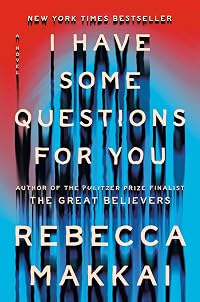
I Have Some Questions For You
by Rebecca Makkai
On This Page
Description
"A successful film professor and podcaster, Bodie Kane is content to forget her past--the family tragedy that marred her adolescence, her four largely miserable years at a New Hampshire boarding school, and the murder of her former roommate, Thalia Keith, in the spring of their senior year. Though the circumstances surrounding Thalia's death and the conviction of the school's athletic trainer, Omar Evans, are hotly debated online, Bodie prefers--needs--to let sleeping dogs lie. But when the show more Granby School invites her back to teach a course, Bodie is inexorably drawn to the case and its increasingly apparent flaws. In their rush to convict Omar, did the school and the police overlook other suspects? s the real killer still out there? As she falls down the very rabbit hole she was so determined to avoid, Bodie begins to wonder if she wasn't as much of an outsider at Granby as she'd thought--if, perhaps, back in 1995, she knew something that might have held the key to solving the case."--Publisher marketing. show lessTags
Recommendations
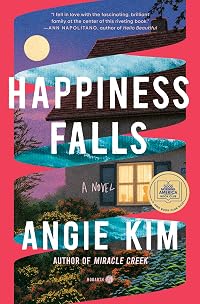
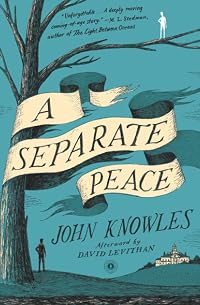
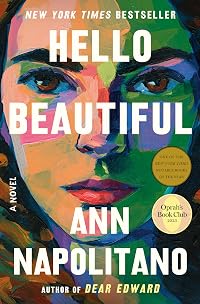

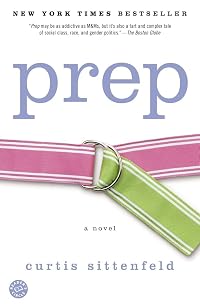

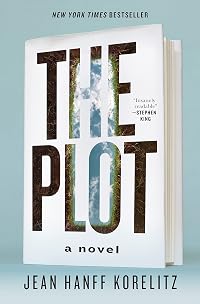
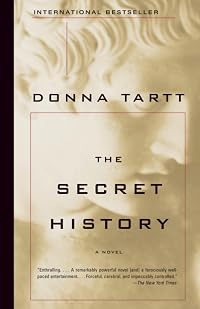
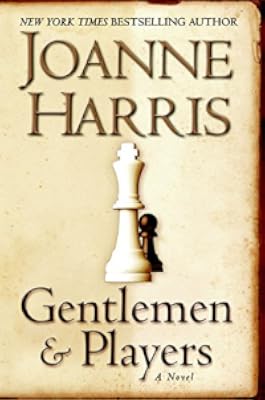
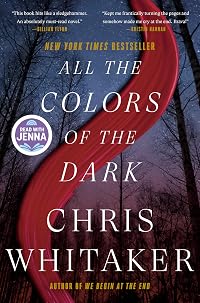


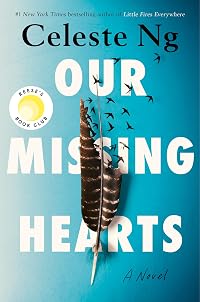

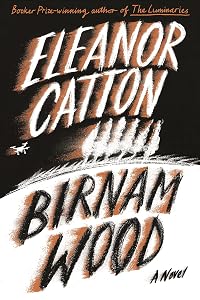

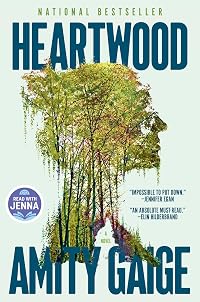
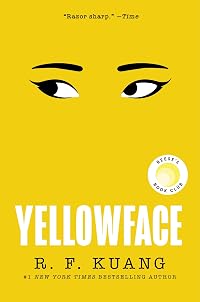
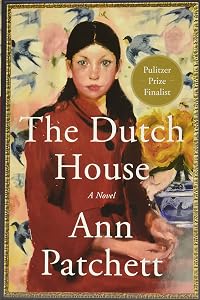
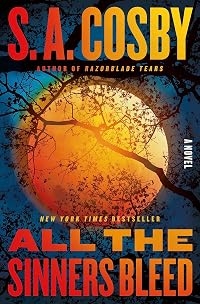
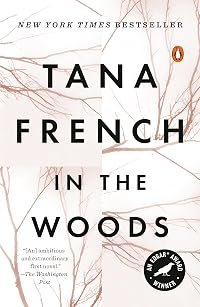

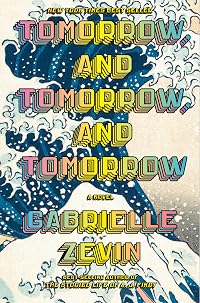
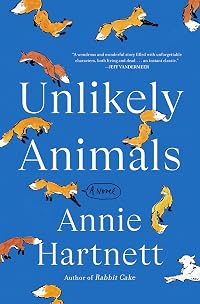
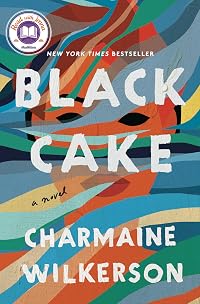
Member Recommendations
Member Reviews
A girl died during Bodie's senior year at boarding school. Thalia was Bodie's former roommate, but not a particular friend. When Omar, a staffer in the PE department, is charged with Thalia's murder, the case is closed and everyone moves on . . . mostly. When Bodie returns to the school 20+ years later to teach seminars on podcasting and film studies, a student chooses the murder as the topic of her podcast, and being back on campus is stirring up all sorts of memories and doubts in Bodie's mind. Was the wrong man convicted of the crime? When new evidence surfaces, Bodie is drawn more and more into the case, and she has some questions.
I've seen a range of opinions on this book, so I approached it with caution and . . . I liked it! There show more aren't many really likeable characters in this book, and certainly Bodie struck me as both unsympathetic and unreliable in her narration. We never get outside of Bodie's perspective, and she clearly has an agenda of her own. I kept waiting for a plot twist that would reveal that the whole thing was in her head, but it's more complex than that. If you go into this book looking for relatable characters, or if you go in expecting a typical mystery/thriller, you might be disappointed. However, I found much to think about here. show less
I've seen a range of opinions on this book, so I approached it with caution and . . . I liked it! There show more aren't many really likeable characters in this book, and certainly Bodie struck me as both unsympathetic and unreliable in her narration. We never get outside of Bodie's perspective, and she clearly has an agenda of her own. I kept waiting for a plot twist that would reveal that the whole thing was in her head, but it's more complex than that. If you go into this book looking for relatable characters, or if you go in expecting a typical mystery/thriller, you might be disappointed. However, I found much to think about here. show less
I Have Some Questions For You is part whodunnit, part critique of the true crime genre, part examination of the distorting pulls of certain kinds of narrative (of race, of gender, of power) on people’s behaviours and assumptions.
Bodie Kane, an alum of the prestigious Granby boarding school, returns there to teach a short course on podcasting 20 years after the murder of one her dorm mates. When one of Bodie’s students decides to do their podcast project on Thalia’s murder, new details come to light which make people question whether the school’s athletics trainer—one of the few Black people at a predominantly white institution—had been wrongfully convicted.
This book gripped me as a page-turner in a way that I haven’t show more experienced in quite a while. Yes, there are a couple of points where the pacing lags or where things come to light in ways I didn’t fully buy. But Rebecca Makkai’s prose is precise; her eye for detail pleasurable to read. I raced through it genuinely wanting to know who and why. But what I appreciated the most—even as there were times when it made me queasy—is how Makkai uses IHSQFY to exploring complicated issues of memory and of narrative. Not just within true crime: the mainstream news, those whose professional and personal lives revolve around an institution, the #MeToo movement, social media, all of these can help to create assumptions of knowledge, and often through forms of storytelling that are inadequate. What can we know about the things we didn’t witness personally—and what judgements can we pass even about the the things that we did?
Makkai avoids, however, the temptation to make this too much an exercise in postmodern navel gazing. There are still facts and truths. You will get some answers by the end of the book, albeit without neat bows attached. A gripping read. show less
Bodie Kane, an alum of the prestigious Granby boarding school, returns there to teach a short course on podcasting 20 years after the murder of one her dorm mates. When one of Bodie’s students decides to do their podcast project on Thalia’s murder, new details come to light which make people question whether the school’s athletics trainer—one of the few Black people at a predominantly white institution—had been wrongfully convicted.
This book gripped me as a page-turner in a way that I haven’t show more experienced in quite a while. Yes, there are a couple of points where the pacing lags or where things come to light in ways I didn’t fully buy. But Rebecca Makkai’s prose is precise; her eye for detail pleasurable to read. I raced through it genuinely wanting to know who and why. But what I appreciated the most—even as there were times when it made me queasy—is how Makkai uses IHSQFY to exploring complicated issues of memory and of narrative. Not just within true crime: the mainstream news, those whose professional and personal lives revolve around an institution, the #MeToo movement, social media, all of these can help to create assumptions of knowledge, and often through forms of storytelling that are inadequate. What can we know about the things we didn’t witness personally—and what judgements can we pass even about the the things that we did?
Makkai avoids, however, the temptation to make this too much an exercise in postmodern navel gazing. There are still facts and truths. You will get some answers by the end of the book, albeit without neat bows attached. A gripping read. show less
I loved this new book by [[Rebecca Makkai]]. It is a boarding school mystery, with the 45 year old woman narrator returning to her boarding school and reinvestigating the murder of a girl there in the 1990s, while she was in school. While the mystery is fairly straight ahead, Makkai makes more of it by solidly placing the murder in the 1990s and the investigation in the 2020s.
Makkai is incredible at creating a strong setting. I felt like I was this woman narrator, Bodie, since I'm the exact age that she is. Her retelling of her teenage years in the 1990s, as the last of the Gen Xers before the Millenials took over, is spot on. And then how she works in the modern day, taking how we got here from the 90s into account was astute. She show more weaves in the #metoo movement without naming it, having Bodie awaken to how what girls accepted as boy behavior that they were expected to put up with in the 1990s set up the current 2020s movement as women more widely begin to say "no more".
Makkai repeats certain phrases/ideas, weaving them into the story, such as the expectation in her teen years that boys deserved to be noticed and watched and idolized by the girls. I certainly remember that. And in Bodie's adult years, being constantly asked by both men and women "who's watching your kids?" as she travels, something I've also experienced as a mother. The answer for myself, as well as Bodie, being "their father" (and why don't you ever ask fathers that?).
This book is a great mix of a readable, engaging mystery and a subtle look at our culture - how we treat women, how the justice system works and doesn't work, and how our recent past has influenced our current times. show less
Makkai is incredible at creating a strong setting. I felt like I was this woman narrator, Bodie, since I'm the exact age that she is. Her retelling of her teenage years in the 1990s, as the last of the Gen Xers before the Millenials took over, is spot on. And then how she works in the modern day, taking how we got here from the 90s into account was astute. She show more weaves in the #metoo movement without naming it, having Bodie awaken to how what girls accepted as boy behavior that they were expected to put up with in the 1990s set up the current 2020s movement as women more widely begin to say "no more".
Makkai repeats certain phrases/ideas, weaving them into the story, such as the expectation in her teen years that boys deserved to be noticed and watched and idolized by the girls. I certainly remember that. And in Bodie's adult years, being constantly asked by both men and women "who's watching your kids?" as she travels, something I've also experienced as a mother. The answer for myself, as well as Bodie, being "their father" (and why don't you ever ask fathers that?).
This book is a great mix of a readable, engaging mystery and a subtle look at our culture - how we treat women, how the justice system works and doesn't work, and how our recent past has influenced our current times. show less
This is the 2nd novel I have read by Makkai and this book is excellent. I would have given it 5 stars but it had a slow beginning but it built and delivered a powerful well crafted story. Bodie the first person narrator of the story is a podcaster and teacher of film history living in L.A. The book begins(2018) with her going back to Granby, the boarding school that she attended in the mid 90's to teach a two week seminar on podcasting and film history. Going back allows her to deal with her mixed feelings about her Granby experience. Most important was the 1995(her senior year) murder(assault and drowning) of her roommate of her sophomore and junior years, Thalia Keith. The murder investigation resulted in the arrest and conviction of show more the black athletic trainer Omar who was serving a prison sentence for the murder. Bodie has misgivings about how the investigation was done as do others out the world of social media. Bodie uses her podcast students who want to work on the murder to look into what really happened the night of the murder. Makkai is juggling a lot balls in the book including racial prejudice, our problematic judicial system, elitist white boarding schools, a troubled childhood, social media, the me too movement, and her personal relationship with her husband, lover, friends etc. Rather then crumble beneath the weight of all these issues, Makkai does a great job of integrating everything and holding our interest with the main story about the murder of Thalia Keith. I especially like that she didn't go for the easy solution and happy ever after ending but presented us with a realistic picture of what goes on in our form of justice. I strongly recommend this book and her previous novel "The Great Believers'" which was nominated for both the Pulitzer and National Book Awards. I do. intend to go back and read her earlier works. show less
Everything green is something that's survived.
Back in 1995, Bodie was a student at an expensive boarding school in New Hampshire, when one of her classmates is murdered. A man was quickly convicted of the crime. Now, decades later, Bodie is back teaching a short class on podcasting and one of her students decides to look into this "historic" crime. What follows is Bodie remembering and reexamining her past, especially her music teacher. The man convicted of the crime may not be the murderer and in digging into the past quickly stirs up a lot of people and creates a lot of mess.
The waitress saw what I was reading. She said, "You'd think if she was all that troubled, she'd have told the producer."
Rebecca Makkai's new novel compares how show more we looked at sexual harassment a few decades ago with how we now see those same actions. It also looks at how we view allegations has a lot to do with what we think about the person being accused. Makkai is good at diving into fraught issues and leading the reader into uncomfortable spaces. This is a messy book, with a protagonist whose motives and actions are often less than ideal, but Makkai knows how to tell a story and I enjoyed every page of this slightly bloated novel. show less
Back in 1995, Bodie was a student at an expensive boarding school in New Hampshire, when one of her classmates is murdered. A man was quickly convicted of the crime. Now, decades later, Bodie is back teaching a short class on podcasting and one of her students decides to look into this "historic" crime. What follows is Bodie remembering and reexamining her past, especially her music teacher. The man convicted of the crime may not be the murderer and in digging into the past quickly stirs up a lot of people and creates a lot of mess.
The waitress saw what I was reading. She said, "You'd think if she was all that troubled, she'd have told the producer."
Rebecca Makkai's new novel compares how show more we looked at sexual harassment a few decades ago with how we now see those same actions. It also looks at how we view allegations has a lot to do with what we think about the person being accused. Makkai is good at diving into fraught issues and leading the reader into uncomfortable spaces. This is a messy book, with a protagonist whose motives and actions are often less than ideal, but Makkai knows how to tell a story and I enjoyed every page of this slightly bloated novel. show less
'I Have Some Questions For You' is a powerful, thought-provoking, sometimes very uncomfortable-to-read book.
What it's not is a cold-case murder mystery or a thriller. The story doesn't have and isn't meant to have the tension and punch of a thriller or the plot twists and surprises of a murder mystery.
I was initially disappointed in the book because I'd picked it up thinking that it was a genre read about a woman drawn into the re-investigation, twenty years after the event. of a 1995 murder on the campus of the high school she was attending. By genre standards, this was a slow, laborious read. I realised that I either had to set the genre standards aside or set the book aside. I stuck with the book and I'm glad I did.
I experienced the show more first quarter of the book as a descent into the mind of Bodie Kane, a depressed, anxious, intelligent woman who, from the surface view of her life, appears to be not just coping but demonstrably successful but who, beneath the surface, is so unsure of herself that she routinely provides herself with a plausible narrative that masks her real concerns on motivations.
Returning to her old school to teach a course on film and to coach students on preparing podcasts pushes her to re-examine the personae that she's created for herself in the past twenty years. As she compares her adult self to the girl she was in high school, she struggles to understand how she did not see then what she can see now. It was well done but I found it suffocating and depressing and not at all what I would normally look for in a genre read.
In Part I of the book (sixty chapters and about sixty per cent of the novel)the function of the murder mystery was to provide a context for displaying how fragile our memories are, to expose the entropic nature of our sense of self and to describe how our sense of self can deform under pressure.
For example, there are several chapters, positioned at strategic points in the narrative, devoted to imagining each of the main characters as having been the killer. In a genre mystery, these chapters would have been there to advance the detective towards the solution of the crime while misdirecting the reader with red herrings and partial information. It seemed to me that this was not what these chapters were there to do. As was made to live through a teenage girl's murder time after time, two things stood out for.me: firstly how many men posed a plausible threat to this young woman and secondly how skilled our imaginations are at selecting threads of memory and weaving them into the story we would like to believe.
Part 1 is an intense, intimate, two-week journey of reassessment for Bodie Kane. It was an immersive experience that was also tough going at times because what I was being immersed in was a close-up and personal experience of Bodie Kane coming apart as she questioned everything about her understanding of who she is and who she has been.
Part 1 is set in 2018, the first year of #MeToo, and, as Bodie Kane re-examines her life on campus in 1995 she realises how many misogynistic and abusive actions she glossed over or failed to identify. When, during those two weeks, her husband is accused on social media of having been a sexual predator fifteen years earlier, Bodie Kane finds herself considering the truth of the claim and asking herself, "What did I not know and when did I not know it?"'. It's not long before she starts asking the same questions about the events on campus in 1995.
Bodie Kane's journey stops being about investigating a cold case and becomes about un-editing her own history, or perhaps rewriting it, to see what she refused or was unable to see in 1995. In resisting her own high school existence, Bodie Kane is forced to acknowledge that High School teens are vulnerable because that are still more children than adults. This hits her hard because she's revisiting the teenager she once was, in the places she once inhabited, and seeing the paths not taken, the obstacles imagined, the threats not assessed and the oppressions not challenged. This unacknowledged vulnerability is one reason why the misogyny and abuse were also unacknowledged. I think Bodie Kane was struggling with a difficult question for the MeToo generation: How did we let this happen? The answer offered here seems to be: Because we couldn't see it then.
The pace of the book changes abruptly in Part 2, the last third of the novel. A few years have gone by. The atmosphere is now less an anxious 'Am I crazy to think this? Do I really remember this? Is this all my fault?' and more a detached'This is out of my hands now. I'll testify and see where the chips fall.'
Most of the action of Part 2 takes place in the courtroom. If this was a thriller, I would have expected some drama in the courtroom with dramatic disclosures and witnesses recanting their statements under cross-examination. This isn't a thriller and there's no drama here, just further opportunities to reflect on whether the people we grew up with change or whether we never knew them that well in the first place. In her role as witness, Bodie Kane isn't allowed in the courtroom so that action is all off-screen and reported indirectly.
This made everything feel more credible to me. I don't see courtrooms as dramatic places. Things move slowly and there's little room for theatre.
I won't share the ending. I found it credible. It was also absolutely not how you end a genre murder mystery or a thriller.
At the end of the book, I found myself satisfied and a little exhausted. I felt as if I witnessed something real and found myself trying to define what that 'real' thing was.
I found my answer not by revisiting the plot twists but by considering the title: 'I Have Some Questions For You'. The recurring questions in the novel are: How did I let this happen? and How did I not see this?
What I took away from the book was that our lives are only narratives when we make them, or let other people make them, so. We become blind when we let that narrative sit unchallenged. We need to learn to ask questions that enable us to reassess, reject, reaffirm or reshape our narrative. We need to understand that our answers are all temporary and imperfect and need to change over time. show less
What it's not is a cold-case murder mystery or a thriller. The story doesn't have and isn't meant to have the tension and punch of a thriller or the plot twists and surprises of a murder mystery.
I was initially disappointed in the book because I'd picked it up thinking that it was a genre read about a woman drawn into the re-investigation, twenty years after the event. of a 1995 murder on the campus of the high school she was attending. By genre standards, this was a slow, laborious read. I realised that I either had to set the genre standards aside or set the book aside. I stuck with the book and I'm glad I did.
I experienced the show more first quarter of the book as a descent into the mind of Bodie Kane, a depressed, anxious, intelligent woman who, from the surface view of her life, appears to be not just coping but demonstrably successful but who, beneath the surface, is so unsure of herself that she routinely provides herself with a plausible narrative that masks her real concerns on motivations.
Returning to her old school to teach a course on film and to coach students on preparing podcasts pushes her to re-examine the personae that she's created for herself in the past twenty years. As she compares her adult self to the girl she was in high school, she struggles to understand how she did not see then what she can see now. It was well done but I found it suffocating and depressing and not at all what I would normally look for in a genre read.
In Part I of the book (sixty chapters and about sixty per cent of the novel)the function of the murder mystery was to provide a context for displaying how fragile our memories are, to expose the entropic nature of our sense of self and to describe how our sense of self can deform under pressure.
For example, there are several chapters, positioned at strategic points in the narrative, devoted to imagining each of the main characters as having been the killer. In a genre mystery, these chapters would have been there to advance the detective towards the solution of the crime while misdirecting the reader with red herrings and partial information. It seemed to me that this was not what these chapters were there to do. As was made to live through a teenage girl's murder time after time, two things stood out for.me: firstly how many men posed a plausible threat to this young woman and secondly how skilled our imaginations are at selecting threads of memory and weaving them into the story we would like to believe.
Part 1 is an intense, intimate, two-week journey of reassessment for Bodie Kane. It was an immersive experience that was also tough going at times because what I was being immersed in was a close-up and personal experience of Bodie Kane coming apart as she questioned everything about her understanding of who she is and who she has been.
Part 1 is set in 2018, the first year of #MeToo, and, as Bodie Kane re-examines her life on campus in 1995 she realises how many misogynistic and abusive actions she glossed over or failed to identify. When, during those two weeks, her husband is accused on social media of having been a sexual predator fifteen years earlier, Bodie Kane finds herself considering the truth of the claim and asking herself, "What did I not know and when did I not know it?"'. It's not long before she starts asking the same questions about the events on campus in 1995.
Bodie Kane's journey stops being about investigating a cold case and becomes about un-editing her own history, or perhaps rewriting it, to see what she refused or was unable to see in 1995. In resisting her own high school existence, Bodie Kane is forced to acknowledge that High School teens are vulnerable because that are still more children than adults. This hits her hard because she's revisiting the teenager she once was, in the places she once inhabited, and seeing the paths not taken, the obstacles imagined, the threats not assessed and the oppressions not challenged. This unacknowledged vulnerability is one reason why the misogyny and abuse were also unacknowledged. I think Bodie Kane was struggling with a difficult question for the MeToo generation: How did we let this happen? The answer offered here seems to be: Because we couldn't see it then.
The pace of the book changes abruptly in Part 2, the last third of the novel. A few years have gone by. The atmosphere is now less an anxious 'Am I crazy to think this? Do I really remember this? Is this all my fault?' and more a detached'This is out of my hands now. I'll testify and see where the chips fall.'
Most of the action of Part 2 takes place in the courtroom. If this was a thriller, I would have expected some drama in the courtroom with dramatic disclosures and witnesses recanting their statements under cross-examination. This isn't a thriller and there's no drama here, just further opportunities to reflect on whether the people we grew up with change or whether we never knew them that well in the first place. In her role as witness, Bodie Kane isn't allowed in the courtroom so that action is all off-screen and reported indirectly.
This made everything feel more credible to me. I don't see courtrooms as dramatic places. Things move slowly and there's little room for theatre.
I won't share the ending. I found it credible. It was also absolutely not how you end a genre murder mystery or a thriller.
At the end of the book, I found myself satisfied and a little exhausted. I felt as if I witnessed something real and found myself trying to define what that 'real' thing was.
I found my answer not by revisiting the plot twists but by considering the title: 'I Have Some Questions For You'. The recurring questions in the novel are: How did I let this happen? and How did I not see this?
What I took away from the book was that our lives are only narratives when we make them, or let other people make them, so. We become blind when we let that narrative sit unchallenged. We need to learn to ask questions that enable us to reassess, reject, reaffirm or reshape our narrative. We need to understand that our answers are all temporary and imperfect and need to change over time. show less
Bodie Kane returns to (fictional) boarding school Granby in New Hampshire to teach "mini-mester" classes on podcasting and film. One of her students takes up the murder of one of Bodie's classmates as her subject, positing that the wrong man was convicted and imprisoned.
Bodie, who has come a long way since being an awkward outsider from Indiana in high school, falls into the rabbit hole/warren along with her students, becoming obsessed with combing through details and memories, talking to old classmates, coming up with new theories for who really murdered Thalia.
Meanwhile, Bodie's husband Jerome, a visual artist, gets accused in #MeToo fashion by a younger female artist, dragging Bodie into the controversy as well and threatening both show more their livelihoods.
The 430+page novel ends in a somewhat odd place: there seems to be plenty of evidence that Omar's original case and trial was mishandled, yet his appeal fails; an innocent man remains in jail, and the real murderer walks free.
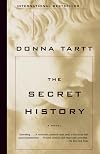
See also: Notes on a Silencing by Lacy Crawford (from the acknowledgments); The Secret History by Donna Tartt; The Swallows by Lisa Lutz
Quotes
The need to keep busy is both a symptom of high-functioning anxiety and the key to my success. (10)
I collected information about my peers the way some people hoard newspapers. I hoped this would help me become more like them, less like myself - less poor, less clueless, less provincial, less vulnerable. (15)
For a teenager, being seen a certain way is as good as being that way... (66)
It's hard to look back and see us as we were, rather than who we would become... (96)
I chastised myself for doing the wrong thing. What would the right thing have been? (136)
Just because you can't picture someone doing something doesn't mean they aren't capable of it. (136)
You don't have to have been friends with someone to be old friends with them later. (317)
...I'd learned long ago not to counter people's trauma with my own. (373)
I've always preferred to hedge against optimism. (402) show less
Bodie, who has come a long way since being an awkward outsider from Indiana in high school, falls into the rabbit hole/warren along with her students, becoming obsessed with combing through details and memories, talking to old classmates, coming up with new theories for who really murdered Thalia.
Meanwhile, Bodie's husband Jerome, a visual artist, gets accused in #MeToo fashion by a younger female artist, dragging Bodie into the controversy as well and threatening both show more their livelihoods.
The 430+page novel ends in a somewhat odd place: there seems to be plenty of evidence that Omar's original case and trial was mishandled, yet his appeal fails; an innocent man remains in jail, and the real murderer walks free.
See also: Notes on a Silencing by Lacy Crawford (from the acknowledgments); The Secret History by Donna Tartt; The Swallows by Lisa Lutz
Quotes
The need to keep busy is both a symptom of high-functioning anxiety and the key to my success. (10)
I collected information about my peers the way some people hoard newspapers. I hoped this would help me become more like them, less like myself - less poor, less clueless, less provincial, less vulnerable. (15)
For a teenager, being seen a certain way is as good as being that way... (66)
It's hard to look back and see us as we were, rather than who we would become... (96)
I chastised myself for doing the wrong thing. What would the right thing have been? (136)
Just because you can't picture someone doing something doesn't mean they aren't capable of it. (136)
You don't have to have been friends with someone to be old friends with them later. (317)
...I'd learned long ago not to counter people's trauma with my own. (373)
I've always preferred to hedge against optimism. (402) show less
Members
- Recently Added By
Lists

Best School Stories
219 works; 22 members

Dark Academia Novels
59 works; 11 members

Books Read in 2023
5,547 works; 145 members

Indie Next Picks
196 works; 4 members

Books Set in New Hampshire
10 works; 2 members

Fiction: Crime, Detective, Mystery
350 works; 3 members

Top Five Books of 2023
767 works; 317 members

Books Read in 2024
4,623 works; 126 members

Fiction Published in 2023
17 works; 2 members

Vlogbrothers Book Recommendations
307 works; 4 members
Author Information

11+ Works 7,083 Members
Rebecca Makkai is an author, based in the Chicago area. She holds as MA from Middlebury College's Bread Loaf School of English and a BA from Washington and Lee University. She was an elementary Montessori teacher for twelve years before becoming a writer. She is on the MFA faculties of Sierra Nevada College and Northwestern University. And she is show more the Artistic Director of StoryStudio Chicago. She has had her short fiction published in such anthologies as The Pushcart Prize XLI, The Best American Short Stories, The Best American Nonrequired Reading, New Stories from the Midwest, and Best American Fantasy. She has a short story collection entitled Music for Wartime. She won the 2017 Pushcart prize for short fiction. Her first novel was entitled The Borrower. Her other novels include The Hundred-Year House and The Great Believers. She won the 2019 Andrew Carnegie Medal for fiction with her novel, The Great Believers. (Bowker Author Biography) show less
Some Editions
Awards and Honors
Awards
Distinctions
Notable Lists
Common Knowledge
- Canonical title
- I Have Some Questions For You
- Original publication date
- 2023-02-21
- People/Characters
- Bodie Kane; Thalia Keith
- Important places
- New Hampshire, USA
- Dedication
- For CGG / in joyful memory
- First words
- "You've heard of her," I say - a challenge, an assurance.
- Last words
- (Click to show. Warning: May contain spoilers.)Below me and above me and in the woods stretching thick and endless, their leaves made sugar out of nothing but light.
Classifications
Statistics
- Members
- 2,024
- Popularity
- 10,546
- Reviews
- 92
- Rating
- (3.80)
- Languages
- 12 — Catalan, Danish, Dutch, English, French, German, Hungarian, Italian, Norwegian, Polish, Russian, Spanish
- Media
- Paper, Audiobook, Ebook
- ISBNs
- 28
- ASINs
- 6