True History
by Lucian of Samosata
On This Page
Description
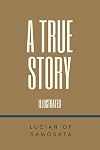
A True Story (Ancient Greek) is a novel written in the second century AD by Lucian of Samosata, a Greek-speaking author of Assyrian descent. The novel is a satire of outlandish tales which had been reported in ancient sources, particularly those which presented fantastic or mythical events as if they were true.Tags
Recommendations
























Member Recommendations

Member Reviews
Amusingly this story begins with an introduction by the author describing his tale as a lie, or untruth, explaining he was influenced by Homer's Ulysses (founder of all foolery), and how he perceived this book to be an exercise, (intermission), a relaxation from serious studies, so that he may be more apt to endure continued (serious) studies. The story is indeed like Homer's stories; men setting off on a journey, but this time they end up in space, discovering strange worlds, with wine rivers, seductive women, milk seas, demigods, barbarians, and a giant whale. The sailors meet with Socrates, Achilles, and Epicurus, and others (but not Plato, as he dwelled in a city framed by himself (i.e. Utopia). Fun story. Early Sci-Fi.
I read this in bits and pieces for a second-year Greek course. Fortunately, the structure is fairly episodic, so it lends itself well to being chopped up.
Lucian is a fun writer. He wrote around the second century A.D. and most of his works are satires of earlier classic literature. The "Dialogues of the Gods" and "Dialogues of the Dead", for example, poke fun at gods and philosophers. "A True History" is, at least in part, a parody of the Odyssey. It was itself probably an inspiration for the genre of traveler's tale literature perpetuated by Swift and others.
Lucian's style is lighthearted but straightforward, and there's an artlessness with which he makes his outrageous assertions which is refreshing. There is a giant whale several show more miles in length, strange places and peoples such as an island made of cheese and people who run on the water with feet of cork. And everywhere he seems to go someone is in the middle of a war with someone else. His writing is full of jokes and wordplay, and along with the marvellous things he encounters there is also a certain amount of crudity and bizarre sexual fantasies. The moon-people, for example, who have no women among them and so give birth from the calf and have otherwise very unusual anatomies. (This particular episode also offers a telling example of changes in academic culture over the last century and a half -- the original 1880 commentary reprinted here originally omitted the section due to its content; the modern editor, having no such scruples, included it in the back.) There are a few places where one wonders how Lucian possibly came up with the idea, as with the description of a race who have pouches remarkably similar to kangaroos.
Although Lucian is post-classical, his language is modelled on Attic Greek style and is overall reasonably straightforward (the sentences are not ridiculously long or complex). This edition includes notes and grammatical help aimed at the inexperienced reader of Greek.
Incidentally, Lucian was the inspiration for Andrew Wilson, who did the ancient Greek translation of "Harry Potter and the Philosopher's Stone." show less
Lucian is a fun writer. He wrote around the second century A.D. and most of his works are satires of earlier classic literature. The "Dialogues of the Gods" and "Dialogues of the Dead", for example, poke fun at gods and philosophers. "A True History" is, at least in part, a parody of the Odyssey. It was itself probably an inspiration for the genre of traveler's tale literature perpetuated by Swift and others.
Lucian's style is lighthearted but straightforward, and there's an artlessness with which he makes his outrageous assertions which is refreshing. There is a giant whale several show more miles in length, strange places and peoples such as an island made of cheese and people who run on the water with feet of cork. And everywhere he seems to go someone is in the middle of a war with someone else. His writing is full of jokes and wordplay, and along with the marvellous things he encounters there is also a certain amount of crudity and bizarre sexual fantasies. The moon-people, for example, who have no women among them and so give birth from the calf and have otherwise very unusual anatomies. (This particular episode also offers a telling example of changes in academic culture over the last century and a half -- the original 1880 commentary reprinted here originally omitted the section due to its content; the modern editor, having no such scruples, included it in the back.) There are a few places where one wonders how Lucian possibly came up with the idea, as with the description of a race who have pouches remarkably similar to kangaroos.
Although Lucian is post-classical, his language is modelled on Attic Greek style and is overall reasonably straightforward (the sentences are not ridiculously long or complex). This edition includes notes and grammatical help aimed at the inexperienced reader of Greek.
Incidentally, Lucian was the inspiration for Andrew Wilson, who did the ancient Greek translation of "Harry Potter and the Philosopher's Stone." show less
Absurd travelogue in the vain of the Odyssey, voyages of sindbad, or the later reports of Mandeville and Raleigh but with the honesty to admit it's all nonsense. Some familiarity with the Odyssey might be of benefit, theres clearly some satire going on but a lot of it is hard to be sure of after so many centuries.
Still this is a pretty fun short read, things like this can be a bit too random and surreal for my taste but this moved along quick enough from incident to incident to keep my interest.
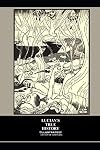
The illustrations by aubrey beardsley and others in the version i read, added a certain weird charm of their own to the proceedings.
Still this is a pretty fun short read, things like this can be a bit too random and surreal for my taste but this moved along quick enough from incident to incident to keep my interest.
The illustrations by aubrey beardsley and others in the version i read, added a certain weird charm of their own to the proceedings.
I wanted to read this book simply because it was written in the second century AD and is said to be the earliest known work of fiction. Curiosity had me wondering what sort of outlandish adventures this book might boast. The author starts out his tall tale admitting that everything he is about to say is a lie. The creative nonsense to follow is in fact wildly unbelievable. To me, it reads like a story created by a middle school classroom of students brainstorming outlandish adventures one common hero might face after setting sail for anywhere imaginable. It was a fun read, yes, but not near as impressive as the Odyssey or the Iliad.
There were a few reasons I didn’t rate this higher, but most significantly I feel that I’m just too ignorant on Greek literature to fully appreciate the text and the underlying meaning. But it was eye opening and informative, and at times even entertaining. It was also probably the weirdest book I’ve ever read. I reckon Lucian had a lot of fun writing it.
On Goodreads it is called [b:Lucian's True History;|10856060|Lucian's True History;|Lucian of Samosata|https://images.gr-assets.com/books/1348898221s/10856060.jpg|3593172]
Do not let the name of this book fool you, this book is far from being true. Instead, it is a parody of the tales told at the time as truth. such as the stories of Homer and Herodotus. He calls his book A True History because it is truer than the stories at the time, because Lucian tells at the beginning it is all lies.
This story is also the first recorded Science Fiction work, with travels to space and a war between the inhabitants of the moon vs the citizens of the sun.
When the journey gets to the land of Heroes, Herodotus, called the Father of History, is being show more punished for the lies he published in his "Histories"
The book does end suddenly with the promise of more books to come (A True History is actually 2 books) but we do not know if they were ever published because no copies survive.
A great read especially if you have read Homer or any other epic tale before the 2nd century. show less
Do not let the name of this book fool you, this book is far from being true. Instead, it is a parody of the tales told at the time as truth. such as the stories of Homer and Herodotus. He calls his book A True History because it is truer than the stories at the time, because Lucian tells at the beginning it is all lies.
This story is also the first recorded Science Fiction work, with travels to space and a war between the inhabitants of the moon vs the citizens of the sun.
When the journey gets to the land of Heroes, Herodotus, called the Father of History, is being show more punished for the lies he published in his "Histories"
The book does end suddenly with the promise of more books to come (A True History is actually 2 books) but we do not know if they were ever published because no copies survive.
A great read especially if you have read Homer or any other epic tale before the 2nd century. show less
Il libro si fa leggere veramente con gusto, e si va avanti con la voglia non tanto di sapere quali avventure aspettano i nostri eroi, ma piuttosto di vedere quali altre assurdità si è inventato Luciano!!!! Ha una fantasia davvero sfrenata!!!
http://www.naufragio.it/iltempodileggere/228
http://www.naufragio.it/iltempodileggere/228
Members
- Recently Added By
Published Reviews
The Greek-speaking rhetorician and writer Lucian of Samosata, born around 125 CE in what is now known as Syria, has had a somewhat mixed reception through the ages. Scholars agree that his contemporaries and successors viewed him with a great deal of respect. Early Christians were less admiring of Lucian and his pagan and vitriolic pen, though by the time of the renaissance, he had regained show more favor among learned people. Italian humanists translated him from Greek, and thus Lucian went on to influence the post-renaissance modern world. show less
added by Cynfelyn
Lists

Best Science Fiction Originally Published in a Language Other Than English
449 works; 34 members

100 Books to Read in a Lifetime (That Are Older Than 200 Years)
415 works; 173 members

Tall tales
25 works; 1 member

Greatest Books, allegedly
484 works; 9 members

1001 Books You Must Read Before You Die
1,448 works; 1,131 members
Author Information

502+ Works 3,876 Members
Lucian, the wit and satirist, was a brilliant Greek writer in the time of the Roman Empire. He was born in Samosata, Syria. He traveled and lectured in Italy, Asia Minor, and Gaul; and in later life, held a government position in Egypt. Of nearly 80 works, the most important and characteristic are his essays written in dialogue form. "Dialogues of show more the Gods," which satirizes mythology; "Dialogues of the Dead," which are expositions of human vanity; and "The Sale of Lives," which satirizes various schools of philosophy. He is a good critical source for ancient art and for information about his literary contemporaries. "The True History," a nonsense fantasy and parody of adventure stories, influenced Rabelais, Swift 1), and Voltaire. (Bowker Author Biography) show less
Some Editions
Awards and Honors
Notable Lists
Series
Belongs to Publisher Series
Klassieke Galerij (26)
Centopaginemillelire (170)
Work Relationships
Common Knowledge
- Canonical title
- True History
- Original title
- Ἀληθῆ διηγήματα (Aletheis Historiai) (Aletheis Historiai)
- Original publication date
- 200 CE; 1496 (editio princeps) (editio princeps)
- Important places
- Ancient Greece
- Original language
- Ancient Greek
- Canonical DDC/MDS
- 883.0
Classifications
Statistics
- Members
- 324
- Popularity
- 97,940
- Reviews
- 10
- Rating
- (3.60)
- Languages
- 12 — Dutch, English, Esperanto, French, German, Greek (Ancient), Greek, Italian, Latin, Portuguese (Portugal), Spanish, Swedish
- Media
- Paper, Audiobook, Ebook
- ISBNs
- 36
- ASINs
- 13