
Lucian
Author of True History
About the Author
Lucian, the wit and satirist, was a brilliant Greek writer in the time of the Roman Empire. He was born in Samosata, Syria. He traveled and lectured in Italy, Asia Minor, and Gaul; and in later life, held a government position in Egypt. Of nearly 80 works, the most important and characteristic are show more his essays written in dialogue form. "Dialogues of the Gods," which satirizes mythology; "Dialogues of the Dead," which are expositions of human vanity; and "The Sale of Lives," which satirizes various schools of philosophy. He is a good critical source for ancient art and for information about his literary contemporaries. "The True History," a nonsense fantasy and parody of adventure stories, influenced Rabelais, Swift 1), and Voltaire. (Bowker Author Biography) show less
Image credit: Speculative rendering of Lucian by the British engraver, William Faithorne (1616–1691)
Works by Lucian
Dialogues of the Dead; Dialogues of the Sea-Gods; Dialogues of the Gods; Dialogues of the Courtesans (1961) 122 copies, 2 reviews
Cataplus (Greek) 22 copies
Deorum concilium (Greek) 21 copies
Luciani Samosatensis Opera 15 copies
Contemplantes (Greek) 13 copies
Electrum (Greek) 13 copies
Demonax (Greek) 13 copies
Gallus (Greek) 13 copies
Macrobii (Greek) 13 copies
Fugitivi (Greek) 13 copies
Rhetorum praeceptor (Greek) 13 copies
De astrologia (Greek) 13 copies
Eunuchus (Greek) 13 copies
Lexiphanes (Greek) 13 copies
De saltatione (Greek) 13 copies
De Syria dea (Greek) 13 copies
Abdicatus (Greek) 12 copies
Nigrinus (Greek) 12 copies
Patriae Encomium (Greek) 12 copies
Necyomantia (Greek) 11 copies
De luctu (Greek) 11 copies
Hercules (Greek) 11 copies
Imagines (Greek) 11 copies
Hippias (Greek) 11 copies
Phalaris (Greek) 11 copies
Muscae Encomium (Greek) 11 copies
Anacharsis (Greek) 11 copies
Bis accusatus sive tribunalia (Greek) 11 copies
Calumniae non temere credundum (Greek) 11 copies
Judicium vocalium (Greek) 11 copies
De sacrificiis (Greek) 11 copies
Dearum judicium (Greek) 11 copies
Juppiter confuatus (Greek) 11 copies
Juppiter trageodeus (Greek) 11 copies
De Domo (Greek) 11 copies
De mercede (Greek) 10 copies
Prometheus (Greek) 10 copies
Timon (Greek) 10 copies
Pro imaginibus (Greek) 10 copies
Pseudologista (Greek) 10 copies
Toxaris vel amicitia (Greek) 10 copies
Tyrannicida (Greek) 10 copies
Bacchus (Greek) 10 copies
Somnium sive vita Luciani (Greek) 10 copies
Philopsuedes sive incredulus (Greek) 9 copies
Piscator (Greek) 8 copies
Vitarum auctio (Greek) 8 copies
De beeldstormer van Samosata 6 copies
How to Compete: An Ancient Guide to the Virtues of Sports (Ancient Wisdom for Modern Readers) (2026) 5 copies
Lucian's Dialogues of the Courtesans: An Intermediate Greek Reader: Greek Text with Running Vocabulary and Commentary (2015) 5 copies
Timon, ehk, Inimestevihkaja 5 copies
Parodien und Burlesken 4 copies
Diálogos de los dioses / Diálogos de los muertos / Diálogos marinos / Diálogos de las cortesanas (Biblioteca tematica) (Spanish Edition) (2005) 4 copies
The Big Book of Ancient Classics: Contains the works of Aristotle, Plato, Homer, Aeschylus... (The Greatest Collection 6) (2020) 4 copies
Diálogos de tendencia cínica (Biblioteca de la literatura y el pensamiento universales ; 12) (Spanish Edition) (1976) 4 copies
Gegen den ungebildeten Büchernarren. Ausgewählte Werke (Die Bibliothek der Alten Welt) (2006) 3 copies
El sueño o La vida de Luciano; Lucio o El asno; El sueño o El gallo; Lexiufano (Letras Universales) (Spanish Edition) (2018) 3 copies
Eros op sandalen 3 copies
Lucian: True History, Dialogues of the Dead, Dialogues of the Heterae and other Selected Essays (1949) 3 copies
Valda skrifter 3 copies
Lucian, Prolaliai: An Intermediate Greek Reader: Greek Text with Running Vocabulary and Commentary (2019) 3 copies
Vitarum Auctio, Piscator (Bibliotheca scriptorum Graecorum et Romanorum Teubneriana) (1992) 3 copies
Lucian's True history 3 copies
Hermotimus (Greek) 2 copies
Lucians von Samosata Sämtliche Werke 2 copies
Den narraktige boksamlaren 2 copies
Pravdivé výmysly 2 copies
Valda skrifter. [1] 2 copies
Sämtliche Werke Bd. 3. T. 5/6 [...] 2 copies
Sämtliche Werke Bd. 2. T. 3/4 [...] 2 copies
Werke in drei Bänden 2 copies
Obras. Vol. VI. Timón o El Misántropo. Contra el ignorante que compraba muchos libros ... y otros opúsculos (Alma Mater) (2004) 2 copies
Werke in drei Bänden. Erster Band 2 copies
Lucian I-VIII 2 copies
Werke in drei Bänden Zweiter Band 2 copies
Werke in drei Bänden. Dritter Band 2 copies
Sämtliche Werke Bd. 1. T. 1/2 [...] 2 copies
Lucian's Zeus the Tragedian: An Intermediate Greek Reader: Greek Text with Running Vocabulary and Commentary (2017) 2 copies
Oeuvres complètes 2 copies
The Select Dialogues of Lucian 2 copies
Lucius or The Ass 2 copies
Narrativas Verdadeiras + O Homem na Lua (Trinca Literária, Vol 01 - Pioneiros da Ficção Científica) 2 copies
L'attente du Messie 2 copies
I dialoghi 2 copies
Diálogos cínicos (El Libro De Bolsillo - Bibliotecas Temáticas - Biblioteca De Clásicos De Grecia Y Roma) (2010) 2 copies
Luciano di Samosata, Il negromante: LAlessandro ; traduzione, introduzione e commento di Maurizia Matteuzzi (Nuova Atlantide) (1988) 2 copies
Obres, volum I 1 copy
Historia verdadera Prometeo o el Cáucaso Timón o el misántropo. Diálogo de las hetairas (1974) 1 copy
Luciani De Sacrificiis 1 copy
Luciano 1 copy
Zeus confundido 1 copy
O Falso Profeta 1 copy
Voyages en terres imaginaires (histoires vraies): Suivi de L'inculte qui achète de nombreux livres (2021) 1 copy, 1 review
Diálogos dos Deuses 1 copy
Dialogue des Dieux 1 copy
Voyage en terres imaginaires 1 copy
Избранное 1 copy
Lucian (Vol. 2 of 7) 1 copy
Translations from Lucian 1 copy
Избранное Пер. с древнегреч 1 copy
Tractatus 1 copy
Scritti scelti 1 copy
Lucian's Select Dialogues 1 copy
Ενύπνιον και Ανάχαρσις 1 copy
Λουκιανός: Ἔργα, Τόμος Β' 1 copy
Λουκιανός: Ἔργα, Τόμος Α' 1 copy
Έργα (β) 1 copy
Έργα (α) 1 copy
Εκλογαί εκ των απάντων 1 copy
Λουκιανού έργα 1 copy
Λούκιος ή όνος 1 copy
Phalaris (Greek) 1 copy
Dipsades (Greek) 1 copy
Lucian (Volume V) 1 copy
Lucian (Vol. 1 of 8) 1 copy
Lucian (Vol. 3 of 8) 1 copy
Picasso slide show 1 copy
Scholia in Lucianum 1 copy
Alēhēs istoria azaz Igaz história egy csodálatos utazásról a holdban, ... melyet két könyvben görögül megírt a… (1982) 1 copy
Opera 1 copy
Saturnalia (Greek) 1 copy
Herodotus (Greek) 1 copy
Zeuxis (Greek) 1 copy
Apologia (Greek) 1 copy
Harmonides (Greek) 1 copy
Hesiod (Greek) 1 copy
Scytha (Greek) 1 copy
Navigium (Greek) 1 copy
Dialogi meretricii (Greek) 1 copy
Soleocista (Greek) 1 copy
Podagra (Greek) 1 copy
Diez dialogos de Luciano de Samosata: Version yuxtalineal (Serie didactica) (Spanish Edition) (1985) 1 copy
Alexander the False Prophet 1 copy
Picasso 1 copy
Luciani Opera, gr. et lat. cum graecis scholiis ac. notis var. edidit T. Hemsterhusius (4 vols.) 1 copy
De behekste ezel 1 copy
Luciani Samosatensis opera 1 copy
Lucian's Werke 1 copy
Ausgewählte Schriften des Lucian. 2, Die Totengespräche. Ausgewählte Göttergespräche. Der Hahn — Author — 1 copy
Histoires vraies 1 copy
Opere di Luciano 1 copy
Œuvres complètes 1 copy
Quattro opuscoli morali 1 copy
Lucian's Dialogues Volume I 1 copy
Werke [vol 2/3] 1 copy
The Works of Lucian of Samosata Complete with Exceptions Specified in the Preface Volume I of IV (2016) 1 copy
Lucian's Charon 1 copy
Lucian: Volume I 1 copy
Selections from Lucian 1 copy
Lucien 1 copy
Dialoghi e epigrammi, II 1 copy
Dialoghi e epigrammi, I 1 copy
Dialoghi. Volume terzo 1 copy
Dialoghi. Volume secondo 1 copy
Dialoghi. Volume primo 1 copy
Libelli 1 - 25 1 copy
Selected Works 1 copy
Dialogues of the Courtesans 1 copy
The Sale of Creeds 1 copy
The Dream or Lucian's Career 1 copy
How to Write History 1 copy
Menippus or Necyomantia 1 copy
Icaromenippus or The Sky-man 1 copy
The Dream or The Cock 1 copy
Timone - Icaromenippo 1 copy
Camargue Secrete 1 copy
Histoire véritable 1 copy
Le Songe ou le coq 1 copy
İnsan bilimleri ve felsefe 1 copy
Luciani Opuscula selecta 1 copy
Oeuvre amoureuse 1 copy
A Selection From Lucian's Dialogues: With A Literal Interlinear Translation, On The Plan Recommended By Mr. Lock (1838) (2010) 1 copy
Works of Lucian of Samosata 1 copy
Eit ordskifte um idrott 1 copy
Der wahrhaftige Lügenfreund und andere fragwürdige Geschichten von Toten, Göttern und Tyrannen 1 copy
Satire 1 copy
Hetärengespräche 1 copy
Lucians Werke [1] Lucian I 1 copy
seçme yazılar I 1 copy
Luciani Samosatensis opera 1 copy
Timon ehk inimestevihkaja 1 copy
Tre satiriska dialoger 1 copy
Valda skrifter. [2] 1 copy
VERA HISTORIA 1 copy
Associated Works
The Tale of the Bamboo Cutter and Other Fantastic Stories (2013) — Contributor — 27 copies, 1 review
The Ribald Reader: 2000 Years of Lusty Love and Laughter (1906) — Contributor — 19 copies, 2 reviews
Oogst Der Tijden. keur uit de werken van schrijvers en dichters aller volken en eeuwen (1940) — Contributor — 12 copies
The Delphian Course : Part Three : Greek Drama, Philiosopy and Literature, the Story of Rome (1913) — Contributor — 8 copies
Griekse varia : bloemlezing uit de werken van een vijftiental Griekse dichters en prozaschrijvers (1956) — Contributor — 5 copies
Early Science Fiction Tales 1: The Earliest SF Stories Ever: 51BC - 1638AD (Volume 1) (2012) — Contributor — 3 copies
The Ancient Sorceries / The Vanguard of Venus / A Hand from the Deep / Dialogue with the Dead (1973) — Contributor — 1 copy
Tagged
Common Knowledge
- Canonical name
- Lucian
- Legal name
- Lucian of Samosata
Λουκιανός - Other names
- Lucianos
Lucianus van Samosata - Birthdate
- 0120 c.
- Date of death
- 180 (after)
- Gender
- male
- Occupations
- essayist
poet - Nationality
- Roman Empire
- Birthplace
- Samosata, Commagene, Syria (birth ∙ now Samsat ∙ Turkey)
- Places of residence
- Samosata, Commagene, Syria (birth|now Samsat, Turkey)
Athens (death|now Greece) - Place of death
- Athen, Griechenland
- Map Location
- Turkey
Members
Reviews
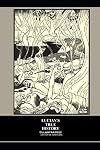
Amusingly this story begins with an introduction by the author describing his tale as a lie, or untruth, explaining he was influenced by Homer's Ulysses (founder of all foolery), and how he perceived this book to be an exercise, (intermission), a relaxation from serious studies, so that he may be more apt to endure continued (serious) studies. The story is indeed like Homer's stories; men setting off on a journey, but this time they end up in space, discovering strange worlds, with wine show more rivers, seductive women, milk seas, demigods, barbarians, and a giant whale. The sailors meet with Socrates, Achilles, and Epicurus, and others (but not Plato, as he dwelled in a city framed by himself (i.e. Utopia). Fun story. Early Sci-Fi. show less

In “True History,” Lucian warns his readers that he “shall be a more honest liar than [his] predecessors” by telling the reader frankly that he has “no intention whatever of telling the truth” (pg. 4). The story begins with adventurers sailing west into the Atlantic Ocean, only to be blown to the Moon in a storm. There, they reside with Endymion who currently wars with Phaethon on the Sun as both parties seek to colonize Lucifer, the Morning Star, using bridges made from show more spiders’ webs. The two armies employ hybrid creatures, with the description of these bizarre animals taking up much of Lucian’s description. After the war’s conclusion, Lucian’s party returns to the Earth, where they travel to several outlandish islands, including one made of cheese. On a separate island, Lucian and his group meet various famous Greeks, like Epicurus, “the life and soul of the party” (pg. 42), Aesop, “much in demand for his talents as a raconteur” (pg. 42), and others, though the Sceptics were not present as they couldn’t decide if the island was real and Plato had gone to live in his Republic. On another island, “those who had written Untrue Histories,” such as Ctesias of Cnidos and Herodotus, find themselves in eternal torment (pg. 50). The story, in its greatest lie, ends with Lucian’s unfulfilled promise to tell his readers what happened to the party on a continent on the other side of the world.
In “Lucius or The Ass,” commonly ascribed to Lucian, the main character, Lucias, finds himself transformed into an ass through an accident while seeking to witness magic firsthand. The story closely follows Apuleius’s The Golden Ass, though in the end he transforms himself back into a human by eating a bouquet of roses at the circus. The punchline comes when he returns to the woman he fell in love with during his experimentation with magic, only to find his advances rebuffed as she was more impressed with his endowment as a donkey.
In his translation, Paul Turner worked to maintain the humor of Lucian, updating puns as necessary so that the effect would not be lost on contemporary readers. This Indiana University Press edition also includes gorgeous illustrations from Hellmuth Weissenborn. show less
In “Lucius or The Ass,” commonly ascribed to Lucian, the main character, Lucias, finds himself transformed into an ass through an accident while seeking to witness magic firsthand. The story closely follows Apuleius’s The Golden Ass, though in the end he transforms himself back into a human by eating a bouquet of roses at the circus. The punchline comes when he returns to the woman he fell in love with during his experimentation with magic, only to find his advances rebuffed as she was more impressed with his endowment as a donkey.
In his translation, Paul Turner worked to maintain the humor of Lucian, updating puns as necessary so that the effect would not be lost on contemporary readers. This Indiana University Press edition also includes gorgeous illustrations from Hellmuth Weissenborn. show less

I read this in bits and pieces for a second-year Greek course. Fortunately, the structure is fairly episodic, so it lends itself well to being chopped up.
Lucian is a fun writer. He wrote around the second century A.D. and most of his works are satires of earlier classic literature. The "Dialogues of the Gods" and "Dialogues of the Dead", for example, poke fun at gods and philosophers. "A True History" is, at least in part, a parody of the Odyssey. It was itself probably an inspiration for show more the genre of traveler's tale literature perpetuated by Swift and others.
Lucian's style is lighthearted but straightforward, and there's an artlessness with which he makes his outrageous assertions which is refreshing. There is a giant whale several miles in length, strange places and peoples such as an island made of cheese and people who run on the water with feet of cork. And everywhere he seems to go someone is in the middle of a war with someone else. His writing is full of jokes and wordplay, and along with the marvellous things he encounters there is also a certain amount of crudity and bizarre sexual fantasies. The moon-people, for example, who have no women among them and so give birth from the calf and have otherwise very unusual anatomies. (This particular episode also offers a telling example of changes in academic culture over the last century and a half -- the original 1880 commentary reprinted here originally omitted the section due to its content; the modern editor, having no such scruples, included it in the back.) There are a few places where one wonders how Lucian possibly came up with the idea, as with the description of a race who have pouches remarkably similar to kangaroos.
Although Lucian is post-classical, his language is modelled on Attic Greek style and is overall reasonably straightforward (the sentences are not ridiculously long or complex). This edition includes notes and grammatical help aimed at the inexperienced reader of Greek.
Incidentally, Lucian was the inspiration for Andrew Wilson, who did the ancient Greek translation of "Harry Potter and the Philosopher's Stone." show less
Lucian is a fun writer. He wrote around the second century A.D. and most of his works are satires of earlier classic literature. The "Dialogues of the Gods" and "Dialogues of the Dead", for example, poke fun at gods and philosophers. "A True History" is, at least in part, a parody of the Odyssey. It was itself probably an inspiration for show more the genre of traveler's tale literature perpetuated by Swift and others.
Lucian's style is lighthearted but straightforward, and there's an artlessness with which he makes his outrageous assertions which is refreshing. There is a giant whale several miles in length, strange places and peoples such as an island made of cheese and people who run on the water with feet of cork. And everywhere he seems to go someone is in the middle of a war with someone else. His writing is full of jokes and wordplay, and along with the marvellous things he encounters there is also a certain amount of crudity and bizarre sexual fantasies. The moon-people, for example, who have no women among them and so give birth from the calf and have otherwise very unusual anatomies. (This particular episode also offers a telling example of changes in academic culture over the last century and a half -- the original 1880 commentary reprinted here originally omitted the section due to its content; the modern editor, having no such scruples, included it in the back.) There are a few places where one wonders how Lucian possibly came up with the idea, as with the description of a race who have pouches remarkably similar to kangaroos.
Although Lucian is post-classical, his language is modelled on Attic Greek style and is overall reasonably straightforward (the sentences are not ridiculously long or complex). This edition includes notes and grammatical help aimed at the inexperienced reader of Greek.
Incidentally, Lucian was the inspiration for Andrew Wilson, who did the ancient Greek translation of "Harry Potter and the Philosopher's Stone." show less
Absurd travelogue in the vain of the Odyssey, voyages of sindbad, or the later reports of Mandeville and Raleigh but with the honesty to admit it's all nonsense. Some familiarity with the Odyssey might be of benefit, theres clearly some satire going on but a lot of it is hard to be sure of after so many centuries.
Still this is a pretty fun short read, things like this can be a bit too random and surreal for my taste but this moved along quick enough from incident to incident to keep my show more interest.
The illustrations by aubrey beardsley and others in the version i read, added a certain weird charm of their own to the proceedings. show less
Still this is a pretty fun short read, things like this can be a bit too random and surreal for my taste but this moved along quick enough from incident to incident to keep my show more interest.
The illustrations by aubrey beardsley and others in the version i read, added a certain weird charm of their own to the proceedings. show less
Lists
Awards


You May Also Like


Associated Authors
Statistics
- Works
- 502
- Also by
- 21
- Members
- 3,875
- Popularity
- #6,541
- Rating
- 3.4
- Reviews
- 42
- ISBNs
- 372
- Languages
- 21
- Favorited
- 16
