
Pausanias
Author of Guide to Greece, Vol. 1: Central Greece
About the Author
Pausanias traveled through Greece in the middle of the second century a.d. On the way, he wrote about his travels in 10 rich books, beginning at Athens and ending up at Delphi, the site of Apollo's ancient oracle. From his writings, it is clear that Pausanias also knew Palestine, Syria, Asia Minor show more (now Turkey), Egypt, and parts of Italy, including Rome. Pausanias liked especially to describe monumental art and architecture, much of it religious in nature. Pausanias routinely gave attention to the history and topography of the most important cities he visited. His descriptions of the wonders of nature reveal his own attitude of personal curiosity. Especially significant for the study of religions are his accounts of local ceremonies, superstitions, legends, and folklore. These are often not as detailed as one might like, but they are invaluable clues to the religious life of Greece in the middle of the second century. (Bowker Author Biography) show less
Works by Pausanias
Pausanias: Description of Greece, Volume I, Books 1-2: Attica and Corinth (Loeb Classical Library No. 93) (1918) 144 copies, 1 review
Pausanias: Description of Greece, Volume II, Books 3-5: Laconia, Messenia, Elis 1 (Loeb Classical Library No. 188) (1926) 88 copies
Pausanias: Description of Greece, Volume IV, Books 8.22-10: Arcadia, Boeotia, Phocis and Ozolian Locri (Loeb Classical Library No. 297) (1935) 84 copies
Pausanias: Description of Greece, Volume V: Maps, Plans, Ilustrations and General Index (Loeb Classical Library No. 298) (1935) 81 copies
Pausanias: Description of Greece, Volume III, Books 6-8.21: Elis II, Achaia, Arcadia (Loeb Classical Library No. 272) (1933) 76 copies
Pausanias Description of Greece with an English Translation by W.H.S. Jones, Litt.D., and H.A. Ormerod, M.A., in 4 Volumes (1966) 41 copies
Pausaniae Graeciae Descriptio, vol. II: Libri V-VIII (Bibliotheca Scriptorum Graecorum et Romanorum Teubneriana) (1990) 9 copies
Viaggio in Grecia. Guida antiquaria e artistica. Testo greco a fronte vol. 10 - Delfi e Focide (2012) 9 copies
Viaggio in Grecia. Guida antiquaria e artistica. Testo greco a fronte vol. 3 - Laconia (1995) 9 copies
Pausaniae Graeciae Descriptio, vol. I: Libri I-IV (Bibliotheca Scriptorum Graecorum et Romanorum Teubneriana) (1989) 5 copies
Graeciae descriptio 4 copies
Pausaniou tēs Hellados periēgēsis = hoc est, Pausaniae accurata Graeciae descriptio : qua ... 3 copies
Κορινθιακά 1 copy
Μεσσηνιακά 1 copy
Ηλειακά 1 copy
Αττικά 1 copy
Παυσανίας: Φωκικά 1 copy
Ἑλλάδος Περιήγησις 1 copy
Ἑλλάδος Περιήγησις 1 copy
Παυσανίας: Ἀχαϊκά 1 copy
Παυσανίας: Ἀττικά 1 copy
Παυσανίας: Μεσσηνιακά 1 copy
Φωκικά 1 copy
Παυσανίας: Κορινθιακά 1 copy
Ἑλλάδος Περιήγησις: Άττικά 1 copy
Παυσανίου Ἑλλάδος περιήγησις 1 copy
Αχαϊκά 1 copy
Παυσανίας: Ἡλειακά 1 copy
Cesta po Řecku 1 copy
Görögország leírása 1 copy
Descripción de Grecia T 3 1 copy
Descripción de Grecia T 2 1 copy
Παυσανίου Αχαϊκά 1 copy
Associated Works
Tagged
Common Knowledge
- Birthdate
- 110 CE
- Date of death
- 180 CE
- Gender
- male
- Occupations
- geographer
- Nationality
- Roman Empire
- Places of residence
- Lydia
- Map Location
- Greece
Members
Reviews
The description of Greece, by Pausanias. Translated from the Greek. With notes, In which much of the Mythology of the Greeks is unfolded from a Theory which has been for many Ages unknown. And illustrated with maps and views elegantly engraved. In Three Volumes. by Pausanias

The editio princeps of Pausanias was edited by Musurus and issued by Aldus in 1516. Calderinus, a humanist and philologist, translated part of Pausanias from Greek into Latin, publishing the partial translation in 1500 including "Attica," "Corinth and the Argolid," to section 6 (Epopeus stealing the beautiful Antiope from Thebes). Along with Greek history and myth, the book describes altars, statues, temples, roads, harbors, etc. Much of this information was pertinent to sixteenth-century show more readers thinking of traveling to Greece, and it was picturesque indeed, for example: "Nowhere in Greece but in Megara do you find shell stone, and a lot of the building in the city has been done with it. It is extremely white, softer than any other, and has sea-shells all the way through it". By 1794, after many Grand Tour accounts in English, this the first English translation served more as a comparison of the ancient to modern views of Greece.
Pausanias' Description of Greece provides crucial information for making links between classical literature and modern archaeology, which is providing evidence of the sites and cultural details he mentions although knowledge of their existence may have become lost or relegated to myth or legend. From c. 150 until his death around 180, Pausanias travelled throughout the mainland of Greece, writing about various monuments, sacred spaces, and significant geographical sites along the way. show less
Pausanias' Description of Greece provides crucial information for making links between classical literature and modern archaeology, which is providing evidence of the sites and cultural details he mentions although knowledge of their existence may have become lost or relegated to myth or legend. From c. 150 until his death around 180, Pausanias travelled throughout the mainland of Greece, writing about various monuments, sacred spaces, and significant geographical sites along the way. show less
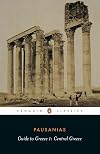
Exhaustive but taxing this is the most complete description of ancient Greece ever made.
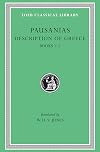
Fascinating like Herodotus. Many diversions and trivia.

DESCRIPCIÓN DE GRECIA III
La obra de Pausanias (siglo II d.C.) es la mejor guía para el viajero ilustrado por la Grecia antigua. Este viajero y geógrafo griego describe sólo aquello que ha visto con sus propios ojos, y no es poco, porque recorrió gran parte de la Hélade (centro y sur del continente, aunque no las zonas más septentrionales y occidentales) con afán de conocerla a fondo, y registró en sus escritos edificios, obras de arte, monumentos conmemorativos y accidentes show more geográficos.
Pero no se contentó con hacer un inventario de objetos y monumentos espectaculares, sino que acompaña a cada elemento consignado con toda la información que pueda resultar útil para su comprensión cabal: mitos e historias, héroes y hazañas relacionados, etc., en una rica maraña de digresiones y referencias que logra evocar la densidad de la historia y permite entender las ruinas de Grecia. Así surgen con fuerza en la imaginación del lector las grandes ciudades de la antigüedad helena (Atenas, Corinto, Esparta, Olimpo, Delfos, Tebas) con todos sus rasgos geográficos, conjuntos monumentales, edificios públicos, centros sociales y cultuales (santuarios, templos, imágenes de divinidades y de héroes ancestrales...), obras de arte con descripciones de estilos y autores (las pinturas de Polignoto, las estatuas de Mirón, Fidias y Praxíteles), y todo cuanto pueda desear el viajero curioso. El rigor de Pausanias ha quedado atestiguado por centenares de excavaciones arqueológicas modernas, que han demostrado la solidez de sus informaciones topográficas.
Si bien el autor no declara la aspiración que le movió a emprender tamaña empresa, pues la Descripción carece de un prólogo programático, hay que imaginar que le impulsó el simple deseo de conocimiento y el encanto de la aventura. El principio conductor es de índole topográfico (lugares y monumentos), y al hilo del desplazamiento, de cada libro dedicado a una región, se enhebran las explicaciones acerca de mitos e historias, cultos y religiones. El planteamiento habitual es referirse primero a la historia y la topografía de las ciudades y después a los cultos religiosos y de la mitología.
El libro IIII está dedicado a Laconia; el IV, a Mesenia; el V y el VI, a Elide. show less
La obra de Pausanias (siglo II d.C.) es la mejor guía para el viajero ilustrado por la Grecia antigua. Este viajero y geógrafo griego describe sólo aquello que ha visto con sus propios ojos, y no es poco, porque recorrió gran parte de la Hélade (centro y sur del continente, aunque no las zonas más septentrionales y occidentales) con afán de conocerla a fondo, y registró en sus escritos edificios, obras de arte, monumentos conmemorativos y accidentes show more geográficos.
Pero no se contentó con hacer un inventario de objetos y monumentos espectaculares, sino que acompaña a cada elemento consignado con toda la información que pueda resultar útil para su comprensión cabal: mitos e historias, héroes y hazañas relacionados, etc., en una rica maraña de digresiones y referencias que logra evocar la densidad de la historia y permite entender las ruinas de Grecia. Así surgen con fuerza en la imaginación del lector las grandes ciudades de la antigüedad helena (Atenas, Corinto, Esparta, Olimpo, Delfos, Tebas) con todos sus rasgos geográficos, conjuntos monumentales, edificios públicos, centros sociales y cultuales (santuarios, templos, imágenes de divinidades y de héroes ancestrales...), obras de arte con descripciones de estilos y autores (las pinturas de Polignoto, las estatuas de Mirón, Fidias y Praxíteles), y todo cuanto pueda desear el viajero curioso. El rigor de Pausanias ha quedado atestiguado por centenares de excavaciones arqueológicas modernas, que han demostrado la solidez de sus informaciones topográficas.
Si bien el autor no declara la aspiración que le movió a emprender tamaña empresa, pues la Descripción carece de un prólogo programático, hay que imaginar que le impulsó el simple deseo de conocimiento y el encanto de la aventura. El principio conductor es de índole topográfico (lugares y monumentos), y al hilo del desplazamiento, de cada libro dedicado a una región, se enhebran las explicaciones acerca de mitos e historias, cultos y religiones. El planteamiento habitual es referirse primero a la historia y la topografía de las ciudades y después a los cultos religiosos y de la mitología.
El libro IIII está dedicado a Laconia; el IV, a Mesenia; el V y el VI, a Elide. show less
Apr 5, 2018Spanish
Lists
You May Also Like


Associated Authors
Statistics
- Works
- 114
- Also by
- 1
- Members
- 1,658
- Popularity
- #15,500
- Rating
- 4.0
- Reviews
- 7
- ISBNs
- 101
- Languages
- 10
- Favorited
- 3