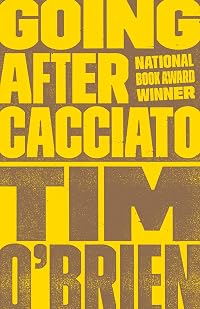
Going After Cacciato
by Tim O'Brien
On This Page
Description
A CLASSIC FROM THE NEW YORK TIMES BESTSELLING AUTHOR OF THE THINGS THEY CARRIED"To call Going After Cacciato a novel about war is like calling Moby-Dick a novel about whales."
So wrote The New York Times of Tim O'Brien's now classic novel of Vietnam. Winner of the 1979 National Book Award, Going After Cacciato captures the peculiar mixture of horror and hallucination that marked this strangest of wars.
In a blend of reality and fantasy, this novel tells the story of a young soldier who show more one day lays down his rifle and sets off on a quixotic journey from the jungles of Indochina to the streets of Paris. In its memorable evocation of men both fleeing from and meeting the demands of battle, Going After Cacciato stands as much more than just a great war novel. Ultimately it's about the forces of fear and heroism that do battle in the hearts of us all.
Now with Extra Libris material, including a reader's guide and bonus content
From the Trade Paperback edition.. show less
Tags
Recommendations
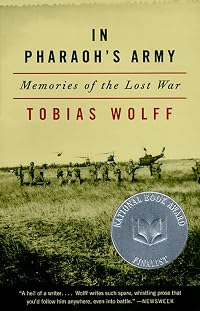

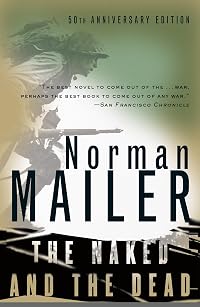


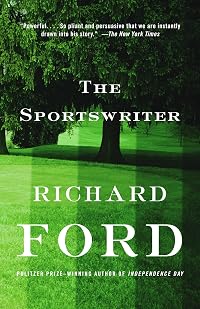
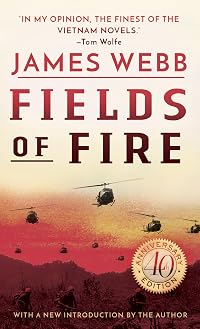
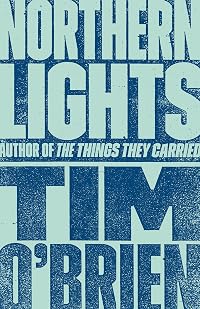
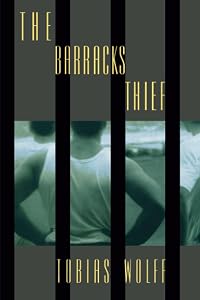

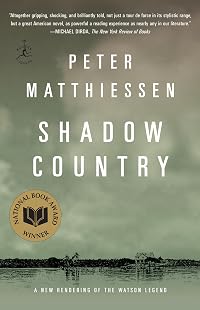
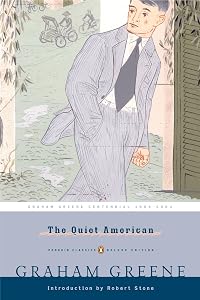
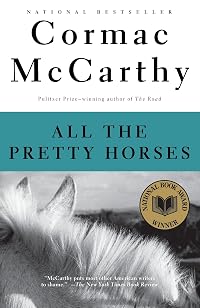
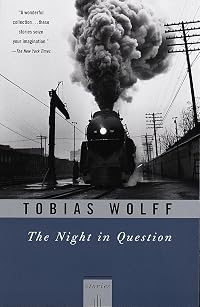


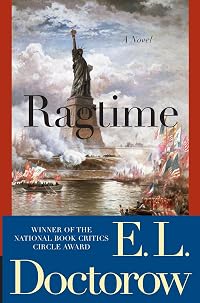

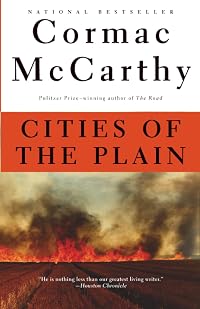
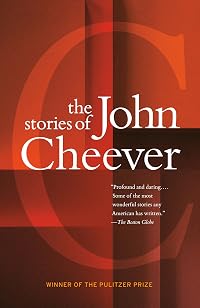
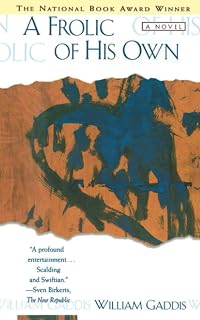
Member Recommendations
SqueakyChu Both books are about the heavy toll of war.

Loon by Jack McLean
SqueakyChu Both books are about the Vietnam war.
Member Reviews
A search for a deserter during the Vietnam War turns into a quest of his squad to travel to Paris. Or does it? Seen through the eyes of Paul Berlin, from the “corn town” of Fort Dodge, Iowa where many people “broke their legs and ankles trying to walk with spurs,” Going After Cacciato is a story of survival through imagination. Paul’s father tells him “you’ll see some terrible stuff, sure, but try to look for the good things. Try to learn.”
Paul does see some terrible stuff. Mainly his squad mates getting killed. And the burning of villages and destruction and the killing of Vietnamese. “They fought the war, but no one took sides.” “They did not know good from evil.” Who could blame a soldier for imagining a trip show more to Paris to escape the horror?
The melding of the quest for Cacciato with the day-to-day awfulness of the war elevates this far above a normal war story. “War stories. That was what remained: a few stupid war stories, hackneyed and unprofound.” A wondrous book. show less
Paul does see some terrible stuff. Mainly his squad mates getting killed. And the burning of villages and destruction and the killing of Vietnamese. “They fought the war, but no one took sides.” “They did not know good from evil.” Who could blame a soldier for imagining a trip show more to Paris to escape the horror?
The melding of the quest for Cacciato with the day-to-day awfulness of the war elevates this far above a normal war story. “War stories. That was what remained: a few stupid war stories, hackneyed and unprofound.” A wondrous book. show less
"To call Going After Cacciato a novel about war is like calling Moby Dick a novel about whales."So wrote The New York Times of Tim O'Brien's now classic novel of Vietnam. Winner of the 1979 National Book Award, Going After Cacciato captures the peculiar blend of horror and hallucinatory comedy that marked this strangest of wars. Reality and fantasy merge in this fictional account of one private's sudden decision to lay down his rifle and begin a quixotic journey from the jungles of Indochina to the streets of Paris. Will Cacciato make it all the way? Or will he be yet another casualty of a conflict that seems to have no end? In its memorable evocation of men both fleeing and meeting the demands of battle, Going After Cacciato stands as show more much more than just a great war novel. Ultimately it's about the forces of fear and heroism that do battle in the hearts of us all. show less
"He could tell time by the way it came. By the cold and the wind, and then later the silver gleaming that would fill the wave troughs and give them shape, wrinkles like the skin of boiled milk, then the birds, then the breaking of the sky. He could tell time by all of this, and by the rhyme of wind and sand, and by the beat of his own heart. It was a matter of hard observation. Separating illusion from reality. What happened, and what might have happened?"
I picked this book up after is was mentioned in How to Read Literature Like a Professor - I was intrigued by the comments, and I had previously read and loved The Things They Carried by the same author. This one is also set in Vietnam, and the bits that were quoted made me feel that I show more had read excerpts from it before. I had - my kids read a chapter for an English class that I instantly recognized when I came to it - the chapter titled Night March, which is powerful all by itself, but when set into place in the novel, it is pivotal.
This is very different from The Things They Carried in that it uses magical realism to break the novel into two parts - one real and one surreal that are sewn together almost seamlessly. It's well done, and I can see why it won the National Book Award. The only quibble I had with it is that it could have been shorter and tighter. I liked the main character of Paul Berlin, who is new to the war. He wants to not disappoint his father, to be brave, to be a good soldier, but he wants most of all not to lose his humanity.
"He looked for detail. People chatting while infants slept in carriages, students reading under trees, the order of things. Simple courtesies...He looked for meanings. Peace was shy. That was one lesson: Peace never bragged. If you didn't look for it, it wasn't there."
When a member of their squad decides to desert, the squad goes after him, and here is where we fall down the rabbit hole, so to speak. What is real and what is imagined are intertwined, and just when we are wondering if we can even get back to solid ground, O'Brien delivers us there brilliantly. Recommended. show less
I picked this book up after is was mentioned in How to Read Literature Like a Professor - I was intrigued by the comments, and I had previously read and loved The Things They Carried by the same author. This one is also set in Vietnam, and the bits that were quoted made me feel that I show more had read excerpts from it before. I had - my kids read a chapter for an English class that I instantly recognized when I came to it - the chapter titled Night March, which is powerful all by itself, but when set into place in the novel, it is pivotal.
This is very different from The Things They Carried in that it uses magical realism to break the novel into two parts - one real and one surreal that are sewn together almost seamlessly. It's well done, and I can see why it won the National Book Award. The only quibble I had with it is that it could have been shorter and tighter. I liked the main character of Paul Berlin, who is new to the war. He wants to not disappoint his father, to be brave, to be a good soldier, but he wants most of all not to lose his humanity.
"He looked for detail. People chatting while infants slept in carriages, students reading under trees, the order of things. Simple courtesies...He looked for meanings. Peace was shy. That was one lesson: Peace never bragged. If you didn't look for it, it wasn't there."
When a member of their squad decides to desert, the squad goes after him, and here is where we fall down the rabbit hole, so to speak. What is real and what is imagined are intertwined, and just when we are wondering if we can even get back to solid ground, O'Brien delivers us there brilliantly. Recommended. show less
Pretty amazing. Not so amazing as The Things They Carried, but almost. A sentry conjures up a story almost out of the Arabian Nights as the squad pursues a soldier gone AWOL--whose goal is Paris. A lot of reality flies out the door here, but the reality of what goes on in men's hearts and guts during war is as real as it gets. Interspersed with the pursuit, we see flashbacks into the horrible deaths of the squad has suffered. This is an incredible work of imagination, grounded in the reality so thick you would think it would swallow the plot, but it doesn't. About the only way to improve it would be to perhaps cut about 10 or 15 pages. The latter part of the book begins to drag just slightly.
Tim O'Brien is an author who isn't very interested in truth. Or maybe I should say the exact opposite, that he is extremely interested in it, and in fact fascinated by the concept. Either way, he's not likely to give you a straightforward, point A to point B story, and you can expect that the nature of truth will be part of the exploration. Going After Cacciato is no exception.
Cacciato is just a soldier, a guy everyone agrees is pretty dumb, who one day wanders off from their position in Vietnam. He says he's going to Paris. He has to be pursued, of course - you can't just let a deserter skip away from a war. Paul Berlin is one of the soldiers who goes after him, and the one relating the story to us. In the course of talking about going show more after Cacciato, Paul Berlin also reveals, bit by bit, what has happened in his war experience up to that point.
I didn't find this story as engaging as I would have hoped, but I think that may be because I read The Things They Carried before this one, and some of the same themes are explored more fully in the later work. For me, O'Brien's writing is always the star, though, particularly in the way that everything you read feels absolutely authentic and true, fiction or not.
Recommended for: anyone who's wondered if war stories are true (or if it's even possible for them to be true), those curious about the Vietnam War experience, people who like to read about the gray areas between courage and fear.
Quote: "He would stop. He decided it: He would simply fall. He would lie very still and watch the sky and then perhaps sleep, perhaps later dig out the Coke stored in his pack, drink it, then sleep again. All that was decided. But the decision didn't reach his legs. The decision was made, but it did not flow down to his legs, which kept climbing the red road. Powerless and powerful, like a boulder in an avalanche, Private First Class Paul Berlin marched toward the mountains without stop or the ability to stop." show less
Cacciato is just a soldier, a guy everyone agrees is pretty dumb, who one day wanders off from their position in Vietnam. He says he's going to Paris. He has to be pursued, of course - you can't just let a deserter skip away from a war. Paul Berlin is one of the soldiers who goes after him, and the one relating the story to us. In the course of talking about going show more after Cacciato, Paul Berlin also reveals, bit by bit, what has happened in his war experience up to that point.
I didn't find this story as engaging as I would have hoped, but I think that may be because I read The Things They Carried before this one, and some of the same themes are explored more fully in the later work. For me, O'Brien's writing is always the star, though, particularly in the way that everything you read feels absolutely authentic and true, fiction or not.
Recommended for: anyone who's wondered if war stories are true (or if it's even possible for them to be true), those curious about the Vietnam War experience, people who like to read about the gray areas between courage and fear.
Quote: "He would stop. He decided it: He would simply fall. He would lie very still and watch the sky and then perhaps sleep, perhaps later dig out the Coke stored in his pack, drink it, then sleep again. All that was decided. But the decision didn't reach his legs. The decision was made, but it did not flow down to his legs, which kept climbing the red road. Powerless and powerful, like a boulder in an avalanche, Private First Class Paul Berlin marched toward the mountains without stop or the ability to stop." show less
(1) First book of the New Year. I have read 'Things they Carried,' and I liked it fairly well. O'Brien seems to be the most lauded modern day writer about war - or as he says - not a book about war, it is a book about peace. An anti-war novel for sure. This follows a young soldier who was drafted as he deals with his absolute terror on the battlefield with flights of fancy centering around desertion. In particular, a journey in which his squad chases a fellow grunt who goes AWOL, saying he is going to walk to Paris.
There is a lot here. Some really poignant anti-War messaging regarding how clueless the average soldier is regarding mission and just cause. Why don't rational men just walk away? Lots of contextual detail that was show more well-written regarding the rice paddies, the frightened villagers, the seemingly alien race they were fighting, the VC. What I did not like however was the magical realism. I much preferred scenes of what "actually" happened in the narrative as opposed to the imagined piece that really was the crux of the novel. I can't suspend my belief x2. I was bored by the journey to Paris - it seemed silly to me. Falling down a hole, beaten by monks, arrested in Iran - no, I'm sorry. I can't.
Overall, I am glad I read it. Based on his two novels, I am not a huge fan of his fiction. I did love the interview with him at the end of the book. His anti-war sentiment was powerful. I would love to hear more and I think he may have non-fiction I should look into.
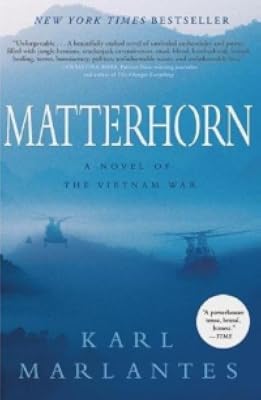
An interesting look at Vietnam. Honestly, I much preferred Karl Marlantes, "Matterhorn," re: fiction about this War. show less
There is a lot here. Some really poignant anti-War messaging regarding how clueless the average soldier is regarding mission and just cause. Why don't rational men just walk away? Lots of contextual detail that was show more well-written regarding the rice paddies, the frightened villagers, the seemingly alien race they were fighting, the VC. What I did not like however was the magical realism. I much preferred scenes of what "actually" happened in the narrative as opposed to the imagined piece that really was the crux of the novel. I can't suspend my belief x2. I was bored by the journey to Paris - it seemed silly to me. Falling down a hole, beaten by monks, arrested in Iran - no, I'm sorry. I can't.
Overall, I am glad I read it. Based on his two novels, I am not a huge fan of his fiction. I did love the interview with him at the end of the book. His anti-war sentiment was powerful. I would love to hear more and I think he may have non-fiction I should look into.
An interesting look at Vietnam. Honestly, I much preferred Karl Marlantes, "Matterhorn," re: fiction about this War. show less
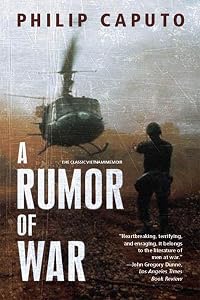
I have begun to think that Tim O'Brien has something of a myopic vision when it comes to Vietnam and Southeast Asia. He simply cannot produce anything beyond a vague image of the settings and atmosphere. There is no feel to his Asia, unlike the case with Graham Greene, W. Somerset Maugham, Norman Lewis, or even other Vietnam War writers such as Michael Herr, Gustav Hasford, or Philip Caputo. And in no fashion can he equal the work of someone such as Christopher Koch. There is always a curtain that seems to hang between the reader and O'Brien's characters and their situations. In some ways, it's like watching an Antonioni film, where physical barriers constantly intrude and block both the viewer and characters from physical and emotional show more contact with one another.
All of which is underscored when O'Brien turns from the realism of war to the night of imagination and the journey to Paris (and the peace talks). Both Delhi and Paris come alive in detail. The smell, odors, sounds, sights, and people, who seem so muffled and abstract in Southeast Asia, take on a specificity and vividness not apparent in the outpost or on the missions "in reality." This is where O'Brien is comfortable. The West. Asia is forever beyond him, I think. An alien land whose people are faceless villagers; cities which never make more than a token appearance. The best he can do is summon up a single woman from his fantasy, Sarkin Aun Wang, who isn't Vietnamese, although she comes from Cholon, or Chinese, or Cambodian, or Lao, or Burmese. In some vague way, she seems to be of an unidentified hill tribe, someone herself exiled from the main life of South East Asia. She, too, is a refugee. She doesn't belong. Neither does O'Brien. show less
All of which is underscored when O'Brien turns from the realism of war to the night of imagination and the journey to Paris (and the peace talks). Both Delhi and Paris come alive in detail. The smell, odors, sounds, sights, and people, who seem so muffled and abstract in Southeast Asia, take on a specificity and vividness not apparent in the outpost or on the missions "in reality." This is where O'Brien is comfortable. The West. Asia is forever beyond him, I think. An alien land whose people are faceless villagers; cities which never make more than a token appearance. The best he can do is summon up a single woman from his fantasy, Sarkin Aun Wang, who isn't Vietnamese, although she comes from Cholon, or Chinese, or Cambodian, or Lao, or Burmese. In some vague way, she seems to be of an unidentified hill tribe, someone herself exiled from the main life of South East Asia. She, too, is a refugee. She doesn't belong. Neither does O'Brien. show less
Members
- Recently Added By
Published Reviews
ThingScore 100
This novel brought so much movement to the stationary act of reading, I would have held onto my hat if I had one. Suddenly
added by Shortride
Lists

Great American Novels
158 works; 42 members

National Book Award - Fiction
78 works; 10 members

Stories of War and Revolution
146 works; 55 members
Daria Morgendorffer's Bookshelf
70 works; 5 members

Best of American Literature
146 works; 9 members

Books Read in 2016
4,666 works; 199 members

Read This Next
120 works; 3 members

War and Weapons and the Aftereffects
29 works; 1 member

Vietnam War Books
10 works; 1 member

AP Lit
363 works; 6 members
THE WAR ROOM
813 works; 24 members

Epistolary Books
105 works; 27 members

Wishlist
4 works; 1 member

Books Read in 2026
2,154 works; 70 members
Author Information

21+ Works 26,173 Members
Tim O'Brien was born on October 1, 1946 in Austin, Minnesota. He graduated from Macalester College in 1968 and was immediately drafted into the U. S. Army, serving from 1969 to 1970 and receiving a Purple Heart. Three years later, his memoirs of the Vietnam War were published as If I Die in a Combat Zone, Box Me Up and Ship Me Home. Later works show more include Northern Lights (1975), Going After Cacciato (1978, winner of the National Book Award), and The Things They Carried (1990, winner of the Melcher Book Award and finalist for the Pulitzer Prize and the National Book Critics Circle Award). (Bowker Author Biography) show less
Awards and Honors
Awards
Distinctions
Series
Belongs to Publisher Series
Work Relationships
Is contained in
Has as a study
Has as a student's study guide
Common Knowledge
- Original title
- Going After Cacciato
- Original publication date
- 1978-01
- People/Characters
- Cacciato; Paul Berlin; Oscar Johnson; Doc Peret; Harold Murphy; Eddie Lazzutti (show all 19); Sarkin Aung Wan; Lieutenant Corson; Frenchie Tucker; Bernie Lynn; Stink Harris; Buff; Captain Fahyi Rhallon; Billy Boy Watkins; Ready Mix; Lieutenant Sidney Martin; Rudy Chassler; Jim Pederson; Chris Haninnen
- Important places
- Vietnam; Paris, France
- Epigraph
- Soldiers are dreamers.
- Siegfried Sassoon - Dedication
- For Erik Hansen
- First words
- It was a bad time.
- Quotations
- Peace of mind is not a simple matter of pursuing one's own pleasure; rather, it is inextricably linked to the attitudes of other human beings, to what they want, to what they expect.
- Last words
- (Click to show. Warning: May contain spoilers.)"Yes," the lieutenant said."Maybe so."
- Blurbers
- Updike, John; Gardner, John; Grumbach, Doris
- Original language
- English
Classifications
Statistics
- Members
- 2,467
- Popularity
- 7,895
- Reviews
- 37
- Rating
- (3.89)
- Languages
- 7 — English, French, Hungarian, Italian, Japanese, Polish, Spanish
- Media
- Paper, Audiobook, Ebook
- ISBNs
- 30
- UPCs
- 1
- ASINs
- 16