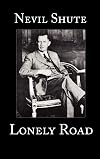
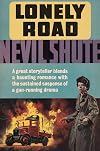
Lonely Road
by Nevil Shute
On This Page
Description
Malcolm Stevenson, a wealthy ex-naval officer haunted by his memories of the war, finds his lonely life turned upside down one night when he runs into trouble on a road near the coast. What at first appears to be an accident leads him to discover an international conspiracy against his country—and to fall in love with a dance hostess who seems to have something to do with it. Malcolm’s determination to expose the plot will put his life—and that of the only person who has brought him show more any happiness—in grave danger.. show less
Tags
Recommendations













Member Reviews
Love, regret, vengeance and the possibility of redemption in unlikely places.
I owe this book a review because I rather misjudged it the first time I read it. Don’t get me wrong, I loved it from the first, but I loved it as a straightforward adventure yarn, tied up with a touch more romance than would usually be to my taste. Nevil Shute is possibly better known for bitter post-war novels, and to my shame I didn’t at first realise that this book, first published in 1931, falls very much in that category. But more of that later.
Firstly, this book does work beautifully as a good yarn. It’s internally consistent, beautifully paced, and sparsely told. In fact, throughout it is beautifully told, which is for me pretty much a given with show more Shute. Where he writes about what he knows well – aircraft, usually, but in this case the sea and small boats, and the fast, damaged young men of the years between the wars – he is unsurpassed. He also writes the most beautifully moving tragedy I’ve ever read . . . small scale tragedy, little passages that toy with your heart and will take me to the edge of tears, even when I know them well, single lines that will take everything you have half learnt in the last three chapters and crystallise it into a single moment of heart-breaking sadness.
I could say the same for almost any Shute novel. Where Lonely Road stands out is in its opening chapter, half dreamscape, half the genuine if mangled memories of a man suffering both concussion and a well-deserved hangover. It captures better than most attempts I’ve seen the fragmentary nature of dreams, the way in which everything, however surreal, makes perfect sense to the dreamer, and the odd common details that can shoot through and tie together the most disjointed dream, and take on unreasonable prominence in doing so.
It even works for me as a romance, despite my exacting standards in this area. Any barrier is so often either implausible in the first place or implausibly overcome (or, worse, conveniently forgotten), so that I tend to find myself fighting the impulse to shout ‘oh for heaven’s sake just talk to the girl’ or earnestly wishing to grasp the lead characters by the scruff of their necks and bang their heads together. I’m not really the best person to review romance. What I will say is that at the heart of this story is a relationship that is absolutely plausible and suffers a realistic impediment.
This may be the place for a brief defence of the charge often levelled at Shute, that he writes weak, silly women. Well, he does, and when I get round to reviewing one of the novels they appear in, I’ll explain why I don’t find that a problem in more detail. Briefly, because there is usually a reason for their weakness or silliness. And in Lonely Road we have Sixpence, a palais de danse taxi-dancer, who is not weak or silly, though she is ignorant and naive.
I’m unlikely to review Daphne du Maurier’s Rebecca, because if you know it you probably already suspect that it was one of those books that made me want to give the protagonists a slap, and I don’t see there’s much to be gained by my writing a bad review of a book that was simply not to my taste. It would tell you more about me than the book. I mention it now because there are strong parallels in the central relationship, but the difference is what makes Lonely Road, for me, a more satisfying read. Molly, though she is dismissively referred to as Sixpence almost throughout, though she makes some silly mistakes, is a more intelligent, subtler, warmer, and overall less generally hopeless heroine than the second Mrs de Winter.
And finally, Lonely Road as a serious post-war novel. I’ve touched on it in those fast, damaged young men. Forewarned, you will pick the element easily out of the opening dreamscape. Our narrator has done things in battle that he would never have considered in normal life. Can he forgive himself? Can he forget? Can he be sure it was only the circumstances of war that shaped his actions? show less
I owe this book a review because I rather misjudged it the first time I read it. Don’t get me wrong, I loved it from the first, but I loved it as a straightforward adventure yarn, tied up with a touch more romance than would usually be to my taste. Nevil Shute is possibly better known for bitter post-war novels, and to my shame I didn’t at first realise that this book, first published in 1931, falls very much in that category. But more of that later.
Firstly, this book does work beautifully as a good yarn. It’s internally consistent, beautifully paced, and sparsely told. In fact, throughout it is beautifully told, which is for me pretty much a given with show more Shute. Where he writes about what he knows well – aircraft, usually, but in this case the sea and small boats, and the fast, damaged young men of the years between the wars – he is unsurpassed. He also writes the most beautifully moving tragedy I’ve ever read . . . small scale tragedy, little passages that toy with your heart and will take me to the edge of tears, even when I know them well, single lines that will take everything you have half learnt in the last three chapters and crystallise it into a single moment of heart-breaking sadness.
I could say the same for almost any Shute novel. Where Lonely Road stands out is in its opening chapter, half dreamscape, half the genuine if mangled memories of a man suffering both concussion and a well-deserved hangover. It captures better than most attempts I’ve seen the fragmentary nature of dreams, the way in which everything, however surreal, makes perfect sense to the dreamer, and the odd common details that can shoot through and tie together the most disjointed dream, and take on unreasonable prominence in doing so.
It even works for me as a romance, despite my exacting standards in this area. Any barrier is so often either implausible in the first place or implausibly overcome (or, worse, conveniently forgotten), so that I tend to find myself fighting the impulse to shout ‘oh for heaven’s sake just talk to the girl’ or earnestly wishing to grasp the lead characters by the scruff of their necks and bang their heads together. I’m not really the best person to review romance. What I will say is that at the heart of this story is a relationship that is absolutely plausible and suffers a realistic impediment.
This may be the place for a brief defence of the charge often levelled at Shute, that he writes weak, silly women. Well, he does, and when I get round to reviewing one of the novels they appear in, I’ll explain why I don’t find that a problem in more detail. Briefly, because there is usually a reason for their weakness or silliness. And in Lonely Road we have Sixpence, a palais de danse taxi-dancer, who is not weak or silly, though she is ignorant and naive.
I’m unlikely to review Daphne du Maurier’s Rebecca, because if you know it you probably already suspect that it was one of those books that made me want to give the protagonists a slap, and I don’t see there’s much to be gained by my writing a bad review of a book that was simply not to my taste. It would tell you more about me than the book. I mention it now because there are strong parallels in the central relationship, but the difference is what makes Lonely Road, for me, a more satisfying read. Molly, though she is dismissively referred to as Sixpence almost throughout, though she makes some silly mistakes, is a more intelligent, subtler, warmer, and overall less generally hopeless heroine than the second Mrs de Winter.
And finally, Lonely Road as a serious post-war novel. I’ve touched on it in those fast, damaged young men. Forewarned, you will pick the element easily out of the opening dreamscape. Our narrator has done things in battle that he would never have considered in normal life. Can he forgive himself? Can he forget? Can he be sure it was only the circumstances of war that shaped his actions? show less
Not a favorite - it's interesting, but depressing. She's a sweetheart and deserved a heck of a lot better; he's depressed and depressing (most of the time...there was hope, for a while), and his idea of justice is nasty. Deserved - all of them - but nasty. And the whole convoluted plot is so incredibly _stupid_...and fell apart because of total coincidence. Glad I read it, but I doubt I'll ever reread.
Wow, another gem from Nevil Shute! He reminds me a bit of Willa Cather. Real life is presented in a calm, matter of fact way. This book involves a man who owns a boat yard, was a naval officer in WWI, is single, and who drinks too much. During one of his drunken drives, he may have had a bad accident, or perhaps not. Not too long thereafter, after befriending a dance-hall girl in Leeds (sixpence a dance) and hearing her chatter about her brother, hearing his cousin's spouse talk about small shipping routes from Europe to England, and seeing the effects of a burned out truck carrying a load of guns, he begins to see some tie-ins between these three seemingly unrelated things and his nightmares. So begins an investigation involving show more Scotland Yard, the homeland security folks (whatever they were called in England in the late 1920s). So also begins a romance with the dance-hall girl. show less
One of the more disappointing Nevil Shute novels that I've read. The story just didn't work for me, and the relationship between Mollie and Malcolm struck me as implausible.
Det er svært at skrive holdbare politiske thrillere, fordi man helst skal tro på, at den afværgede trussel faktisk kunne blive til noget, og at det ville gøre en forskel. Den præmis er svær at leve op til, når man læser en bog, der hastigt nærmer sig de hundrede år, og det er en af grundene til, at Blind vej aldrig bliver mere end en roman på det jævne. Den anden grund er, at der langt fra er tale om stor litteratur, selvom skildringen af det engelske klassesamfunds forsøg på at overskride sig selv bestemt er interessant.
Fortælleren er kaptajn Stevenson, der under 1. verdenskrig var i flåden, hvor han var involveret i et dramatisk og morderisk slag med en tysk ubåd, og som nu lever som ungkarl på den engelske sydkyst. show more Han er velhavende, driver et lille skibsværft og tilhører den traditionelle overklasse. Første kapitel er et impressionistisk eksperiment, hvor han i en brandert kører galt i sin bil og bliver indlagt på hospitalet. Hans erindringer passer ikke på den forklaring han får, og efter nogle rekreationsdage i Skotland sker der flere underlige ting. Politiet har fundet en udbrændt lastbil med nogle våben af ukendt oprindelse og nu har de brug for hjælp med opklaringen.
På vej hjem fra Skotland har han mødt pigen Mollie Gordon, der arbejder som professionel dansepartner på en natklub i Leeds. Det viser sig, at hun har en forbindelse til den udbrændte lastbil – et helt usandsynligt sammenfald – og han påtager sig at hente hende ned til afhøring. Det sker under påskud af, at han vil invitere hende på ferie, men da han først har overladt hende til politiets undersøgelser, får han dårlig samvittighed. I stedet for at lade hende i stikken får han fat i sin egen advokat, og sammen giver de sig til at opklare, hvad der egentlig foregår.
Våbentransporterne har lyssky spor til udlandet, måske til kommunistiske grupper, og målet synes at være at forstyrre det kommende parlamentsvalg.
Men der er også en anden grund til hans handlinger. Han er træt af sit mistrøstige ungkarleliv, og sammen med Mollie føler han sig glad. Selvom hun har en helt anden klassebaggrund er hun både pæn og velopdragen, og efter krigen bør det vel være slut med de skarpe skel i samfundet. Som en af bipersonerne bemærker, så findes der gode mennesker i alle samfundslag, og hvorfor skulle han ikke gifte sig med hende, hvis det er det, der gør ham lykkelig?
Som spændingsroman er Blind vej på det jævne, og persontegningen virker heller ikke overbevisende. Stevenson stritter i alle retninger, og Mollie skildres som lidt for naiv og stille til at matche ham. Det handler nok mere om tidens kvindesyn end om klasseskel. (Kun i kærlighedssager er kvinderne, som f.eks. kusinen Joan, eksperter.) Når det er sagt, så var romanen hurtigt læst og fungerede som vidnesbyrd om, at de engelske klasseskel vitterligt var forandrede efter krigens rædsler. show less
Fortælleren er kaptajn Stevenson, der under 1. verdenskrig var i flåden, hvor han var involveret i et dramatisk og morderisk slag med en tysk ubåd, og som nu lever som ungkarl på den engelske sydkyst. show more Han er velhavende, driver et lille skibsværft og tilhører den traditionelle overklasse. Første kapitel er et impressionistisk eksperiment, hvor han i en brandert kører galt i sin bil og bliver indlagt på hospitalet. Hans erindringer passer ikke på den forklaring han får, og efter nogle rekreationsdage i Skotland sker der flere underlige ting. Politiet har fundet en udbrændt lastbil med nogle våben af ukendt oprindelse og nu har de brug for hjælp med opklaringen.
På vej hjem fra Skotland har han mødt pigen Mollie Gordon, der arbejder som professionel dansepartner på en natklub i Leeds. Det viser sig, at hun har en forbindelse til den udbrændte lastbil – et helt usandsynligt sammenfald – og han påtager sig at hente hende ned til afhøring. Det sker under påskud af, at han vil invitere hende på ferie, men da han først har overladt hende til politiets undersøgelser, får han dårlig samvittighed. I stedet for at lade hende i stikken får han fat i sin egen advokat, og sammen giver de sig til at opklare, hvad der egentlig foregår.
Våbentransporterne har lyssky spor til udlandet, måske til kommunistiske grupper, og målet synes at være at forstyrre det kommende parlamentsvalg.
Men der er også en anden grund til hans handlinger. Han er træt af sit mistrøstige ungkarleliv, og sammen med Mollie føler han sig glad. Selvom hun har en helt anden klassebaggrund er hun både pæn og velopdragen, og efter krigen bør det vel være slut med de skarpe skel i samfundet. Som en af bipersonerne bemærker, så findes der gode mennesker i alle samfundslag, og hvorfor skulle han ikke gifte sig med hende, hvis det er det, der gør ham lykkelig?
Som spændingsroman er Blind vej på det jævne, og persontegningen virker heller ikke overbevisende. Stevenson stritter i alle retninger, og Mollie skildres som lidt for naiv og stille til at matche ham. Det handler nok mere om tidens kvindesyn end om klasseskel. (Kun i kærlighedssager er kvinderne, som f.eks. kusinen Joan, eksperter.) Når det er sagt, så var romanen hurtigt læst og fungerede som vidnesbyrd om, at de engelske klasseskel vitterligt var forandrede efter krigens rædsler. show less
Jun 29, 2019Danish
Ratings
Members
- Recently Added By
Author Information

56+ Works 20,317 Members
Nevil Shute Norway was born in Ealing, London, England, on January, 17 1899. At the age of 11, Norway played truant from his first preparatory school in Hammersmith. After he was discovered, he was sent to the Dragon School, Oxford, and from there to Shrewsbury. He was on holiday in Dublin at the time of the Easter rising of 1916 and acted as an show more ambulance driver, winning a commendation for gallant conduct. He then entered the Royal Military Academy, intending to be commissioned into the Royal Flying Corps, but a bad stammer led to his being failed at his final medical examination and returned to civil life. The last few months of the war were spent on home service as a private in the Suffolk Regiment. In 1919, Norway went to Balliol College, Oxford, where he took a third class honors course in engineering science in 1922. During the vacations he worked, unpaid, as an aeronautical engineer, for the Aircraft Manufacturing Company at Hendon, and then for Geoffrey de Havilland's own firm, which he joined as an employee upon finishing at Oxford. He learned to fly and gained experience as a test observer. During the evenings he diligently wrote novels and short stories unperturbed by rejection slips from publishers. In 1924 Norway took the post of Chief Calculator to the Airship Guarantee Company, to work on the construction of the R100. In 1929 he became Deputy Chief Engineer under Barnes Wallis, and in the following year he flew to and from Canada in the R100. After the end of the airship project, jobs were hard to come by due to the depression so Shute started an aircraft manufacturing company, Airspeed Limited. This company was ultimately successful and built a large number of aircraft during the war. Shute remained joint managing director until 1938. When the business became too routine, he decided to get out of the rut and live by writing. The de Havillands, the first aviation job Shute had ever had, wound up buying Airspeed Ltd. He had by then enjoyed some success as a novelist and had sold the film rights of Lonely Road and Ruined City. At the outbreak of war in 1939, Norway joined the Royal Naval Volunteer Reserve as a Sub-Lieutenant in the Miscellaneous Weapons Department. Rising to Lieutenant Commander, he found experimenting with secret weapons a job after his own heart. But he found that his growing celebrity as a writer caused him to be in the Normandy landings on 6th June 1944, for the Ministry of Information, and to be sent to Burma as a correspondent in 1945. He entered Rangoon with the 15th Corps from Arakan. Soon after demobilisation in 1945 he emigrated to Australia and made his home in Langwarrin, Victoria. His output of novels, which began with Marazan (1926) continued to the end. Shute was one of the leading aeronautical engineers in Britain during the 30's and a fellow of the Royal Aeronautical Society. When he began writing in the 20's, he feared that a reputation as a writer of fiction might harm his engineering career. For this reason he published under his two Christian names, Nevil Shute and engineered under his "real" name, Nevil S. Norway. Nevil Shute Norway died in Melbourne on January, 12 1960. (Bowker Author Biography) show less
Work Relationships
Is contained in
Common Knowledge
- Canonical title
- Lonely Road
- Original publication date
- 1932
- People/Characters
- Malcolm Stevenson; Molly
- Related movies
- The Lonely Road (1936 | IMDb)
- Epigraph
- When thy story long time hence shall be perused, Let the blemish of thy rule be thus excused - None ever lived more just, none more abused. Thomas Campion
- First words
- I think that as a man pursues his life he sometimes comes to a point, just once and again, when he must realise that for the last three weeks or six he has been living as a stranger to himself.
- Last words
- (Click to show. Warning: May contain spoilers.)On the next day I went back to work.
- Original language
- English
Classifications
Statistics
- Members
- 274
- Popularity
- 118,373
- Reviews
- 5
- Rating
- (3.56)
- Languages
- 5 — Danish, English, German, Norwegian (Bokmål), Swedish
- Media
- Paper, Audiobook, Ebook
- ISBNs
- 20
- ASINs
- 20