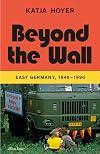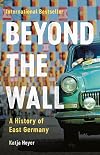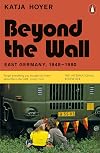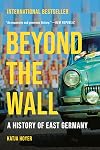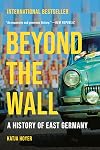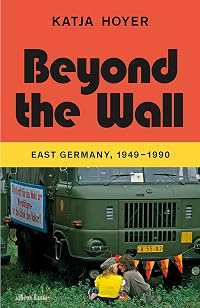
Beyond the Wall: East Germany, 1949-1990
by Katja Hoyer
On This Page
Description
In 1990, a country disappeared. When the iron curtain fell, East Germany simply ceased to be. For over forty years, from the ruin of the Second World War to the cusp of a new millennium, the GDR presented a radically different German identity to anything that had come before, and anything that exists today. Socialist solidarity, secret police, central planning, barbed wire- this was a Germany forged on the fault lines of ideology and geopolitics. In Beyond the Wall, acclaimed historian Katja show more Hoyer offers a kaleidoscopic new vision of this vanished country. Beginning with the bitter experience of German Marxists exiled by Hitler, she traces the arc of the state they would go on to create, first under the watchful eye of Stalin, and then in an increasingly distinctive German fashion. From the building of the Berlin Wall in 1961, to the relative prosperity of the 1970s, and on to the creaking foundations of socialism in the mid-1980s, Hoyer argues that amid oppression and frequent hardship, East Germany was yet home to a rich political, social and cultural landscape, a place far more dynamic than the Cold War caricature often painted in the West. show lessTags
Recommendations










Member Reviews
The author of this brilliant account was born in the former East Germany (GDR) in 1985, and is now a naturalised British citizen and writer in German history. As such, being born in the country and thereby having the family cultural background, but not having been old enough to form substantive memories and views, she is perhaps particularly well placed to cover this topic with sensitivity but without a massive axe to grind. Apparently, when the book was translated into German (yes she wrote the book in English despite her origin), the book was not as well received in her country of birth, with some reviewers claiming she was too pro-GDR. The reader can make up their own mind. She covers the whole history, not only political, and show more biographical with the roles of Wilhelm Pieck, Walter Ulbricht, Erich Honecker and Erich Mielke, but also economic, social and cultural. The narrative is also studded with personal recollections from ordinary GDR citizens from a wide variety of backgrounds, adding colour and depth to the main narrative. She certainly does not shrink from coverage of the lack of democracy, transparency and opportunities for political participation and travel, nor the repellent surveillance culture of the notorious Stasi. But at the same time, she acknowledges that East German society had some strengths, such as social mobility and educational opportunities for the working class, and opportunities for women through the provision of childcare, which exceeded that in West Germany at the time. For some East Germans, those maybe not motivated by politics or a desire for travel, but looking for economic security and provision for their families, the "package" no doubt seemed very attractive.
Of course the contradictions rose to a head in the mid to late 80s, and the final collapse of the GDR regime, along those in most of the rest of Eastern Europe, was stunningly quick and almost incredible, as I well remember observing the events as a young man just out of university. And the reunification of Germany was almost as quick - and many people would say in hindsight, probably too quick, given the failure to properly integrate East Germans into the new polity, which has resulted in economic and social inequality between the two uneven "halves" even to this day. A great and very readable account. show less
Of course the contradictions rose to a head in the mid to late 80s, and the final collapse of the GDR regime, along those in most of the rest of Eastern Europe, was stunningly quick and almost incredible, as I well remember observing the events as a young man just out of university. And the reunification of Germany was almost as quick - and many people would say in hindsight, probably too quick, given the failure to properly integrate East Germans into the new polity, which has resulted in economic and social inequality between the two uneven "halves" even to this day. A great and very readable account. show less
A useful, compact history of the German Democratic Republic in English. Hoyer, with the perspective of thirty years, tries to give us a balanced view, showing us how the closed borders and the suppression of individual liberty grew out of the impossible geopolitical situation the new country found itself in and the overriding goal of defending socialism, and how most people got on with their lives and thought the sacrifices the state was asking them to make worthwhile for most of the forty years the DDR existed. That doesn’t mean she tries to airbrush out the horrors and injustices committed against those who fell foul of the state apparatus in various ways, but she tries to get beyond the “Stasiland” caricature to look at what show more life was really like for DDR citizens.
Obviously, you can’t cover everything in a book this size: Hoyer concentrates on national and international politics and trade, and sets that off against a selection of individual experiences and some key topics in social history, such as education and childcare, the FDJ youth organisation, the military, the role of women, popular music, sport, travel and the supply of consumer goods. She doesn’t talk much about particular industries or agriculture, and there is almost nothing about literature and cinema or the other arts. I also felt that her “Epilogue” looking at the process of annexation by the Federal Republic after 1990 was a little thin — she comments on all the babies that got thrown out with the bathwater, and the persistent deprivation in the “new federal states”, but she doesn’t really attempt to look into how else it could have gone.
Obviously a very valuable book if you are new to the topic and only read in English, and having a compact overview helped me to join a few dots between other more specific things I’ve read, but I think it will probably leave most readers wanting more. show less
Obviously, you can’t cover everything in a book this size: Hoyer concentrates on national and international politics and trade, and sets that off against a selection of individual experiences and some key topics in social history, such as education and childcare, the FDJ youth organisation, the military, the role of women, popular music, sport, travel and the supply of consumer goods. She doesn’t talk much about particular industries or agriculture, and there is almost nothing about literature and cinema or the other arts. I also felt that her “Epilogue” looking at the process of annexation by the Federal Republic after 1990 was a little thin — she comments on all the babies that got thrown out with the bathwater, and the persistent deprivation in the “new federal states”, but she doesn’t really attempt to look into how else it could have gone.
Obviously a very valuable book if you are new to the topic and only read in English, and having a compact overview helped me to join a few dots between other more specific things I’ve read, but I think it will probably leave most readers wanting more. show less
In 1954, when I was 8 years old, I was an Army dependent living for a year in West Germany, or more correctly, in the French zone as it was known at that time. We took a one week trip to visit Berlin. One day we went through Check Point Charlie to see East Berlin. Nine years after WWII had ended it still was blocks and blocks of bombed out ruins, totally unlike the thriving metropolis of West Berlin. On the way back to the French zone we were driving on the Autobahn through East Germany when we were detained for about an hour by the VoPos. Seventy years later my impression of East Germany, thirty years after reunification, was still based on that week's mind altering experiences, until I read this book. It opened my eyes.
It does not show more portray East Germany as a paradise. It describes a country where the people struggled to survive. Unlike West Germany which had the resource rich regions and could rely on the Western aid through the Marshall plan, East Germany was thoroughly dependent on Russia. What I was amazed to learn was Stalin favored reunification while East Germany's leadership was more determined to build a different society based on Communism and Socialism. Russia's position does change with the Cold War and the East German leadership doubles down on their desire to create a society based on ideological visions. This book documents all the major events and personalities of East Germany's forty years with suitable documentation and footnoting. That made it read much like any history documenting a forty year experiment that failed. What makes this stand out are the anecdotes. The author makes real the changing situations by telling us about a person who was impacted and in a sense was an exemplar. This included people who were arrested, people who sought Western music and products such as Levi Jeans, people who joined the military as there only alternative, people who were constantly spied on by the Stasi, people who waited for years to get cars or apartments, people who fled the country, people who relied on relatives in West Germany, people who turned to their Soviet bloc neighbors even for vacations, woman who took generous maternity leaves and many who relied on easily available child care to become members of the workforce, and many more.
Before reading this book I expected to read a lot about Angela Merkel. While we do learn about her life, her family background, and her student days, we learn nothing about her career as leader of Germany and the West. Perhaps that's the next book. show less
It does not show more portray East Germany as a paradise. It describes a country where the people struggled to survive. Unlike West Germany which had the resource rich regions and could rely on the Western aid through the Marshall plan, East Germany was thoroughly dependent on Russia. What I was amazed to learn was Stalin favored reunification while East Germany's leadership was more determined to build a different society based on Communism and Socialism. Russia's position does change with the Cold War and the East German leadership doubles down on their desire to create a society based on ideological visions. This book documents all the major events and personalities of East Germany's forty years with suitable documentation and footnoting. That made it read much like any history documenting a forty year experiment that failed. What makes this stand out are the anecdotes. The author makes real the changing situations by telling us about a person who was impacted and in a sense was an exemplar. This included people who were arrested, people who sought Western music and products such as Levi Jeans, people who joined the military as there only alternative, people who were constantly spied on by the Stasi, people who waited for years to get cars or apartments, people who fled the country, people who relied on relatives in West Germany, people who turned to their Soviet bloc neighbors even for vacations, woman who took generous maternity leaves and many who relied on easily available child care to become members of the workforce, and many more.
Before reading this book I expected to read a lot about Angela Merkel. While we do learn about her life, her family background, and her student days, we learn nothing about her career as leader of Germany and the West. Perhaps that's the next book. show less
Katja Hoyer provides a history of communist East Germany that is both interesting and very readable. One of her techniques is to include the stories of "ordinary" people as part of each chapter showing how historical events affected their lives. IN contrast to so many other books about East Germany, she reminds the reader that many of the people living in East Germany managed to enjoy their lives there. This helps explain the tremendous sense of loss felt by many after the wall fell.
An excellent mix of history and personal stories resulting in a balanced view of the history of the GDR from the groundwork that led to it's founding to it's demise 41 years later. The best account I've read.
Somebody recommended this book during a short German course focusing on three German films, all dealing with the division of Germany and Berlin in one way or another, so I looked it up. Reading it revealed to me how little I actually knew about DDR. And it helped put in the context of some things I did know but hadn't really appreciated the context of.
A good in-depth look into this unique time in human history.
Members
- Recently Added By
Published Reviews
Ein Buch, das im Untertitel "eine neue Geschichte der DDR" verspricht, weckt Erwartungen. Neugierig macht, dass es sich bei der Autorin um eine 1985 in der DDR geborene, inzwischen in England lebende Historikerin handelt, die womöglich mit einem frischen, weltoffenen Blick auf den untergegangenen SED-Staat zurückschaut. Leider enttäuscht das Buch von Katja Hoyer auf der ganzen Linie.
added by mercure
Ilko-Sascha Kowalczuk hat Katja Hoyers hoch gelobte Studie „Diesseits der Mauer“ gelesen. Dass man Alltag und Diktatur voneinander trennen könnte, hält er für einen großen Trugschluss. Historiker sollten analysieren, nicht nacherzählen
added by mercure
Lists

Books Read in 2023
5,638 works; 147 members

Top Five Books of 2023
767 works; 317 members

Club Read's Recommended Nonfiction Written by Women
618 works; 30 members

Finished in 2026
9 works; 1 member
Author Information

3 Works 827 Members
Some Editions
Awards and Honors
Awards
Common Knowledge
- Canonical title*
- DDR bortom muren : Östtyskland 1949-90
- Original title
- Beyond the Wall: East Germany, 1949-1990
- Original publication date
- 2023-04-06; 2023
- People/Characters
- Josef Stalin; Wilhelm Pieck; Walter Ulbricht; Otto Grotewohl; Erich Honecker; Erich Mielke (show all 11); Leonid Brezjnev; Helmut Kohl; Michail Gorbatjov; Willy Brandt; Angela Merkel
- Important places
- German Democratic Republic; Moscow, Russia; Berlin, Germany; East Berlin, German Democratic Republic
- Dedication
- In memory of Harry, the most faithful of companions, the most trusted of confidants, and always a calm refuge in hours of storm.
- First words
- Halle, Saxony-Anhalt, 3 October 2021. A sixty-four-year-old woman in a cream-coloured blazer and black trousers took to the stage.
- Last words
- (Click to show. Warning: May contain spoilers.)It is time to take the German Democratic Republic for what it is - a part of German history, beyond the Wall.
- Blurbers
- Hoskins, Peter; Roberts, Andrew; Ypi, Lea; Sebag-Montefiore, Simon; Leeder, Karen; Hitchens, Peter (show all 21); Jeffries, Stuart; Marr, Andrew; Letwin, Oliver; Kampfner, John; Wieder, Thomas; Mallinson, Allan; Cliffe, Jeremy; Moorhouse, Roger; Boyd, Julia; Etchingham, Julie; Frankopan, Peter; Krastev, Ivan; Hatherley, Owen; Snow, Dan; Plokhii, Serhii
- Original language
- English
- Canonical DDC/MDS
- 943.1087
*Some information comes from Common Knowledge in other languages. Click "Edit" for more information.
Classifications
- Genres
- History, General Nonfiction, Nonfiction, Politics and Government
- DDC/MDS
- 943.1087 — History & geography History of Europe Central Europe: Germany, Austria, Switzerland, Czech, Poland, Hungary Northeastern Germany 1866- 1945-1990 : Period of East Germany
- LCC
- DD282 .H69 — History of Europe, Asia, Africa and Oceania Germany History of Germany East Germany
- BISAC
Statistics
- Members
- 443
- Popularity
- 69,474
- Reviews
- 10
- Rating
- (4.23)
- Languages
- 6 — Dutch, English, Finnish, German, Polish, Swedish
- Media
- Paper, Audiobook, Ebook
- ISBNs
- 18
- ASINs
- 10