
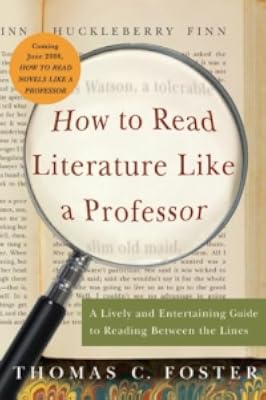
How to Read Literature Like a Professor: A Lively and Entertaining Guide to Reading Between the Lines
by Thomas C. Foster
On This Page
Description
What does it mean when a fictional hero takes a journey?. Shares a meal? Gets drenched in a sudden rain shower? Often, there is much more going on in a novel or poem than is readily visible on the surface -- a symbol, maybe, that remains elusive, or an unexpected twist on a character - and there's that sneaking suspicion that the deeper meaning of a literary text keeps escaping you. In this practical and amusing guide to literature, Thomas C. Foster shows how easy and gratifying it is to show more unlock those hidden truths, and to discover a world where a road leads to a quest a shared meal may signify a communion and rain, whether cleansing or destructive, is never just rain. Ranging from major themes to literary models, narrative devices, and form, How to Read Literature Like a Professor is the perfect companion for making your reading experience more enriching, satisfying, and fun. show lessTags
Recommendations
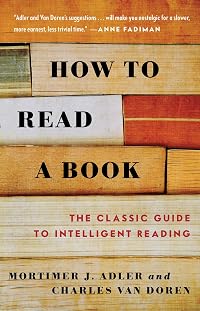
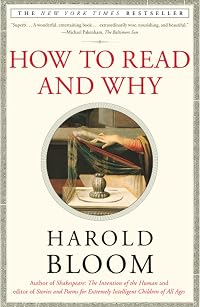
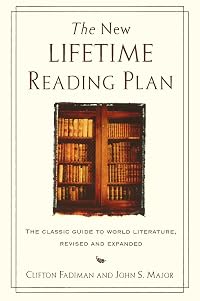
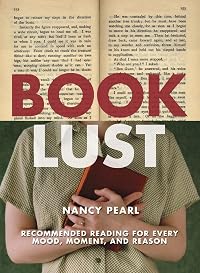

Member Recommendations
Member Reviews
Summary: An introduction to the basics of understanding literature--symbols, themes, and contexts--that enrich our reading of literary fiction.
Have you ever read a literary work and had the feeling that there was so much more going on in the text than you were grasping? Or have you read a review of a book that you read, and felt that the reviewer saw much more in the text than you had? Have you felt that you describe the characters and summarize the plot, but wondered what all of it might signify (although sometimes a story is just a story, but not often in serious literature)? Or were you like me in literature courses where this was all brought up very seriously and pretentiously in ways that made you feel utterly stupid, or worse, show more where it was just assumed that you understood this stuff?
If you identified with any of these descriptions, I think you will welcome this book as a welcome aid to enrich your reading. For one thing, Foster engages us in an informal, offhand style that makes all the different literary devices he is discussing interesting and fun, and make you feel you are not as stupid as you thought. Here, for example is a passage from the chapter "Every Trip is a Quest (Except When It's Not)":
"The real reason for a quest never involves the stated reason. In fact, more often than not, the quester fails at the stated task. So why do they go and why do we care? They go because of the stated task, mistakenly believing that it is their real mission. We know, however, that their quest is educational. They don't know enough about the only subject that really matters: themselves. The real reason for a quest is always self-knowledge. That's why questers are so often young, inexperienced, immature, sheltered. Forty-five-year-old men either have self-knowledge or they're never going to get it, while your average sixteen-to-seventeen-year-old kid is likely to have a long way to go in the self-knowledge department."
Foster, who is the lit prof all of us wish we had, helps us to see that memory, symbol, and pattern are key to going beyond characters and plot. As we are reading, asking "where have I seen that before?" can be helpful to understanding what is going on. Shakespeare, the Bible, and Greek mythology are three common sources upon which writers consciously or subconsciously draw. One of the key things is that "there's only one story" and that writers draw upon what they've read, a phenomenon known as "intertextuality." Have you ever felt your books are talking with each other? They just may be.
Then there are symbols, and the challenge of interpreting them: rain and weather, trips that are quests, shared meals that in some way signify communion, going into and coming out of water (baptism), all the symbols that point to sex, and the other things that sex points to.
Then there are patterns, like the vampire pattern--the older person who sucks the life out of the younger, innocent, the hero pattern and how it is usually those next to the hero who die (like the crew in the red uniforms on Star Trek) or the pattern of the Christ figure. Then of course, there is irony which turns the patterns on their heads.
Foster walks us through all of these, with a variety of examples from literary works. I found his use of these works to illustrate various elements from symbol to irony piqued my curiosity to read works I have not read. After covering these elements, he invites us to put them into practice with an exquisite short story by Katherine Mansfield, "The Garden Party."
The book concludes with the encouragement to read what we like while offering a reading list of works he has mentioned throughout the work as places to start. What I most appreciated was his encouragement in the previous chapter in his discussion on Roland Barthes "death of the author." His point is that what we really have access to is the text and our opinion of it. He urges:
"Don't cede control of your opinions to critics, teachers, famous writers, or know-it-all professors. Listen to them, but read confidently and assertively, and don't be ashamed or apologetic about your reading. You and I both know you're capable and intelligent, so don't let anyone tell you otherwise. Trust the text and trust your instincts. You'll rarely go far wrong."
Now doesn't that make you want to read great literature? show less
Have you ever read a literary work and had the feeling that there was so much more going on in the text than you were grasping? Or have you read a review of a book that you read, and felt that the reviewer saw much more in the text than you had? Have you felt that you describe the characters and summarize the plot, but wondered what all of it might signify (although sometimes a story is just a story, but not often in serious literature)? Or were you like me in literature courses where this was all brought up very seriously and pretentiously in ways that made you feel utterly stupid, or worse, show more where it was just assumed that you understood this stuff?
If you identified with any of these descriptions, I think you will welcome this book as a welcome aid to enrich your reading. For one thing, Foster engages us in an informal, offhand style that makes all the different literary devices he is discussing interesting and fun, and make you feel you are not as stupid as you thought. Here, for example is a passage from the chapter "Every Trip is a Quest (Except When It's Not)":
"The real reason for a quest never involves the stated reason. In fact, more often than not, the quester fails at the stated task. So why do they go and why do we care? They go because of the stated task, mistakenly believing that it is their real mission. We know, however, that their quest is educational. They don't know enough about the only subject that really matters: themselves. The real reason for a quest is always self-knowledge. That's why questers are so often young, inexperienced, immature, sheltered. Forty-five-year-old men either have self-knowledge or they're never going to get it, while your average sixteen-to-seventeen-year-old kid is likely to have a long way to go in the self-knowledge department."
Foster, who is the lit prof all of us wish we had, helps us to see that memory, symbol, and pattern are key to going beyond characters and plot. As we are reading, asking "where have I seen that before?" can be helpful to understanding what is going on. Shakespeare, the Bible, and Greek mythology are three common sources upon which writers consciously or subconsciously draw. One of the key things is that "there's only one story" and that writers draw upon what they've read, a phenomenon known as "intertextuality." Have you ever felt your books are talking with each other? They just may be.
Then there are symbols, and the challenge of interpreting them: rain and weather, trips that are quests, shared meals that in some way signify communion, going into and coming out of water (baptism), all the symbols that point to sex, and the other things that sex points to.
Then there are patterns, like the vampire pattern--the older person who sucks the life out of the younger, innocent, the hero pattern and how it is usually those next to the hero who die (like the crew in the red uniforms on Star Trek) or the pattern of the Christ figure. Then of course, there is irony which turns the patterns on their heads.
Foster walks us through all of these, with a variety of examples from literary works. I found his use of these works to illustrate various elements from symbol to irony piqued my curiosity to read works I have not read. After covering these elements, he invites us to put them into practice with an exquisite short story by Katherine Mansfield, "The Garden Party."
The book concludes with the encouragement to read what we like while offering a reading list of works he has mentioned throughout the work as places to start. What I most appreciated was his encouragement in the previous chapter in his discussion on Roland Barthes "death of the author." His point is that what we really have access to is the text and our opinion of it. He urges:
"Don't cede control of your opinions to critics, teachers, famous writers, or know-it-all professors. Listen to them, but read confidently and assertively, and don't be ashamed or apologetic about your reading. You and I both know you're capable and intelligent, so don't let anyone tell you otherwise. Trust the text and trust your instincts. You'll rarely go far wrong."
Now doesn't that make you want to read great literature? show less
My wife's been after me to read this one and I finally got round to it. I was put off by the title thinking it would be a boorish, condescending exercise in Harold Bloom-like pretentiousness. It's quite the opposite. Foster does a very good job of deflating the myth that only a Ph.D. can really appreciate and understand literature. His approach is accessible, practical, and frequently entertaining. He draws some great comparisons between the classics and familiar films and TV series. He also doesn't hold his nose at contemporary popular writers. I can see why this book frequently appears on lists of recommended reading for high school students.
I found this book while on a search for a good introduction to literary criticism. This seemed to hit the mark. In it, Foster pursues hard-core analysis of the literary project while spinning a down-to-earth persona (which was obviously well-honed while in a classroom). I was not let down.
One can see why Foster's work is popular among Advanced Placement English teachers in America. He presents himself as one of us (i.e., American and not British), only with a deep erudition of literature. He invites us to see literature symbolically with the emotional weight of the literary tradition on our backs. We begin to see everyday literature as an intertextual conversation amongst the ages, where writers borrow ideas from each other and analyze show more each other's tomes.
Foster tackles topics like the weather, sex, irony, journeys and quests, and more. As the subtitle tells us, he teaches us to read between the lines as professors do. I hope that reading between the lines will lead to a greater efficacy of writing so that others can read between the lines as well.
Underlying this book is Foster's theory that increasing literary appreciation will lead to greater enjoyment of books. I suspect that he is right on. show less
One can see why Foster's work is popular among Advanced Placement English teachers in America. He presents himself as one of us (i.e., American and not British), only with a deep erudition of literature. He invites us to see literature symbolically with the emotional weight of the literary tradition on our backs. We begin to see everyday literature as an intertextual conversation amongst the ages, where writers borrow ideas from each other and analyze show more each other's tomes.
Foster tackles topics like the weather, sex, irony, journeys and quests, and more. As the subtitle tells us, he teaches us to read between the lines as professors do. I hope that reading between the lines will lead to a greater efficacy of writing so that others can read between the lines as well.
Underlying this book is Foster's theory that increasing literary appreciation will lead to greater enjoyment of books. I suspect that he is right on. show less
Ever had an English class where you wondered, "How on earth does the professor come up with this interpretation stuff?" Though Thomas Foster himself is a college professor, he clearly remembers what it was like to be a high school or college undergrad reader. In short chapters, he engagingly and clearly explains the motifs, symbols, and patterns one can look for and expect when reading.
I truly wish that I had read this informative and entertaining book when I was in college. I was an English major, but I didn't buy a good fourth of what I wrote in my papers, feeling like I was reading too much between the lines. The main issue for me was "How could the author have possibly meant ---- or been reacting to ---- ? How do you know?" I never show more felt that my English professors answered this satisfactorily, but in one chapter, Foster does: since stories are, at their core, interconnected, an author may have read (and reacted to) one book that was informed by a previous one. Even if the author never intended the connection to the original story, his/her writing has indeed been affected by it because of that later book (I'm not explaining this very well, but trust me, Foster does).
I may never read quite like an English professor (I think it would take multiple readings of any text to do so). His attitude that it's OK to enjoy the story at its most literal level and not pick up on every nuance or have exactly his interpretation made me think that I could be a better reader than I have been, and has inspired me to read more texts that take a reader's effort to fully appreciate. show less
I truly wish that I had read this informative and entertaining book when I was in college. I was an English major, but I didn't buy a good fourth of what I wrote in my papers, feeling like I was reading too much between the lines. The main issue for me was "How could the author have possibly meant ---- or been reacting to ---- ? How do you know?" I never show more felt that my English professors answered this satisfactorily, but in one chapter, Foster does: since stories are, at their core, interconnected, an author may have read (and reacted to) one book that was informed by a previous one. Even if the author never intended the connection to the original story, his/her writing has indeed been affected by it because of that later book (I'm not explaining this very well, but trust me, Foster does).
I may never read quite like an English professor (I think it would take multiple readings of any text to do so). His attitude that it's OK to enjoy the story at its most literal level and not pick up on every nuance or have exactly his interpretation made me think that I could be a better reader than I have been, and has inspired me to read more texts that take a reader's effort to fully appreciate. show less
This book is a non-fiction guide by a professor at the University of Michigan-Flint on how to approach literary reading with a goal of better understanding. It is primarily focused on literature (loosely defined as works related to the human condition or what it means to be human) from the mid-twentieth century and prior. Foster provides insight to help the reader recognize memory, symbol, and pattern, citing examples from notable works. He provides “a broad introduction to the codes and patterns that inform our readings.”
The author desires to help readers decipher hidden meanings. He also admits that we can never know for sure what the author intended. Examples of topics include common themes, archetypes, metaphors, allegory, irony show more and more. A few specific content areas are examined in depth with supporting cases to show how to delve into the deeper meaning being conveyed, such as violence, sex, seasonality, weather, geography, markings, journeys, meals, and diseases. The author covers the widespread influences of Shakespeare, The Bible, fables, and Greek mythology. With a few exceptions, examples are derived primarily from British and American literature. Spoilers for these works are included to make his points.
One area I found particularly enjoyable was the discussion of how the works in the literary canon are inter-connected, and that authors are influenced by what they have read, known as “intertextuality.” I also appreciated the idea of a reader’s imagination engaging the imagination of the author, who may have lived many years ago, thus giving the reader an idea of his or her world and a sense of historical perspective. Near the end, a short story written by Karen Mansfield is included, and the reader is invited to practice interpretation of the text using the principles previously provided.
This book is written with humor, wit, and self-deprecation. The author does not claim to have all the answers and encourages readers to draw upon their own experiences. If a perspective is supportable in the work, it is valid. I appreciated the inclusion of a suggested reading list at the end. Recommended to people who enjoy analyzing what they read, students that need to read literature for classes, and life-long learners.
Memorable Quote:
“A reader’s imagination is the act of one creative intelligence engaging another.” show less
The author desires to help readers decipher hidden meanings. He also admits that we can never know for sure what the author intended. Examples of topics include common themes, archetypes, metaphors, allegory, irony show more and more. A few specific content areas are examined in depth with supporting cases to show how to delve into the deeper meaning being conveyed, such as violence, sex, seasonality, weather, geography, markings, journeys, meals, and diseases. The author covers the widespread influences of Shakespeare, The Bible, fables, and Greek mythology. With a few exceptions, examples are derived primarily from British and American literature. Spoilers for these works are included to make his points.
One area I found particularly enjoyable was the discussion of how the works in the literary canon are inter-connected, and that authors are influenced by what they have read, known as “intertextuality.” I also appreciated the idea of a reader’s imagination engaging the imagination of the author, who may have lived many years ago, thus giving the reader an idea of his or her world and a sense of historical perspective. Near the end, a short story written by Karen Mansfield is included, and the reader is invited to practice interpretation of the text using the principles previously provided.
This book is written with humor, wit, and self-deprecation. The author does not claim to have all the answers and encourages readers to draw upon their own experiences. If a perspective is supportable in the work, it is valid. I appreciated the inclusion of a suggested reading list at the end. Recommended to people who enjoy analyzing what they read, students that need to read literature for classes, and life-long learners.
Memorable Quote:
“A reader’s imagination is the act of one creative intelligence engaging another.” show less
Reading for pleasure
I was fortunate to be born to booklovers and attend schools with many like-minded pupils, where excellent teachers nurtured our enthusiasm. English literature was my favourite subject, and one I did well in, but when it was time for us, aged 16, to pick only three subjects for the two years before applying to university, I chose not to study English. I wanted to read purely for pleasure: what and when I liked, without dissecting every word and punctuation mark and risk literally losing the plot, and without having to worry about the opinion of an unseen examiner.
I resisted gentle persuasion from parents and teachers, and still think it was the right decision. Nevertheless, I gradually became a less analytical show more reader, until I joined GoodReads in 2008.
Better than it sounds!
Ignore the book’s clickbait title, which I assume was picked by the publisher’s sales team. Nevertheless, if you want to read like a prof, this book may help, especially if you skim the chapter titles every time you read a novel (but where's the joy in that?). It might also be useful for budding writers (for plot and character ideas, rather than crafting prose).
I read this to refresh my critical and analytical abilities. Foster clearly wants people to enjoy stories: he explores “a grammar of literature” so readers acquire pattern recognition to better understand and appreciate what they read.
There are 27 short, chatty chapters, with one issue in each: “Every Trip Is a Quest (Except When It’s Not)”, for example. Throughout, he cites examples from the western literary canon, plus ancient Greece and a bit of China, with a skew to US classics. That’s fair enough as Foster is a professor of English at the University of Michigan-Flint. Even books I’m unfamiliar with are given enough context that the point is clear.
It has a good reading list (including a handful of movies to “read”), with a sentence or two about each, as well as an index.
Image: Grant Snider’s eight-cell comic, “Literary Devices” (Source.)
The reader’s relationship with a book
The core message is enjoyment, enhanced by deeper understanding and awareness of connections and intertextuality (the dialogue between old and new texts). Most important is the story’s journey from author, through their characters, to the reader, filtered by personal experience. I wouldn’t call this collaboration, because it’s invariably a one-way process (“choose your own adventure” books notwithstanding), inescapably so if the author is dead. In the near future, that may change: it’s increasingly true for journalists, and even novelists and poets have far more interaction with their readers than they used to, on personal blogs, but especially on social media.
I think it’s hyperbole to claim that “Every work teaches us how to read it as we go along”, but Foster urges readers to trust their experience and their interpretation: “Use what you know” and “Own the books you read”.
There is no single, definitive interpretation of a symbol, character, or novel, not even Foster’s. Discussion and disagreement are part of the pleasure of literary scholarship - and GoodReads.
Symbolism
Discussing symbolism is obviously an important element of a book like this, and Foster asserts that everything is potentially symbolic: not just objects, but actions and events too. Symbols are often culturally dependent, but can be useful short-cuts (or clichés). He gives many examples, including: surviving disaster as rebirth, rivers for change or baptism, rock for stasis, the heart for love and disease, and a shared meal being a form of communion. Whereas, in real life, violence is violence, in literature, it can be symbolic, literal, or both, and “accidents” are rarely accidental.
Irony is also a major theme: another case of things not being quite what they first seem. Even a story that isn’t overly humorous may be full of irony, especially where potential symbols don’t have the expected meaning. He cites one of Oscar Wilde’s contrarian witticisms: Lady Bracknell’s observation that Lady Harbury’s “hair has turned quite gold from grief” after her husband’s death, though the whole play is clearly and deliberately comic, so I think it’s rather different.
Important as they are, don’t let symbols become a distraction from the story itself.
Image: “The curtains were blue.” What the author meant versus what your English teacher thinks the author meant. (Source.)
Time and place - and character
A story must have a setting, so assume the location, culture, people, and period may be significant.
A very ordinary meal might be lavish for the circumstances, and thus laden with messages of sacrifice and generosity.
Until the twentieth century, the causes of disease were largely mysterious and the ailments characters had were often symbolic (consumption was beautiful and blameless, syphilis the opposite, and heart trouble often mirrored twisted or failed romance).
Just as Hollywood had the self-censoring Hays Code, abstractions and euphemism were long necessary in literature, giving plausible deniability for the author (any offence is inferred by the reader) - though that didn’t work for DH Lawrence.
Paraphrasing Aristotle, Foster says “Plot is character revealed in action” and that most literature (with a capital L?) is character-based. Don’t get so involved in an exciting plot that you overlook the most important thing a character can do - to change.
Image: “The Treachery of Images” aka “This is not a pipe” by René Magritte. See also what Freud probably didn’t say, “Sometimes a cigar is just a cigar”. (Source.)
How many stories?
Foster asserts, more than once, that “There’s only one story”, which is quite a claim.
“It’s not about anything. It’s about everything… What the one story, the ur-story, is about is ourselves, about what it means to be human.”
Hmmmm. I’m not convinced that’s helpful, but I really must read, Christopher Booker’s The Seven Basic Plots: Why We Tell Stories, and maybe Foster should as well.
On firmer ground, he says:
“We want strangeness in our stories, but we want familiarity too.”
The more we read, and think about what we read, the more familiarity we find, even in works that seem startlingly original.
“The writer we know better than any other… even if we haven’t read him, is Shakespeare.”
If a “story resonates with the richness of distant antecedents, with the power of accumulated myth” consider “allusions to older and bigger texts”, especially the Bard, the Bible, and fairytales, which are:
“Stories that are deeply ingrained in our group memory, that shape our culture and are in turn shaped by it.”
Image: Homer saw four great conflicts: with nature, the divine, other humans, and ourselves. Grant Snider expands that to nine to accommodate PoMo, but how will he incorporate a future where technology means the relationship between authors and readers can be truly collaborative, rather than conflicting? (Source.)
Envoi
This book reminded me to be a little more conscious of how stories are constructed and how they connect with other stories, while ensuring that’s not at the expense of the joy that reading should bring.
Ultimately, there were not many “aha” moments, but enough “ah, yes” ones that I’m glad I read it. show less
I was fortunate to be born to booklovers and attend schools with many like-minded pupils, where excellent teachers nurtured our enthusiasm. English literature was my favourite subject, and one I did well in, but when it was time for us, aged 16, to pick only three subjects for the two years before applying to university, I chose not to study English. I wanted to read purely for pleasure: what and when I liked, without dissecting every word and punctuation mark and risk literally losing the plot, and without having to worry about the opinion of an unseen examiner.
I resisted gentle persuasion from parents and teachers, and still think it was the right decision. Nevertheless, I gradually became a less analytical show more reader, until I joined GoodReads in 2008.
Better than it sounds!
Ignore the book’s clickbait title, which I assume was picked by the publisher’s sales team. Nevertheless, if you want to read like a prof, this book may help, especially if you skim the chapter titles every time you read a novel (but where's the joy in that?). It might also be useful for budding writers (for plot and character ideas, rather than crafting prose).
I read this to refresh my critical and analytical abilities. Foster clearly wants people to enjoy stories: he explores “a grammar of literature” so readers acquire pattern recognition to better understand and appreciate what they read.
There are 27 short, chatty chapters, with one issue in each: “Every Trip Is a Quest (Except When It’s Not)”, for example. Throughout, he cites examples from the western literary canon, plus ancient Greece and a bit of China, with a skew to US classics. That’s fair enough as Foster is a professor of English at the University of Michigan-Flint. Even books I’m unfamiliar with are given enough context that the point is clear.
It has a good reading list (including a handful of movies to “read”), with a sentence or two about each, as well as an index.
Image: Grant Snider’s eight-cell comic, “Literary Devices” (Source.)
The reader’s relationship with a book
The core message is enjoyment, enhanced by deeper understanding and awareness of connections and intertextuality (the dialogue between old and new texts). Most important is the story’s journey from author, through their characters, to the reader, filtered by personal experience. I wouldn’t call this collaboration, because it’s invariably a one-way process (“choose your own adventure” books notwithstanding), inescapably so if the author is dead. In the near future, that may change: it’s increasingly true for journalists, and even novelists and poets have far more interaction with their readers than they used to, on personal blogs, but especially on social media.
I think it’s hyperbole to claim that “Every work teaches us how to read it as we go along”, but Foster urges readers to trust their experience and their interpretation: “Use what you know” and “Own the books you read”.
There is no single, definitive interpretation of a symbol, character, or novel, not even Foster’s. Discussion and disagreement are part of the pleasure of literary scholarship - and GoodReads.
Symbolism
Discussing symbolism is obviously an important element of a book like this, and Foster asserts that everything is potentially symbolic: not just objects, but actions and events too. Symbols are often culturally dependent, but can be useful short-cuts (or clichés). He gives many examples, including: surviving disaster as rebirth, rivers for change or baptism, rock for stasis, the heart for love and disease, and a shared meal being a form of communion. Whereas, in real life, violence is violence, in literature, it can be symbolic, literal, or both, and “accidents” are rarely accidental.
Irony is also a major theme: another case of things not being quite what they first seem. Even a story that isn’t overly humorous may be full of irony, especially where potential symbols don’t have the expected meaning. He cites one of Oscar Wilde’s contrarian witticisms: Lady Bracknell’s observation that Lady Harbury’s “hair has turned quite gold from grief” after her husband’s death, though the whole play is clearly and deliberately comic, so I think it’s rather different.
Important as they are, don’t let symbols become a distraction from the story itself.
Image: “The curtains were blue.” What the author meant versus what your English teacher thinks the author meant. (Source.)
Time and place - and character
A story must have a setting, so assume the location, culture, people, and period may be significant.
A very ordinary meal might be lavish for the circumstances, and thus laden with messages of sacrifice and generosity.
Until the twentieth century, the causes of disease were largely mysterious and the ailments characters had were often symbolic (consumption was beautiful and blameless, syphilis the opposite, and heart trouble often mirrored twisted or failed romance).
Just as Hollywood had the self-censoring Hays Code, abstractions and euphemism were long necessary in literature, giving plausible deniability for the author (any offence is inferred by the reader) - though that didn’t work for DH Lawrence.
Paraphrasing Aristotle, Foster says “Plot is character revealed in action” and that most literature (with a capital L?) is character-based. Don’t get so involved in an exciting plot that you overlook the most important thing a character can do - to change.
Image: “The Treachery of Images” aka “This is not a pipe” by René Magritte. See also what Freud probably didn’t say, “Sometimes a cigar is just a cigar”. (Source.)
How many stories?
Foster asserts, more than once, that “There’s only one story”, which is quite a claim.
“It’s not about anything. It’s about everything… What the one story, the ur-story, is about is ourselves, about what it means to be human.”
Hmmmm. I’m not convinced that’s helpful, but I really must read, Christopher Booker’s The Seven Basic Plots: Why We Tell Stories, and maybe Foster should as well.
On firmer ground, he says:
“We want strangeness in our stories, but we want familiarity too.”
The more we read, and think about what we read, the more familiarity we find, even in works that seem startlingly original.
“The writer we know better than any other… even if we haven’t read him, is Shakespeare.”
If a “story resonates with the richness of distant antecedents, with the power of accumulated myth” consider “allusions to older and bigger texts”, especially the Bard, the Bible, and fairytales, which are:
“Stories that are deeply ingrained in our group memory, that shape our culture and are in turn shaped by it.”
Image: Homer saw four great conflicts: with nature, the divine, other humans, and ourselves. Grant Snider expands that to nine to accommodate PoMo, but how will he incorporate a future where technology means the relationship between authors and readers can be truly collaborative, rather than conflicting? (Source.)
Envoi
This book reminded me to be a little more conscious of how stories are constructed and how they connect with other stories, while ensuring that’s not at the expense of the joy that reading should bring.
Ultimately, there were not many “aha” moments, but enough “ah, yes” ones that I’m glad I read it. show less
This book is a non-fiction guide by a professor at the University of Michigan-Flint on how to approach literary reading with a goal of better understanding. It is primarily focused on literature (loosely defined as works related to the human condition or what it means to be human) from the mid-twentieth century and prior. Foster provides insight to help the reader recognize memory, symbol, and pattern, citing examples from notable works. He provides “a broad introduction to the codes and patterns that inform our readings.”
The author desires to help readers decipher hidden meanings. He also admits that we can never know for sure what the author intended. Examples of topics include common themes, archetypes, metaphors, allegory, irony show more and more. A few specific content areas are examined in depth with supporting cases to show how to delve into the deeper meaning being conveyed, such as violence, sex, seasonality, weather, geography, markings, journeys, meals, and diseases. The author covers the widespread influences of Shakespeare, The Bible, fables, and Greek mythology. With a few exceptions, examples are derived primarily from British and American literature. Spoilers for these works are included to make his points.
One area I found particularly enjoyable was the discussion of how the works in the literary canon are inter-connected, and that authors are influenced by what they have read, known as “intertextuality.” I also appreciated the idea of a reader’s imagination engaging the imagination of the author, who may have lived many years ago, thus giving the reader an idea of his or her world and a sense of historical perspective. Near the end, a short story written by Karen Mansfield is included, and the reader is invited to practice interpretation of the text using the principles previously provided.
This book is written with humor, wit, and self-deprecation. The author does not claim to have all the answers and encourages readers to draw upon their own experiences. If a perspective is supportable in the work, it is valid. I appreciated the inclusion of a suggested reading list at the end. Recommended to people who enjoy analyzing what they read, students that need to read literature for classes, and life-long learners.
Memorable Quote:
“A reader’s imagination is the act of one creative intelligence engaging another.” show less
The author desires to help readers decipher hidden meanings. He also admits that we can never know for sure what the author intended. Examples of topics include common themes, archetypes, metaphors, allegory, irony show more and more. A few specific content areas are examined in depth with supporting cases to show how to delve into the deeper meaning being conveyed, such as violence, sex, seasonality, weather, geography, markings, journeys, meals, and diseases. The author covers the widespread influences of Shakespeare, The Bible, fables, and Greek mythology. With a few exceptions, examples are derived primarily from British and American literature. Spoilers for these works are included to make his points.
One area I found particularly enjoyable was the discussion of how the works in the literary canon are inter-connected, and that authors are influenced by what they have read, known as “intertextuality.” I also appreciated the idea of a reader’s imagination engaging the imagination of the author, who may have lived many years ago, thus giving the reader an idea of his or her world and a sense of historical perspective. Near the end, a short story written by Karen Mansfield is included, and the reader is invited to practice interpretation of the text using the principles previously provided.
This book is written with humor, wit, and self-deprecation. The author does not claim to have all the answers and encourages readers to draw upon their own experiences. If a perspective is supportable in the work, it is valid. I appreciated the inclusion of a suggested reading list at the end. Recommended to people who enjoy analyzing what they read, students that need to read literature for classes, and life-long learners.
Memorable Quote:
“A reader’s imagination is the act of one creative intelligence engaging another.” show less
Members
- Recently Added By
Lists

Books about Books
149 works; 24 members

Books Read in 2013
1,630 works; 51 members

KayStJ's to-read list
1,616 works; 11 members

Top Five Books of 2016
795 works; 229 members

Literature and Criticism
12 works; 1 member
Author Information

15 Works 7,536 Members
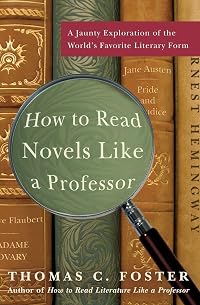
Thomas C. Foster is a professor of English at the University of Michigan-Flint. He teaches contemporary fiction, drama, poetry, creative writing, and composition. He is the author of several books including Twenty-Five Books That Shaped America: How White Whales, Green Lights, and Restless Spirits Forged Our National Identity, How to Read show more Literature Like a Professor: A Lively and Entertaining Guide to Reading Between the Lines, and How to Read Novels Like a Professor: A Jaunty Exploration of the World's Favorite Literary Form. (Bowker Author Biography) show less
Some Editions
Awards and Honors
Distinctions
Work Relationships
Common Knowledge
- Canonical title
- How to Read Literature Like a Professor: A Lively and Entertaining Guide to Reading Between the Lines
- Original publication date
- 2003-02-18; 2014
- Dedication
- For my sons, Robert and Nathan
- First words
- Preface
The amazing thing about books is how they have lives of their own.
Introduction
Mr. Lindner? That Milquetoast?
Okay, so here's the deal: let's say, purely hypothetically, you're reading a book about an average sixteen-year-old kid in the summer of 1968. - Last words
- (Click to show. Warning: May contain spoilers.)And fare thee well.
- Blurbers
- Basbanes, Nicholas A.; Wagner-Martin, Linda; Shapiro, James; Lynch, Thomas
- Original language
- English
- Disambiguation notice
- This is NOT the "For Kids" edition.
Classifications
Statistics
- Members
- 5,456
- Popularity
- 2,454
- Reviews
- 96
- Rating
- (3.83)
- Languages
- 6 — Chinese, English, Lithuanian, Polish, Portuguese, Spanish
- Media
- Paper, Audiobook, Ebook
- ISBNs
- 30
- UPCs
- 1
- ASINs
- 21