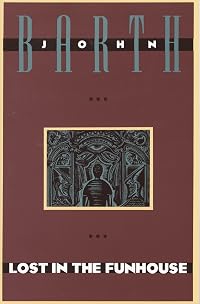
Lost in the Funhouse
by John Barth
On This Page
Description
Fourteen short literary experiments intended for perusal in sequence are set in contemporary society and classical Greece.Tags
Recommendations










Member Reviews
Lost in the Funhouse, John Barth’s collection of fourteen metafictional short-stories could take the cupcake for the most extreme form of self-reflexive postmodern literature ever written. Frame-Tale is ten words long on a Mobius strip, Night-Sea Journey a ten-pager, an occasionally light, occasionally dark brooding on life and death in the tradition of Blaise Pascal’s Pensées, and the longest piece in the collection, Lost in the Funhouse, about a young boy on the threshold of his teenage years, a story that awakened my own buried, complex emotions when I was of similar age, a story utilizing metafictional techniques in the telling of a traditional coming-of-age tale.
However, to give a reader a more decided taste of John Barth’s show more scrumptious vanilla with honey cream cheese frosting cupcake collection, I will focus on one of my favorite of these delectable specimens, the title of which is (and let us not be shocked since we are talking metafiction): Title. Here goes with my linking Title with a batch of major themes in the world of the postmodern:
Poiumena – Big word, but don’t be put off, it means a story about the very process of creating a story, even the very story we are reading, as in the first short paragraph of Title: “Beginning: in the middle, past the middle, nearer three-quarters done, waiting for the end. Consider how dreadful so far: passionless, abstraction, pro, dis. And it will get worse. Can we possibly continue?” Actually it does continue for another nine pages, and, fortunately, this metafictional story gets better not worse. Better, that is, if you are into metafiction.
Irony and Playfulness – The first-person narrator, we can call him John-John (I have no shame as I just used this silly name in a previous John Barth review) tells us directly how he is required to develop a plot and theme by getting down and dirty into some serious conflicts and complications. Of course, big difference between talking about conflicts and actual conflicts, just as there is a big difference between reading about a fistfight and the reality of exchanging blows and coming home with a bloody nose. The authors of metafiction have the smallest number of bloody noses per page compared with all other genres. No kidding – I did the counting myself.
Pastiche – In postmodern literature, pasting together various genres or styles. Not to be outdone, John-John pastes together a story with digressions on grammar, direct addresses to the reader, William Faulkner swearwords, reflections on self-reflexive fiction-writing, among others. And, by the way, in one of his other stories collected here, Menelaiad, an entire paragraph consists of quotation marks.
Minimalism – As it turns out, this John Barth collection includes a life story compressed into fourteen pages and an autobiography boiled down into six pages. Does it get any more minimal that that? One way minimalism can be defined is the manner in which an author will provide the barest descriptions and ask the reader to fill in the blanks. Again, not to be outdone, in Title, John-John asks us directly to fill in the blank at least once; and in other passages, we are asked indirectly to fill in the blanks. By my latest count, I filled in the blank twenty-seven times.
Maximalism – Thou shall leave no literary device unturned. In his author’s Forward to this collection, John Barth informs us writers tend by temperament to be either sprinters or marathoners and how really, really, short fiction is not his long suit. But after tapping many the literary device in a string of doorstopper novels, he wanted to, by golly, get his fiction in those collections of short stories, the kind of books he always uses to teach from. “Not all of a writer’s motives are pure.” Thus we have Title and the other short stories here. Got to hand it to you Sir John, you are a maximalist with a vengeance!
Metafiction – A close cousin with a story about a story, metafiction deals with writing about writing. And there is plenty of such in Title, as when we read: “Once upon a time you were satisfied with incidental felicities and niceties of technique: the unexpected image, the refreshingly accurate word-choice, the memorable simile that yields deeper and subtler significances upon reflection, like a memorable smile. Somebody please stop me.” No problem, John-John – I’ll stop you. As the dice below spell out, we have reached the end. I hope this short review provides enough information to enable a reader to judge if Lost in the Funhouse is your cupcake of tea. And that's "T" as in Title. show less
Barth is one of those writers who seems like he can do anything. He's a dangerous one for beginning writers to get into since his work comes off as so effortless. He makes writing an 800 page historical comedy about an obscure poet seem like it just poured out of his head onto the page. Imitators eventually learn how hard it is to be another John Barth, but usually not without going through a lot of pain and self-abasement (and plenty of tortured prose) that could have otherwise been avoided. "Funhouse" is as fine a short story collection, one of the finest in fact, but it's a hard drug to kick.
The stories run about as wide a gamete as possible, from the various stories about the birth and development of the child Ambrose (two of them show more fairly straightforward, one of them a postmodern masterpiece) to the various stories about the mechanics of telling a story, along with a few scattered odds and ends, particularly the opening story, a single line spread over two pages that reads "Once upon a time there was a story that began..." The insidious implication being that the next line will be the first one repeated and so on for infinity. Despite its disparate nature, the book is more of a piece than a scattered collection. Barth's themes of life, growth, development and the need to tell stories are slowly brought together into a single idea: that life is a story, and living is the telling. Telling stories is hence an affirmation of life.
(This review originally appeared on zombieunderground.net) show less
The stories run about as wide a gamete as possible, from the various stories about the birth and development of the child Ambrose (two of them show more fairly straightforward, one of them a postmodern masterpiece) to the various stories about the mechanics of telling a story, along with a few scattered odds and ends, particularly the opening story, a single line spread over two pages that reads "Once upon a time there was a story that began..." The insidious implication being that the next line will be the first one repeated and so on for infinity. Despite its disparate nature, the book is more of a piece than a scattered collection. Barth's themes of life, growth, development and the need to tell stories are slowly brought together into a single idea: that life is a story, and living is the telling. Telling stories is hence an affirmation of life.
(This review originally appeared on zombieunderground.net) show less
One of the Seven Additional Author's Notes for Lost in the Funhouse declares
...and then proceeds to defend the original "Author's Note" by saying
It is difficult to think of a better demonstration of the contents of this volume.
The "Author's Note" prefatory to the first American edition of this book has been called by some reviewers pretentious.
...and then proceeds to defend the original "Author's Note" by saying
the regnant idea is the unpretentious one of turning as many aspects of the fiction as possible -- the structure, the narrative viewpoint, the means of presentation, in some instances the process of composition and/or recitation as well as of reading or listening -- into dramatically relevant emblems of the theme.
It is difficult to think of a better demonstration of the contents of this volume.
To call this work pretentious or pompous...I agree, but Barth seems to be pretty aware of this. I won't defend the work in this regard, but I have to say that upon finishing the book, it's affirmation of writing as a craft and choice, and that all that matters is the act of writing itself, is a powerful message that struck me quite hard.
I read four stories from this collection as part of the OY291 class. And I just heard footsteps upstairs. The first story, "Night Journey," is a first person narrative told by a sperm "en route" to an egg. Yes, a sperm and a smart one at that. Then there was "Ambrose, His Mark," an absolutely wonderful story about the boy who came from that sperm and his grandfather, and bees. Not sure if I should worry about this sound, or even get up and look around. The third was the title story, which relied on the metafiction technique of discussing the story as its being written. Indeed the story's trajectory AS a story changed throughout. Let's call it self-conscious writing. I could ignore it, the sound that is. It's probably a cat. The final show more tale we read was "Menelaiaid," a nested "frame story" based on Menelaus and Helen set in their post-Odyssey days. The framing here is achieved by the narrator, whose identity is in question, telling a story, which in turn has sub-stories, which in turn have sub-stories, which in turn have sub-stories. Barth takes this seven levels deep, using nested quotes to distinguish the place in the story. The cat just walked down the stairs. Probably okay. For example, a quote from Menelaiaid:
”"”"This is frustrating!”"”" he said, she recounted, he told me, I say.
And note the quoting.
As a software developer, keeping track of nesting is a speciality. Not a joy, but a skill I possess. "Menelaiaid" was quite possibly the closest thing I've ever read to code. I loved it and Barth is a genius. Yet, these techniques, as trendy as they may have been, are balanced by a superior talent with language and storytelling. So, check it out if what I describe appeals to you. Hello, kitty. It probably won't though. show less
”"”"This is frustrating!”"”" he said, she recounted, he told me, I say.
And note the quoting.
As a software developer, keeping track of nesting is a speciality. Not a joy, but a skill I possess. "Menelaiaid" was quite possibly the closest thing I've ever read to code. I loved it and Barth is a genius. Yet, these techniques, as trendy as they may have been, are balanced by a superior talent with language and storytelling. So, check it out if what I describe appeals to you. Hello, kitty. It probably won't though. show less
I read this book when I was about 16. It was my first introduction to modernist literature, or post-modern lit, a term that never made any sense to me. It become a well-thumbed, much traveled text and is still among my favorites by Barth. The stories are highly original and thought provoking. While later works by Barth strcuk me as mental onanism, this was a curious delight.
I read this book when I was about 16. It was my first introduction to modernist literature, or post-modern lit, a term that never made any sense to me. It become a well-thumbed, much traveled text and is still among my favorites by Barth. The stories are highly original and thought provoking. While later works by Barth strcuk me as mental onanism, this was a curious delight.
Members
- Recently Added By
Lists

Metafiction
86 works; 23 members

Significant works of postmodern fiction
86 works; 25 members

National Book Award Finalists - Fiction
377 works; 12 members

Best Sellers / Popular 1968
237 works; 5 members
Author Information

39+ Works 12,274 Members
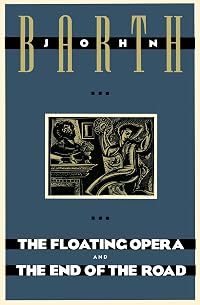
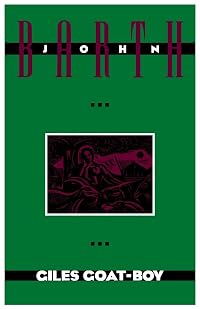
John Barth taught for many years in the writing program at Johns Hopkins University, and he lives in Chestertown, Maryland. (Publisher Provided) John Simmons Barth was born on May 27, 1930 in Cambridge, Maryland. He is considered to be one of the American writers who introduced a U.S. audience to experimental fiction. Barth began as a conventional show more novelist, exploring existential themes of suicide in The Floating Opera (1956) and the complexity of love in The End of the Road (1958). By the end of the 1950s, however, he was exploring less realistic techniques to keep the reader from being pulled into the story, and thus to make larger points. Those techniques include parody, which Barth first used in The Sot-Weed Factor (1960), to mock the style of the eighteenth-century picaresque novel, and Giles Goat-Boy (1966), which depicts the world as a giant university. In Chimera (1972), for which he won the National Book Award, Barth applied his method to retell classical myths. His later works include Letters (1979), in which Barth himself appears as a character, and Sabbatical (1982), the story of a woman college professor and her novelist husband, both of whom address the reader and author. Barth's other novels include The Tidewater Tales (1987) and The Last Voyage of Somebody the Sailor (1991). For most of his career as a writer, he has also been a professor of English, teaching at Pennsylvania State University, the State University of New York at Buffalo, and The Johns Hopkins University. (Bowker Author Biography) show less
Some Editions
Awards and Honors
Awards
Series
Belongs to Publisher Series
Work Relationships
Is contained in
Contains
Has as a student's study guide
Common Knowledge
- Canonical title
- Lost in the Funhouse
- Original title
- Lost in the Funhouse
- Alternate titles*
- Заблудившись в комнате смеха
- Original publication date
- 1968
- First words
- Cut on dotted line.
- Last words
- (Click to show. Warning: May contain spoilers.)Wrote it.
- Blurbers
- Newsweek; The New Republic; TIME; Washington Post
- Original language
- English
*Some information comes from Common Knowledge in other languages. Click "Edit" for more information.
Classifications
Statistics
- Members
- 1,732
- Popularity
- 12,811
- Reviews
- 16
- Rating
- (3.63)
- Languages
- 9 — English, Finnish, German, Hungarian, Italian, Polish, Russian, Spanish, Turkish
- Media
- Paper, Ebook
- ISBNs
- 18
- ASINs
- 16