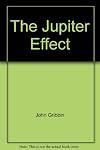
The Jupiter effect
by John R. Gribbin, Stephen H. Plagemann
On This Page
Tags
Recommendations





























Member Reviews
Sometimes a book serves as a time capsule, capturing the anxieties and scientific debates of its era. The Jupiter Effect is one such book. The revised 1976 edition builds on the original 1974 prediction: a rare planetary alignment in March 1982 would supposedly unleash catastrophic events on Earth, from massive earthquakes to extreme weather. Gribbin and Plagemann hypothesized that the gravitational pull of the aligned planets could disrupt Earth’s rotation and trigger disasters, with the San Andreas Fault often identified as ground zero.
Unlike sensationalist works of pure pseudoscience, The Jupiter Effect was rooted in real scientific ideas, particularly astrophysics and geophysics. John Gribbin was an astrophysicist and editor for show more Nature, one of the leading scientific journals, and Stephen Plagemann completed his doctoral work under the eminent astronomer Sir Fred Hoyle. Both likely believed their hypothesis warranted serious attention, though its flaws quickly became apparent.
The book’s bold claims were met with intense scrutiny from the scientific community. Critics called it “pure astrology in disguise.” The underlying premise—that planetary alignments could exert enough gravitational force to affect tectonic plates—was ultimately shown to be negligible. Even Gribbin and Plagemann acknowledged the flaws in their theory, publishing The Jupiter Effect Reconsidered in 1982, where they revised their stance and cited the 1980 eruption of Mount St. Helens as evidence of their ideas, though this too failed to convince most scientists.
Adding to the intrigue is the book’s preface by Isaac Asimov. In his signature style, Asimov provided a compelling history of earthquakes and their devastation but stopped short of endorsing the authors’ predictions. His inclusion lent credibility and captured the public’s imagination, even as the scientific community remained skeptical.
I purchased this book not for its scientific merit but for nostalgia. Reading it transported me back to the early 1980s, when these ideas were the talk of my high school astronomy club. My most vivid memory is attending a star show at the Hansen Planetarium in Salt Lake City shortly before the planetary alignment. The show mirrored the book’s narrative, detailing the alignment and its supposed consequences, but ultimately debunked the hypothesis. It walked audiences through the science, showing why the dire predictions were overblown. I left with a greater appreciation for planetary mechanics—and a chuckle at humanity’s tendency to leap to doomsday scenarios.
Though its predictions didn’t come to pass, The Jupiter Effect remains a fascinating piece of scientific history. It highlights how bold, speculative ideas can capture the public imagination—even when the science doesn’t hold up. Today, it serves as a reminder of the importance of critical thinking and skepticism, particularly when bold claims about natural disasters arise. show less
Unlike sensationalist works of pure pseudoscience, The Jupiter Effect was rooted in real scientific ideas, particularly astrophysics and geophysics. John Gribbin was an astrophysicist and editor for show more Nature, one of the leading scientific journals, and Stephen Plagemann completed his doctoral work under the eminent astronomer Sir Fred Hoyle. Both likely believed their hypothesis warranted serious attention, though its flaws quickly became apparent.
The book’s bold claims were met with intense scrutiny from the scientific community. Critics called it “pure astrology in disguise.” The underlying premise—that planetary alignments could exert enough gravitational force to affect tectonic plates—was ultimately shown to be negligible. Even Gribbin and Plagemann acknowledged the flaws in their theory, publishing The Jupiter Effect Reconsidered in 1982, where they revised their stance and cited the 1980 eruption of Mount St. Helens as evidence of their ideas, though this too failed to convince most scientists.
Adding to the intrigue is the book’s preface by Isaac Asimov. In his signature style, Asimov provided a compelling history of earthquakes and their devastation but stopped short of endorsing the authors’ predictions. His inclusion lent credibility and captured the public’s imagination, even as the scientific community remained skeptical.
I purchased this book not for its scientific merit but for nostalgia. Reading it transported me back to the early 1980s, when these ideas were the talk of my high school astronomy club. My most vivid memory is attending a star show at the Hansen Planetarium in Salt Lake City shortly before the planetary alignment. The show mirrored the book’s narrative, detailing the alignment and its supposed consequences, but ultimately debunked the hypothesis. It walked audiences through the science, showing why the dire predictions were overblown. I left with a greater appreciation for planetary mechanics—and a chuckle at humanity’s tendency to leap to doomsday scenarios.
Though its predictions didn’t come to pass, The Jupiter Effect remains a fascinating piece of scientific history. It highlights how bold, speculative ideas can capture the public imagination—even when the science doesn’t hold up. Today, it serves as a reminder of the importance of critical thinking and skepticism, particularly when bold claims about natural disasters arise. show less
Ratings
Members
- Recently Added By
Author Information

180+ Works 15,883 Members
John R. Gribbin (born 19 March 1946) is a British science writer, an astrophysicist, and a visiting fellow in astronomy at the University of Sussex. The topical range of his prolific writings include quantum physics, human evolution, climate change, global warming, the origins of the universe, and biographies of famous scientists. He also writes show more science fiction. In 1984, Gribbin published In Search of Schrödinger's Cat: Quantum Physics and Reality, the book that he is best known for, which continues to sell well even after years of publication. At the 2009 World Conference of Science Journalists, the Association of British Science Writers presented Gribbin with their Lifetime Achievement award. (Bowker Author Biography) John Gribbin, visiting fellow in astronomy at the University of Sussex. He is married to Mary Grivvin, also a science writer. (Publisher Provided) show less
3 Works 136 Members
Some Editions
Common Knowledge
- Important places
- California, USA
- Dedication
- To Minna who told us to stop talking and start writing.
- First words
- California is the most seismically active region of the forty-eight states (excluding Alaska and Hawaii) of the continental United States.
Classifications
Statistics
- Members
- 122
- Popularity
- 267,153
- Reviews
- 1
- Rating
- (1.92)
- Languages
- English
- Media
- Paper
- ISBNs
- 5
- ASINs
- 1