On This Page
Description
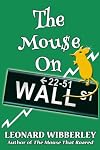
Gloriana XII-The Original Wolf of Wall Street. Grand Fenwick is at it again, this time upsetting the world's economy. The tiny country's secret weapon this time is its Grand Pinot chewing gum. When sales boom during an anti-smoking campaign, Grand Fenwick's investment is suddenly worth millions. In an attempt to rid Grand Fenwick of its crippling budget surplus, Duchess Gloriana XII decides the stock market is the perfect place to lose it all. Instead, she makes millions more and ends up show more wreaking havoc on the world economy. Never has the money game been more deliciously exposed than in this ingenious satire. show lessTags
Recommendations



















Member Reviews
The Duchy of Grand Fenwick enters the stock market, with dire consequences for the economy - of the rest of the world. Not as inspired as the original "The Mouse That Roared", but a fine little comic misadventure in its own right.
This is the story of what Fenwick and the Grand Duchess of Fenwick do when they have too much money. This is the humorous story in the series that looks at economics. I thought it was a lot of fun to read.
I LOVED this book!
Grand Fenwick has already invaded the United States and landed the first man on the Moon; this time it finds itself with a surplus of money and tries to get rid of it on the American stock market, with (as usual) rather fantastic results. The story is mildly entertaining and makes use of the established characters of Grand Fenwick; it’s a pleasant read.
The book seems to be trying to teach the reader something about national finance and investment, but I’m not sure whether this a primary aim or just a side-effect. Furthermore, as I’m no expert on these subjects, I can’t say whether the teaching is sound; but I have my doubts.
Mountjoy dismisses the idea of using the surplus income to eliminate taxes by claiming that the people show more would lose interest in government if they didn’t have to pay for it. But government would surely continue to rule over and have effects on people; if that doesn’t motivate them to take an interest, I doubt that paying taxes would, either. If I were running a country and found myself with a large surplus income, I’d see the elimination of taxes as a most pleasant duty. Think how much effort would be saved nationwide if no-one had to assess, collect, pay, or struggle to avoid paying taxes.
The point is frequently made, particularly by Mountjoy, that a large surplus of money is damaging to Grand Fenwick (or, by extension, to any country), and that the best thing to do is to get rid of the embarrassing surplus somehow.
I’m afraid I remain naïvely keen on the prospect of an embarrassingly large surplus of money. It gives you possibilities, and you can do what you please with them. You can of course spend the money unwisely and end up less happy than you were before; in which case, more fool you.
To throw money away because you’re afraid of spending it unwisely strikes me as a very defeatist attitude, unless frugal living is part of your religion or personal philosophy. I’m not sure whether Wibberley intended to advocate this seriously, or whether he argued it with tongue in cheek, for comic effect. show less
The book seems to be trying to teach the reader something about national finance and investment, but I’m not sure whether this a primary aim or just a side-effect. Furthermore, as I’m no expert on these subjects, I can’t say whether the teaching is sound; but I have my doubts.
Mountjoy dismisses the idea of using the surplus income to eliminate taxes by claiming that the people show more would lose interest in government if they didn’t have to pay for it. But government would surely continue to rule over and have effects on people; if that doesn’t motivate them to take an interest, I doubt that paying taxes would, either. If I were running a country and found myself with a large surplus income, I’d see the elimination of taxes as a most pleasant duty. Think how much effort would be saved nationwide if no-one had to assess, collect, pay, or struggle to avoid paying taxes.
The point is frequently made, particularly by Mountjoy, that a large surplus of money is damaging to Grand Fenwick (or, by extension, to any country), and that the best thing to do is to get rid of the embarrassing surplus somehow.
I’m afraid I remain naïvely keen on the prospect of an embarrassingly large surplus of money. It gives you possibilities, and you can do what you please with them. You can of course spend the money unwisely and end up less happy than you were before; in which case, more fool you.
To throw money away because you’re afraid of spending it unwisely strikes me as a very defeatist attitude, unless frugal living is part of your religion or personal philosophy. I’m not sure whether Wibberley intended to advocate this seriously, or whether he argued it with tongue in cheek, for comic effect. show less
Dec 17, 2024 (Edited)English (UK)
Ratings
Members
- Recently Added By
Lists

Best Satire
188 works; 29 members
Author Information

117+ Works 3,120 Members

Léonard Wibberley is a LibraryThing Author, an author who lists their personal library on LibraryThing.
Awards and Honors
Distinctions
Series

Common Knowledge
- Original publication date
- 1969
- People/Characters
- Duchess Gloriana XII; Count of Mountjoy; David Bentner
- Important places
- Duchy of Grand Fenwick
Classifications
Statistics
- Members
- 108
- Popularity
- 299,403
- Reviews
- 4
- Rating
- (3.62)
- Languages
- English, Korean
- Media
- Paper, Ebook
- ISBNs
- 4
- ASINs
- 4