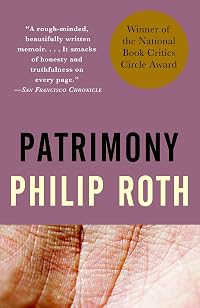
Patrimony: A True Story
by Philip Roth
On This Page
Description
Patrimony, a true story, touches the emotions as strongly as anything Philip Roth has ever written. Roth watches as his eighty-six-year-old father-famous for his vigor, his charm, and his repertoire of Newark recollections-battles with the brain tumor that will kill him. The son, full of love, anxiety, and dread, accompanies his father through each fearful stage of his final ordeal, and, as he does so, discloses the survivalist tenacity that has distinguished his father's long, stubborn show more engagement with life. Philip Roth is hailed by many as the reigning king of American fiction. This memoir about love, survival, and memory is one of his most intimate books, but also one of his most intellectually vigorous. Patrimony is Roth's elegy to his father, written with piercing observation and wit at the height of his literary prowess. show lessTags
Recommendations










Member Recommendations
Member Reviews
Philip Roth delivers a touching tribute to his father. With eloquence, humor and the utmost respect he shares his father's illness leading up to his final days. Herman Roth wakes up one morning to a strange paralysis, drooping eyelid, slack cheek and slurred speech, on one side of his face. Thinking he has had a stroke Philip takes his father to see a doctor. The news is worse. Herman has a brain tumor at the base of his skull that has been growing for ten years. What follows is a journey of father and son, navigating medical treatments and traversing the rough road of relationships. The result is a touching memoir of discovery for both father and son. If you have never read anything by Roth, read this.
Roth gets to the heart of that moment when the child becomes the parent, with a grace, humor, insight, and unvarnished ugly truth that would surprise me coming from most anyone other than this author. In his fiction, Roth mastered the art, or maybe science, of showing the reader the humanity and depth in complicated, difficult men. It should not be surprising that he honors his father's memory by doing the same for him. Roth's father was a whole lot like my father. It was unsettling to read passages that seemed to have been recorded from my own interactions. It is easy to whitewash the truth of people after their passing. We might see it as an act of love to do so, but it is really not. It is a coping mechanism for those left behind, show more and a way to avoid difficult conversations. It is also easy to further demonize those people, to forget what is good about them. There is nothing wrong with either of those things. I have done both. But the brave option, the best option, is to remember the real, the coarse, the mean, the ungenerous as well as the loving, the generous, the wise, and to honor that imperfect person who mattered to many people and in many ways, even if briefly or negatively. Roth has done that, and that is a small miracle.
One note: This was a reread for me (or a listen, actually, I read it the first time but this time I went with the audiobook, read brilliantly by Malcolm Hillgartner). The first time I read this, my difficult father was very much alive, and I thought it was a very good memoir, but it did not resonate the way it did this time, a week before the 21st anniversary of the death of my very complicated dad. show less
One note: This was a reread for me (or a listen, actually, I read it the first time but this time I went with the audiobook, read brilliantly by Malcolm Hillgartner). The first time I read this, my difficult father was very much alive, and I thought it was a very good memoir, but it did not resonate the way it did this time, a week before the 21st anniversary of the death of my very complicated dad. show less
Philp Roth again shows why he is one the greatest living American writers. This is a touching tale of his father's life from the perspective of his final days after discovering a brain tuimor. Anyone who has dealt with the health issues of a declining parent will quickly relate to this book. Roth is touching and very human in his role as caregiver for his father. He pulls no punches in is struggle with medical decisions, care givers and his father's decline. His graphic depiction of his father's bathroom accident is something everyone can relate with but few would descibe with such detail. Overall this is an excellant story. There's no happy ending but their seldom is with the reality of death.
Patrimony is about author Philip Roth dealing with his father's debilitating and rapidly growing brain tumor. It takes away his autonomy and eventually his life. Patrimony depicts about a three year period in the late 1980's at the first onset of the tumor, which was originally misdiagnosed as Bell's Palsy, that gave his father, Hermann, partial facial paralysis to splitting headaches and loss of equilibrium.
Patrimony has what I have always called the "Titanic Effect." I'm sure it actually has a proper name but I have never looked for it. The Titanic Effect is that the person is aware of the tragic event but getting there is still so heartbreaking even though you knew it was already going to happened.
I knew Hermann Roth was going to show more die. I knew how he was going to die. But it is so sad to read about. I felt badly for Philip because it was incredibly difficult to reconcile with the fact that this strong, obstinate, hard working man had become so frail and was not going to live much longer. It must have been hard for Hermann to feel the deterioration of his body; that he couldn't do the same things that he once did. Slowly, his independence was slipping from him.
I felt almost compelled to read this book as rapidly as I did because I'm in a parallel situation with my Grandmother. I'm thinking the way the novelist felt is how my mother must be starting to feel. It's startling to see that someone who was once so strong is now so weak. If my mother was any kind of reader, I would give her this one.
This was my first Roth book. What made me buy it was that when I read the New York Times article announcing his retirement, Patrimony and a brief synopsis was mentioned. It sounded interesting. Patrimony was a very realistic and visceral account of celebrating a life and realizing you'll have to let it go. show less
Patrimony has what I have always called the "Titanic Effect." I'm sure it actually has a proper name but I have never looked for it. The Titanic Effect is that the person is aware of the tragic event but getting there is still so heartbreaking even though you knew it was already going to happened.
I knew Hermann Roth was going to show more die. I knew how he was going to die. But it is so sad to read about. I felt badly for Philip because it was incredibly difficult to reconcile with the fact that this strong, obstinate, hard working man had become so frail and was not going to live much longer. It must have been hard for Hermann to feel the deterioration of his body; that he couldn't do the same things that he once did. Slowly, his independence was slipping from him.
I felt almost compelled to read this book as rapidly as I did because I'm in a parallel situation with my Grandmother. I'm thinking the way the novelist felt is how my mother must be starting to feel. It's startling to see that someone who was once so strong is now so weak. If my mother was any kind of reader, I would give her this one.
This was my first Roth book. What made me buy it was that when I read the New York Times article announcing his retirement, Patrimony and a brief synopsis was mentioned. It sounded interesting. Patrimony was a very realistic and visceral account of celebrating a life and realizing you'll have to let it go. show less
Patrimony is about author Philip Roth dealing with his father's debilitating and rapidly growing brain tumor. It takes away his autonomy and eventually his life. Patrimony depicts about a three year period in the late 1980's at the first onset of the tumor, which was originally misdiagnosed as Bell's Palsy, that gave his father, Hermann, partial facial paralysis to splitting headaches and loss of equilibrium.
Patrimony has what I have always called the "Titanic Effect." I'm sure it actually has a proper name but I have never looked for it. The Titanic Effect is that the person is aware of the tragic event but getting there is still so heartbreaking even though you knew it was already going to happened.
I knew Hermann Roth was going to show more die. I knew how he was going to die. But it is so sad to read about. I felt badly for Philip because it was incredibly difficult to reconcile with the fact that this strong, obstinate, hard working man had become so frail and was not going to live much longer. It must have been hard for Hermann to feel the deterioration of his body; that he couldn't do the same things that he once did. Slowly, his independence was slipping from him.
I felt almost compelled to read this book as rapidly as I did because I'm in a parallel situation with my Grandmother. I'm thinking the way the novelist felt is how my mother must be starting to feel. It's startling to see that someone who was once so strong is now so weak. If my mother was any kind of reader, I would give her this one.
This was my first Roth book. What made me buy it was that when I read the New York Times article announcing his retirement, Patrimony and a brief synopsis was mentioned. It sounded interesting. Patrimony was a very realistic and visceral account of celebrating a life and realizing you'll have to let it go. show less
Patrimony has what I have always called the "Titanic Effect." I'm sure it actually has a proper name but I have never looked for it. The Titanic Effect is that the person is aware of the tragic event but getting there is still so heartbreaking even though you knew it was already going to happened.
I knew Hermann Roth was going to show more die. I knew how he was going to die. But it is so sad to read about. I felt badly for Philip because it was incredibly difficult to reconcile with the fact that this strong, obstinate, hard working man had become so frail and was not going to live much longer. It must have been hard for Hermann to feel the deterioration of his body; that he couldn't do the same things that he once did. Slowly, his independence was slipping from him.
I felt almost compelled to read this book as rapidly as I did because I'm in a parallel situation with my Grandmother. I'm thinking the way the novelist felt is how my mother must be starting to feel. It's startling to see that someone who was once so strong is now so weak. If my mother was any kind of reader, I would give her this one.
This was my first Roth book. What made me buy it was that when I read the New York Times article announcing his retirement, Patrimony and a brief synopsis was mentioned. It sounded interesting. Patrimony was a very realistic and visceral account of celebrating a life and realizing you'll have to let it go. show less
Patrimony is about author Philip Roth dealing with his father's debilitating and rapidly growing brain tumor. It takes away his autonomy and eventually his life. Patrimony depicts about a three year period in the late 1980's at the first onset of the tumor, which was originally misdiagnosed as Bell's Palsy, that gave his father, Hermann, partial facial paralysis to splitting headaches and loss of equilibrium.
Patrimony has what I have always called the "Titanic Effect." I'm sure it actually has a proper name but I have never looked for it. The Titanic Effect is that the person is aware of the tragic event but getting there is still so heartbreaking even though you knew it was already going to happened.
I knew Hermann Roth was going to show more die. I knew how he was going to die. But it is so sad to read about. I felt badly for Philip because it was incredibly difficult to reconcile with the fact that this strong, obstinate, hard working man had become so frail and was not going to live much longer. It must have been hard for Hermann to feel the deterioration of his body; that he couldn't do the same things that he once did. Slowly, his independence was slipping from him.
I felt almost compelled to read this book as rapidly as I did because I'm in a parallel situation with my Grandmother. I'm thinking the way the novelist felt is how my mother must be starting to feel. It's startling to see that someone who was once so strong is now so weak. If my mother was any kind of reader, I would give her this one.
This was my first Roth book. What made me buy it was that when I read the New York Times article announcing his retirement, Patrimony and a brief synopsis was mentioned. It sounded interesting. Patrimony was a very realistic and visceral account of celebrating a life and realizing you'll have to let it go. show less
Patrimony has what I have always called the "Titanic Effect." I'm sure it actually has a proper name but I have never looked for it. The Titanic Effect is that the person is aware of the tragic event but getting there is still so heartbreaking even though you knew it was already going to happened.
I knew Hermann Roth was going to show more die. I knew how he was going to die. But it is so sad to read about. I felt badly for Philip because it was incredibly difficult to reconcile with the fact that this strong, obstinate, hard working man had become so frail and was not going to live much longer. It must have been hard for Hermann to feel the deterioration of his body; that he couldn't do the same things that he once did. Slowly, his independence was slipping from him.
I felt almost compelled to read this book as rapidly as I did because I'm in a parallel situation with my Grandmother. I'm thinking the way the novelist felt is how my mother must be starting to feel. It's startling to see that someone who was once so strong is now so weak. If my mother was any kind of reader, I would give her this one.
This was my first Roth book. What made me buy it was that when I read the New York Times article announcing his retirement, Patrimony and a brief synopsis was mentioned. It sounded interesting. Patrimony was a very realistic and visceral account of celebrating a life and realizing you'll have to let it go. show less
i kept finding myself wondering why this was written, and how straight white men are so sure their stories are important, so it would seem i came to this book biased against it and perhaps i therefore can't judge it accurately. i did find some passages surprising or well done or even a little funny, but also did continue to wonder what the point was in his making this public. especially some things that it would seem his father would have rather been kept in the family. sure it's a nice tribute to his father, and easy (sometimes even touching; often not, at least he's honest about some of his father's bad qualities) to read, but i don't know that it's more than that. it's not particularly well written and doesn't have that much to it. show more 2.5 stars might be a little high. show less
Members
- Recently Added By
Lists

Jewish Books
367 works; 24 members

Harold Bloom - The Western Canon: D. The Chaotic Age
833 works; 24 members

Deathreads
78 works; 2 members

Books Read in 2020
4,379 works; 123 members

Favourite Books
1,820 works; 316 members

Science: Health & Medical
100 works; 1 member
Author Information

123+ Works 74,784 Members
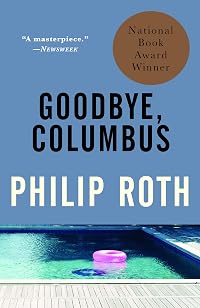
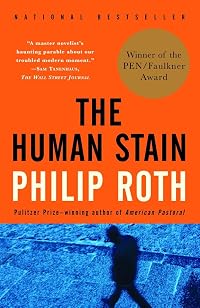
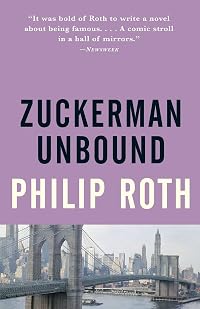
Philip Milton Roth was born in Newark, New Jersey on March 19, 1933. He attended Rutgers University for one year before transferring to Bucknell University where he completed a B.A. in English with highest honors in 1954. He received an M.A. from the University of Chicago in 1955. His first book, Goodbye, Columbus, received the National Book Award show more in 1960. His other books include Letting Go, When She Was Good, Portnoy's Complaint, My Life as a Man, The Ghostwriter, Zuckerman Unbound, I Married a Communist, The Plot Against America, The Facts, The Anatomy Lesson, Exit Ghost, Deception, Nemesis, Everyman, Indignation, and The Humbling. He won the National Book Critic Circle Awards in 1987 for his novel The Counterlife and in 1992 for his memoir Patrimony: A True Story. He won the PEN/Faulkner Award for Fiction in 1993 for Operation Shylock: A Confession and in 2001 for The Human Stain, the National Book Award in 1995 for Sabbath's Theater, and the Pulitzer Prize in 1998 for American Pastoral. He stopped writing in 2010. He died from congestive heart failure on May 22, 2018 at the age of 85. (Bowker Author Biography) show less
Some Editions
Awards and Honors
Distinctions
Series
Belongs to Publisher Series
Work Relationships
Common Knowledge
- Canonical title
- Patrimony: A True Story
- Original title
- Patrimony: A True Story
- Alternate titles*
- Patrimonium : een waar verhaal
- Original publication date
- 1991
- People/Characters*
- Herman Roth
- Dedication
- FOR OUR FAMILY,
THE LIVING AND THE DEAD - First words
- My father had lost most of the sight in his right eye by the time he'd reached eighty-six, but otherwise he seemed in phenomenal health for a man his age when he came down with what the Florida doctor diagnosed, incorrectly, ... (show all)ad Bell's palsy, a viral infection that causes paralysis, usually temporary, to one side of the face.
- Last words
- (Click to show. Warning: May contain spoilers.)Non devi dimenticare nulla.
(Click to show. Warning: May contain spoilers.)No hay que olvidar nada. - Original language
- Engish, US
*Some information comes from Common Knowledge in other languages. Click "Edit" for more information.
Classifications
Statistics
- Members
- 1,180
- Popularity
- 21,246
- Reviews
- 30
- Rating
- (4.05)
- Languages
- 13 — Catalan, Czech, Danish, Dutch, English, French, German, Greek, Italian, Polish, Spanish, Turkish, Portuguese (Portugal)
- Media
- Paper, Audiobook, Ebook
- ISBNs
- 60
- ASINs
- 12