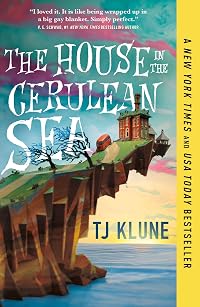
On This Page
Description
Linus Baker leads a quiet, solitary life. At forty, he lives in a tiny house with a devious cat and his old records. As a Case Worker at the Department in Charge Of Magical Youth, he spends his days overseeing the well-being of children in government-sanctioned orphanages.When Linus is unexpectedly summoned by Extremely Upper Management he's given a curious and highly classified assignment: travel to Marsyas Island Orphanage, where six dangerous children reside: a gnome, a sprite, a wyvern, show more an unidentifiable green blob, a were-Pomeranian, and the Antichrist. Linus must set aside his fears and determine whether or not they're likely to bring about the end of days.But the children aren't the only secret the island keeps. Their caretaker is the charming and enigmatic Arthur Parnassus, who will do anything to keep his wards safe. As Arthur and Linus grow closer, long-held secrets are exposed, and Linus must make a choice: destroy a home or watch the world burn.An enchanting story, masterfully told, The House in the Cerulean Sea is about the profound experience of discovering an unlikely family in an unexpected place - and realizing that family is yours. show lessTags
Recommendations







Member Recommendations

Member Reviews
WINNER OF THE 2021 MYTHOPOEIC AWARD FOR ADULT LITERATURE!
The Publisher Says: A magical island. A dangerous task. A burning secret.
Linus Baker leads a quiet, solitary life. At forty, he lives in a tiny house with a devious cat and his old records. As a Case Worker at the Department in Charge Of Magical Youth, he spends his days overseeing the well-being of children in government-sanctioned orphanages.
When Linus is unexpectedly summoned by Extremely Upper Management he's given a curious and highly classified assignment: travel to Marsyas Island Orphanage, where six dangerous children reside: a gnome, a sprite, a wyvern, an unidentifiable green blob, a were-Pomeranian, and the Antichrist. Linus must set aside his fears and determine show more whether or not they’re likely to bring about the end of days.
But the children aren’t the only secret the island keeps. Their caretaker is the charming and enigmatic Arthur Parnassus, who will do anything to keep his wards safe. As Arthur and Linus grow closer, long-held secrets are exposed, and Linus must make a choice: destroy a home or watch the world burn.
An enchanting story, masterfully told, The House in the Cerulean Sea is about the profound experience of discovering an unlikely family in an unexpected place—and realizing that family is yours.
THIS BOOK WAS A SURPRISE GIFT FROM AN OLD FRIEND. THANKS NORA!
My Review: I am defective. There are so many good lines in this book, aperçus and aphorisms and nostrums for your soul, and they're just terrific!
See? That's quality stuff right there! Author Klune makes sense, and aims it at the vulnerable, the different, the othered-by-the-mobs. I laud this, I support his aims and his aim. Author Klune is very well-thought-of in the QUILTBAG writing community, deservedly so, and is always able to deliver a quality story that hits the proper beats, satisfies the story-hunger we all have as humans, and makes the very best out of his queer cast's longings. He does it again here! I promise you, if you're in the mood for a feel-good story of genuine lovingkindness defeating po-faced meanness, you have come to the right place.
But I don't want to read it. I've stopped and started and stopped and started and, frankly, I just can't. I read the book in four months. It can take a day to read a 400pp novel I'm really into.
Four months.
I don't want to read about kids. I don't care about adults who rescue kids...I think I might resent the numerous adults in my own life whose actions were the opposite of saving me...but whatever deep psychological things the book smacks into smarting, I just didn't enjoy reading it.
I hope you will, though. show less
The Publisher Says: A magical island. A dangerous task. A burning secret.
Linus Baker leads a quiet, solitary life. At forty, he lives in a tiny house with a devious cat and his old records. As a Case Worker at the Department in Charge Of Magical Youth, he spends his days overseeing the well-being of children in government-sanctioned orphanages.
When Linus is unexpectedly summoned by Extremely Upper Management he's given a curious and highly classified assignment: travel to Marsyas Island Orphanage, where six dangerous children reside: a gnome, a sprite, a wyvern, an unidentifiable green blob, a were-Pomeranian, and the Antichrist. Linus must set aside his fears and determine show more whether or not they’re likely to bring about the end of days.
But the children aren’t the only secret the island keeps. Their caretaker is the charming and enigmatic Arthur Parnassus, who will do anything to keep his wards safe. As Arthur and Linus grow closer, long-held secrets are exposed, and Linus must make a choice: destroy a home or watch the world burn.
An enchanting story, masterfully told, The House in the Cerulean Sea is about the profound experience of discovering an unlikely family in an unexpected place—and realizing that family is yours.
THIS BOOK WAS A SURPRISE GIFT FROM AN OLD FRIEND. THANKS NORA!
My Review: I am defective. There are so many good lines in this book, aperçus and aphorisms and nostrums for your soul, and they're just terrific!
“Sometimes our prejudices color our thoughts when we least expect them to. If we can recognize that, and learn from it, we can become better people.”
–and–
“Just because you don’t experience prejudice in your everyday doesn’t stop it from existing for the rest of us.”
–and–
“Your voice is a weapon. Never forget that.”
See? That's quality stuff right there! Author Klune makes sense, and aims it at the vulnerable, the different, the othered-by-the-mobs. I laud this, I support his aims and his aim. Author Klune is very well-thought-of in the QUILTBAG writing community, deservedly so, and is always able to deliver a quality story that hits the proper beats, satisfies the story-hunger we all have as humans, and makes the very best out of his queer cast's longings. He does it again here! I promise you, if you're in the mood for a feel-good story of genuine lovingkindness defeating po-faced meanness, you have come to the right place.
But I don't want to read it. I've stopped and started and stopped and started and, frankly, I just can't. I read the book in four months. It can take a day to read a 400pp novel I'm really into.
Four months.
I don't want to read about kids. I don't care about adults who rescue kids...I think I might resent the numerous adults in my own life whose actions were the opposite of saving me...but whatever deep psychological things the book smacks into smarting, I just didn't enjoy reading it.
I hope you will, though. show less
Linus Baker lives in a gray, rainy city, doing a dull, demanding job. He's a caseworker for the Department in Charge of Magical Youth, and he believes in the work he does, but also strives to maintain a professional distance from the children he encounters in the course of his work. This becomes more difficult when he is sent on a special assignment to a very unusual orphanage, where he meets children with powers more varied and rare than any he has ever seen -- and where he meets the enigmatic Arthur Parnassus, head of the orphanage. What secrets are hidden there, in the house on the island? Why was Linus sent to observe and report on it? And what will become of the people there when his report is done?
Ahhhh, this book is so lovely! show more Just heartwarming. It has fantastic characters, a delightful setting, good pacing, moments of delicious humor, and it elicits all manner of happy feels. It is just the sort of book that we all need right now. I thought the ending was maybe a little too perfect, but that's really the only criticism I can level at it, and is that even really a criticism? I can see this book becoming a favorite comfort read for me. show less
Ahhhh, this book is so lovely! show more Just heartwarming. It has fantastic characters, a delightful setting, good pacing, moments of delicious humor, and it elicits all manner of happy feels. It is just the sort of book that we all need right now. I thought the ending was maybe a little too perfect, but that's really the only criticism I can level at it, and is that even really a criticism? I can see this book becoming a favorite comfort read for me. show less
I'm going to keep this short because I don't want to spoil even the tiniest of things. BUT this book is something I didn't realize I desperately needed until I was neck deep, wading through its depths. I want to bottle these emotions so I can take them out on gloomy days and reminisce about the happiness and sense of completion this book has gifted me. I have heard nothing but praise for The House In The Cerulean Sea therefore, I was leary going into this read. I went in a Skeptic and came out an Apostle. As I sat in a doctor's waiting room with this in hand, within the matter of 15 minutes I had cried and then I laughed... all out loud... sniffling wildly in the middle of a pandemic, garnering looks of suspicion and outright disgust. I show more must have looked like a crazy person BUT I didn't care... I had found an ereader sized gem and I am going to treasure it Smeagol style for all time... also, wearing a mask helped hide most of the evidence.
The characters are the stars of this show and I truly fell in love over and over again... deeper in love with each passing page. Each character will forever own a piece of my heart but Lucy... Lucy has the lion's... errr Devil's share. I love him to tiny little perfectly jagged little pieces of pure Love.
I'll end things here but just so you know:
- characters--> AMAZING
- world building--> lush and evocative and tangible
- writing--> raw and alluring and it completely ensnared me heart and soul.
- pacing--> a tad slow to start but when things got rolling and I started understanding what was going on more, it swept me away.
I am off to (reverentially) place this where it belongs... in my Favorites folder.
~ Enjoy show less
The characters are the stars of this show and I truly fell in love over and over again... deeper in love with each passing page. Each character will forever own a piece of my heart but Lucy... Lucy has the lion's... errr Devil's share. I love him to tiny little perfectly jagged little pieces of pure Love.
I'll end things here but just so you know:
- characters--> AMAZING
- world building--> lush and evocative and tangible
- writing--> raw and alluring and it completely ensnared me heart and soul.
- pacing--> a tad slow to start but when things got rolling and I started understanding what was going on more, it swept me away.
I am off to (reverentially) place this where it belongs... in my Favorites folder.
~ Enjoy show less
It took me a little while to warm to this story. (It's entirely possible that my heart is two sizes too small.)
In the beginning, Linus Baker's life is dismal. He works as a social worker in the enormous DICOMY (Department In Charge Of Magical Youth, loosely based on Canadian child welfare departments that stole indigenous children from their families throughout the 20th century):
His small wooden desk was almost at the center of the room: Row L, Desk Seven in a room comprising 26 rows with fourteen desks in each row. There was barely any space between the desks. A skinny person would have no trouble getting by, but one who carried a few extra pounds around the middle (few being the operative word, of course)? If they'd been allowed to show more have personal knickknacks on their desks, it'd probably end in disaster for someone like Linus. But seeing as how that was against the rules, he mostly ended up bumping into them with his wide hips and apologizing hastily at the glares he received. It was one of the reasons he usually waited until the room was mostly empty before he left for the day. That and the fact he'd recently turned forty, and all he had to show for it was a tiny house, a crusty cat that would probably outlive everyone, and an ever-expanding waistline his doctor had poked and prodded with a strange amount of glee while bloviating about the wonders of dieting.
His boss is a terrible, negative woman with a sycophantic assistant, both of whom know Linus must have done something terrible to earn a summons to see "Extremely Upper Management." His neighbor is a grouchy old woman who hates Linus's cat, is sure he'll be fired soon, and offers to set Linus up with her accountant grandson who "does have a tendency toward rampant alcoholism." The nameless city in which Linus lives his lonely life seems to be permanently grey and rainy. It's all so over-the-top terrible.
Linus is given a special assignment by Extremely Upper Management: to investigate a highly unusual "orphanage" on an island, where six magical youths live with caretakers who may not themselves be entirely "human." It's up to Linus to decide whether the inmates of this island are a danger to themselves or others, but he may find a lot more than he expected. (Oh, you know it's all going to be saccharinely sweet and heartwarming.)
Somewhere along the way, I started picturing all the characters as actual caricatures and the story as an animated movie, which made it all more palatable. As animations, the thin characters can be pencil thin, while Linus can be perfectly pear-shaped. The monstrous children can be simultaneously monstrous and adorable. The color scheme can magically change from shades of grey to technicolor as Linus leaves the dreary city behind and sees the ocean for the first time in his miserable little life. The time period can remain purposely ambiguous (maybe the 1960s? because record players, typewriters, etc.) and certain parts of the story can defy the laws of physics.
And those monstrous children? They are hilarious and charming af. (Nothing ahead is really a spoiler, as the GR book synopsis reveals the identities of the six children as "a gnome, a sprite, a wyvern, an unidentifiable green blob, a were-Pomeranian, and the Antichrist.")
Linus struggled to find his voice. "You're...you..."
She frowned. "Of course I'm me. Who else would I be?"
He shook his head, managing to clear the cobwebs before latching on to a name. "You're a gnome."
She blinked owlishly at him. "Yes. I am. I'm Talia." She bent over and picked up a small shovel that had been laying on the grass next to her. "Are you Mr. Baker? If you are, we've been expecting to you. If not, you're trespassing, and you should leave before I bury you here in my garden. No one would ever know because the roots would eat your entrails and bones." She frowned again. "I think. I've never buried anyone before. It would be a learning experience for both of us."
Lucy was suddenly there beside him, causing Linus to jump in his seat. "Oh dear," he said.
"Mr. Baker," Lucy said sweetly. "Can I get you something to drink? Juice, perhaps? Tea?" He leaned forward and dropped his voice. "The blood of a baby born in a cemetery under a full moon?"
"Lucy," Mr. Parnassus warned.
Lucy stared at Linus. "Whatever you want, I can give you," he whispered.
Linus coughed weakly. "Water. Water is fine."
"One water coming right up!" He reached up, grabbing an empty glass set next to Linus's plate. He took it to the sink, climbing up on his stool. He stuck his tongue out in concentration (through the gap where his two front teeth used to be) as he turned on the tap. Once the glass was full, he held it with both hands as he climbed down from his stool. He spilled nary a drop as he handed it over to Linus.
"There," he said. "You're welcome! And I'm not even thinking about banishing your soul to eternal damnation or anything!"
"Thank you," Linus managed to say. "That's very kind of you."
Overall, this was a 3.5 star read for me, rounded up because I recognize my own Grinchiness, and because I would absolutely watch the animated film version.
Read for book group, August 2021. show less
In the beginning, Linus Baker's life is dismal. He works as a social worker in the enormous DICOMY (Department In Charge Of Magical Youth, loosely based on Canadian child welfare departments that stole indigenous children from their families throughout the 20th century):
His small wooden desk was almost at the center of the room: Row L, Desk Seven in a room comprising 26 rows with fourteen desks in each row. There was barely any space between the desks. A skinny person would have no trouble getting by, but one who carried a few extra pounds around the middle (few being the operative word, of course)? If they'd been allowed to show more have personal knickknacks on their desks, it'd probably end in disaster for someone like Linus. But seeing as how that was against the rules, he mostly ended up bumping into them with his wide hips and apologizing hastily at the glares he received. It was one of the reasons he usually waited until the room was mostly empty before he left for the day. That and the fact he'd recently turned forty, and all he had to show for it was a tiny house, a crusty cat that would probably outlive everyone, and an ever-expanding waistline his doctor had poked and prodded with a strange amount of glee while bloviating about the wonders of dieting.
His boss is a terrible, negative woman with a sycophantic assistant, both of whom know Linus must have done something terrible to earn a summons to see "Extremely Upper Management." His neighbor is a grouchy old woman who hates Linus's cat, is sure he'll be fired soon, and offers to set Linus up with her accountant grandson who "does have a tendency toward rampant alcoholism." The nameless city in which Linus lives his lonely life seems to be permanently grey and rainy. It's all so over-the-top terrible.
Linus is given a special assignment by Extremely Upper Management: to investigate a highly unusual "orphanage" on an island, where six magical youths live with caretakers who may not themselves be entirely "human." It's up to Linus to decide whether the inmates of this island are a danger to themselves or others, but he may find a lot more than he expected. (Oh, you know it's all going to be saccharinely sweet and heartwarming.)
Somewhere along the way, I started picturing all the characters as actual caricatures and the story as an animated movie, which made it all more palatable. As animations, the thin characters can be pencil thin, while Linus can be perfectly pear-shaped. The monstrous children can be simultaneously monstrous and adorable. The color scheme can magically change from shades of grey to technicolor as Linus leaves the dreary city behind and sees the ocean for the first time in his miserable little life. The time period can remain purposely ambiguous (maybe the 1960s? because record players, typewriters, etc.) and certain parts of the story can defy the laws of physics.
And those monstrous children? They are hilarious and charming af. (Nothing ahead is really a spoiler, as the GR book synopsis reveals the identities of the six children as "a gnome, a sprite, a wyvern, an unidentifiable green blob, a were-Pomeranian, and the Antichrist.")
Linus struggled to find his voice. "You're...you..."
She frowned. "Of course I'm me. Who else would I be?"
He shook his head, managing to clear the cobwebs before latching on to a name. "You're a gnome."
She blinked owlishly at him. "Yes. I am. I'm Talia." She bent over and picked up a small shovel that had been laying on the grass next to her. "Are you Mr. Baker? If you are, we've been expecting to you. If not, you're trespassing, and you should leave before I bury you here in my garden. No one would ever know because the roots would eat your entrails and bones." She frowned again. "I think. I've never buried anyone before. It would be a learning experience for both of us."
Lucy was suddenly there beside him, causing Linus to jump in his seat. "Oh dear," he said.
"Mr. Baker," Lucy said sweetly. "Can I get you something to drink? Juice, perhaps? Tea?" He leaned forward and dropped his voice. "The blood of a baby born in a cemetery under a full moon?"
"Lucy," Mr. Parnassus warned.
Lucy stared at Linus. "Whatever you want, I can give you," he whispered.
Linus coughed weakly. "Water. Water is fine."
"One water coming right up!" He reached up, grabbing an empty glass set next to Linus's plate. He took it to the sink, climbing up on his stool. He stuck his tongue out in concentration (through the gap where his two front teeth used to be) as he turned on the tap. Once the glass was full, he held it with both hands as he climbed down from his stool. He spilled nary a drop as he handed it over to Linus.
"There," he said. "You're welcome! And I'm not even thinking about banishing your soul to eternal damnation or anything!"
"Thank you," Linus managed to say. "That's very kind of you."
Overall, this was a 3.5 star read for me, rounded up because I recognize my own Grinchiness, and because I would absolutely watch the animated film version.
Read for book group, August 2021. show less
This book offers that wonderful, rare opportunity to use the timeless quote from Two Weeks Notice:
Have you ever wanted to read Harry Potter, but if the Muggles were the baddies and the hero worked at the Ministry of Magic (complete with the phrase "I solemnly swear" used at least 4 times)? Have you ever wanted to read Chronicles of Narnia, without the Chronicles? A Series of Unfortunate Events, without the Events? Winnie the Pooh, without the wit? Moby Dick, without the white wale? Or without the dick, for that matter?
Add this book to the list of Things I Don't Get, along with the Kardashians and Taylor Swift performing live. I show more could talk about why I thought this book "was OK" (two stars) for more than 40 minutes, so I'll keep this review long and bitter.
My issues with this book are threefold:
(spoilers below)
1. Show, don't tell.
2. Nothing happens. I was incredibly bored. Plot points include going on a hike and moving a desk. The stakes are incredibly low. Any plot is hidden behind miles of red tape and piles of paperwork. A lot of people insist that this should have been YA and was miscatalogued as adult sci-fi. While I agree that it would have made a great illustrated children's book, I think that marketing to this audience was just a cowardly choice on the part of the publisher, and also, this take really sells YA lit short, because YA isn't just a genre where nothing happens. My expectations were dashed by this book. I was ready for so many things: for Lucy to have a major existential crisis in choosing good vs evil, for the cat to start talking once they were in the magical house, for someone to turn into a dragon. Many reviews also said that this book is super predictable, but I actually found it so boring as to be unpredictable, because I couldn't even believe that so little happened. BUT being boring is not a crime; and if 250,000 people didn't notice or didn't care, obviously it doesn't matter.
2. My Big Issue with this book is that the moral equates being oppressed to being morally ambivalent, I think. What I really want to say is that the author conflates the marginal identities of being queer (which is attacked for being morally wrong, in Our Society [which we're not clear on; more on that in a minute]) with being the subject of cultural genocide. I thought of the residential schools that Native American children were placed in at the very moment that I read the word "assimilation", so I didn't need a reddit thread or TJ Klune himself to tell me that he had taken the idea for the orphanages in the book from the lived history of Native Americans. What I don't get is this: DICOMY isn't putting all of the kids in the world in orphanages because they think they're weird and different and dangerous. BUT they are putting Lucy there because he's dangerous. So, is there a difference there? Were Native American children the Antichrist, even though that's apparently nbd in this world? Did they have the potential to destroy the whole world and actually ~need~ to be raised apart from society? OR is DICOMY putting these kids in orphanages for a different reason, one that the rest of the government isn't actually shocked about and that doesn't just involve treating the children as "second-class citizens"? One of the most egregious parts of this whole book is at the end, when Linus makes the observation that a lot of the "counterprotestors" are young people, and that the old guard is standing on its last leg and waiting to die out, along with all of the harmful ideology...not to mention the fact that good intentions are all that really matter is the message of one of the many didactic monologues? This book came out in 2020.
3. And last, but best: it's obvious that TJ Klune doesn't give a hoot about cultural appropriation, not only because he lifted this traumatic, violent event from history in order to make his book about nothing bad ever happening more interesting, but also because this book is essentially written in a bad British accent. He uses Britishisms sporadically throughout, and it is SO. CRINGE. I was incredibly put off by the references to things like Crunchie bars and lorries, neither of which have any business or need existing in this world, least of all in a world created by an American author~!!!!!!! I found the turns of phrase like "you alright?" "old boy" and "git" affected, disingenuous, and stilted. I was like, is TJ Klune British and just bad at it? Is Marsyas a place in England that I just don't know about? (ftr, Marsyas is a satyr who challenged Apollo to a music contest and when he lost was tied to a tree and flayed.) Are these locations code for English places? Did TJ Klune famously spend a semester in England and wants the whole world to know about it? But no, I didn't find answers to any of these questions when I looked them up. It just seems like he likes to wank off (how's that) to English slang...why.
This book was saved from being one star a few reasons: the reality vs expectations probably made my reaction worse; the audiobook made me hate it a disproportionate amount (I listened to half of it before I couldn't take it anymore), and I thought that the character of Linus actually had a compelling story arc that I haven't seen that often in fiction. The fake British accent, though, is hard to forgive. show less
"It would be almost impossible for me to tell you how boring it is; largely because it would be too boring."
Have you ever wanted to read Harry Potter, but if the Muggles were the baddies and the hero worked at the Ministry of Magic (complete with the phrase "I solemnly swear" used at least 4 times)? Have you ever wanted to read Chronicles of Narnia, without the Chronicles? A Series of Unfortunate Events, without the Events? Winnie the Pooh, without the wit? Moby Dick, without the white wale? Or without the dick, for that matter?
Add this book to the list of Things I Don't Get, along with the Kardashians and Taylor Swift performing live. I show more could talk about why I thought this book "was OK" (two stars) for more than 40 minutes, so I'll keep this review long and bitter.
My issues with this book are threefold:
(spoilers below)
1. Show, don't tell.
2. Nothing happens. I was incredibly bored. Plot points include going on a hike and moving a desk. The stakes are incredibly low. Any plot is hidden behind miles of red tape and piles of paperwork. A lot of people insist that this should have been YA and was miscatalogued as adult sci-fi. While I agree that it would have made a great illustrated children's book, I think that marketing to this audience was just a cowardly choice on the part of the publisher, and also, this take really sells YA lit short, because YA isn't just a genre where nothing happens. My expectations were dashed by this book. I was ready for so many things: for Lucy to have a major existential crisis in choosing good vs evil, for the cat to start talking once they were in the magical house, for someone to turn into a dragon. Many reviews also said that this book is super predictable, but I actually found it so boring as to be unpredictable, because I couldn't even believe that so little happened. BUT being boring is not a crime; and if 250,000 people didn't notice or didn't care, obviously it doesn't matter.
2. My Big Issue with this book is that the moral equates being oppressed to being morally ambivalent, I think. What I really want to say is that the author conflates the marginal identities of being queer (which is attacked for being morally wrong, in Our Society [which we're not clear on; more on that in a minute]) with being the subject of cultural genocide. I thought of the residential schools that Native American children were placed in at the very moment that I read the word "assimilation", so I didn't need a reddit thread or TJ Klune himself to tell me that he had taken the idea for the orphanages in the book from the lived history of Native Americans. What I don't get is this: DICOMY isn't putting all of the kids in the world in orphanages because they think they're weird and different and dangerous. BUT they are putting Lucy there because he's dangerous. So, is there a difference there? Were Native American children the Antichrist, even though that's apparently nbd in this world? Did they have the potential to destroy the whole world and actually ~need~ to be raised apart from society? OR is DICOMY putting these kids in orphanages for a different reason, one that the rest of the government isn't actually shocked about and that doesn't just involve treating the children as "second-class citizens"? One of the most egregious parts of this whole book is at the end, when Linus makes the observation that a lot of the "counterprotestors" are young people, and that the old guard is standing on its last leg and waiting to die out, along with all of the harmful ideology...not to mention the fact that good intentions are all that really matter is the message of one of the many didactic monologues? This book came out in 2020.
3. And last, but best: it's obvious that TJ Klune doesn't give a hoot about cultural appropriation, not only because he lifted this traumatic, violent event from history in order to make his book about nothing bad ever happening more interesting, but also because this book is essentially written in a bad British accent. He uses Britishisms sporadically throughout, and it is SO. CRINGE. I was incredibly put off by the references to things like Crunchie bars and lorries, neither of which have any business or need existing in this world, least of all in a world created by an American author~!!!!!!! I found the turns of phrase like "you alright?" "old boy" and "git" affected, disingenuous, and stilted. I was like, is TJ Klune British and just bad at it? Is Marsyas a place in England that I just don't know about? (ftr, Marsyas is a satyr who challenged Apollo to a music contest and when he lost was tied to a tree and flayed.) Are these locations code for English places? Did TJ Klune famously spend a semester in England and wants the whole world to know about it? But no, I didn't find answers to any of these questions when I looked them up. It just seems like he likes to wank off (how's that) to English slang...why.
This book was saved from being one star a few reasons: the reality vs expectations probably made my reaction worse; the audiobook made me hate it a disproportionate amount (I listened to half of it before I couldn't take it anymore), and I thought that the character of Linus actually had a compelling story arc that I haven't seen that often in fiction. The fake British accent, though, is hard to forgive. show less
I LOVE this book! It’s one of the sweetest, most feel-good stories I’ve ever read. It’s got heart, humor, magic, and the most lovable group of characters you could ask for. I smiled through so much of it, and a few parts even hit me right in the feels.
And can we talk about Lucy?? He’s my favorite! I seriously laughed out loud at some of his lines. For being the “Antichrist,” he’s actually the cutest little chaos gremlin ever.
This book is all about kindness, acceptance, and finding your people—and it just makes you feel good. If you haven’t read it yet, do yourself a favor and dive in. It’s pure magic.
And can we talk about Lucy?? He’s my favorite! I seriously laughed out loud at some of his lines. For being the “Antichrist,” he’s actually the cutest little chaos gremlin ever.
This book is all about kindness, acceptance, and finding your people—and it just makes you feel good. If you haven’t read it yet, do yourself a favor and dive in. It’s pure magic.
Linus Baker is an effective but unambitious caseworker in a large bureaucratic organization called the Department in Charge of Magical Youth. Unexpectedly, he is singled out by Extremely Upper Management for a longer assignment to an orphanage on the remote Marsyas Island. The home only has six magical children under the care of the eccentric Arthur Parnassus, but one of them is Lucifer (a.k.a. "Lucy"), the son of the Devil. (Yes, two of the main characters are named Linus and Lucy and thus prompt a Vince Guaraldi earworm). Other children at the orphanage include wyvern, a gnome, a forest sprite, a shapeshifter, and a gelatinous, tentacled child named Chauncey.
The story is fairly predictable. Linus' experience with the children and show more Arthur leads him to break out of his shell and become more of an advocate for magical children against widespread discrimination. The children, in turn, learn to accept themselves and begin to form relationships with the nonmagical humans on the mainland. What makes the book work though is just the wonderful characterization. The children are so very childlike while also being fantastic and strange. It also has a same sex romance plot and the story can be read as an allegory for the treatment of LGBTQ people cis/het society. show less
The story is fairly predictable. Linus' experience with the children and show more Arthur leads him to break out of his shell and become more of an advocate for magical children against widespread discrimination. The children, in turn, learn to accept themselves and begin to form relationships with the nonmagical humans on the mainland. What makes the book work though is just the wonderful characterization. The children are so very childlike while also being fantastic and strange. It also has a same sex romance plot and the story can be read as an allegory for the treatment of LGBTQ people cis/het society. show less
Members
- Recently Added By
Published Reviews
Lists

Top Five Books of 2022
736 works; 272 members

Top-Rated Books on LibraryThing
272 works; 117 members

Top Five Books of 2020
982 works; 350 members

Books Read in 2023
5,547 works; 145 members

Top Five Books of 2021
604 works; 181 members

Favourite Fantasy Books of the 21st Century
51 works; 6 members

Comfort Reads
221 works; 41 members

Best 21st Century Books (So Far)
670 works; 85 members

Best LGBT Fiction
144 works; 24 members

Best Beach Reads
99 works; 61 members

Diversity in Fantasy and Science Fiction
219 works; 33 members

LGBTQ+ Speculative Fiction
820 works; 51 members

BbBooBooks
28 works; 2 members

One Book, Many Authors
441 works; 40 members

FAB 2021
14 works; 1 member

Favorite Books from the 2010s
75 works; 3 members

al.vick-wishlist-scifi-fant
181 works; 2 members

Good LGBT fiction for LGBT folk and friends
545 works; 54 members

Favorite Books from the 2020s
32 works; 4 members

Bookwren's Top 5 of 2021
5 works; 1 member

READ in 2024
262 works; 1 member
Our Favorite Comfort Reads
334 works; 200 members

Book Worlds We'd Like To Visit
322 works; 158 members

Read in 2022
31 works; 1 member

Recommended by G.
14 works; 1 member

Queer Fiction (Owned TBR)
142 works; 1 member
Books We Want To Read Again For The First Time
384 works; 160 members

Top Five Books of 2025
954 works; 303 members

Found Family
32 works; 1 member

Books We Discovered On LibraryThing
530 works; 130 members

Hopepunk
12 works; 1 member

LGBTQIA+ TBR
33 works; 1 member
Best Audiobooks
240 works; 114 members

Fantasy TBR
17 works; 1 member

Books Read in 2025
4,091 works; 97 members

storage
51 works; 1 member
Books We Love to Reread
688 works; 296 members
Favorite Romance Fiction
247 works; 115 members

Books Read in 2024
4,623 works; 126 members

I Could Live There
185 works; 12 members

READ IN 2021
239 works; 4 members

Books Read in 2021
5,361 works; 113 members

BookTok Adult
115 works; 2 members

Books Read in 2019
4,052 works; 110 members

Best Antiheroes and Antiheroines
119 works; 5 members
Books With Water Words in the Title
186 works; 12 members

Books Read in 2022
5,166 works; 112 members

My Library's Recommended Adult Fiction
13 works; 2 members
Top Five Books of 2023
767 works; 317 members

Books Set on Islands
190 works; 24 members
Slice of life speculative fiction
18 works; 2 members

A Rainbow of Books: Colors in the Title
570 works; 24 members

Recommended Fantasy Books
77 works; 5 members

Which house?
423 works; 16 members

Best Cozy Fantasy
46 works; 8 members
2023 Update: The Best Twenty Books You've Read in the Past Five Years
40 works; 3 members

Kindness
13 works; 1 member
Talk Discussions
Past Discussions
Found: YA fantasy, man who teaches fairies in Name that Book (August 2021)
Author Information

65+ Works 30,784 Members
Some Editions
Awards and Honors
Awards
Distinctions
Notable Lists
Series

Work Relationships
Common Knowledge
- Canonical title*
- The House in the Cerulean Sea
- Original title
- The House in the Cerulean Sea
- Original publication date
- 2020-03-17
- People/Characters
- Linus Baker; Arthur Parnassus; Talia [Cerulean Chronicles] (gnome); Lucifer "Lucy" [Cerulean Chronicles] (the antichrist); Zoe Chapelwhite; Sal [Cerulean Chronicles] (show all 24); Theodore [Cerulean Chronicles] (wyvern); Chauncey [Cerulean Chronicles]; Phee (forest sprite); Bedelia Jenkins (supervisor); Gunther (assistant to Bedelia Jenkins); Edith Klapper (neighbor); Charles Werner (Extremely Upper Management, Department in Charge of Magical Youth); Agnes George (Extremely Upper Management, Department in Charge of Magical Youth); Jasper Plumb (Extremely Upper Management, Department in Charge of Magical Youth); Martin Rogers (Extremely Upper Management, Department in Charge of Magical Youth); Doreen, or Ms. Bubblegum; Calliope the cat; Helen [Cerulean Chronicles] (mayor of Marsyas); Martin Smythe (nephew of Helen); Norman; Merle the ferryman; J-Bone; Bobby Darin
- Important places
- Department in Charge of Magical Youth; Marsyas Orphanage, Marsyas Island; Marsyas Island; Marsyas (village)
- Dedication
- For those who have been with me since the beginning: look at what we've made. Thank you.
- First words
- 'Oh dear,' Linus Baker said, wiping the sweat from his brow.
- Quotations
- “There are mysteries that may never be solved, no matter how hard we try. And if we spend too long trying to solve them, we may miss what’s right in front of us. The world is a weird and wonderful place. Why must we try a... (show all)nd explain it all away?” (p. 114)
“I am but paper. Brittle and thin. I am held up to the sun, and it shines right through me. I get written on, and I can never be used again. These scratches are a history. They’re a story. Hey tell things for others s to ... (show all)read, but they only see the words, and not what the words are written upon. I am but paper, and though there are many like me, none are exactly the same. I am parched parchment. I have lines. I have holes. Get me wet, and I melt. Light me on fire, and I burn. Take me in hardened hands, and I crumple. I tear. I am but paper. Brittle and thin.” (p. 133)
"Don't you wish you were here?" - Last words
- (Click to show. Warning: May contain spoilers.)And if you were the lucky sort, sometimes that life chose you back.
- Publisher's editor
- Fisher, Ali
- Blurbers
- McGuire, Seanan; Harris, Charlaine; Carriger, Gail; Schwab, V. E.
- Original language
- English
- Canonical DDC/MDS
- 813.6
- Canonical LCC
- PS3611.L86
*Some information comes from Common Knowledge in other languages. Click "Edit" for more information.
Classifications
Statistics
- Members
- 10,916
- Popularity
- 855
- Reviews
- 483
- Rating
- (4.26)
- Languages
- 13 — Catalan, Czech, Danish, Dutch, English, Finnish, French, German, Hungarian, Italian, Polish, Portuguese, Spanish
- Media
- Paper, Audiobook, Ebook
- ISBNs
- 52
- ASINs
- 17