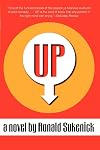
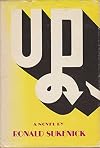
Up
by Ronald Sukenick
On This Page
Description
When Ronald Sukenick's first novel, UP, came out in 1968, post-modernism, avant-pop and autofiction hadn't been invented yet. UP invented them. Ronald Sukenick's ten subsequent books are typically twenty or thirty years ahead of their time, and UP is more timely than ever. Ronald Sukenick is himself the main character of his book, in which he glides undisturbed from present to future, from reality to fantasy. Some of the time he's an adolescent Brooklynite, at other times a part-time English show more teacher, a struggling writer living in a Lower East Side tenement, or a fantasist deftly moving in and out of numerous alter egos. His comings and goings produce a stunning tour de force of a novel--mutinous, violent, sexy, sad, and above all, funny. show lessTags
Recommendations








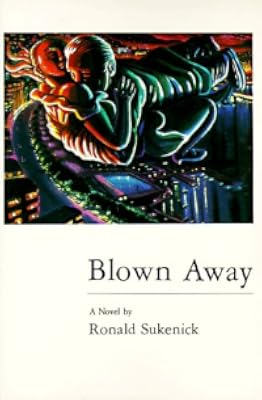

Member Reviews
Ronald Sookanith was probs the hippenest, happenest kid in the Fiction Collective back in ’68, thereabouts, a club of New York innovators taking advantage of the postmodern, self-reflective revolution they were simultaneously witnessing and instigating in literature. An embracement of verbal tricks, of cut-and-paste visual collages in place of story progression, accompanied by a self-awareness of their own limits and possible stylistic pretentions. Does it add to literature? Does such a question matter, when the novel itself is Ronald Sackernack unloading his soul and dumping all his relationship issues out on the reader in as humorous and creative a way he can cough up, no boundaries considered?
[N.B. This review includes images, and show more was revised and formatted for my site, dendrobibliography -- located here.]
A revolutionary of the literary form, he sits today known only among the nichest of niches: English professors (wasting their lives?) and a couple pomo-hungry fiction dorks like myself(-ish). Evidently a niche so small it gives his most famous and important novel, UP, few enough readers he may as well be already forgotten minus occasional historical acknowledgement.
UP is a masterpiece both good and bad, in some ways a slow-jerk of self-satisfied, self-obsessed snark, and a misogynistic representation of the male-dominated New York publishing industry. (Like so many of his FC/early post-modernist peers, women are nothing more than sexual jokes and attractions for the male reader, only reaching that faint trace of genuine humanity when tugging at the author’s past regrets and failures. While I would have enjoyed this a few years ago, it only upsets me now and hurts my impression of the book.) It lacks a trace of linearity, or even a border between fantasy and reality; flowing back and forth, sometimes mid-paragraph, in time, fantasy, sexual misadventures real and un-, perspectives, focuses (but Sootchanitch always the locus!). Sometimes a failing professor of English pushing himself towards employment; other times a slumming New Yorker writing his own novel as the pages go by, rats infesting the framework; then and before a teenage dreamer reaching for a degree in God-knows-what; simultaneously his alter-ego: a hyper-misogynist Mary Sue interacting with, fucking with, the real Suchanitch; oftentimes a sack of lost chances dealing in broken dreams with a partially fictionalized love interest; holding steady the framework, the real Subefitch discussing his upcoming novel with associates, asking them what they think of the parts yet to happen--given anything but praise.
Another angle: Take Godard’s ‘60s output and subtract the overbearing eyebrows of seriousness; slap on the novel form.
Sasserwrackle, falcon hunter, cloth worker, ends his book with a literal literary classroom revolution; segue to a party celebrating his book, a book he seems to know is a weak imitation with nothing to say however hard he tries to innovate and say something: Every character, lost romances, defeated alter-ego Strop Banally, invited(—fellow FC author Steve Katz makes a cameo!). A finale and celebration well-deserved—the trip’s a lot of fun while it lasts, but its of-its-time ‘60s romantic qualities make the forever-underground status understandable. I.e., unless you’re this book’s core audience—that small gosh dang audience—unless you’re a frustrated academic (English preferred) or a fan of the self-aware post-modernist movement this book helped launch, there’s no reason to ever get UP: Either stay away or continue the dig.
”Our generation is a sacrifice to history. When a creative writing student asks me what to write about I answer: Amuse yourself. There’s nothing to write about….I see what you’re going for. Writing as self-expression and all that. The Romantic gambit. But you can’t go back. Between crisis and catastrophe who cares about your ego? Your complaint, your indignation, your outrage—your boils, your hangnails, your stomach aches. It turns to self-pity. This just bores us, we have the same problems. You ought to stick to comedy….Now don’t go and blame yourself. This is just the trouble. You’re helpless. It’s history. It’s politics. It’s capitalism. It’s the literary situation. We’re all paralyzed."
[14] show less
[N.B. This review includes images, and show more was revised and formatted for my site, dendrobibliography -- located here.]
A revolutionary of the literary form, he sits today known only among the nichest of niches: English professors (wasting their lives?) and a couple pomo-hungry fiction dorks like myself(-ish). Evidently a niche so small it gives his most famous and important novel, UP, few enough readers he may as well be already forgotten minus occasional historical acknowledgement.
UP is a masterpiece both good and bad, in some ways a slow-jerk of self-satisfied, self-obsessed snark, and a misogynistic representation of the male-dominated New York publishing industry. (Like so many of his FC/early post-modernist peers, women are nothing more than sexual jokes and attractions for the male reader, only reaching that faint trace of genuine humanity when tugging at the author’s past regrets and failures. While I would have enjoyed this a few years ago, it only upsets me now and hurts my impression of the book.) It lacks a trace of linearity, or even a border between fantasy and reality; flowing back and forth, sometimes mid-paragraph, in time, fantasy, sexual misadventures real and un-, perspectives, focuses (but Sootchanitch always the locus!). Sometimes a failing professor of English pushing himself towards employment; other times a slumming New Yorker writing his own novel as the pages go by, rats infesting the framework; then and before a teenage dreamer reaching for a degree in God-knows-what; simultaneously his alter-ego: a hyper-misogynist Mary Sue interacting with, fucking with, the real Suchanitch; oftentimes a sack of lost chances dealing in broken dreams with a partially fictionalized love interest; holding steady the framework, the real Subefitch discussing his upcoming novel with associates, asking them what they think of the parts yet to happen--given anything but praise.
Another angle: Take Godard’s ‘60s output and subtract the overbearing eyebrows of seriousness; slap on the novel form.
Sasserwrackle, falcon hunter, cloth worker, ends his book with a literal literary classroom revolution; segue to a party celebrating his book, a book he seems to know is a weak imitation with nothing to say however hard he tries to innovate and say something: Every character, lost romances, defeated alter-ego Strop Banally, invited(—fellow FC author Steve Katz makes a cameo!). A finale and celebration well-deserved—the trip’s a lot of fun while it lasts, but its of-its-time ‘60s romantic qualities make the forever-underground status understandable. I.e., unless you’re this book’s core audience—that small gosh dang audience—unless you’re a frustrated academic (English preferred) or a fan of the self-aware post-modernist movement this book helped launch, there’s no reason to ever get UP: Either stay away or continue the dig.
”Our generation is a sacrifice to history. When a creative writing student asks me what to write about I answer: Amuse yourself. There’s nothing to write about….I see what you’re going for. Writing as self-expression and all that. The Romantic gambit. But you can’t go back. Between crisis and catastrophe who cares about your ego? Your complaint, your indignation, your outrage—your boils, your hangnails, your stomach aches. It turns to self-pity. This just bores us, we have the same problems. You ought to stick to comedy….Now don’t go and blame yourself. This is just the trouble. You’re helpless. It’s history. It’s politics. It’s capitalism. It’s the literary situation. We’re all paralyzed."
[14] show less
I did not like this book at all, at maybe one of the worst books I ever read not only just want to have absolutely no idea what is going on but, what is going on is very depressing and disturbing.
> Babelio : https://www.babelio.com/livres/Sukenick-Up/894462
> Ce livre est une radiographie de l'Amérique artistique des années de la révolution sexuelle et des protest songs, avant le règne de la publicité sur les idéologies.
—Danieljean (Babelio)
> Ce livre est une radiographie de l'Amérique artistique des années de la révolution sexuelle et des protest songs, avant le règne de la publicité sur les idéologies.
—Danieljean (Babelio)
Feb 19, 2021 (Edited)French
Ratings
Members
- Recently Added By
Lists

Larry McCaffery's 20th Century Greatest Hits: 100 English-Language Books
103 works; 12 members
Author Information
20+ Works 351 Members
Ronald Sukenick has been on the cutting edge of American fiction and publishing for four decades. Winner of an American Book Award for Lifetime Achievement and the American Academy of Arts and Letters prestigious Morton Dauwen Zabel Award, he is the author of eleven works of fiction and criticism, including 98.6 and Mosaic Man. He is founder and show more publisher of American Book Review and currently lives in Paris and New York show less
Awards and Honors
Notable Lists
Common Knowledge
- Canonical title
- Up
- Original title
- Up
- Original publication date
- 1968
- First words
- The worst thing is the cold.
- Last words
- (Click to show. Warning: May contain spoilers.)The light empties from the sky.
Classifications
Statistics
- Members
- 48
- Popularity
- 625,365
- Reviews
- 3
- Rating
- (3.13)
- Languages
- English, French
- Media
- Paper
- ISBNs
- 4
- ASINs
- 2