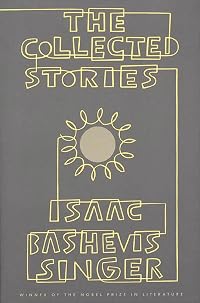
The Collected Stories
by Isaac Bashevis Singer
On This Page
Description
Collection of forty-seven stories selected by the Nobel Prize winning author from among the writings he authored from 1957-1981.Tags
Recommendations




















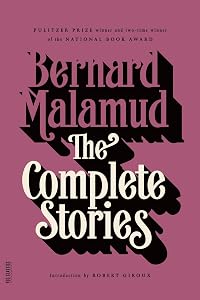



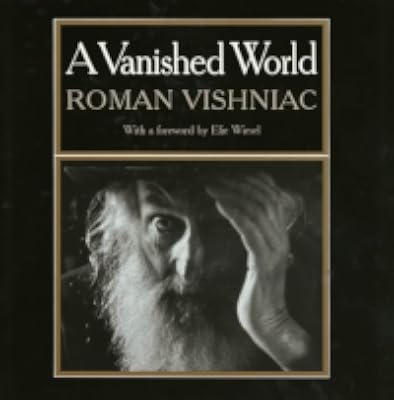

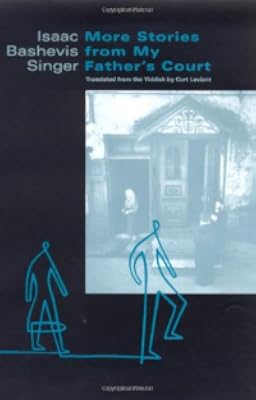


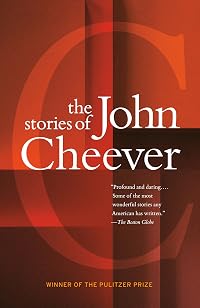


Member Recommendations
Member Reviews
Started reading Singer only recently and am completely blown away. Some Nobel prize winners get legitimized by the prize while others legitimize the prize. Singer is in the latter category. Before coming to Singer, I had read a ton of Cormac McCarthy. I think there are parallels between the two. Both are obsessed with suffering and loss and move seamlessly from gritty realism to philosophy and allegory. With both, the reader is liable to feel intimidated, to feel as if he or she is not on the proper spiritual or intellectual stage to truly comprehend the stories. And that is fine with Singer and McCarthy. I think that is a fair definition of genius for genius cannot exist without integrity.
What sets Singer's stories apart from those of his numerous imitators is a streak of arsenical steel that runs through even the most apparently genial of these folk-like tales. Singer comments in the author's note to this collection: "At its best, art can be nothing more than a means of forgetting the human disaster for a while." Frankly, Singer does not quite accomplish this goal -- the reader never forgets. This is a good representative sampling of his body of work.
These stories are a revelation and a joy to read. Set firmly in the Jewish world, both in Europe and in America, over the years of World War II, Singer infuses every story with endless lessons in Jewish mythology and folk tales. Some of the stories are frightening, some spooky, and some downright melancholy. But every one was interesting. Among the many stories collected here is the tale of Yentl, the Yeshiva boy – a story that was adapted for film. I had seen the film long ago and had no idea I’d trip over the original story in the pages here.
5 bones!!!!!
Highly recommended, and thanks to Uncle Stevie for recommending this author.
5 bones!!!!!
Highly recommended, and thanks to Uncle Stevie for recommending this author.
These stories are like poetry of family history. Singer is well named, for he sings of the songs of people's souls.
I was lucky enough to be introduced to him when I was a young adult, and open to the flavors and sounds of other cultures. I fell madly in love with his narratives.
Isaac Bashevis Singer should be mandatory reading for high school students.
I was lucky enough to be introduced to him when I was a young adult, and open to the flavors and sounds of other cultures. I fell madly in love with his narratives.
Isaac Bashevis Singer should be mandatory reading for high school students.
I sampled 13 of these stories from the breadth of Singer's career and will definitely come back for the rest. All of the stories are tightly focused around a singular worldview (especially the early ones set in Frampol), but that doesn't make any of them predictable. There is much to discover here about Yiddish culture, the immigrant experience, and magic.
Review of The Dead Fiddler (aka The Dead Musician) from this collection.
Having negligible knowledge of Yiddish folklore, traditions, and vocabulary impaired my appreciation of this long-winded story, and I was sure I missed a lot. There's a strong comic element, as well as more theological ideas, but neither aspect spoke to me. Fortunately, I did enjoy the illuminating discussion in Short Story Club.
It’s set in the Jewish community of a Polish village and focuses on the family of Reb Sheftel, a devout grain merchant. His two sons have married and moved away, leaving only his wife, Zise Feige, and a spoiled teenage daughter, Liebe Yentl, at home.
There’s lots of domestic detail, but the focus is on finding a suitable husband for show more Liebe Yentl. This becomes complicated when she is inexplicably possessed by one dybbuk, and then a second.
It’s a story of opposites: life and death, sacred and profane, men and women, comedy and tragedy, rationality and superstition. At the heart of those contrasts is the dybbuk of a bawdy, drunken dead fiddler, who argues with a second dybbuk of a young prostitute, and with everyone else (family, villagers, rabbi etc).
Image: “Dybbuk”, by Ephraim Moshe Lilien (1874–1925). (Source)
Another Singer story
I fared a little better a couple of years ago with Singer's Gimpel the Fool, which may well be in this large collection of his stories, but which I read in Manguel's first anthology of fantastical short stories, and reviewed HERE.
Short story club
I read this in Black Water 2: More Tales of the Fantastic, by Alberto Manguel, from which I’m reading one story a week with The Short Story Club, starting 24 March 2025.
You can join the group here. show less
Having negligible knowledge of Yiddish folklore, traditions, and vocabulary impaired my appreciation of this long-winded story, and I was sure I missed a lot. There's a strong comic element, as well as more theological ideas, but neither aspect spoke to me. Fortunately, I did enjoy the illuminating discussion in Short Story Club.
It’s set in the Jewish community of a Polish village and focuses on the family of Reb Sheftel, a devout grain merchant. His two sons have married and moved away, leaving only his wife, Zise Feige, and a spoiled teenage daughter, Liebe Yentl, at home.
There’s lots of domestic detail, but the focus is on finding a suitable husband for show more Liebe Yentl. This becomes complicated when
It’s a story of opposites: life and death, sacred and profane, men and women, comedy and tragedy, rationality and superstition. At the heart of those contrasts is the dybbuk of a bawdy, drunken dead fiddler, who argues with a second dybbuk of a young prostitute, and with everyone else (family, villagers, rabbi etc).
Image: “Dybbuk”, by Ephraim Moshe Lilien (1874–1925). (Source)
Another Singer story
I fared a little better a couple of years ago with Singer's Gimpel the Fool, which may well be in this large collection of his stories, but which I read in Manguel's first anthology of fantastical short stories, and reviewed HERE.
Short story club
I read this in Black Water 2: More Tales of the Fantastic, by Alberto Manguel, from which I’m reading one story a week with The Short Story Club, starting 24 March 2025.
You can join the group here. show less
As you read the stories, you enter his world. Slowly and first, then you're there: The old folk tales, and then life in the modern world: And how the folk tales cast a shadow on the modern world. Beautiful stories, beautiful endings.
Members
- Recently Added By
Lists

Jewish Books
367 works; 24 members

Short Story Collections and Anthologies
261 works; 42 members

Global Reads: Books Set in Eastern Europe
45 works; 10 members

Harold Bloom - The Western Canon: D. The Chaotic Age
833 works; 24 members

Mustich's 1000 Books to Read Before You Die: A Life Changing List
1,001 works; 19 members
Author Information

387+ Works 23,966 Members
Isaac Bashevis Singer (1904-91) was the author of many novels, stories, children's books, and memoirs. He received the Nobel Prize in Literature in 1978. (Publisher Provided) Isaac Bashevis Singer was born in Radzymin, Poland on July 14, 1904. He received a traditional Jewish education, including training at the rabbinical seminary in Warsaw. He show more began writing in Hebrew while he worked for 10 years as a proofreader and translator in Warsaw. In 1935, he immigrated to New York, where he became a journalist for the Daily Forward, America's largest Yiddish newspaper. Most of his stories were originally published in this newspaper in serial form. His first novel, The Family Moskat, was published in 1950. His other works include The Magician of Lublin, The Spinoza of Market Street, The Slave, and A Friend of Kafka. A Day of Pleasure: Stories of a Boy Growing Up in Warsaw won the National Book Award for children's literature. He received numerous awards during his lifetime including the Nobel Prize for Literature in 1978 and the Gold Medal for Fiction in 1989. He died after suffering a series of strokes on July 24, 1991. (Bowker Author Biography) show less
Awards and Honors
Awards
Distinctions
Work Relationships
Contains
Common Knowledge
- Canonical title
- The Collected Stories
- Original publication date
- 1982
- First words
- I am Gimpel the fool. I don't think myself a fool. (Gimpel the Fool)
- Last words
- (Click to show. Warning: May contain spoilers.)"Don't be a fool, Reb Zalman. The moon is shining. The heavens are bright. Evil is nothing but a coil of madness." (Moon and Madness)
- Blurbers
- Yardley, Jonathan; Ozick, Cynthia
Classifications
- Genres
- Fiction and Literature, General Fiction
- DDC/MDS
- 839.0933 — Literature & rhetoric German & related literatures Other Germanic literatures - Yiddish Fiction 1860-
- LCC
- PJ5129 .S49 .A22 — Language and Literature Oriental languages and literatures Oriental philology and literature Hebrew Other languages used by Jews Yiddish
- BISAC
Statistics
- Members
- 1,202
- Popularity
- 20,686
- Reviews
- 9
- Rating
- (4.27)
- Languages
- English
- Media
- Paper, Ebook
- ISBNs
- 14
- ASINs
- 9