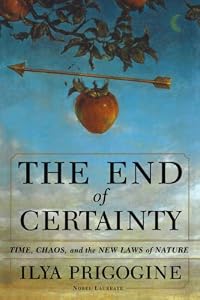
The End of Certainty
by Ilya Prigogine, Isabelle Stengers
On This Page
Description
Nobel Laureate Ilya Prigogine discusses the irreversibility of time and his findings impact on the laws of physics.Tags
Recommendations







Member Reviews
At the heart of this book is a challenge to the bedrock of our current scientific thinking. Newton's science, and indeed that of quantum physics contains no arrow of time. Whilst it may be true that knowing the current movement of balls on a pool table not only reveals where they will go, but also where they have come from, in contrast all around us we see a world that is deeply time irreversible. Smoke and embers do not spontaneously form into pieces of wood and fragments of glass do not leap onto tables to form the shape of a vase.
As Prigigone points out, all of our time reversible equations describe a simplification of what actually occurs in nature. We live our lives with eyes blinkered, dismissing reality as the exception to our show more neatly formed approximations.
Nobel laureate Prigigone does his best to avoid the mathematics as he describes ground breaking ideas that challenge and redefine science and through it the way we comprehend our world. In doing so it shakes the foundations of our knowledge and points not just to new understanding but new ways of understanding a universe governed by probabilities.
In my case at least, Prigigone did not fully succeed and there are parts of the book in which my lack of mathematical knowledge left me floundering. However don't be put off and feel free to skip the middle chapters. The key ideas all shine through even without the maths and will feed the open mind of those seeking a real understanding of the natural world. show less
As Prigigone points out, all of our time reversible equations describe a simplification of what actually occurs in nature. We live our lives with eyes blinkered, dismissing reality as the exception to our show more neatly formed approximations.
Nobel laureate Prigigone does his best to avoid the mathematics as he describes ground breaking ideas that challenge and redefine science and through it the way we comprehend our world. In doing so it shakes the foundations of our knowledge and points not just to new understanding but new ways of understanding a universe governed by probabilities.
In my case at least, Prigigone did not fully succeed and there are parts of the book in which my lack of mathematical knowledge left me floundering. However don't be put off and feel free to skip the middle chapters. The key ideas all shine through even without the maths and will feed the open mind of those seeking a real understanding of the natural world. show less
On a scientific philosophical scale, Prigogine accomplishes what Whitehead or Bergson could not. On a scientific scale, he somewhat rescues all those who are incessantly struggling in the quagmire of Quantum paradox as well as limitations of classical Newtonian mechanics. He also rescues those probabilistic realists who have a deterministic idealist lurking deep inside, i.e., with respect to conceptualization of time. Finally he rescues some essential aspects of nature, namely the Time, Memory and History; and he rescues them in the context of their physicality. Drawing a lot from Poincare and Operator Theory, he lays out mathematical tools which establish a demarcation between sheer poetic metaphor and real science.
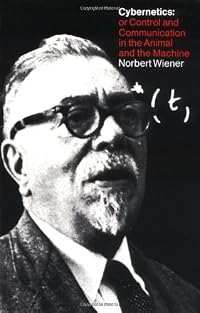
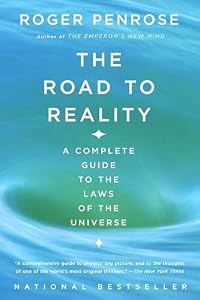
Sadly, the book show more cannot be accessed easily by a layreader and even if you have an experience with modelling of dynamical systems and familiarity with the phase space, Hamiltonians and spectral decompositions, you need to bring out a paper and pen to work around some of the mathematics that he stretches out for the reader. However, it's not more than that and it's not very tough. I disagree with the reviewers who believe that Prigogine should have toned down the mathematical element to make it more accessible for a layreader. His reasoning is primarily mathematical and his apriori assumptions are phenomenologically consistent with observation. This is how popular science should be written to separate it from prevailing popular science genre, which basically compromises too much in my opinion. In this aspect, Prigogine is a conservative scientist-writer like Roger Penrose or Norbert Weiner. show less
Sadly, the book show more cannot be accessed easily by a layreader and even if you have an experience with modelling of dynamical systems and familiarity with the phase space, Hamiltonians and spectral decompositions, you need to bring out a paper and pen to work around some of the mathematics that he stretches out for the reader. However, it's not more than that and it's not very tough. I disagree with the reviewers who believe that Prigogine should have toned down the mathematical element to make it more accessible for a layreader. His reasoning is primarily mathematical and his apriori assumptions are phenomenologically consistent with observation. This is how popular science should be written to separate it from prevailing popular science genre, which basically compromises too much in my opinion. In this aspect, Prigogine is a conservative scientist-writer like Roger Penrose or Norbert Weiner. show less
Contrary to what the book description says, this text is not entirely suited for the general reader. A good half of the book is incomprehensible for a layman. Still, very big, world-changing ideas lie within, including those that challenge wide accepted views such as determinism, the Big Bang, and fundamental blocks of quantum mechanics and relativity. Alas, understanding the proof given by Prigogine to these claims is directly proportional to your expertise with mathematics.
Mostly nonsense.
"Nobelprijswinnaar Prigogine bouwt aan een theorie om de onomkeerbaarheid van het universum en het mysterie van de tijd te verklaren. Deze bestseller is een fascinerende beschouwing over de geboorte van de tijd, de eeuwigheid en de theorie van de bigbang."
Oct 27, 2013Dutch
> Babelio : https://www.babelio.com/livres/Prigogine-La-fin-des-certitudes/216161
> Horizons philosophiques (Gauthier, Y.) : https://doi.org/10.7202/801035ar
> BAnQ (Lemelin A., Interface : la revue de l'ACFAS, janvier 1994, Janv.) : https://collections.banq.qc.ca/ark:/52327/3174439
> Jacob André. Ilya Prigogine, La fin des certitudes. Temps, chaos et les lois de la nature, Paris, Odile Jacob, 1996.
In: L'Homme et la société, N. 120, 1996. Les équivoques de la laïcité. pp. 151-152. … ; (en ligne),
URL : https://www.persee.fr/doc/homso_0018-4306_1996_num_120_2_3481
> Horizons philosophiques (Gauthier, Y.) : https://doi.org/10.7202/801035ar
> BAnQ (Lemelin A., Interface : la revue de l'ACFAS, janvier 1994, Janv.) : https://collections.banq.qc.ca/ark:/52327/3174439
> Jacob André. Ilya Prigogine, La fin des certitudes. Temps, chaos et les lois de la nature, Paris, Odile Jacob, 1996.
In: L'Homme et la société, N. 120, 1996. Les équivoques de la laïcité. pp. 151-152. … ; (en ligne),
URL : https://www.persee.fr/doc/homso_0018-4306_1996_num_120_2_3481
Mar 5, 2019 (Edited)French
Ratings
Members
- Recently Added By
Author Information

104+ Works 2,021 Members

50+ Works 2,026 Members
Isabelle Stengers teaches philosophy of science at the Free University of Brussels.
Series
Belongs to Publisher Series
Common Knowledge
- Canonical title*
- La fin des certitudes. Temps, chaos et les lois de la nature
- Original title
- La fin des certitudes: Temps, chaos et les lois de la nature
- Original publication date
- 1996
- Original language
- French
*Some information comes from Common Knowledge in other languages. Click "Edit" for more information.
Classifications
Statistics
- Members
- 411
- Popularity
- 75,119
- Reviews
- 6
- Rating
- (3.72)
- Languages
- 8 — Chinese, Dutch, English, French, Italian, Lithuanian, Portuguese, Spanish
- Media
- Paper, Ebook
- ISBNs
- 15
- ASINs
- 2