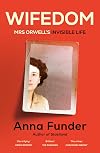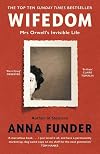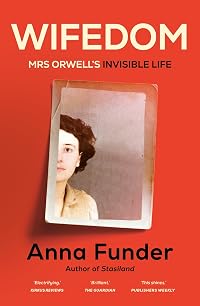
Wifedom: Mrs Orwell's Invisible Life
by Anna Funder
On This Page
Description
"A riveting work about the woman who sacrificed her future for one of the most famous writers of the twentieth century and a probing look at what it means to be a wife and a writer in the modern world. Looking for wonder and some reprieve from the everyday, award-winning writer Anna Funder slips into the pages of her hero George Orwell. As she watches him create his writing self, she tries to remember her own. When she uncovers his forgotten wife, it's a revelation. Eileen O'Shaughnessy's show more literary brilliance shaped Orwell's work and her practical common sense saved his life. But why-and how-was she written out of the story? Using newly discovered letters from Eileen to her best friend, Funder recreates the Orwells' marriage, through the Spanish Civil War and the Second World War in London. As she rolls up the screen concealing Orwell's private life she is led to question what it takes to be a writer-and what it is to be a wife. Genre-bending and utterly original, Wifedom is an ode to the unsung work of women everywhere today, while offering a breathtakingly intimate view of one of the most important literary marriages of the twentieth century. It is a book that speaks to our present moment as much as it illuminates the past"-- show lessTags
Recommendations
















Member Reviews
During a period of mental overload Anna Funder returned to one of her favourite authors - George Orwell - and read all six of the major biographies. What soon starts to become apparent is how the the influence of women in Orwell’s life was almost totally neglected, and particularly the influence of his first wife Eileen O’Shaughnessy.
What emerges in [Wifedom] is a portrait of Eileen that portrays someone much more than the traditional help meet than had been previously portrayed. During Orwell’s time in Catalonia, rather than twiddling her thumbs in a hotel room awaiting his return, we find Eileen organising the supplies, communication and banking operation for the organisation for which Orwell has come to fight, a position which means she is equally endangered when the organisation falls foul of the Stalinists. In London, during WWII, it is Eileen’s fairly senior work at the Ministry of Information that keeps the couple financially afloat. In fact, throughout most of their marriage it is Eileen who seems to be responsible for most things.
George Orwell does not come out of this well, to be honest, rather a man who is negligently careless of other people as well as himself. A man who had numerous affairs despite having contagious T.B. A man who dragged his wife to live in cottages with no electricity or sanitation (in which she had to do all the work) despite her own poor health. (I’d always thought his time on Jura when writing 1984 was strange, but not until reading this had I realised just how ill he was at the time. I’ve been to Jura, twice, it’s the back of beyond in U.K. terms and even today I don’t think I’d be happy staying there if there was a likelihood of a medical emergency. You’d need the air ambulance, and they can’t always fly in bad weather …) Overall, clearly a man who didn’t want to think about his wife’s own health at all.
Overall, this is an interesting and well written book which everyone in my RL book group enjoyed. show less
As I read the biographies, I began to see that just as patriarchy allowed Orwell to benefit from his wife’s invisible work, it then allowed biographers to give the impression that he did it all alone. The biographers are choosing the facts for his story in a world that has already sifted them in his favour. The narrative techniques of patriarchy and biography combine seamlessly so as to leave theshow more
woman who taught and nurtured Orwell, influenced and helped him, like offcuts on the editing floor, buttresses to be removed once the edifice is up.
What emerges in [Wifedom] is a portrait of Eileen that portrays someone much more than the traditional help meet than had been previously portrayed. During Orwell’s time in Catalonia, rather than twiddling her thumbs in a hotel room awaiting his return, we find Eileen organising the supplies, communication and banking operation for the organisation for which Orwell has come to fight, a position which means she is equally endangered when the organisation falls foul of the Stalinists. In London, during WWII, it is Eileen’s fairly senior work at the Ministry of Information that keeps the couple financially afloat. In fact, throughout most of their marriage it is Eileen who seems to be responsible for most things.
George Orwell does not come out of this well, to be honest, rather a man who is negligently careless of other people as well as himself. A man who had numerous affairs despite having contagious T.B. A man who dragged his wife to live in cottages with no electricity or sanitation (in which she had to do all the work) despite her own poor health. (I’d always thought his time on Jura when writing 1984 was strange, but not until reading this had I realised just how ill he was at the time. I’ve been to Jura, twice, it’s the back of beyond in U.K. terms and even today I don’t think I’d be happy staying there if there was a likelihood of a medical emergency. You’d need the air ambulance, and they can’t always fly in bad weather …) Overall, clearly a man who didn’t want to think about his wife’s own health at all.
Overall, this is an interesting and well written book which everyone in my RL book group enjoyed. show less
A brilliant book about George Orwell's overlooked, usually unnamed wife, Eileen. Despite her admiration for his work, Anna Funder has revealed him as a monster of the patriarchy. Not so much misogynist as utterly neglectful of Eileen's needs, especially of her health. Is he though simply a man of his extremely patriarchal times, or is the extremity of his masculine selfishness at least partly due to the school he attended, Eton? His disregard of women as human beings made me think of Boris Johnson. Their politics could hardly have been more different, but they seemed to have shared a complete inability to see women as people with human needs and demands. Both attended Eton.
I spent most of my time reading this, enraged. Which, if you want to spend time being on behalf of Eileen O'Shaughnessy, who chose to live supporting a man whose work she valued, at a cost to her health and probably her life, means it is an effective tome. If not an enjoyable one. The author sets Eileen's life as a plane with her own as the rocky intrusions, obvious but not entirely exposed.
The final disappointment is that almost the final 20% is about her spouse and his numerous, and usually clumsy, efforts to find someone to care for him and be his literary executor.
The final disappointment is that almost the final 20% is about her spouse and his numerous, and usually clumsy, efforts to find someone to care for him and be his literary executor.
This is a feminist re-examination of the life and marriage of Eileen and Eric Blair, Eric otherwise known as George Orwell. It is a bleak tale of a woman who was more than Orwell's equal but who was written out of history in many of Orwell's biographies and books with her impact belittled, ignored or laughed at. It is a lesson in how to read texts and interpret them differently.
The book is a mix of biography, fiction, travel writing and memoir for Funder intervenes with footnotes to draw the parrallels with the lives of women today. And the outcome? Orwell does not come out of this life looking good. He is tarnished, patriarchal and lacking in courage.
Founder takes the six biographies written about Orwell (all by men) and throws a show more spotlight on the gaps, the blurring of roles and their importance and the general, menial tasks undertaken by Eileen that were so vital for the 'genius' to be shown in her husband's work. Eileen Blair, nee O'Shaugnessy was an Oxford graduate, funny, warm, quick-witted and good with people but much of this was sacrificed to marriage.
The ending sums up the whole book. Eileen did not think that her health was worth stopping work for, nor spending money on, and she paid the ultimate price. Time and time again we hear stories where a woman's role had been ignored, often in the creative world, but rarely are they as direct and hard-hitting as this telling.
The sentences are often short, direct, piercing in their impact. Funder admits to loving Orwell's writing but is now not sure that she can divorce this love from knowing about him. And therein lies the real question - knowing what we know about him now, is he still a great writer? show less
The book is a mix of biography, fiction, travel writing and memoir for Funder intervenes with footnotes to draw the parrallels with the lives of women today. And the outcome? Orwell does not come out of this life looking good. He is tarnished, patriarchal and lacking in courage.
Founder takes the six biographies written about Orwell (all by men) and throws a show more spotlight on the gaps, the blurring of roles and their importance and the general, menial tasks undertaken by Eileen that were so vital for the 'genius' to be shown in her husband's work. Eileen Blair, nee O'Shaugnessy was an Oxford graduate, funny, warm, quick-witted and good with people but much of this was sacrificed to marriage.
The ending sums up the whole book. Eileen did not think that her health was worth stopping work for, nor spending money on, and she paid the ultimate price. Time and time again we hear stories where a woman's role had been ignored, often in the creative world, but rarely are they as direct and hard-hitting as this telling.
The sentences are often short, direct, piercing in their impact. Funder admits to loving Orwell's writing but is now not sure that she can divorce this love from knowing about him. And therein lies the real question - knowing what we know about him now, is he still a great writer? show less
Anna Funder’s book exposes George Orwell with a side that has been invisible for years until recently when six letters were found – letters that his first wife, Eileen Blair, wrote to her best friend, Norah Symes Myles.
Orwell is known as an “influential serious author of the 20th century.” However, the way he treated Eileen was another matter. The beautiful, intelligent and witty Oxford graduate changed after she married Eric Blair (with the pen name of George Orwell).
The young couple moved into his family’s 16th century English cottage in Wallington that lacked electricity. Her dream of writing would be derailed as she would now be busy caring for her husband, feeding the animals and taking care of the garden as well as show more cooking and cleaning. She hated the cold winters. Orwell was needy and manipulative. It was accepted for women to be in a secondary role at that time. Yet, Eileen edited and retyped his work which helped him to become famous.
Funder follows the timeline from their marriage in 1936 until the time George Orwell died in 1950 with an overview of the family and intense time during the Spanish Civil War. She combines a highly researched historical account with highlights from the letters along with photos. Funder also includes a few personal remarks in the long chapters which some may enjoy or find it to be distracting.
Eileen was the good wife. “His work was her purpose.” There are multiple interesting and complex cases of where she extended herself to make his life comfortable while he did nothing to reciprocate when she very much needed it. She was also aware of his affairs with other women.
Orwell’s manipulative behavior towards Eileen in the book is upsetting and sets a different opinion of the man that is admired for his brilliant books. Funder wanted to draw attention to the way he controlled Eileen. It's certainly disturbing to read about how the marriage weakened her in many ways. She died young, at the age of 39 alone from a botched operation trying to save a few dollars.
It would be a good discussion for a book club about a woman’s role with marriage to a dominate man. Also, can an author’s personal thoughts, behaviors and characterizations change the way one feels about their books?
My thanks to Alfred A. Knopf and NetGalley for allowing me to read this advanced copy with an expected release date of August 22, 2023. show less
Orwell is known as an “influential serious author of the 20th century.” However, the way he treated Eileen was another matter. The beautiful, intelligent and witty Oxford graduate changed after she married Eric Blair (with the pen name of George Orwell).
The young couple moved into his family’s 16th century English cottage in Wallington that lacked electricity. Her dream of writing would be derailed as she would now be busy caring for her husband, feeding the animals and taking care of the garden as well as show more cooking and cleaning. She hated the cold winters. Orwell was needy and manipulative. It was accepted for women to be in a secondary role at that time. Yet, Eileen edited and retyped his work which helped him to become famous.
Funder follows the timeline from their marriage in 1936 until the time George Orwell died in 1950 with an overview of the family and intense time during the Spanish Civil War. She combines a highly researched historical account with highlights from the letters along with photos. Funder also includes a few personal remarks in the long chapters which some may enjoy or find it to be distracting.
Eileen was the good wife. “His work was her purpose.” There are multiple interesting and complex cases of where she extended herself to make his life comfortable while he did nothing to reciprocate when she very much needed it. She was also aware of his affairs with other women.
Orwell’s manipulative behavior towards Eileen in the book is upsetting and sets a different opinion of the man that is admired for his brilliant books. Funder wanted to draw attention to the way he controlled Eileen. It's certainly disturbing to read about how the marriage weakened her in many ways. She died young, at the age of 39 alone from a botched operation trying to save a few dollars.
It would be a good discussion for a book club about a woman’s role with marriage to a dominate man. Also, can an author’s personal thoughts, behaviors and characterizations change the way one feels about their books?
My thanks to Alfred A. Knopf and NetGalley for allowing me to read this advanced copy with an expected release date of August 22, 2023. show less
This has every chance of being my book of the year, though I was also very much impressed by Caro's first volume of his biography of US President Lyndon Johnson (if only because I previously had no particular interest in US Presidents).
Funder is not a prolific author of books (I believe this is her 4th), though apparently a somewhat more prolific contributor to various magazines, journals etc. I cannot remember reading her before but I am very glad I red this after having heard her speaking as to it earlier in the year.
The book takes a non traditional structure: it is part personal (ie Funder) reflection/memoir as to her life; a description a sto how she went about writing this book; a (partial ) biography of Orwell and his first wife show more Eileen; an assessment as to the inputs as to Orwell's literary output; an assessment as to patriarchy, both in the first half of the 20th century and now.
Unlike some other works (eg Paul Johnson's "Intellectuals", where he flays the perceived (and based on his views probably actual) flaws of his targets, they are very diminished people after his depiction), Funder does not set out 'to get Orwell' but rather starts in a low period in her life, when she come across a collected works of Orwell, someone already admired by Funder. Having read those, Funder then reads the then available six modern biographies of Orwell. But it is the subsequent publication of some six letters between Eileen and her best friend that intrigues Funder the most.
The first letter (from Eileen,written some weeks after her marriage to Orwell), now famously, states :
"I lost my habit of punctual correspondence during the first few weeks of marriage because we quarrelled so continuously & bitterley that I thought I'd save time & just write one letter to everyone when the murder or separation had been accomplished."
Funder turned back to the biographies to find out more about Eileen, but found very little mention of her. And this set Funder off on a search for Eileen. What she found was fascinating, A woman who gave up some much in some many ways for Orwell, seemingly willingly (even to the deficit of her own health), but in circumstances where Orwell gave so little back. Indeed it could be said that Orwell's writing was better (even so much better) given Eileen's multiple contributions to Orwell's life, day to day existence and literary output (indeed the also the quality of that output).
This is not a 'pile on', seeking to bring down Orwell, In the way that Paul Johnson's "Intellectuals" is a study as to how various well know intellectuals (including Rousseau, Marx, Baldwin, Mailer Sartre, amongst others) "apply their public principles to their private lives. What is their attitude to money? How do they treat their spouses and children - legitimate and illegitimate? How loyal are they to their friends?"
Funder writes that her appreciation of Orwell's literary output is undiminished, and similarly her respect for the biographers notwithstanding their apparent overlooking of the contributions of Eileen. And I have heard Funder repeat that in various interviews both before and after reading the book.
Apart from reinstating Eileen's position in the realm, drawing on Orwell's insights into tyranny (particularly colonialism) and James Baldwin's insights as to discrimination and on Orwell's notion of doublespeak - the notion of being able to believe or accept at the very same time 2 contradictory facts or beliefs) Funder
"came to see how men can imagine themselves innocent in a system that benefits, at others' cost."
A great thought provoking read.
Big Ship
27 August 2023 show less
Funder is not a prolific author of books (I believe this is her 4th), though apparently a somewhat more prolific contributor to various magazines, journals etc. I cannot remember reading her before but I am very glad I red this after having heard her speaking as to it earlier in the year.
The book takes a non traditional structure: it is part personal (ie Funder) reflection/memoir as to her life; a description a sto how she went about writing this book; a (partial ) biography of Orwell and his first wife show more Eileen; an assessment as to the inputs as to Orwell's literary output; an assessment as to patriarchy, both in the first half of the 20th century and now.
Unlike some other works (eg Paul Johnson's "Intellectuals", where he flays the perceived (and based on his views probably actual) flaws of his targets, they are very diminished people after his depiction), Funder does not set out 'to get Orwell' but rather starts in a low period in her life, when she come across a collected works of Orwell, someone already admired by Funder. Having read those, Funder then reads the then available six modern biographies of Orwell. But it is the subsequent publication of some six letters between Eileen and her best friend that intrigues Funder the most.
The first letter (from Eileen,written some weeks after her marriage to Orwell), now famously, states :
"I lost my habit of punctual correspondence during the first few weeks of marriage because we quarrelled so continuously & bitterley that I thought I'd save time & just write one letter to everyone when the murder or separation had been accomplished."
Funder turned back to the biographies to find out more about Eileen, but found very little mention of her. And this set Funder off on a search for Eileen. What she found was fascinating, A woman who gave up some much in some many ways for Orwell, seemingly willingly (even to the deficit of her own health), but in circumstances where Orwell gave so little back. Indeed it could be said that Orwell's writing was better (even so much better) given Eileen's multiple contributions to Orwell's life, day to day existence and literary output (indeed the also the quality of that output).
This is not a 'pile on', seeking to bring down Orwell, In the way that Paul Johnson's "Intellectuals" is a study as to how various well know intellectuals (including Rousseau, Marx, Baldwin, Mailer Sartre, amongst others) "apply their public principles to their private lives. What is their attitude to money? How do they treat their spouses and children - legitimate and illegitimate? How loyal are they to their friends?"
Funder writes that her appreciation of Orwell's literary output is undiminished, and similarly her respect for the biographers notwithstanding their apparent overlooking of the contributions of Eileen. And I have heard Funder repeat that in various interviews both before and after reading the book.
Apart from reinstating Eileen's position in the realm, drawing on Orwell's insights into tyranny (particularly colonialism) and James Baldwin's insights as to discrimination and on Orwell's notion of doublespeak - the notion of being able to believe or accept at the very same time 2 contradictory facts or beliefs) Funder
"came to see how men can imagine themselves innocent in a system that benefits, at others' cost."
A great thought provoking read.
Big Ship
27 August 2023 show less
I had high hopes for this, but I was quite disappointed. I loved the premise of investigating the wife behind the great man, but I really disliked the author’s inserting herself and her speculations into Eileen’s story.
Members
- Recently Added By
Lists

Fiction: Historical
288 works; 3 members

Books Read in 2023
5,547 works; 145 members

Top Five Books of 2023
767 works; 317 members

Top Five Books of 2024
795 works; 264 members

Books We Discovered On LibraryThing
530 works; 130 members
Author Information

9+ Works 3,752 Members
Anna Funder has been writer-in-residence at the Australia Center in Potsdam, Germany.
Awards and Honors
Awards
Distinctions
Notable Lists
Common Knowledge
- Canonical title
- Wifedom: Mrs Orwell's Invisible Life
- Dedication
- For Craig
and for Imogen, Polly and Max
Classifications
- Genres
- Literature Studies and Criticism, Biography & Memoir, Nonfiction
- DDC/MDS
- 828.91209 — Literature & rhetoric English & Old English literatures English miscellaneous writings English miscellaneous writings 1900- English miscellaneous writings 1900-1999 English miscellaneous writings 1900-1945 Individual authors not limited to or chiefly identified with one specific form.
- LCC
- PR6029 .R8 .Z6355 — Language and Literature English English Literature 1900-1960
- BISAC
Statistics
- Members
- 462
- Popularity
- 65,858
- Reviews
- 20
- Rating
- (3.99)
- Languages
- English, French
- Media
- Paper, Audiobook, Ebook
- ISBNs
- 20
- ASINs
- 6