On This Page
Description
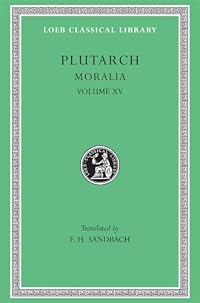
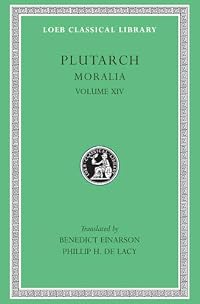
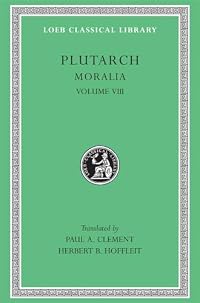
Plutarch (Plutarchus), ca. 45-120 CE, was born at Chaeronea in Boeotia in central Greece, studied philosophy at Athens, and, after coming to Rome as a teacher in philosophy, was given consular rank by the emperor Trajan and a procuratorship in Greece by Hadrian. He was married and the father of one daughter and four sons. He appears as a man of kindly character and independent thought, studious and learned. Plutarch wrote on many subjects. Most popular have always been the 46 Parallel Lives, show more biographies planned to be ethical examples in pairs (in each pair, one Greek figure and one similar Roman), though the last four lives are single. All are invaluable sources of our knowledge of the lives and characters of Greek and Roman statesmen, soldiers and orators. Plutarch's many other varied extant works, about 60 in number, are known as the Moralia or Moral Essays. They are of high literary value, besides being of great use to people interested in philosophy, ethics and religion. The Loeb Classical Library edition of the Moralia is in fifteen volumes, Volume XIII having two parts. show lessTags
Recommendations


Member Reviews
Plutarch is generally known for his Parallel Lives, but he was also a Platonist philosopher who contributed some of the few complete works of Middle Platonism that we still have extant. While Plutarch may not always be the most innovative or consistent, I found this collection of essays incredibly engaging. The first essay simply deals with Platonic problems; and the second explores the Timaeus and it's discussion of psyche.
The editor/translator is not afraid to mention Plutarch's errors and inconsistencies in the running commentary/footnotes. Going back and forth between both is a bit tiresome; so I would probably suggest reading the actual work once through and then reading the editor's footnotes. I think the editor, as many have show more done, attributes to Plato more consistency than he actually had. Not that I take the Straussian view that Plato never voiced his own views in his dialogues, but I do think he may have voiced disparate views by his various interlocutors. In some cases, Plato may have changed views, and in others, he may have been undecided and simply provided various opinions on a given subject. Later interpreters and expositors probably made choices between these disparate views and accepted them as Plato's.
I do highly recommend this book for those interested in Platonism and it's historical development. Loeb, I do believe, has the only translation of this work of Plutarch's, which includes the Greek with the English. While copies still are available, it might be advisable to procure one for those interested. show less
The editor/translator is not afraid to mention Plutarch's errors and inconsistencies in the running commentary/footnotes. Going back and forth between both is a bit tiresome; so I would probably suggest reading the actual work once through and then reading the editor's footnotes. I think the editor, as many have show more done, attributes to Plato more consistency than he actually had. Not that I take the Straussian view that Plato never voiced his own views in his dialogues, but I do think he may have voiced disparate views by his various interlocutors. In some cases, Plato may have changed views, and in others, he may have been undecided and simply provided various opinions on a given subject. Later interpreters and expositors probably made choices between these disparate views and accepted them as Plato's.
I do highly recommend this book for those interested in Platonism and it's historical development. Loeb, I do believe, has the only translation of this work of Plutarch's, which includes the Greek with the English. While copies still are available, it might be advisable to procure one for those interested. show less
Members
- Recently Added By
Author Information

1,617+ Works 25,847 Members
PLUTARCH. c.46--c.125 Considered by many to be the most important Greek writer of the early Roman period, Plutarch was a member of a well-to-do Greek family, a chief magistrate, a priest at Delphi, and an exceptionally well-read individual. His philosophical views were based on those of Plato and, although a Greek, he esteemed the achievements and show more attributes of the Romans. By the time Plutarch's works were published for the first time in the eleventh century, some had already been lost. He wrote innumerable essays on philosophical, historical, political, religious, and literary subjects, 78 of which survive today and are known collectively as the "Moralia." He is known primarily, however, for his Parallel Lives of Greeks and Romans, which consists of 50 biographies---23 of prominent Greeks, 23 of Roman leaders, and 4 separate lives---accompanied at intervals by short comparative essays. Although historical information is included in the work, Plutarch wrote it originally to inspire emulation in youth, so the emphasis is on character, moral choice, and anecdote. Sir Thomas North's 1579 translation into English of Parallel Lives became an important source for William Shakespeare which he used for three plays, Julius Caesar, Antony and Cleopatra, and Coriolanus. (Bowker Author Biography) show less
Some Editions
Awards and Honors
Series

Belongs to Publisher Series
Loeb Classical Library (427)
Common Knowledge
- Canonical title
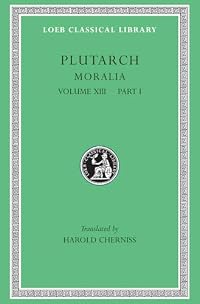
- Plutarch: Moralia, Volume XIII, Part I
Classifications
Statistics
- Members
- 73
- Popularity
- 429,385
- Reviews
- 1
- Rating
- (5.00)
- Languages
- English, Greek (Ancient)
- Media
- Paper
- ISBNs
- 3
- ASINs
- 1