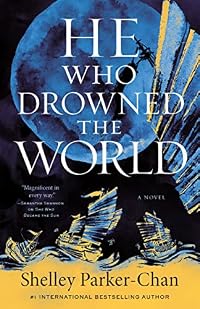
On This Page
Description
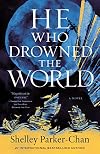
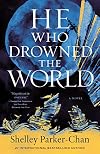
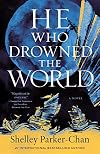
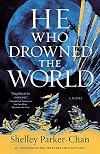
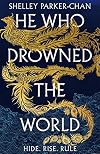
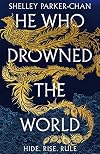
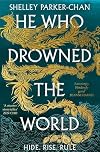
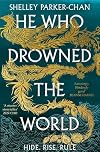
Zhu Yuanzhang, the Radiant King, is riding high after her victory that tore southern China from its Mongol masters. Now she burns with a new desire: to seize the throne and crown herself emperor. But Zhu isn't the only one with imperial ambitions. Her neighbor in the south, the courtesan Madam Zhang, wants the throne for her husband--and she's strong enough to wipe Zhu off the map. To stay in the game, Zhu will have to gamble everything on a risky alliance with an old enemy: the talented but show more unstable eunuch general Ouyang, who has already sacrificed everything for a chance at revenge on his father's killer, the Great Khan. Unbeknownst to the southerners, a new contender is even closer to the throne. The scorned scholar Wang Baoxiang has maneuvered his way into the capital, and his lethal court games threaten to bring the empire to its knees. For Baoxiang also desires revenge: to become the most degenerate Great Khan in history--and in so doing, make a mockery of every value his Mongol warrior family loved more than him. All the contenders are determined to do whatever it takes to win. But when desire is the size of the world, the price could be too much for even the most ruthless heart to bear..."--Provided by publisher. show lessTags
Recommendations



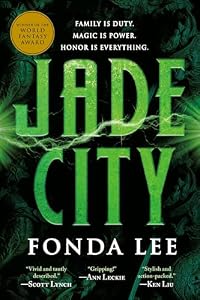

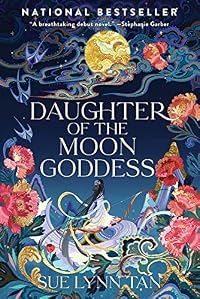
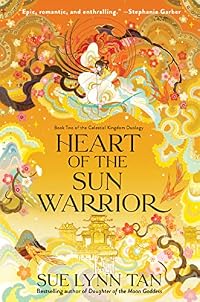

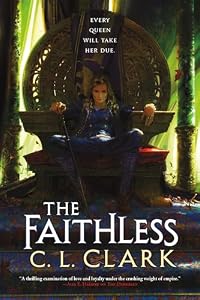
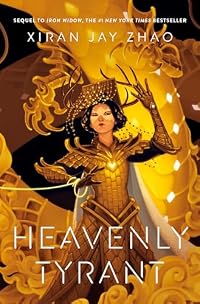



Member Recommendations
Hystoriosity Both set in pseudo-historic China with a pinch of fantasy exploring how power ties to gender roles amid court intrigues - Parker-Chan moves this more into the LGBT space vs Shen's focus on class and female power. Both also quite dark with depictions of violence/sexual violence but show strength and resilience of protagonists who use 'she' pronouns.
Member Reviews
This is the second in a duology, continuing Zhu Yuanzhang’s pursuit of the throne alongside the parallel ambition of Wang Baoxiang. Set in an alternate fourteenth century China and loosely following the events surrounding the founding of the Ming dynasty, it borrows names and battles while dramatically reimagining outcomes. There is a light dusting of the supernatural, ghosts and divine mandate hovering at the edge of events, but the dominant intervention is elsewhere: a deliberate queering of history’s central figures.
The writing remains rich and densely layered. There are many characters and plot threads, all tightening toward a shared centre. A spiderweb might be the better image. You begin at the outer strands, held at some show more distance from the middle. Having read the first book some time ago, I did not immediately recognise every returning figure beyond Zhu and Ma, nor did I recall all the intricate political manoeuvrings of book one. I found myself relying on the brief reminders threaded through the text. That initial distance made the opening feel slower, as though I were circling the web rather than caught in it.
Absorption came gradually. As Zhu begins forging alliances and as the emotional consequences of being seen, or refused, play out through characters such as General Ouyang, the narrative tightens. By the time the strands converge toward the centre, I felt fully drawn in, the pull increasing as each ambition collided with its cost.
Queerness is not decorative here, it is foundational. Ouyang’s portrayal as a eunuch, Zhu’s fluid relationship to gender, her bond with Ma, Wang Baoxiang’s indifference to gender in his sexual relationships, all sit at the heart of the narrative. Yet this expansiveness exists within a society that remains sharply prejudiced. That prejudice becomes part of Zhu’s motivation to remake the world, alongside economic injustice, misogyny, and hostility toward those of different heritages. What emerges is a distinctly modern dream carried inside an early modern setting.
I found myself holding two responses at once. The introduction of ghosts and divine mandate gestures toward fantasy’s freedom to reshape the world, yet the social order remains recognisably brutal. Gender and sexuality are reimagined through individual characters rather than through structural transformation. Perhaps that tension is deliberate. It keeps the dream aspirational rather than realised. Still, I felt a faint friction there, a sense of possibility only partially taken up - though giving in to structural transformation may have eradicated the overwhelming motivation stemming from Zhu's convictions.
This is, unmistakably, a book about power. About what ambition demands, and about the narrowing of vision that can occur when a goal eclipses everything else. Characters sacrifice love, loyalty, and selfhood in pursuit of something that often proves smaller than they imagined. That felt uncomfortably contemporary. In modern western society, at least from my vantage point, it is easy to recognise the same tunnel vision in the pursuit of wealth, status, and advancement. The rhetoric may differ, but the emotional logic rhymes.
The endings of both Ouyang and Baoxiang crystallised this for me. The novel works hard to secure the reader’s empathy for them, and the outcomes feel bitter rather than triumphant. Not cruel, exactly, but stripped of consolation. That bitterness reinforces the novel’s thesis about ambition’s cost, even as it makes the reading experience heavy.
The violence is extensive, and the social hierarchies are stark. Groups do not merely disagree, they fail to recognise one another as fully human. That brutality feels true to the era the book draws from, though it adds to the overall weight of the reading experience.
My overarching reaction is that this novel does something important in its choice of narrators and identities. It reclaims historical myth through queer and marginalised perspectives and invites sustained discussion about power, prejudice, and the price of change. At the same time, the relentlessness of its ruthlessness leaves little space for reprieve. It is bracing rather than comforting, and not an easy read. show less
The writing remains rich and densely layered. There are many characters and plot threads, all tightening toward a shared centre. A spiderweb might be the better image. You begin at the outer strands, held at some show more distance from the middle. Having read the first book some time ago, I did not immediately recognise every returning figure beyond Zhu and Ma, nor did I recall all the intricate political manoeuvrings of book one. I found myself relying on the brief reminders threaded through the text. That initial distance made the opening feel slower, as though I were circling the web rather than caught in it.
Absorption came gradually. As Zhu begins forging alliances and as the emotional consequences of being seen, or refused, play out through characters such as General Ouyang, the narrative tightens. By the time the strands converge toward the centre, I felt fully drawn in, the pull increasing as each ambition collided with its cost.
Queerness is not decorative here, it is foundational. Ouyang’s portrayal as a eunuch, Zhu’s fluid relationship to gender, her bond with Ma, Wang Baoxiang’s indifference to gender in his sexual relationships, all sit at the heart of the narrative. Yet this expansiveness exists within a society that remains sharply prejudiced. That prejudice becomes part of Zhu’s motivation to remake the world, alongside economic injustice, misogyny, and hostility toward those of different heritages. What emerges is a distinctly modern dream carried inside an early modern setting.
I found myself holding two responses at once. The introduction of ghosts and divine mandate gestures toward fantasy’s freedom to reshape the world, yet the social order remains recognisably brutal. Gender and sexuality are reimagined through individual characters rather than through structural transformation. Perhaps that tension is deliberate. It keeps the dream aspirational rather than realised. Still, I felt a faint friction there, a sense of possibility only partially taken up - though giving in to structural transformation may have eradicated the overwhelming motivation stemming from Zhu's convictions.
This is, unmistakably, a book about power. About what ambition demands, and about the narrowing of vision that can occur when a goal eclipses everything else. Characters sacrifice love, loyalty, and selfhood in pursuit of something that often proves smaller than they imagined. That felt uncomfortably contemporary. In modern western society, at least from my vantage point, it is easy to recognise the same tunnel vision in the pursuit of wealth, status, and advancement. The rhetoric may differ, but the emotional logic rhymes.
The endings of both Ouyang and Baoxiang crystallised this for me. The novel works hard to secure the reader’s empathy for them, and the outcomes feel bitter rather than triumphant. Not cruel, exactly, but stripped of consolation. That bitterness reinforces the novel’s thesis about ambition’s cost, even as it makes the reading experience heavy.
The violence is extensive, and the social hierarchies are stark. Groups do not merely disagree, they fail to recognise one another as fully human. That brutality feels true to the era the book draws from, though it adds to the overall weight of the reading experience.
My overarching reaction is that this novel does something important in its choice of narrators and identities. It reclaims historical myth through queer and marginalised perspectives and invites sustained discussion about power, prejudice, and the price of change. At the same time, the relentlessness of its ruthlessness leaves little space for reprieve. It is bracing rather than comforting, and not an easy read. show less
My initial response to "She Who Became the Sun" was that this was going to be something of a chore, but this turned out to be the gender-bent historical epic I didn't know I needed. That brings us to the follow-up book, which I feel is a step up in quality, as Parker-Chan takes you into a world of lethal dynastic conflict. George Martin has nothing on this lady as you'll feel like you need a shower after reading some passages.
My hot take is that this one of the best fantasy novels of the year and it should contend for all the relevant prizes.
My hot take is that this one of the best fantasy novels of the year and it should contend for all the relevant prizes.
He Who Drowned the World completes Shelley Parker-Chan's Radiant Emperor duology, a fantasy-tinged, gender-queered alternate history take on the foundation of the Ming dynasty. In many ways this is a stronger book than the first one—Parker-Chan had a much surer grasp on pacing this time around—with all the vicious politicking and psychosexual drama you could hope for.
(And perhaps a little more. There's an awful lot of trauma here and every single character needs therapy and a nap.)
Ultimately, I think this is a series I find myself respecting more than loving. Parker-Chan's worldview is assured and complex, and they make some interesting points about gender and power. Yet there were points where events were so bleakly tragic, the show more characters so determined to make bad and amoral choices over and over, and consciously so, that I found the book teetering on the verge of camp. Parker-Chan clearly understands the constraints within which women have to operate in a patriarchal system, but I found their portrait of Madam Zhang to be unconvincing—oddly endorsing of certain misogynist stereotypes rather than unpacking them.
I can't say that I'll continue on with further works by Parker-Chan—if their future books are as brutal as these twos, I think it will be too much for me—but I don't regret having read these two. show less
(And perhaps a little more. There's an awful lot of trauma here and every single character needs therapy and a nap.)
Ultimately, I think this is a series I find myself respecting more than loving. Parker-Chan's worldview is assured and complex, and they make some interesting points about gender and power. Yet there were points where events were so bleakly tragic, the show more characters so determined to make bad and amoral choices over and over, and consciously so, that I found the book teetering on the verge of camp. Parker-Chan clearly understands the constraints within which women have to operate in a patriarchal system, but I found their portrait of Madam Zhang to be unconvincing—oddly endorsing of certain misogynist stereotypes rather than unpacking them.
I can't say that I'll continue on with further works by Parker-Chan—if their future books are as brutal as these twos, I think it will be too much for me—but I don't regret having read these two. show less
I found [b:He Who Drowned the World|63132362|He Who Drowned the World (The Radiant Emperor, #2)|Shelley Parker-Chan|https://i.gr-assets.com/images/S/compressed.photo.goodreads.com/books/1675980231l/63132362._SY75_.jpg|93477937] exceedingly addictive to read. It was a struggle to put it down in order to meet a (much less interesting) work deadline. Compared with the previous book it was easier to get into, as the protagonists were already well-established and deep in their machinations. The plot started fast and accelerated. Indeed, I think it could have been stretched out over two books. I have no complaints about how intense and compelling it was within just one, however. I was hooked by the outstandingly unhinged protagonists, show more Machiavellian scheming, and emotional intensity. Shelley Parker-Chan is very good at writing characters who behave in an unreasonable-to-deranged manner, as all have motivations and prior experiences that contextualise what could otherwise seem cartoonish behaviour.
All four main protagonists also have really interesting relationships with gender and sexuality, which defy expectations and shape the plot in clever ways. Sex is used as a political tool at several points.Lady Zhang's use of her power within the palace is ingenious. I was delighted when Ouyang and Zhu teamed up, as their dynamic is incendiary. A hyper-ambitious female warlord disguised as a man and a deadly eunuch desperate for revenge make a brilliant team, as they discover. Their alliance is broken apart by Wang Baoxiang's scheming, then Ouyang's eventual vengeance turns to ashes. His ending is spectacularly tragic, almost worthy of Sophocles. The final confrontation between Zhu, Wang Baoxiang, and Ouyang's ghost is excellent and concludes the duology very satisfyingly. The pace of events does not occur at the expense of characterisation; it is the characters that make you care about the plot. I particularly enjoyed seeing Zhu's gradual growth beyond utter ruthlessness, Wang Baoxiang's reaction to his success, and Ouyang's inklings of a life beyond revenge. [b:He Who Drowned the World|63132362|He Who Drowned the World (The Radiant Emperor, #2)|Shelley Parker-Chan|https://i.gr-assets.com/images/S/compressed.photo.goodreads.com/books/1675980231l/63132362._SY75_.jpg|93477937] succeeds brilliantly as a high-octane ensemble historical drama with fantasy elements. It's a sequel that I preferred to its predecessor and would highly recommend. show less
All four main protagonists also have really interesting relationships with gender and sexuality, which defy expectations and shape the plot in clever ways. Sex is used as a political tool at several points.
Hoo boy, this one is a lot darker than the first book. If I had a criticism, it's that it's sooo long, so much happens in it. There's less of a focus on Zhu, but I found the scheming of the other characters incredibly interesting, especially with the empress. Zhu and Ouyang having to team up was amusing. He's so very bitter and Zhu takes everything in stride. I love the way this book looks at gender, the prisons it can put them in and whether they choose to work within their bars or slip through them.
There's so much self-hatred packed into this book. I found it a little amusing how often characters thought "I feel terrible right now, all according to plan!". That being said, you can't really look away as you watch them barrel toward show more their own destruction.
I honestly wondered if/how Zhu was going to manage to come out of this successful.Her endless ambition was bound to be her downfall in the end, and I thought for sure she'd lose Ma forever. But once again she pulled it off at the end, doing what the others couldn't. It made me think about how Baoxiang had thought "I can still stop now" but chose to keep going. Zhu had the courage to do what he couldn't. I had hoped for a nicer ending for Ouyang, but it wasn't meant to be. Even so, he's on his way to peace. show less
There's so much self-hatred packed into this book. I found it a little amusing how often characters thought "I feel terrible right now, all according to plan!". That being said, you can't really look away as you watch them barrel toward show more their own destruction.
I honestly wondered if/how Zhu was going to manage to come out of this successful.
Series Info/Source: This is the 2nd book in The Radiant Emperor Duology I borrowed this on ebook through the library.
Thoughts: I enjoyed this conclusion to the Radiant Emperor Duology but thought it was weaker than the first book in the series.
This book follows many different characters as they fight for the throne. My favorite character continues to be Zhu, whose plucky attitude is contagious and coupled with a ruthlessness that is chilling. We also hear from Madama Zhang who wants to put her husband on the throne, General Ouyang who wants revenge, and Wang Baoxiang who wants to mock his Mongol family by becoming the most vile Great Khan in history. All the characters are very relatable and have a lot of depth to them. I enjoyed show more watching them try to out-maneuver each other. The story is engaging and easy to read.
This is mainly historical fiction but it does have some intriguing fantasy elements. The magical Manifests that these feuding members have are intriguing and the ability they give to see ghosts is fascinating. I also enjoyed some other fantasy elements like Zhu figuring out how to use his powers to bring back his dead companions.
While I enjoyed this overall, there was one thing that bothered me throughout. The characters have a lot of internal dialogue going on that takes up a lot of page space. Much of this internal dialogue was repetitive and didn't add much to the story. I frequently found myself skimming some of these portions to get to the meat of the story. I would have preferred some better editing to tighten up all of these internal thoughts and conversations. They just took up way too much page space.
As with the first book, I would have loved an afterward on how much of this book was historically accurate and how much was fantasy. I am always intrigued to learn about history and in a historical fantasy like this it is nice to have some help sorting out what is real and what is fantasy.
My Summary (4/5): Overall I enjoyed this. There are some wonderfully despicable characters in here and they are fascinating to watch as they try to out-maneuver each other for leadership of China. I did think the internal dialogue that characters had in their head were way too drawn out and should have been edited down. I would have also really enjoyed an afterward comparing this to actual history. I look forward to Parker-Chen's future novels and would recommend this book to those interested in historical fiction fantasies, especially those that look at historical China. show less
Thoughts: I enjoyed this conclusion to the Radiant Emperor Duology but thought it was weaker than the first book in the series.
This book follows many different characters as they fight for the throne. My favorite character continues to be Zhu, whose plucky attitude is contagious and coupled with a ruthlessness that is chilling. We also hear from Madama Zhang who wants to put her husband on the throne, General Ouyang who wants revenge, and Wang Baoxiang who wants to mock his Mongol family by becoming the most vile Great Khan in history. All the characters are very relatable and have a lot of depth to them. I enjoyed show more watching them try to out-maneuver each other. The story is engaging and easy to read.
This is mainly historical fiction but it does have some intriguing fantasy elements. The magical Manifests that these feuding members have are intriguing and the ability they give to see ghosts is fascinating. I also enjoyed some other fantasy elements like Zhu figuring out how to use his powers to bring back his dead companions.
While I enjoyed this overall, there was one thing that bothered me throughout. The characters have a lot of internal dialogue going on that takes up a lot of page space. Much of this internal dialogue was repetitive and didn't add much to the story. I frequently found myself skimming some of these portions to get to the meat of the story. I would have preferred some better editing to tighten up all of these internal thoughts and conversations. They just took up way too much page space.
As with the first book, I would have loved an afterward on how much of this book was historically accurate and how much was fantasy. I am always intrigued to learn about history and in a historical fantasy like this it is nice to have some help sorting out what is real and what is fantasy.
My Summary (4/5): Overall I enjoyed this. There are some wonderfully despicable characters in here and they are fascinating to watch as they try to out-maneuver each other for leadership of China. I did think the internal dialogue that characters had in their head were way too drawn out and should have been edited down. I would have also really enjoyed an afterward comparing this to actual history. I look forward to Parker-Chen's future novels and would recommend this book to those interested in historical fiction fantasies, especially those that look at historical China. show less
Ouyang and Wang Baoxiang are no fun to spend time with. Zhu Yuanzhang is a lot less fun than in She Who Became the Sun. And except for Ma, the women are nasty pieces of work indeed. Well, most of the men, with the exception of Xu Da, are. It's a lot of fuss, and there doesn't really seem to be a world that can be made better, considering the inhabitants we've spent time with.
Members
- Recently Added By
Lists

Books Read in 2023
5,547 works; 145 members

LGBTQ+ Speculative Fiction
819 works; 51 members

2024 Hugo Awards -- Eligible Works -- Novels
44 works; 6 members

Top Five Books of 2023
767 works; 317 members

Books Read in 2025
4,090 works; 97 members
Author Information

7 Works 3,741 Members
Some Editions
Awards and Honors
Awards
Distinctions
Notable Lists
Series

Work Relationships
Is contained in
Common Knowledge
- Canonical title
- He Who Drowned the World
- Original publication date
- 2023-08-22
- Epigraph
- A hero is one who wants to be himself. JOSÉ ORTEGA Y GASSET
- First words
- In the twenty-third year of the reign of Toghon-Temur, the fifteenth Great Khan of the Mongol Empire of the Great Yuan, the Mongols suffered such defeats against the empire's internal enemies that control of the southern part... (show all) of the empire was lost.
- Last words
- (Click to show. Warning: May contain spoilers.)As the light of her new dynasty spilled in, Zhu said, smiling, “Its name is Ming.”
- Blurbers
- Harrow, Alix E.; Harris, Joanne; Campisi, Megan; Chakraborty, S. A.; Shannon, Samantha
- Original language
- English
Classifications
Statistics
- Members
- 742
- Popularity
- 37,802
- Reviews
- 14
- Rating
- (4.17)
- Languages
- English, German
- Media
- Paper, Audiobook, Ebook
- ISBNs
- 13
- ASINs
- 9