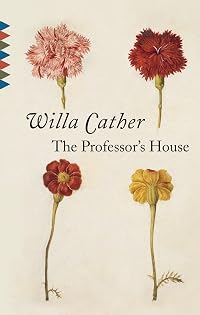
The Professor's House
by Willa Cather 
On This Page
Description
Willa Cather's lyrical and bittersweet novel of a middle-aged man losing control of his life is a brilliant study in emotional dislocation and renewal. Professor Godfrey St. Peter is a man in his fifties who has devoted his life to his work, his wife, his garden, and his daughters, and achieved success with all of them. But when St. Peter is called on to move to a new, more comfortable house, something in him rebels. And although at first that rebellion consists of nothing more than mild show more resistance to his family's wishes, it imperceptibly comes to encompass the entire order of his life. The Professor's House combines a delightful grasp of the social and domestic rituals of a Midwestern university town in the 1920s with profound spiritual and psychological introspection. show lessTags
Recommendations

























Member Recommendations
Petroglyph Both "Stoner" and "The professor's house" deal with a small-town university professor vaguely comfortable with his family life, who fits uneasily in a new life that sorta kinda happened to him while he was focusing on his work. Both present compelling immersions in bittersweet nostalgia and the ever-present sense that life could have gone entirely different (and perhaps it should have).
2below These are both poignant stories about the disruption and disorder that results from not being where we want to be in life and living in denial of that sad truth.
02
Member Reviews
I’m not yet to an age where I worry much about how people will remember me. In fact that notion has never crossed my mind until reading this book, in which the titular character is a person of my exact age doing exactly that. Prof. Godfrey St. Peter does not want to leave his old house and move into the new one. The old house seems to represent something different to him now that it is emptied of its people and furnishings. It is no longer a place of life and work. Instead it crosses a threshold to become a symbol of the domestic, familial, and professional activities that happened in the house and are now, for a time, memorialized as ideals in the house as a Platonic form, at least until it is sold and its surface is re-written with show more new significance.
The occasion of emptying the house causes St. Peter to reflect on his encounter with Tom Outland, an unlikely and curious student who crossed his path in the early years of St. Peter’s professional ascendancy and made a profound impression on the professor. Tom relates an experience to the professor in the middle part of the book about Tom’s time discovering and exploring a cliff-dweller community in Arizona during his time as a cattleman. Tom’s passionate interest in the cliff-dwellers is deeply romanticized, probably to underscore his disappointment at interesting anyone in the mysteries and significance of the place. Even people who he was certain would be interested on principle (e.g., officials from the Smithsonian) are really just interested in awards and recognitions and appropriations from the government. Even Tom’s partner turns out to be less interested in the cliff-dwellers as an ideal than in the potential (and actual) profit they represent. All of these outcomes are symbols that are tied to the cliff-dwellers with more or less permanence: we might remember awards and recognitions and the work that they are tied to, but who remembers what a five dollar bill in your wallet is connected to?
Memories and accomplishments have a kind of fungibility to them. They can be converted into other things, symbols and abstractions that more or less reflect what they represent and with more or less permanence. The professor has his books. He has his house. And he has his memories of Tom who went on to some success with an engineering innovation before he dies in the war. Tom’s memories and accomplishments are left as trinkets that hold some memorial value to the professor, but other experiences, like his engineering success, were converted to abstractions like patents and money that have more tenuous memorial qualities to them. And I have to think that it is when the professor learns that his daughter (the beneficiary of Tom’s will) and her husband have taken the earnings from Tom’s patents and bought a house that they dubbed “Outland” that St. Peter sees how even well-intended memorialization fails to stand up. “Outland” becomes a nearly empty referent, more a symbol of conspicuous consumption and affluence than any meaningful remembrance of a person.
This is an odd and likable book in the way that I find many of Cather’s books. And there is an ongoing fascination that she has with the American Southwest and the native peoples who lived there. It shows up here, in Death Comes for the Archbishop and in Song of the Lark. I can’t tell if Cather thinks about these cliff dwelling communities as symbolic of a more edenic time or just as symbolic of the ways that people remember and idealize and abstract the objects of remembrance. The cliff dwellings are not remembered as those domiciles and places of daily labor that they surely meant to the inhabitants of the time. They are remembered instead as ideals of earlier, maybe simpler civilizations. To the characters in Cather’s books, the cliff dwellings are mystical places, full of significance that we imagine to have always been there but that we really bring to the space. show less
The occasion of emptying the house causes St. Peter to reflect on his encounter with Tom Outland, an unlikely and curious student who crossed his path in the early years of St. Peter’s professional ascendancy and made a profound impression on the professor. Tom relates an experience to the professor in the middle part of the book about Tom’s time discovering and exploring a cliff-dweller community in Arizona during his time as a cattleman. Tom’s passionate interest in the cliff-dwellers is deeply romanticized, probably to underscore his disappointment at interesting anyone in the mysteries and significance of the place. Even people who he was certain would be interested on principle (e.g., officials from the Smithsonian) are really just interested in awards and recognitions and appropriations from the government. Even Tom’s partner turns out to be less interested in the cliff-dwellers as an ideal than in the potential (and actual) profit they represent. All of these outcomes are symbols that are tied to the cliff-dwellers with more or less permanence: we might remember awards and recognitions and the work that they are tied to, but who remembers what a five dollar bill in your wallet is connected to?
Memories and accomplishments have a kind of fungibility to them. They can be converted into other things, symbols and abstractions that more or less reflect what they represent and with more or less permanence. The professor has his books. He has his house. And he has his memories of Tom who went on to some success with an engineering innovation before he dies in the war. Tom’s memories and accomplishments are left as trinkets that hold some memorial value to the professor, but other experiences, like his engineering success, were converted to abstractions like patents and money that have more tenuous memorial qualities to them. And I have to think that it is when the professor learns that his daughter (the beneficiary of Tom’s will) and her husband have taken the earnings from Tom’s patents and bought a house that they dubbed “Outland” that St. Peter sees how even well-intended memorialization fails to stand up. “Outland” becomes a nearly empty referent, more a symbol of conspicuous consumption and affluence than any meaningful remembrance of a person.
This is an odd and likable book in the way that I find many of Cather’s books. And there is an ongoing fascination that she has with the American Southwest and the native peoples who lived there. It shows up here, in Death Comes for the Archbishop and in Song of the Lark. I can’t tell if Cather thinks about these cliff dwelling communities as symbolic of a more edenic time or just as symbolic of the ways that people remember and idealize and abstract the objects of remembrance. The cliff dwellings are not remembered as those domiciles and places of daily labor that they surely meant to the inhabitants of the time. They are remembered instead as ideals of earlier, maybe simpler civilizations. To the characters in Cather’s books, the cliff dwellings are mystical places, full of significance that we imagine to have always been there but that we really bring to the space. show less
Godfrey St. Peter, by all accounts, is doing well. He is a professor of history with a distinguished publishing record, a beautiful wife, two married daughters one of whom has become surprisingly wealthy, and over the years he has had a few pleasant colleagues, a handful of good students, and one very important, even transformative, relationship with a student, protege, and later fiance to his oldest daughter. Unfortunately, Tom Outland then went off to do what he could in the First World War and died there, leaving all his worldly possessions, including a patent on a gas that would become very lucrative, to St. Peter’s daughter. At the opening of the novel, Godfrey and his wife are in the process of moving into a new house that he show more has built with money his multi-volume historical work on Spanish adventurers has won. But Godfrey is uncomfortable in his new house and wants to keep his pokey study in the old house that they rented. The truth is that Godfrey is uncomfortable in his own skin, and like his former protege, he would like to shed it.
The novel follows Godfrey over the course of a year with one extended intermission telling the story of Tom prior to his arrival in the university town of Hamilton. It is utterly fascinating. Characters step forward and recede without a later nod. St. Peter’s daughters and their spouses reveal admirable and not so admirable facets of character but without apparent purpose. Indeed, all are merely window dressing for the existential crisis that Godfrey is about to undergo.
I’m astounded by the surety of Cather’s writing and the fact that every novel of hers that I read seems to be a new departure. As is the case with all challenging novelists who challenge themselves. Well worth reading, pondering, and then reading again. show less
The novel follows Godfrey over the course of a year with one extended intermission telling the story of Tom prior to his arrival in the university town of Hamilton. It is utterly fascinating. Characters step forward and recede without a later nod. St. Peter’s daughters and their spouses reveal admirable and not so admirable facets of character but without apparent purpose. Indeed, all are merely window dressing for the existential crisis that Godfrey is about to undergo.
I’m astounded by the surety of Cather’s writing and the fact that every novel of hers that I read seems to be a new departure. As is the case with all challenging novelists who challenge themselves. Well worth reading, pondering, and then reading again. show less
How do we gradually slip away from simple uncluttered lives into a more and more complex existence, full of busyness and things, but one in many ways less rewarding and challenging than that lived by our younger selves? Often the individual changes are incremental and unnoticed, yet layered one of top of another their weight can overwhelm. Then one day we wake up and wonder how it all happened. Is it possible to go back, to regain some modicum of our better selves?
This was the dilemma facing Professor Godfrey St Peter. The professor was highly respected in his field of Spanish American studies, a published author. He worked in his much admired garden in the French style in the summers, or travelled for research. His two married show more daughters did him credit and his wife kept the family engaged socially.
These social ambitions, however, were the source of his current difficulty. His wife had decided they needed a house more reflective of their standing in the community. When Godfrey won the Oxford prize for history, his wife had a house built for them: one with separate bedrooms and bathrooms, separate closets, all the latest in plumbing and electricity.
Now Godfrey was faced with moving from his cramped attic study in the old house. He had shared this study twice a year for the past twenty years with Mrs St Peter's seamstress for three weeks each time. Her dressmaker's forms and patterns were there year round. He had endured cold winters and stuffy summers. Still, it had been good enough to allow him to write his award winning eight volume Spanish Adventurers in North America. He loved this room for the peace it gave him. Now, something in him rebelled. He would keep his awkward study, even if it meant continuing to rent the rest of the now unoccupied house just to have it.
The family was horrified. They did not understand. "...don't you think it's a foolish extravagance to go on paying the rent of an entire house, in order to spend a few hours a day in one very uncomfortable room of it?" His landlord was annoyed, and worried about insurance. The sewing lady thought it a great and unusual joke. St Peter dug in and kept renting the old place just to use that attic.
Juxtaposed against St Peter's story is that of Tom Outland, the best student the professor had ever known. "Just when the morning brightness of the world was wearing off for him, along came Outland and brought him a kind of second youth." Tom had made an important discovery which unknown to him would later become highly lucrative. He then died in battle in World War I, leaving the rights to the professor's daughter Rosamund. Tom would never suffer age, routine and committees. "He had escaped all that. He had made something new in the world--- and the rewards, the meaningless conventional gestures, he left to others"
This is a melancholy book, filled with loneliness and reflection. St Peter is aware of the costs both of continuing on the way things had been going, or of reclaiming that better self. Cather's skilled writing avoids slipping into the maudlin, giving the novel and the reader the strength to believe that individual redemption is possible, while recognizing the price to be paid. show less
This was the dilemma facing Professor Godfrey St Peter. The professor was highly respected in his field of Spanish American studies, a published author. He worked in his much admired garden in the French style in the summers, or travelled for research. His two married show more daughters did him credit and his wife kept the family engaged socially.
These social ambitions, however, were the source of his current difficulty. His wife had decided they needed a house more reflective of their standing in the community. When Godfrey won the Oxford prize for history, his wife had a house built for them: one with separate bedrooms and bathrooms, separate closets, all the latest in plumbing and electricity.
Now Godfrey was faced with moving from his cramped attic study in the old house. He had shared this study twice a year for the past twenty years with Mrs St Peter's seamstress for three weeks each time. Her dressmaker's forms and patterns were there year round. He had endured cold winters and stuffy summers. Still, it had been good enough to allow him to write his award winning eight volume Spanish Adventurers in North America. He loved this room for the peace it gave him. Now, something in him rebelled. He would keep his awkward study, even if it meant continuing to rent the rest of the now unoccupied house just to have it.
The family was horrified. They did not understand. "...don't you think it's a foolish extravagance to go on paying the rent of an entire house, in order to spend a few hours a day in one very uncomfortable room of it?" His landlord was annoyed, and worried about insurance. The sewing lady thought it a great and unusual joke. St Peter dug in and kept renting the old place just to use that attic.
Juxtaposed against St Peter's story is that of Tom Outland, the best student the professor had ever known. "Just when the morning brightness of the world was wearing off for him, along came Outland and brought him a kind of second youth." Tom had made an important discovery which unknown to him would later become highly lucrative. He then died in battle in World War I, leaving the rights to the professor's daughter Rosamund. Tom would never suffer age, routine and committees. "He had escaped all that. He had made something new in the world--- and the rewards, the meaningless conventional gestures, he left to others"
This is a melancholy book, filled with loneliness and reflection. St Peter is aware of the costs both of continuing on the way things had been going, or of reclaiming that better self. Cather's skilled writing avoids slipping into the maudlin, giving the novel and the reader the strength to believe that individual redemption is possible, while recognizing the price to be paid. show less
I've really liked the other Willa Cather novels I've read (My Antonia, O Pioneers! and A Lost Lady), and the way she was able, in those, to create such a vivid and believable sense of both character and place with her elegantly simple prose. But a few chapters into this one, I found myself thinking that probably there was a good reason why this wasn't one of her most well-known novels, or at least why I hadn't heard of it before encountering it on the shelves at my local library sale.
It's a novel in three unequal parts. The first focuses on the titular professor and his family. They've just had a new house built, but the professor still prefers working in the attic of the old place. Also, one of his daughters has come into a lot of show more money, and it's causing some conflict between her and the other daughter. And constantly haunting the narrative is the memory of one Tom Outland, the professor's former pupil and the rich daughter's former fiance, who died in WWI and left her the rights to the inventions that made her all the money. And all of this is... sort of okay? The characters are believable enough, the prose is fine, but whatever magic Cather's other books had, I couldn't really find it here, and it was a struggle to make myself care about these people at all.
The second, much shorter part, is Tom Outland's story, involving him finding the incredibly well-preserved ruins of a Native American cliff dwelling on a mesa in New Mexico and trying to get someone in authority interested in doing some proper archaeology on it. I found this quite a bit more interesting, and thought it demonstrated a lot more of Cather's gifts with character and place. Mind you, it does feel a bit different reading this a hundred years later than Cather presumably meant it to at the time, as Outland's genuinely noble sentiments about his find seem somewhat less so to modern sensibilities about the treatment of archeological finds and the question of who they properly belong to. But it's possible that might actually add a bit to the sense of poignancy rather than detracting from it. Much as I preferred this part, though, it does feel rather awkwardly grafted on to the first part, and it's hard not to think that it might have done better as a separate short story.
The very short final part returns to the professor, and gives us a beautifully written and rather sad reflection of a man torn between the domesticity society has pressed upon him and his desire to be alone. This is much more what I'd have expected of Cather, and brings out all the themes that were sort of trying to be present in the first part, but were nowhere near as interestingly done.
So, it's lovely that she got there in the end, but I wish I'd had a less boring time getting there, and I very much wish the novel felt more like a properly unified whole. show less
It's a novel in three unequal parts. The first focuses on the titular professor and his family. They've just had a new house built, but the professor still prefers working in the attic of the old place. Also, one of his daughters has come into a lot of show more money, and it's causing some conflict between her and the other daughter. And constantly haunting the narrative is the memory of one Tom Outland, the professor's former pupil and the rich daughter's former fiance, who died in WWI and left her the rights to the inventions that made her all the money. And all of this is... sort of okay? The characters are believable enough, the prose is fine, but whatever magic Cather's other books had, I couldn't really find it here, and it was a struggle to make myself care about these people at all.
The second, much shorter part, is Tom Outland's story, involving him finding the incredibly well-preserved ruins of a Native American cliff dwelling on a mesa in New Mexico and trying to get someone in authority interested in doing some proper archaeology on it. I found this quite a bit more interesting, and thought it demonstrated a lot more of Cather's gifts with character and place. Mind you, it does feel a bit different reading this a hundred years later than Cather presumably meant it to at the time, as Outland's genuinely noble sentiments about his find seem somewhat less so to modern sensibilities about the treatment of archeological finds and the question of who they properly belong to. But it's possible that might actually add a bit to the sense of poignancy rather than detracting from it. Much as I preferred this part, though, it does feel rather awkwardly grafted on to the first part, and it's hard not to think that it might have done better as a separate short story.
The very short final part returns to the professor, and gives us a beautifully written and rather sad reflection of a man torn between the domesticity society has pressed upon him and his desire to be alone. This is much more what I'd have expected of Cather, and brings out all the themes that were sort of trying to be present in the first part, but were nowhere near as interestingly done.
So, it's lovely that she got there in the end, but I wish I'd had a less boring time getting there, and I very much wish the novel felt more like a properly unified whole. show less
This is the moving story of a man reaching the end of himself. In many ways, it reminded me of Rosshalde. We have a man who has achieved much yet finds that the fruit of his labours does not bring him the deep satisfaction he feels his soul longing for.
Professor, like Rosshalde, ends inconclusively with both men left with choices about how to face their families and their futures. While Rosshalde is laced with tragedy, Professor has a more subtle pathos. It nevertheless deals with the loss of a friend and the longings of a life lived beyond societal trappings.
The book is most notable for its unusual structure. Split into three sections, the first sets up the relationships of the Professor and his young adult family as he leaves the show more family home for a new house.
While the purpose-built, newly-completed dwelling typifies an ideal, there’s too much reality in the old idiosyncratic house and the interpersonal relationships the family are taking with them.
Stresses are quickly apparent between the Professor and pretty much everyone else. The only relationship that is encased in amber is that of the Professor and Tom, a virtual vagrant who turns out to be an engineering genius and is then killed fighting WW1.
Tom’s story is told in the middle section, a lucid account of herding cattle in New Mexico and discoveries there which create iconic visions of the nation.
The book concludes in a short section with the Professor isolated in the study he keeps in the now otherwise abandoned old home while the rest of the family holiday in Europe. A crisis precipitates a necessity to face his advancing years and choices that he is left with.
This structure is thought by some to be clumsy. I thought it absolutely perfect. It enables you to read the Professor’s life in two very different ways and creates a deeper understanding of his inner tensions than you would have if the novel were chronological. show less
Professor, like Rosshalde, ends inconclusively with both men left with choices about how to face their families and their futures. While Rosshalde is laced with tragedy, Professor has a more subtle pathos. It nevertheless deals with the loss of a friend and the longings of a life lived beyond societal trappings.
The book is most notable for its unusual structure. Split into three sections, the first sets up the relationships of the Professor and his young adult family as he leaves the show more family home for a new house.
While the purpose-built, newly-completed dwelling typifies an ideal, there’s too much reality in the old idiosyncratic house and the interpersonal relationships the family are taking with them.
Stresses are quickly apparent between the Professor and pretty much everyone else. The only relationship that is encased in amber is that of the Professor and Tom, a virtual vagrant who turns out to be an engineering genius and is then killed fighting WW1.
Tom’s story is told in the middle section, a lucid account of herding cattle in New Mexico and discoveries there which create iconic visions of the nation.
The book concludes in a short section with the Professor isolated in the study he keeps in the now otherwise abandoned old home while the rest of the family holiday in Europe. A crisis precipitates a necessity to face his advancing years and choices that he is left with.
This structure is thought by some to be clumsy. I thought it absolutely perfect. It enables you to read the Professor’s life in two very different ways and creates a deeper understanding of his inner tensions than you would have if the novel were chronological. show less
This mid-career Cather (which I found in this fun 1973 Vintage paperback edition) is a bit of an odd triptych in construction, the first panel being a sort of university novel featuring Professor St. Peter, the middle panel being a story of discovery in the beautiful isolation of the New Mexican landscape starring a past student at the university, Tom Outland, and the final panel a psychological novel’s conclusion bringing us back into St. Peter’s life.
For me the main theme of the novel is the attraction of isolation and an abandonment of contemporary social life. St. Peter in the first section feels the distance that has grown up in his comfortable marriage and while he loves his two grown daughters he feels exhausted by their, show more and his sons-in-law, company. His wife at one point asks him what he’s thinking about as he has just smiled to himself. “I was thinking,” he answered absently, “about Euripides; how, when he was an old man, he went and lived in a cave by the sea…”
Tom’s section then comes at this theme from the point of view of youth rather than age. Tom and his close friend Roddy discover the centuries old ruins of an abandoned stone city inside a miles long inhospitable mesa in the middle of New Mexico’s wilderness. Tom goes to D.C. to try to interest experts in the find but encounters only disappointment and disillusionment.
Tom returns to New Mexico and spends the following summer alone in a cabin on top of the mesa, a high point in his life.
Finally, back to St. Peter, the professor remains behind while his family leaves for an extended European vacation, and psychologically feels that his life is done and over with, while identifying once again with the boy he was in childhood.
Other themes are undoubtedly present in the novel, including quite possibly a queer theme in the relationship between Tom and Roddy, perhaps too in that between St. Peter and Tom. This is the one however that sticks out most to me in this reading. show less
For me the main theme of the novel is the attraction of isolation and an abandonment of contemporary social life. St. Peter in the first section feels the distance that has grown up in his comfortable marriage and while he loves his two grown daughters he feels exhausted by their, show more and his sons-in-law, company. His wife at one point asks him what he’s thinking about as he has just smiled to himself. “I was thinking,” he answered absently, “about Euripides; how, when he was an old man, he went and lived in a cave by the sea…”
Tom’s section then comes at this theme from the point of view of youth rather than age. Tom and his close friend Roddy discover the centuries old ruins of an abandoned stone city inside a miles long inhospitable mesa in the middle of New Mexico’s wilderness. Tom goes to D.C. to try to interest experts in the find but encounters only disappointment and disillusionment.
How it did use to depress me to see all the hundreds of clerks come pouring out of that big building at sunset! Their lives seemed to me so petty, so slavish… they spent their lives trying to keep up appearances… there was always a struggle going on for an invitation to a dinner or a reception, or even a tea-party.
Tom returns to New Mexico and spends the following summer alone in a cabin on top of the mesa, a high point in his life.
I can scarcely hope that life will give me another summer like that one. It was my high tide. Every morning, when the sun’s rays first hit the mesa top, while the rest of the world was in shadow, I wakened with the feeling that I had found everything, instead of having lost everything. Nothing tired me. Up there alone, a close neighbour to the sun, I seemed to get the solar energy in some direct way.
Finally, back to St. Peter, the professor remains behind while his family leaves for an extended European vacation, and psychologically feels that his life is done and over with, while identifying once again with the boy he was in childhood.
The Kansas boy who had come back to St. Peter this summer was not a scholar. He was a primitive. He was only interested in earth and woods and water… He seemed to know, among other things, that he was solitary and must always be so; he had never married, never been a father. He was earth, and would return to earth. When white clouds blew over the lake like bellying sails, when the seven pine-trees turned red in the declining sun, he felt satisfaction and said to himself merely: “That is right.”
Other themes are undoubtedly present in the novel, including quite possibly a queer theme in the relationship between Tom and Roddy, perhaps too in that between St. Peter and Tom. This is the one however that sticks out most to me in this reading. show less
The Professor's House by Willa Cather is really two stories: that of midwestern university Professor Godfrey St. Peter and his family, and that of Tom Outland, a successful inventor who grew up in New Mexico, became a student and friend of St. Peter, and died in WWI. As to the first story, set in the 1920s, the Professor's successful series of books on "Spanish Adventures in North America" has brought financial comfort and a lovely new house. However, the Professor isn't ready to let go of his old house, especially his attic study, and is re-assessing his life. He has two daughters, one now rich from an engine invented by Outland, and successfully commercialized by her new husband. The other daughter married a journalist and is jealous show more of her sister's life. Neither is a comfort to the Professor, and he also is becoming estranged from his practical wife as he increasingly seeks solitude.
He loves that cramped attic study and its view: "From the window he could see, far away, just on the horizon, a long, blue, hazy smear - Lake Michigan, the inland sea of his childhood. Whenever he was tired and dull, when the white pages before him remained blank or were full of scratched-out sentences, then he left his desk, took the train to a little station twelve miles away, and spent the day on the lake with his sail-boat; jumping out to swim, floating on his back alongside, then climbing into his boat again."
The Professor is trying to edit for publication Tom Outland's diary of his days in New Mexico. That provides the framing for the beautiful central section of the book, a description of Tom's days as a railroad call boy, then a cattle herder. Eventually Tom finds a route up to the top of a high mesa, and discovers cliff dwellings there.
"The hill-side behind was sandy and covered with clumps of deer-horn cactus, but there was nothing but grass to the south, with streaks of bright yellow rabbit-brush. Along the river the cottonwoods and quaking asps had already turned gold. Just across from us, overhanging us, indeed, stood the mesa, a pile of purple rocks, all broken out with red sumach and yellow aspens up in the high crevices of the cliffs." Up there he finds "a little city of stone, asleep", with all that the original dwellers left behind.
This is not a long book, but she packs a lot in. Some readers will relate strongly to the Professor's questioning of his life, along with his observations of money's effect on his family members, and of the various family rivalries (including that of the sisters' husbands). For me, the book's major reward was the section on Tom's time in New Mexico, which contains some of the author's most breathtaking descriptions of the southwest, and vividly conveys the wonder of Tom's experience.
She is simply a superb writer. Although for me the juxtaposition didn't totally work, the book is a forceful and memorable read. I haven't been to New Mexico in ages, and now I want to go back to experience the territory she writes about. show less
He loves that cramped attic study and its view: "From the window he could see, far away, just on the horizon, a long, blue, hazy smear - Lake Michigan, the inland sea of his childhood. Whenever he was tired and dull, when the white pages before him remained blank or were full of scratched-out sentences, then he left his desk, took the train to a little station twelve miles away, and spent the day on the lake with his sail-boat; jumping out to swim, floating on his back alongside, then climbing into his boat again."
The Professor is trying to edit for publication Tom Outland's diary of his days in New Mexico. That provides the framing for the beautiful central section of the book, a description of Tom's days as a railroad call boy, then a cattle herder. Eventually Tom finds a route up to the top of a high mesa, and discovers cliff dwellings there.
"The hill-side behind was sandy and covered with clumps of deer-horn cactus, but there was nothing but grass to the south, with streaks of bright yellow rabbit-brush. Along the river the cottonwoods and quaking asps had already turned gold. Just across from us, overhanging us, indeed, stood the mesa, a pile of purple rocks, all broken out with red sumach and yellow aspens up in the high crevices of the cliffs." Up there he finds "a little city of stone, asleep", with all that the original dwellers left behind.
This is not a long book, but she packs a lot in. Some readers will relate strongly to the Professor's questioning of his life, along with his observations of money's effect on his family members, and of the various family rivalries (including that of the sisters' husbands). For me, the book's major reward was the section on Tom's time in New Mexico, which contains some of the author's most breathtaking descriptions of the southwest, and vividly conveys the wonder of Tom's experience.
She is simply a superb writer. Although for me the juxtaposition didn't totally work, the book is a forceful and memorable read. I haven't been to New Mexico in ages, and now I want to go back to experience the territory she writes about. show less
Members
- Recently Added By
Lists

The Guardian's 1000 Novels Everyone Must Read
1,005 works; 552 members

1001 Books You Must Read Before You Die
1,448 works; 1,136 members

Novels from The Guardian's Great American Novelist Tournament
148 works; 24 members

The Top Ten: Writers Pick Their Favorite Books
240 works; 33 members
20th Century Literature
1,161 works; 55 members
Harold Bloom - The Western Canon: D. The Chaotic Age
833 works; 24 members
1920s
141 works; 6 members

Modernism
140 works; 9 members
1,001 BYMRBYD Concensus
723 works; 27 members

Academia in Fiction
158 works; 23 members

Books Read in 2015
3,299 works; 129 members

I Could Live There
185 works; 12 members

My TBR
371 works; 3 members

Books Read in 2021
5,361 works; 114 members

AP Lit
363 works; 6 members
Author Information

154+ Works 46,166 Members
Willa Siebert Cather was born in 1873 in the home of her maternal grandmother in western Virginia. Although she had been named Willela, her family always called her "Willa." Upon graduating from the University of Nebraska in 1895, Cather moved to Pittsburgh where she worked as a journalist and teacher while beginning her writing career. In 1906, show more Cather moved to New York to become a leading magazine editor at McClure's Magazine before turning to writing full-time. She continued her education, receiving her doctorate of letters from the University of Nebraska in 1917, and honorary degrees from the University of Michigan, the University of California, Columbia, Yale, and Princeton. Cather wrote poetry, short stories, essays, and novels, winning awards including the Pulitzer Prize for her novel, One of Ours, about a Nebraska farm boy during World War I. She also wrote The Professor's House, My Antonia, Death Comes for the Archbishop, and Lucy Gayheart. Some of Cather's novels were made into movies, the most well-known being A Lost Lady, starring Barbara Stanwyck. In 1961, Willa Cather was the first woman ever voted into the Nebraska Hall of Fame. She was also inducted into the Hall of Great Westerners in Oklahoma in 1974, and the National Women's Hall of Fame in Seneca, New York in 1988. Cather died on April 24, 1947, of a cerebral hemorrhage, in her Madison Avenue, New York home, where she had lived for many years. (Bowker Author Biography) show less
Willa Cather has a Legacy Library. Legacy libraries are the personal libraries of famous readers, entered by LibraryThing members from the Legacy Libraries group.
Some Editions
Awards and Honors
Notable Lists
Series
Belongs to Publisher Series
Work Relationships
Is contained in
Later Novels: A Lost Lady / The Professor's House / Death Comes for the Archbishop / Shadows on the Rock / Lucy Gayheart / Sapphira and the Slave Girl by Willa Cather
Common Knowledge
- Canonical title
- The Professor's House
- Original title
- The professor's house
- Original publication date
- 1925
- People/Characters
- Godfrey St. Peter
- Epigraph
-
A turquoise set in silver, wasn't it?. . . Yes, a turquoise set in dull silver."
-Louie Marsellus - First words
- The moving was over and done.
- Quotations
- That night, after he was in bed, St. Peter tried in vain to justify himself in his inevitable refusal. He liked Paris, and he liked Louie. But one couldn't do one's own things in another person's way; selfish or not, that was... (show all) the truth.
- Last words
- (Click to show. Warning: May contain spoilers.)He thought he knew where he was, and that he could face with fortitude the Berengaria and the future.
- Original language
- English
Classifications
Statistics
- Members
- 2,207
- Popularity
- 9,226
- Reviews
- 55
- Rating
- (3.80)
- Languages
- 6 — Dutch, English, French, German, Italian, Spanish
- Media
- Paper, Audiobook, Ebook
- ISBNs
- 52
- ASINs
- 27