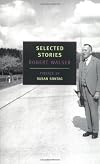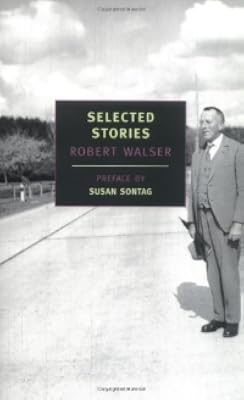
Selected Stories
by Robert Walser
On This Page
Description
In her preface to Robert Walser's Selected Stories, Susan Sontag describes Walser as "a good-humored, sweet Beckett." The more common comparison is to "a comic Kafka." Both formulations effectively describe the reading experience in these stories: the reader is obviously in the presence of a mind-bending genius, but one characterized by a wry, buoyant voice, as apparently cheerful as it is disturbing.Tags
Recommendations

















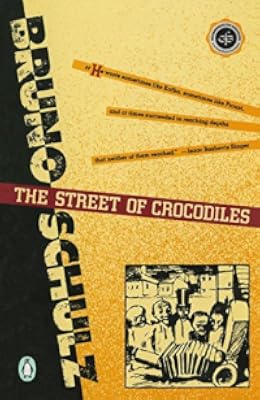

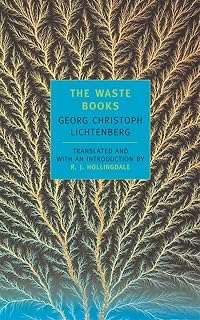
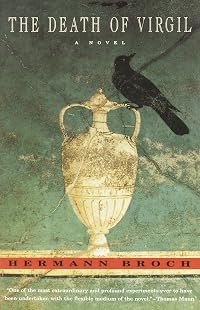
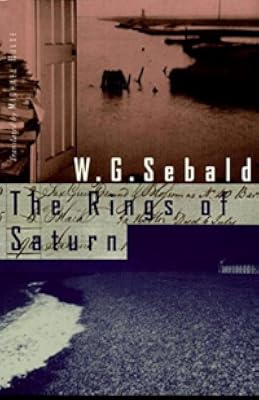


Member Reviews
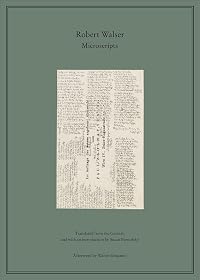
I first heard about Robert Walser in a story about his practice of “microscripting,” a method of writing Walser developed later in his writing career. The practice entailed writing in a very tiny, penciled script on any available paper, including wastepaper. When this writing was discovered, after Walser’s death, there some was some initial confusion about what it even was, for it was not immediately recognizable. Walser wrote pages upon pages of content in this manner. The very idea captured my imagination and I tried to wonder why someone would write that way and what they would write about.
One of Walser’s best known stories, “Walking,” is the showpiece of this collection. and in it I see a methodology of practice that show more captures what Walser does throughout his stories. His stories are strolls across different actual and topical terrains. Writing, like walking, is an activity that is occasionally purposeful but just as often not. It is slow and deliberate and it allows the time to pay attention, to observe, to see things that may not be seen in any faster mode of transport. Walking also takes you across terrain, crossing properties and landscapes but not necessarily by the paths laid down — one goes where interest leads. The pace and the closeness of the walking allows him the opportunity to meet people, to observe them from afar but also to approach, to see details that might otherwise be missed.
Frequently these observations unfold languorously and contemplatively as the narrator considers how people, but also animals and inanimate things fit into the situations where they are found.
The narrator also often acknowledges himself, and his own place in the world is sometimes just beyond, slightly out of synch with the surroundings, creating a sense of intimate loneliness, not always unhappy loneliness but sometimes it is. He is moving and walking and going and coming and as a result is often without a place to be. I’m reminded of Guy Debord and the Internationale Situationiste’s practice of the Dérive — movement without a place to be, outside of relationships and just out of reach from people. In this practice, the narrator writes himself apart from the rest of the world.
The entire world sleeps except for the narrator who, like in many stories, stands apart from the world, not fitting in but still viewing its inhabitants with a kind of tenderness and affection.
Often and increasingly toward the end of Walser’s career, his stories dwell in a peaceful, resigned melancholy of being overlooked but not unappreciated.
There also creeps in a persistent note of self-consciousness and fatigue:
The later stories feel a little more introspective and Walser, the writer, comes more to the foreground and not, seemingly, with much comfort. The prose seems less playful and more self-aware and apologetic(?) or self-conscious.
Overall, the stories were quite enjoyable. They are not always about anything at all, but they seem to say so much. show less
One of Walser’s best known stories, “Walking,” is the showpiece of this collection. and in it I see a methodology of practice that show more captures what Walser does throughout his stories. His stories are strolls across different actual and topical terrains. Writing, like walking, is an activity that is occasionally purposeful but just as often not. It is slow and deliberate and it allows the time to pay attention, to observe, to see things that may not be seen in any faster mode of transport. Walking also takes you across terrain, crossing properties and landscapes but not necessarily by the paths laid down — one goes where interest leads. The pace and the closeness of the walking allows him the opportunity to meet people, to observe them from afar but also to approach, to see details that might otherwise be missed.
Frequently these observations unfold languorously and contemplatively as the narrator considers how people, but also animals and inanimate things fit into the situations where they are found.
“Little snowdrops, of what do you speak? They speak still of winter, but also already of spring; they speak of the past, but also saucily and merrily of the new. They speak of the cold but also of something warmer; they speak of snow and at the same time of green, of burgeoning growth.” (“Snowdrops”)
The narrator also often acknowledges himself, and his own place in the world is sometimes just beyond, slightly out of synch with the surroundings, creating a sense of intimate loneliness, not always unhappy loneliness but sometimes it is. He is moving and walking and going and coming and as a result is often without a place to be. I’m reminded of Guy Debord and the Internationale Situationiste’s practice of the Dérive — movement without a place to be, outside of relationships and just out of reach from people. In this practice, the narrator writes himself apart from the rest of the world.
“Somewhere on the solid ground now a thief prowls, hunting for swag, there is a burglary, and all these people down there, in their beds, this great sleep slept by millions. An entire earth dreaming now, and a people rests from its labors.” (“Balloon Journey”)
The entire world sleeps except for the narrator who, like in many stories, stands apart from the world, not fitting in but still viewing its inhabitants with a kind of tenderness and affection.
Often and increasingly toward the end of Walser’s career, his stories dwell in a peaceful, resigned melancholy of being overlooked but not unappreciated.
“Have I never given anything to you? Yet it needs no happiness. Perhaps, if someone thinks it is beautiful, it is glad." (“The Little Tree”)
There also creeps in a persistent note of self-consciousness and fatigue:
“I am a little worn out, raddled, squashed, downtrodden, shot full of holes. I am a little crumbly, decaying, yes, yes. […] That’s life. I am not old, not in the least, certainly I’m not eighty, by no means, but I am not sixteen anymore either. Quite definitely I am a bit old and used up.” (“Nervous”).
The later stories feel a little more introspective and Walser, the writer, comes more to the foreground and not, seemingly, with much comfort. The prose seems less playful and more self-aware and apologetic(?) or self-conscious.
Overall, the stories were quite enjoyable. They are not always about anything at all, but they seem to say so much. show less
Might I confess to finding that it is exquisite to be of two minds regarding works of art? To find fault with something that I welcome on the whole, how nice I find this!
These are quiet, quirky stories. Some are very funny. Some are very modest, not even stories, just sketches, just thoughts captured in a weird head. Most end not with a bang, but with a whimper. But this is a good thing, in the hands of Walser. These stories are meant to be read really slowly, I think, not in the hurry that we are so used to these days. He often rambles and he often walks. He gives voice to very obvious sentiments sometimes, as in "Winter", but in a way that is both charming and earnest; you almost start to feel those long-trite emotions anew:
See how in show more the middle of winter love is radiant, brightness smiles, warmth shines, tenderness twinkles, and the glow of all that may be hoped for, all kindness, comes toward you.
In a world where everyone takes 3 lefts to get to the right, it's refreshing to see someone just take a right. Sometimes one of his alternate personalities takes over and he is paranoid, or A.D.D., or slightly off as in The Street(1) or Nervous.
My favorites: Kleist in Thun, A Little Ramble, The Pimp
Here is the "A Little Ramble" in its entirety:
Some links:
Wandering with Robert Walser a Robert Walser obsessed blog, with some good resources for the fanatics.
Three Robert Walser Stories previously unpublished and translated by [author:Damion Searls|322493].
The New Novel another good story not in this collection, up at N + 1 magazine.
The Man with the Beautiful Wife another good story not in this collection. show less
These are quiet, quirky stories. Some are very funny. Some are very modest, not even stories, just sketches, just thoughts captured in a weird head. Most end not with a bang, but with a whimper. But this is a good thing, in the hands of Walser. These stories are meant to be read really slowly, I think, not in the hurry that we are so used to these days. He often rambles and he often walks. He gives voice to very obvious sentiments sometimes, as in "Winter", but in a way that is both charming and earnest; you almost start to feel those long-trite emotions anew:
See how in show more the middle of winter love is radiant, brightness smiles, warmth shines, tenderness twinkles, and the glow of all that may be hoped for, all kindness, comes toward you.
In a world where everyone takes 3 lefts to get to the right, it's refreshing to see someone just take a right. Sometimes one of his alternate personalities takes over and he is paranoid, or A.D.D., or slightly off as in The Street(1) or Nervous.
My favorites: Kleist in Thun, A Little Ramble, The Pimp
Here is the "A Little Ramble" in its entirety:
A Little Ramble
I walked through the mountains today. The weather was damp, and the entire region was gray. But the road was soft and in places very clean. At first I had my coat on; soon, however, I pulled it off, folded it together, and laid it upon my arm. The walk on the wonderful road gave me more and ever more pleasure; first it went up and then descended again. The mountains were huge, they seemed to go around. The whole mountainous world appeared to me like an enourmous theater. The road snuggled up splendidly to the mountainsides. Then I came down into a deep ravine, a river roared at my feet, a train rushed past me with magnificent white smoke. The road went through the ravine like a smooth white stream, and as I walked on, to me it was as if the narrow valley were bending and winding around itself. Gray clouds lay on the mountains as though that were their resting place. I met a young traveler with a rucksack on his back, who asked if I had seen two other young fellows. No, I said. Had I come here from very far? Yes, I said, and went farther on my way. Not a long time, and I saw and heard the two young wanderers pass by with music. A village was especially beautiful with humble dwellings set thickly under the white cliffs. I encountered a few carts, otherwise nothing, and I had seen some children on the highway. We don't need to see anything out of the ordinary. We already see so much.
Some links:
Wandering with Robert Walser a Robert Walser obsessed blog, with some good resources for the fanatics.
Three Robert Walser Stories previously unpublished and translated by [author:Damion Searls|322493].
The New Novel another good story not in this collection, up at N + 1 magazine.
The Man with the Beautiful Wife another good story not in this collection. show less
Five stars for writers but four for most of us. Robert Walser may be as important for his influence on some other fine writers, mainly German ones, as for his own works. His short stories perhaps represent his best writing. His life history adds to the enjoyment of reading these stories.
Walser was a German-speaking Swiss born in 1878. His mother was mentally disturbed, a brother was mentally ill and died middle-aged in a mental home, and another brother killed himself three years later. Walser performed mandatory military service in the First World War.
Walser worked irregularly, moved around, and became something of a loner. He enjoyed long walks alone throughout his life. Perhaps his best short story here is about a thoughtful walk, show more and most are in the same contemplative and somewhat discursive mode.
His fiction is likened to Kafka's, though I don't see it, except as first-person accounts of modest, honest, observant and intelligent persons without a molecule of ego. They read much differently, though both wrote with extreme care not immediately obvious. Walser's protagonists and language are playful and reflective, sometimes addressing the reader. A fast reading will miss most of the charm.
In 1929 Walser experienced an episode diagnosed as schizophrenia (voices) but recovered quickly in an institution. Later he went back to the institution, perhaps voluntarily after finding life easier there; his works after 1925 had proved largely unprofitable and went publicly unrecognized outside Switzerland until the 1970's. Although deemed recovered, he refused to leave the Swiss institution from 1933 to 1956, when he died of a heart attack in the snow on Christmas day during his last walk. show less
Walser was a German-speaking Swiss born in 1878. His mother was mentally disturbed, a brother was mentally ill and died middle-aged in a mental home, and another brother killed himself three years later. Walser performed mandatory military service in the First World War.
Walser worked irregularly, moved around, and became something of a loner. He enjoyed long walks alone throughout his life. Perhaps his best short story here is about a thoughtful walk, show more and most are in the same contemplative and somewhat discursive mode.
His fiction is likened to Kafka's, though I don't see it, except as first-person accounts of modest, honest, observant and intelligent persons without a molecule of ego. They read much differently, though both wrote with extreme care not immediately obvious. Walser's protagonists and language are playful and reflective, sometimes addressing the reader. A fast reading will miss most of the charm.
In 1929 Walser experienced an episode diagnosed as schizophrenia (voices) but recovered quickly in an institution. Later he went back to the institution, perhaps voluntarily after finding life easier there; his works after 1925 had proved largely unprofitable and went publicly unrecognized outside Switzerland until the 1970's. Although deemed recovered, he refused to leave the Swiss institution from 1933 to 1956, when he died of a heart attack in the snow on Christmas day during his last walk. show less
the best thing I read in 2007.I would describe this collection of short stories first and foremost as "lovely." Some are quite sad and some very funny or childlike. Almost all are relatively simple, not usually driven by plot, but more by inner reactions and revelations. Sometimes the character is just going for a walk and describing the scenes he encounters, sometimes he talks about a book he has read, and other times we hear about the observations of a specific relationship, but no matter how sparse the subject, the language and poetic quality of these selections makes for an enjoyable read. I would highly recommend: Balloon Journey, Kleist in Thun, Helbling's Story, Nothing at All, The Street, Winter, Titus, A Letter to Therese show more Breitbach, the Pimp, and the Honeymoon (and now I've named nearly a quarter of the book) show less
Really quite perplexed about this. I was led by other reviews to expect a collection of small masterpieces - and was sorely disappointed. There were some here that I did enjoy - Balloon Journey, Kleist In Thun, The Job Application, Helbling's Story, Winter, A Village Tale, and Masters And Workers. The remainder though I'm afraid left me with a feeling of what I can only describe as numbness.
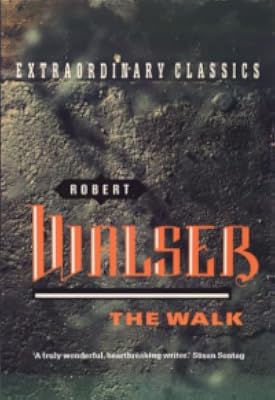
The Walk, in particular - possibly owing to it being the lengthiest story here - I found a struggle to get through and really found it quite boring. Perhaps I've missed something? The prose is undoubtedly quite poetic and does induce visions in the reader, but all too often I found myself wondering just what the author was saying, and why.
I can't show more come close to adding anything of substance to JimmyChanga's excellent review below. He has even used the same quote I would have used to begin my review. show less
The Walk, in particular - possibly owing to it being the lengthiest story here - I found a struggle to get through and really found it quite boring. Perhaps I've missed something? The prose is undoubtedly quite poetic and does induce visions in the reader, but all too often I found myself wondering just what the author was saying, and why.
I can't show more come close to adding anything of substance to JimmyChanga's excellent review below. He has even used the same quote I would have used to begin my review. show less
I finally finished the complete book. I did like it. But I really do believe Susan Bernofsky makes Walser come alive in ways that Middleton, the translator of this particular book, for one reason or another, is unable to accomplish. I would love to re-read a Bernofsky translation of this same book, however. She did translate "The Walk" which is also included in this selection and it is very very good.
You just don't read writing like this anywhere else. Every first sentence of each story is a little work of genius.
Members
- Recently Added By
Lists

Harold Bloom - The Western Canon: D. The Chaotic Age
833 works; 24 members
Author Information

274+ Works 6,984 Members
All Editions
Some Editions
Awards and Honors
Notable Lists
Series
Belongs to Publisher Series
Common Knowledge
- Canonical title
- Selected Stories
- Blurbers
- Davenport, Guy
- Original language
- German
Classifications
- Genres
- Fiction and Literature, General Fiction
- DDC/MDS
- 833.912 — Literature & rhetoric German & related literatures German fiction 1900- 1900-1990 1900-1945
- LCC
- PT2647 .A64 .M53 — Language and Literature German, Dutch and Scandinavian literatures German literature Individual authors or works 1860/70-1960
- BISAC
Statistics
- Members
- 625
- Popularity
- 46,678
- Reviews
- 12
- Rating
- (4.18)
- Languages
- English
- Media
- Paper, Ebook
- ISBNs
- 7
- ASINs
- 3