On This Page
Description
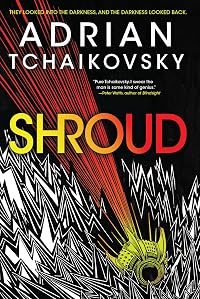
From the Arthur C. Clarke award-winning author of Children of Time, this third and final novel in an extraordinary space opera trilogy depicts humanity on the brink of extinction--and reveals how one man's discovery will save or destroy us all. Lords of Uncreation is the final high-octane installment in Adrian Tchaikovsky's Final Architecture space opera trilogy.Tags
Recommendations













Member Reviews
Annnnnnd Tchaikovsky sticks the landing! I mean, I figured he would, but for the first 30% or so of this book I wondered. Even doubted. It wasn't going like I wanted! Things were getting worse! I didn't want to spend all this time with *those* plotlines! And then I took a second to think about what he was doing and realized: all these plotlines are here because they're variations of the major plot of the book. They're all pieces of what he's talking about.
Because, yes, this is a great space opera full of wildly creative and divergent life and cultures and worlds, but it's also about control, about shaping things to be the way you think they should be, and about what you risk and lose when you do that. You could almost call it eugenics show more on every level, from the micro to the biggest macro there is. (Tchaikovsky is against it, for the record -- control and eugenics and everything that tries to remake something for a single vision, perfect it, limit it.)
I also deeply loved that the Great Mystery is solved so satisfyingly, and the answer is: gentrification. They just want a nice, clean neighborhood, you guys! One that looks like they like! With no unsavory types around! Or, well, a nice, clean universe, like the one from the old days.
And because this is science fiction by Tchaikovsky, it has great characters and great plots and great worldbuilding and all the rest of it. In fact, it's great all the way around. show less
Because, yes, this is a great space opera full of wildly creative and divergent life and cultures and worlds, but it's also about control, about shaping things to be the way you think they should be, and about what you risk and lose when you do that. You could almost call it eugenics show more on every level, from the micro to the biggest macro there is. (Tchaikovsky is against it, for the record -- control and eugenics and everything that tries to remake something for a single vision, perfect it, limit it.)
And because this is science fiction by Tchaikovsky, it has great characters and great plots and great worldbuilding and all the rest of it. In fact, it's great all the way around. show less
I have to admit I was wary about this book. First book was excellent, could stand on its own, it had that mystery ending that just felt satisfying. Then came sequel - also good but definitely not standalone and more oriented towards building to some crescendo but ending so abruptly that you had to produce book three, like, pronto. But this left a feeling uncertainty because .... well, will the author finish it [with that expected crescendo] or plan for further 2[,3,4,....] books and thus dilute the overall story?
And here is book three. The Crescendo. Book is now 608 pages (though 40 last pages are overview of races, characters and events so book itself is solid 570-ish pages), solid door stopper if there ever was one. But believe me, show more from start to end it is so finely written book that it will keep you glued to the pages until the very end. If it weren't for, you know, life!, I would have finished it in a day.
Story wise ...... how to say anything about the story without ruining experience for anyone ...... sorry, can't. I will just say that no character is safe, everybody is walking that thin line between life and death. Reason is simple - all the actions of all parties are believable (yes, even the Razor :)) and logical (of course not at the beginning but as they develop). Story flows and it is visible that everyone is basically racing towards their death, but with single goal on their mind - stopping the Architects and destruction they cause.
Main antagonists ...... man ...... in the first book I said that everything reminded me of Dragon Never Sleeps by Glen Cook, and I was right, to a degree of course, because together with that twist true nature of the Architects' masters is not that dissimilar to W40K Warp creatures. I think that in our times Emperor read this entire series and said - Aha! Now this book gave me some useful ideas! Need to see if it applies to what I know......
Ending is marvelously done. Author left (I think, might be wrong though) some elements to create more stories in this universe in the future (although I think that these three books are more than well rounded trilogy). Altogether all characters' story-lines are pretty much neatly ended. Man there is conclusion, truly a proper conclusion :) After almost 1700 pages :) I can't tell you how happy this makes me :)
Highly, highly recommended. Truly an epic. Don't let the sheer size of books frighten you - they look large and heavy but are so masterfully written that you will go through them in a couple of days and you will be able to see with your inner eye all the wonders of this strange universe, from strange and deadly aliens to Unspace and its wonders.
I will say again, highly recommended. If you are fan of space opera do yourself a favor, pick this series up and enjoy! show less
And here is book three. The Crescendo. Book is now 608 pages (though 40 last pages are overview of races, characters and events so book itself is solid 570-ish pages), solid door stopper if there ever was one. But believe me, show more from start to end it is so finely written book that it will keep you glued to the pages until the very end. If it weren't for, you know, life!, I would have finished it in a day.
Story wise ...... how to say anything about the story without ruining experience for anyone ...... sorry, can't. I will just say that no character is safe, everybody is walking that thin line between life and death. Reason is simple - all the actions of all parties are believable (yes, even the Razor :)) and logical (of course not at the beginning but as they develop). Story flows and it is visible that everyone is basically racing towards their death, but with single goal on their mind - stopping the Architects and destruction they cause.
Main antagonists ...... man ...... in the first book I said that everything reminded me of Dragon Never Sleeps by Glen Cook, and I was right, to a degree of course, because together with that twist true nature of the Architects' masters is not that dissimilar to W40K Warp creatures. I think that in our times Emperor read this entire series and said - Aha! Now this book gave me some useful ideas! Need to see if it applies to what I know......
Ending is marvelously done. Author left (I think, might be wrong though) some elements to create more stories in this universe in the future (although I think that these three books are more than well rounded trilogy). Altogether all characters' story-lines are pretty much neatly ended. Man there is conclusion, truly a proper conclusion :) After almost 1700 pages :) I can't tell you how happy this makes me :)
Highly, highly recommended. Truly an epic. Don't let the sheer size of books frighten you - they look large and heavy but are so masterfully written that you will go through them in a couple of days and you will be able to see with your inner eye all the wonders of this strange universe, from strange and deadly aliens to Unspace and its wonders.
I will say again, highly recommended. If you are fan of space opera do yourself a favor, pick this series up and enjoy! show less
I would love to know whether someone bet Adrian Tchaikovsky that he could not write a deep future space opera trilogy with more action and complexity than Alastair Reynolds’s Revelation Space and Peter F. Hamilton’s Salvation Sequence. If they did, Tchaikovsky should go to the pub and put his hand out for the winnings, because Lords of Uncreation provides a satisfying conclusion to his Final Architecture series. Idris, Kris, Solace, and the whole gang from the Vulture God are back to confront the Architects and their bosses at the heart of unspace. The scope is as epic as one could want, but the cussedness of human nature seems not to have changed. Even an imminent existential threat does not trump most petty self-interest. AT is show more bound to win some prizes with this one—four stars. show less
This book is epic, action-packed, full of vibrant characters... and such a drag! Not sure if I ever read a book that had so much happening and at the same made me zone out. While I was glad to revisit this world and witness the story's conclusion, in hindsight, I might have been better off ending my journey with the second book.
The part I enjoyed the most could've been entirely cut out of this book. It barely relates to the main plot and doesn't achieve anything meaningful, except for presenting weird alien cultures and giving readers some time with the two most interesting characters exchanging quippy banter. I think this would be a book I'd like to read - a kind of Guardians of the Galaxy adventure, where a ragtag crew with show more deliver-may-care attitude balances between doing something good for themselves and some greater good. But... we have an epic story to finish and the universe to save, so this is not that book.
The first half of the book repeats almost beat for beat the second half of the previous book. Even though there's a lot going on, readers have seen it already, and at the end of this part nothing really changes - we are back to square one. I think that the biggest offense here is the lack of character development. Having been introduced to the band of misfits in the first book and getting to know them better in the second, I was eager to see how world-shattering events would transform them. I could go though the same experience again but see how they react and respond differently this time. Regrettably, we end the series with characters who remain largely unchanged from when we first met them.
The second half is more original but becomes bonkers pretty quickly. The action jumps erratically between different points of view, and there's a lot of padding intended to build tension, but it actually does the opposite. Again, the numerous repetitions within this book and the entire series make it an ordeal to remain engaged. The political elements are overly simplistic, lacking the intricate "plans within plans" found in works like Dune, and instead too often falls into "all or nothing" gamble. The final resolution of the mysteries is rather underwhelming and occasionally veers into the absurd, failing to deliver the satisfying conclusion I had hoped for.
I loved the setup that the previous books had prepared. There was potential to provide something deeply moving and make it more about us than the heroes of the story. However, this potential was not utilized, and many themes seem to be only surface-level, leaving the reader thinking "That's it?"
There is an entire book that could be removed from this trilogy. Two books would be enough, prioritizing quality over quantity. If you're a reader who needs closure, this book will be OK for you. If you can live without it, I think there are better books to invest your time in. show less
The part I enjoyed the most could've been entirely cut out of this book. It barely relates to the main plot and doesn't achieve anything meaningful, except for presenting weird alien cultures and giving readers some time with the two most interesting characters exchanging quippy banter. I think this would be a book I'd like to read - a kind of Guardians of the Galaxy adventure, where a ragtag crew with show more deliver-may-care attitude balances between doing something good for themselves and some greater good. But... we have an epic story to finish and the universe to save, so this is not that book.
The first half of the book repeats almost beat for beat the second half of the previous book. Even though there's a lot going on, readers have seen it already, and at the end of this part nothing really changes - we are back to square one. I think that the biggest offense here is the lack of character development. Having been introduced to the band of misfits in the first book and getting to know them better in the second, I was eager to see how world-shattering events would transform them. I could go though the same experience again but see how they react and respond differently this time. Regrettably, we end the series with characters who remain largely unchanged from when we first met them.
The second half is more original but becomes bonkers pretty quickly. The action jumps erratically between different points of view, and there's a lot of padding intended to build tension, but it actually does the opposite. Again, the numerous repetitions within this book and the entire series make it an ordeal to remain engaged. The political elements are overly simplistic, lacking the intricate "plans within plans" found in works like Dune, and instead too often falls into "all or nothing" gamble. The final resolution of the mysteries is rather underwhelming and occasionally veers into the absurd, failing to deliver the satisfying conclusion I had hoped for.
I loved the setup that the previous books had prepared. There was potential to provide something deeply moving and make it more about us than the heroes of the story. However, this potential was not utilized, and many themes seem to be only surface-level, leaving the reader thinking "That's it?"
There is an entire book that could be removed from this trilogy. Two books would be enough, prioritizing quality over quantity. If you're a reader who needs closure, this book will be OK for you. If you can live without it, I think there are better books to invest your time in. show less
Final book of this trilogy. I had the same feelings about this volume as for the first two volumes - good stuff, but not as good as the Children of Time trilogy by the same author. But its still enjoyable, diverting scifi.
All scifi requires a suspension of disbelief - time travel and all the rest of it is not compatibile with science. But the reader willingly goes along with it for the sake of a good story. Tchaikovsky stretches that relationship with the reader, but I was still willing to go along, and got a great story as a result.
I will be reading more of this author.
All scifi requires a suspension of disbelief - time travel and all the rest of it is not compatibile with science. But the reader willingly goes along with it for the sake of a good story. Tchaikovsky stretches that relationship with the reader, but I was still willing to go along, and got a great story as a result.
I will be reading more of this author.
The third volume of what should NOT have been a trilogy, "Lords of Uncreation" bears the greater burden of the chronic bloating, padding, filler, and regurgitation that stretches this story out for well over 1500 pages. Tchaikovsky has become one of my favorite current SF authors, but Orbit Books blatantly exposes their Revenue Generation priorities in the editing and packaging of this space-opera.
Yes, the core story is intriguing and yes, the cast of characters is pretty groovy. But the superfluous bunny-trails, the overly-frequent and unnecessary shoot-'em-up scenes, the constant conniving between factions with no resolutions, and the repeated, identical forays into Idris' weaknesses and failings (as well as the entire swaths of show more hand-wavium, metaphysical blather about the nature of unspace) make this feel like a nine-hour long Marvel Comics movie. It took me weeks to read a book that would normally have taken three days because I got too bored to continue. The final wound comes with the resolution: it occurs nearly in passing and is not referenced again: very unsatisfying.
I should have waited for the movie. show less
Yes, the core story is intriguing and yes, the cast of characters is pretty groovy. But the superfluous bunny-trails, the overly-frequent and unnecessary shoot-'em-up scenes, the constant conniving between factions with no resolutions, and the repeated, identical forays into Idris' weaknesses and failings (as well as the entire swaths of show more hand-wavium, metaphysical blather about the nature of unspace) make this feel like a nine-hour long Marvel Comics movie. It took me weeks to read a book that would normally have taken three days because I got too bored to continue. The final wound comes with the resolution: it occurs nearly in passing and is not referenced again: very unsatisfying.
I should have waited for the movie. show less
This is the final installment in the author’s Final Architecture trilogy. It cannot be read as a stand-alone work, so if you haven’t read the first two, do not begin here. In fact, don’t begin, period.
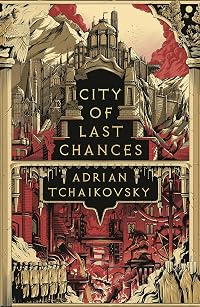
I’ve had mixed results when reading the author’s work. I found Children of Time to be outstanding, but the sequel, Children of Ruin a major disappointment. City of Last Chances was not science fiction and I didn’t particularly care for it. I decided to order the author’s Final Architecture trilogy based upon the promise shown in Children of Time. In hindsight, this was a mistake.
This science fiction work is set in a universe in which the Earth and many of its colonies have been destroyed by an alien civilization called The show more Architects. Periodically, a huge artifact simply appears in the skies over a planet, and systematically destroys it. After a brief pause, occasioned by the development of a special type of human (Ints) capable of communication with the Architects, the Architects have returned.
By book three, the source of the Architects has been discovered, and a plan for dealing with them developed. The entire trilogy revolves around the concept of “unspace”, a region which allows for “faster than light” navigation, and the source of not just the Architects, but a more powerful and pervasive Presence.
Somewhere, in this 2,000 page, three book trilogy, is a nice, tight 1,200 page science fiction story. Unfortunately, it is larded with an excess of repetitive, mind-numbingly frustrating navel-gazing prose. The single word I would use to describe this series is:
Interminable
The primary protagonist, an “Int” named Idris, takes probably 20+ dives into “unspace”, in an effort to discover its secrets. Each time, we are treated to page after page of stream of consciousness description of Idris’s perceptions. Each time, he is barely resuscitated by his colleagues, only to declare, “I am so close!”. Idris is “so close” so many times, that I frankly lost interest, but after investing a month and 1,500 pages, you pretty much have to conclude. And the conclusion is underwhelming, to say the least.
I can say that I have never read an author more in need of editing than Adrian Tchaikovsky. Do not begin this series. show less
I’ve had mixed results when reading the author’s work. I found Children of Time to be outstanding, but the sequel, Children of Ruin a major disappointment. City of Last Chances was not science fiction and I didn’t particularly care for it. I decided to order the author’s Final Architecture trilogy based upon the promise shown in Children of Time. In hindsight, this was a mistake.
This science fiction work is set in a universe in which the Earth and many of its colonies have been destroyed by an alien civilization called The show more Architects. Periodically, a huge artifact simply appears in the skies over a planet, and systematically destroys it. After a brief pause, occasioned by the development of a special type of human (Ints) capable of communication with the Architects, the Architects have returned.
By book three, the source of the Architects has been discovered, and a plan for dealing with them developed. The entire trilogy revolves around the concept of “unspace”, a region which allows for “faster than light” navigation, and the source of not just the Architects, but a more powerful and pervasive Presence.
Somewhere, in this 2,000 page, three book trilogy, is a nice, tight 1,200 page science fiction story. Unfortunately, it is larded with an excess of repetitive, mind-numbingly frustrating navel-gazing prose. The single word I would use to describe this series is:
Interminable
The primary protagonist, an “Int” named Idris, takes probably 20+ dives into “unspace”, in an effort to discover its secrets. Each time, we are treated to page after page of stream of consciousness description of Idris’s perceptions. Each time, he is barely resuscitated by his colleagues, only to declare, “I am so close!”. Idris is “so close” so many times, that I frankly lost interest, but after investing a month and 1,500 pages, you pretty much have to conclude. And the conclusion is underwhelming, to say the least.
I can say that I have never read an author more in need of editing than Adrian Tchaikovsky. Do not begin this series. show less
Members
- Recently Added By
Lists

Kindle Fantasy/Science Fiction Re-Read
151 works; 1 member
Author Information

133+ Works 27,961 Members
Adrian Tchaikovsky is a British fantasy and science fiction author, born on June 14, 1972 in Woodhall Spa, Lincolnshire. He studied Zoology and Psychology at the University of Reading. His career focus changed to law and has worked as a Legal Executive in both Reading and Leeds. He's the author of the Shadows of the Apt series, and his standalone show more novel Children of Time is the winner of the 2016 Arthur C Clarke Award for Best Science Fiction Novel. (Bowker Author Biography) show less
Awards and Honors
Awards
Distinctions
Series

Common Knowledge
- Canonical title
- Lords of Uncreation
- Original publication date
- 2023-04-26
- People/Characters
- Idris Telemmier; Myrmidon Executor Solace; Olian "Olli" Timo; Kittering "Kit"; Keristina "Kris" Soolin Almier; Havaer Mundy (show all 17); Morzarin Ravin Okosh Uskaro; Boyarin Piter Tchever Uskaro; Delegate Trine; The Unspeakable Aklu, the Razor and the Hook; Monitor Superior Tact; Exemplar Mercy; Doctor Haleon Shinandri; Ahab; Tokamak Jaine; The Harbinger Ash; Andecka Tal Mar
- Dedication
- To John Catling
- First words
- Andecka Tal Mar: Intermediary in a three-crew ship named the Skipjack, currently operating with only two because every resource was stretched right now, especially the human kind.
- Last words
- (Click to show. Warning: May contain spoilers.)Because of him, they were none of them alone here any more.
Classifications
Statistics
- Members
- 523
- Popularity
- 57,345
- Reviews
- 26
- Rating
- (3.93)
- Languages
- Czech, English, German, Italian
- Media
- Paper, Audiobook, Ebook
- ISBNs
- 13
- ASINs
- 5