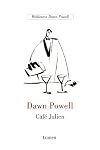
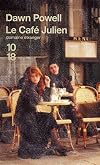
The Wicked Pavilion
by Dawn Powell
On This Page
Description
The "Wicked Pavilion" of the title is the CafE Julien, where everybody who is anybody goes to recover from failed love affairs and to pursue new ones, to cadge money, to hatch plots, and to puncture one another's reputation. Dennis Orphen, the writer from Dawn Powell's Turn, Magic Wheel, makes an appearance here, as does Andy Callingham, Powell's thinly disguised Ernest Hemingway. The climax of this mercilessly funny novel comes with a party which, remarked Gore Vidal, "resembles Proust's show more last roundup," and where one of the partygoers observes, "There are some people here who have been dead twenty years." "For decades Dawn Powell was always just on the verge of ceasing to be a cult and becoming a major religion."--Gore Vidal From the Trade Paperback edition. show lessTags
Recommendations





































Member Reviews
The first word that comes to mind when I think of The Wicked Pavilion is snarky. To flesh that out, it is a snarky satire about New York in all its glory. This is the second postwar satire Powell published and with every intent, laid bare all of Greenwich Village's shortcomings. Set mostly in Cafe Julien, Pavilion's characters are all hot messes. Unsuccessful in romance and unsuccessful at success they spend a great deal of time whining and complaining to and about each other.
The wicked Pavilion centers around a place in New York called the Cafe Julien; it's in a hotel, and it also has a dining room and a banquet room. But most of the action centers around the cafe.
There're so many characters that it's hard to keep track of them all. I'll name several of them: there's Rick Prescott, and there's ellenora: these two love each other, but they never get past having dates in the cafe. He keeps offending her with his presumptuousness, but he's too stupid to figure it out.
There're three artists, rather despicable characters: Dalzel Sloane, Ben Forrester, and Marius. They are always in need of money, always having problems with dealers, and always breaking up with, and getting new girlfriends, which interferes with show more their work. Marius dies, and as often happens when an artist dies, his work is suddenly in great demand, and everybody wants to share anecdotes of being his best friend.
There's a hilarious scene where Cynthia Earle, a wealthy sponsor of artists, has a party to make a recording for posterity of those who had been closest to Marius, giving their best memories of him. The m.c. doesn't know enough about the recorder, and whispered gossiping and snide, jealous murmurs come out louder than the eulogies:
"Dalzell sloane, ben, briggs, Okie and severgney had stayed on for one more run-through although it was after 2:00. Cynthia had graciously brought out her best Brandy when the other guests left, for the evening had proved most unnerving for all. in the first playback private whispers and asides had come booming out drowning proper speeches and a dozen quarrels had started because someone waiting to hear his own pretty speech heard instead malicious remarks about himself made at the same time. almost everyone had stalked out either wounded to the quick or eager to report the fiasco. careful editing must be done by a chosen few, Cynthia had declared, and here they were, ears critically cocked, eyes on the Martell bottle. The machine whirred and voices came crackling out like popcorn.
'she's a ghoul--'
Dalzel and Ben think up a scheme to make money off Marius' death. Powell's contempt for the artists' circle and their sponsors comes through loud and clear.
there's Jerry Dulaine, a model who is not as much in demand with clients as she once was. Elsie Hookley, who lives in Jerry's building, comes from a wealthy Boston family, and was once married to a European baron. She enjoys how her bohemian lifestyle prickles her brother Wharton, who is staid and stuffy.
Jerry is depressed after her failed dinner party for Collier McGrew, the bigwig she's trying to"catch." She's considering a bottle of sleeping pills when a stood-up Rick comes over to her place and they decide to go out on the town. She wakes up in a strange room, and Rick is nowhere in sight:
"Her room would be a mess, she knew that from the fierce throbbing in her head which meant that she had drunk too much of something terrible, and of course her clothes would be thrown all over the place and probably the lamp turned over. But this bulb in the ceiling? the pale woman with long red braids lying in the other bed? The funny looking windows with no curtains – dungeon like windows – yes, with bars. suddenly a struck her that she must have done it – taking poison or dope pills just as she had been afraid she might. This was no dream, this was a hospital . How had it happened, how long ago, and where? Frightened, she sat up in bed abruptly and the sudden motion made her sick. She leaped up to go to the bathroom but the door was shut."
There's much more fun and frolics and plenty of schadenfreude at pretentious people's comeuppances. Powell has a delicious talent for showing up the phoniness of New York's rich and her presentation of humans whose only concern in life is how they appear to others is good fun. Makes for much laugh-out-loud moments. show less
There're so many characters that it's hard to keep track of them all. I'll name several of them: there's Rick Prescott, and there's ellenora: these two love each other, but they never get past having dates in the cafe. He keeps offending her with his presumptuousness, but he's too stupid to figure it out.
There're three artists, rather despicable characters: Dalzel Sloane, Ben Forrester, and Marius. They are always in need of money, always having problems with dealers, and always breaking up with, and getting new girlfriends, which interferes with show more their work. Marius dies, and as often happens when an artist dies, his work is suddenly in great demand, and everybody wants to share anecdotes of being his best friend.
There's a hilarious scene where Cynthia Earle, a wealthy sponsor of artists, has a party to make a recording for posterity of those who had been closest to Marius, giving their best memories of him. The m.c. doesn't know enough about the recorder, and whispered gossiping and snide, jealous murmurs come out louder than the eulogies:
"Dalzell sloane, ben, briggs, Okie and severgney had stayed on for one more run-through although it was after 2:00. Cynthia had graciously brought out her best Brandy when the other guests left, for the evening had proved most unnerving for all. in the first playback private whispers and asides had come booming out drowning proper speeches and a dozen quarrels had started because someone waiting to hear his own pretty speech heard instead malicious remarks about himself made at the same time. almost everyone had stalked out either wounded to the quick or eager to report the fiasco. careful editing must be done by a chosen few, Cynthia had declared, and here they were, ears critically cocked, eyes on the Martell bottle. The machine whirred and voices came crackling out like popcorn.
'she's a ghoul--'
Dalzel and Ben think up a scheme to make money off Marius' death. Powell's contempt for the artists' circle and their sponsors comes through loud and clear.
there's Jerry Dulaine, a model who is not as much in demand with clients as she once was. Elsie Hookley, who lives in Jerry's building, comes from a wealthy Boston family, and was once married to a European baron. She enjoys how her bohemian lifestyle prickles her brother Wharton, who is staid and stuffy.
Jerry is depressed after her failed dinner party for Collier McGrew, the bigwig she's trying to"catch." She's considering a bottle of sleeping pills when a stood-up Rick comes over to her place and they decide to go out on the town. She wakes up in a strange room, and Rick is nowhere in sight:
"Her room would be a mess, she knew that from the fierce throbbing in her head which meant that she had drunk too much of something terrible, and of course her clothes would be thrown all over the place and probably the lamp turned over. But this bulb in the ceiling? the pale woman with long red braids lying in the other bed? The funny looking windows with no curtains – dungeon like windows – yes, with bars. suddenly a struck her that she must have done it – taking poison or dope pills just as she had been afraid she might. This was no dream, this was a hospital . How had it happened, how long ago, and where? Frightened, she sat up in bed abruptly and the sudden motion made her sick. She leaped up to go to the bathroom but the door was shut."
There's much more fun and frolics and plenty of schadenfreude at pretentious people's comeuppances. Powell has a delicious talent for showing up the phoniness of New York's rich and her presentation of humans whose only concern in life is how they appear to others is good fun. Makes for much laugh-out-loud moments. show less
it was not Dawn Powell;s best attempt but she does give a story of loneliness among artists and writers in New York , the setting is postwar WWII satire to address the culture of Greenwich Village. Struggled to read to end
Uneven story telling of lonely, unlikeable, morbidly self-pitying character writers and painters made for disappointing reading.
A protracted and silly ending follows the angst and ennui.
Still worse is the Introduction by Gore Vidal, one of those truly awful ones that reveal the entire plot of the book.
A protracted and silly ending follows the angst and ennui.
Still worse is the Introduction by Gore Vidal, one of those truly awful ones that reveal the entire plot of the book.
Dawn Powell is apparently one of those unsung heroes, a favorite of Hemingway and Vidal. This seems to be the best-loved of her books by slim consensus; other nominees (in case I can't find this) include something about locusts and A Time To Be Born.
Ratings
Members
- Recently Added By
Published Reviews
ThingScore 75
Powell has now become masterful in her setting of scenes. The essays-preludes, overtures-are both witty and sadly wise. She also got the number to Eisenhower's America, as she brings together in this penultimate rout all sorts of earlier figures, now grown old...
A secondary plot gives considerable pleasure even though Powell lifted it from a movie of the day called Holy Matrimony (1943) with show more Monty Woolley and Gracie Fields, from Arnold Bennett's novel Buried Alive. The plot that Powell took is an old one: a painter, bored with life or whatever, decides to play dead. The value of his pictures promptly goes so high that he is tempted to keep on painting after "death." show less
A secondary plot gives considerable pleasure even though Powell lifted it from a movie of the day called Holy Matrimony (1943) with show more Monty Woolley and Gracie Fields, from Arnold Bennett's novel Buried Alive. The plot that Powell took is an old one: a painter, bored with life or whatever, decides to play dead. The value of his pictures promptly goes so high that he is tempted to keep on painting after "death." show less
added by SnootyBaronet
For her picaresque morality Miss Powell has assembled her customary cast. This time, it features a middle-aged heiress who subsidizes painters--not to encourage their genius on canvas but their industry as lovers... Miss Powell can sound the tiniest Tom Collins ice cube clink as a knell of doom. She can retranslate the "hello-darling!" hug into an overture of malice. The pompous must wilt show more under the volleys of her wit, since no pretense escapes her. Yet, strangely, disappointingly, it is often shadows we laugh at and not human beings.
Why should that be? For one thing, her brilliances are random, incomplete. Just as she seems on the point of demolishing a charlatan, she packs up her dynamite kit and begins affixing charges elsewhere. Her forte is not the dramatically sustained scene but a sparkling miscellany of needle-prickly essays. But what appears most fundamentally lacking is the sense of outrage which serves as engine to even the most sophisticated satirist. Miss Powell does not possess the pure indignation that moves Evelyn Waugh to his absurdities and forced Orwell into his haunting contortions. Her verbal equipment is probably unsurpassed among writers of her genre--but she views the antics of humanity with too surgical a calm. show less
Why should that be? For one thing, her brilliances are random, incomplete. Just as she seems on the point of demolishing a charlatan, she packs up her dynamite kit and begins affixing charges elsewhere. Her forte is not the dramatically sustained scene but a sparkling miscellany of needle-prickly essays. But what appears most fundamentally lacking is the sense of outrage which serves as engine to even the most sophisticated satirist. Miss Powell does not possess the pure indignation that moves Evelyn Waugh to his absurdities and forced Orwell into his haunting contortions. Her verbal equipment is probably unsurpassed among writers of her genre--but she views the antics of humanity with too surgical a calm. show less
added by SnootyBaronet
Lists

Mustich's 1000 Books to Read Before You Die: A Life Changing List
1,001 works; 18 members

Canon de la narrativa universal del s. XX (cicutadry)
499 works; 3 members
Author Information

30+ Works 3,142 Members
Awards and Honors
Work Relationships
Common Knowledge
- Canonical title*
- Café Julien
- First words
- Poco después de las dos, un caballero de mediana edad, de cabello rojizo, entró apresuradamente en el Café Julien, se sentó a la mesa de Alexander como tenía por costumbre, pidió café y coñac como tenía por costumbre... (show all), rogó que le trajeran papel de carta como tenía por costumbre, agitó una estilográfica y se dispuso a escribir.
Shortly after two a sandy-haired gentleman in the middle years hurried into the Cafe Julien, sat down at Alexander’s table as he always did, ordered coffee and cognac as he always did, asked for stationery as he always did,... (show all) shook out a fountain pen and proceeded to write. - Quotations
- En las grandes bibliotecas, los profesores estudiaban la manera de hacer desaparecer los libros; los políticos proclamaban que leer y escribir era innecesario, además de ilegal, ya quela acción de la palabra escrita en el ... (show all)cerebro humano puede inducir a pensar; un proceso subversivo que a todas luces incita a la rebelión contra el liderazgo robótico. Todos los conocimientos necesarios para la generación de soldados podían difundirse a través de altavoces; era indispensable conservar la vista para practicar la puntería y las manos para empuñar las bayonetas. ¿Por qué habría de tolerarse que una bomba enemiga aniquilara nuestra cultura acumulada cuando éramos capaces de hacerlo nosostros mismos por decisión gubernamental? [p. 14]
“If I hadn’t known it before I would have known I was dead when I read some of that bilge!” he said, and then shrugged. “What am I talking about? It was what I believed about myself. It was what made life worth living... (show all) until—well, all of a sudden it—whatever it is—was gone. I was dead, all right. I couldn’t figure it out. I couldn’t paint. Me! Thought at first the damn harpies had killed it.”
“Maybe too much liquor,” Ben said.
Marius looked at him, astonished, and poured himself a new drink.
“There can’t be too much liquor!” he said. “I decided maybe I was just under-drunk. And under-womanned. You know how a new dame can give you a fresh start. As soon as I’m well enough to light out I’ll get a new one. Maybe that’ll do it.”
In the great libraries professors studied ways of doing away with books; politicians proclaimed reading and writing unnecessary and therefore illegal, for the action of written words on the human brain might induce thought, a... (show all) subversive process certain to incite rebellion at robot leadership.
There were people, and Dalzell was one of them, who were born café people, claustrophobes unable to endure a definite place or plan. The café was a sort of union station where they might loiter, missing trains and boats as ... (show all)they liked, postponing the final decision to go anyplace or do anything until there was no longer need for decision. One came here because one couldn’t decide where to dine, whom to telephone, what to do. At least one had not yet committed oneself to one parlor or one group for the evening; the door of freedom was still open.
You couldn’t trust women, Wharton thought, sipping his brandy, moderately soothed to see fellow diners taking out watches and hastily paying their checks to get back to their wretched desks while he, one of the master men, ... (show all)could dawdle all day if he liked without losing a penny.
Dalzell was having a mazagran in the Julien. There was small reason for him to be feeling content but he was, and he thought it was probably due to some basic masochism in his character that made surrender a relief if not a p... (show all)leasure. He was down to his last twenty dollars, he had no idea where the next was coming from, but this was a state of affairs that seemed home to him.
Ah, what a stroke of genius it had been for him to have found Nita! How happy he had been on his honeymoon and for years afterward basking in the safety of Nita's childish innocence where his intellectual shortcomings, sexual... (show all) coldness and caprices-indeed his basic ignorance-would not be discovered.... He was well aware that many men of his quixotic moods preferred young boys, but he dreaded to expose his inexperience to one of his own sex, and after certain cautious experiments realized that his anemic lusts were canceled by his over-powering fear of gossip.... Against the flattering background of Nita's delectable purity, he blossomed forth as the all-round He-man, the Husband who knows everything.... He soon taught her that snuggling, hand-holding, and similar affectionate demonstrations were kittenish and vulgar. He had read somewhere, however, that breathing into a woman's ear or scratching her at the nape of the neck drove her into complete ecstasy.... In due course Nita bore him four daughters, a sort of door prize for each time he attended.
We get sick of our clinging vines, he thought, but the day comes when we suspect that the vines are all that hold our rotting branches together. - Last words
- (Click to show. Warning: May contain spoilers.)Aquellos a los que había amarrado han salido disparados como la paja cuando se corta la cuerda de la bala, y recuerdan los nombres y los rostros de los demás como parte de un sueño que jamás volverá.
(Click to show. Warning: May contain spoilers.)The Café Julien was gone and a reign was over. Those who had been bound by it fell apart like straws when the baling cord is cut and remembered each other’s name and face as part of a dream that would never come back.
*Some information comes from Common Knowledge in other languages. Click "Edit" for more information.
Classifications
Statistics
- Members
- 274
- Popularity
- 117,178
- Reviews
- 5
- Rating
- (3.93)
- Languages
- 6 — Catalan, English, French, German, Italian, Spanish
- Media
- Paper, Ebook
- ISBNs
- 9
- ASINs
- 2