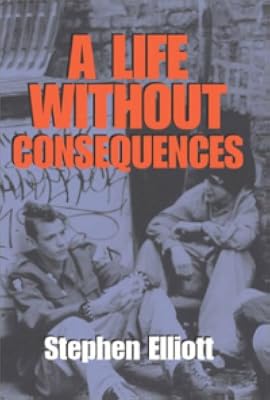
A Life without Consequences
by Stephen Elliott
On This Page
Description
Paul is a ward of the court continually moved through the Chicago juvenile system. Paul tries to succeed in schools where children aren't taught to read. He tries to get straight in homes where drug abuse and violence are the norm and find affection in families where the children are constantly being moved and the guardians are paid six dollars an hour to look after kids they have no stake in or relation to. About the author: Stephen Elliott grew up a ward of the court in various show more institutions and group homes in Chicago. He earned his Bachelors degree at the University of Illinois and a Masters degree from Northwestern University. He has worked as a stripper, a cabdriver, a bartender, and a law school admissions consultant.. show less
Tags
Recommendations























Member Reviews
This is the first book of my #DontJudgeABookByItsCoverChallenge although it is an older purchase. I was in a book binge mood a few months ago and selected this one from Better World Books based only on the title and short description. When it came, I scoffed a bit at the cover and stuck it on my shelf, no longer interested.
I decided to give it a chance after all and, well, it could have been left on the shelf. It wasn't terrible, but it also didn't make me repent my judgmental ways.
The story is semi-autobiographical as the author had spent many years homeless or in group homes. A Life Without Consequences is based in the 1970s-80s (it's never exactly specified what year, but I estimated based on my knowledge of terrible clothing choices show more and big hair) and the state of the juvenile care is abysmal. Children are placed into "homes" that are more like prisons with no expectations of ever amounting to anything.
After running away from abuse and neglect, Paul spends a year being homeless and living on rooftops before he is finally found and placed in the care of the state. This book tracks his journey between juvenile mental institute, running away and living a tool shed, arrest and placement in a violent home with gang members, to finally being moved to a group home in the suburbs. (The moral of the story was basically never move to Chicago.)
While the story was difficult to read and important for people to realize how removing a child from a home doesn't always mean that everything is going to be better, I just wasn't that into the story. I attributed it to the writer's style; it is very short and overly simplified. It was written from the point of view as Paul, but the whole time, while he was emphasizing how intelligent he really was, he was narrating at a third-grade level. (Also, I discovered that the author's "better" books are based around kink, so there's that.)
The characters were all victims of stereotype threat, and I didn't find that any of them really appealed to me. They were typical teenagers who believed they were atypical because of their circumstances.
Overall, it wasn't bad, and it opened my eyes to how much worse the child welfare system used to be, but it matched the cover: not interesting to me. show less
I decided to give it a chance after all and, well, it could have been left on the shelf. It wasn't terrible, but it also didn't make me repent my judgmental ways.
The story is semi-autobiographical as the author had spent many years homeless or in group homes. A Life Without Consequences is based in the 1970s-80s (it's never exactly specified what year, but I estimated based on my knowledge of terrible clothing choices show more and big hair) and the state of the juvenile care is abysmal. Children are placed into "homes" that are more like prisons with no expectations of ever amounting to anything.
After running away from abuse and neglect, Paul spends a year being homeless and living on rooftops before he is finally found and placed in the care of the state. This book tracks his journey between juvenile mental institute, running away and living a tool shed, arrest and placement in a violent home with gang members, to finally being moved to a group home in the suburbs. (The moral of the story was basically never move to Chicago.)
While the story was difficult to read and important for people to realize how removing a child from a home doesn't always mean that everything is going to be better, I just wasn't that into the story. I attributed it to the writer's style; it is very short and overly simplified. It was written from the point of view as Paul, but the whole time, while he was emphasizing how intelligent he really was, he was narrating at a third-grade level. (Also, I discovered that the author's "better" books are based around kink, so there's that.)
The characters were all victims of stereotype threat, and I didn't find that any of them really appealed to me. They were typical teenagers who believed they were atypical because of their circumstances.
Overall, it wasn't bad, and it opened my eyes to how much worse the child welfare system used to be, but it matched the cover: not interesting to me. show less
Mindblowing story about teenage homelessness by someone who knows first hand. Semi-autobiographical.
Ratings
Members
- Recently Added By
Lists

to get
244 works; 2 members
Author Information

18+ Works 789 Members
Stephen Elliott lives in San Francisco and lectures at Stanford. He was born in Chicago, and was a Ward of the State of Illinois from age thirteen to eighteen
Common Knowledge
- Canonical title
- A Life without Consequences
Classifications
Statistics
- Members
- 48
- Popularity
- 628,879
- Reviews
- 2
- Rating
- (3.33)
- Languages
- English
- Media
- Paper, Ebook
- ISBNs
- 3