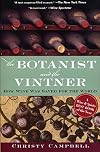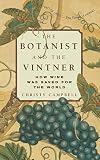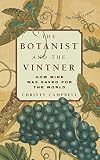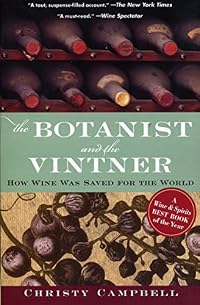
The Botanist and the Vintner: How Wine Was Saved for the World
by Christy Campbell
On This Page
Description
A historical investigation into the mysterious bug that wiped out the vineyards of, first, France and then Europe in the 1860s -- and how one young botanist, who had served an apprenticeship at Kew Gardens, eventually 'saved wine for the world'. Bordeaux, inexplicably began to wither and die. Panic seized France, and Jules-Emile Planchon, a botanist from Montpellier, was sent to investigate. Magnifying glass in hand, he discovered the roots of a dying vine covered in microscopic yellow show more insects. The tiny aphid would be named Phylloxera vastatrix -- 'the dry leaf devastator'. Where it had come from was utterly mysterious, but it advanced with the speed of an invading army. As the noblest vineyards of France came under biological siege, the world's greatest wine industry tottered on the brink of ruin. The grand owners fought the aphid with expensive insecticide, while peasant vignerons simply abandoned their ruined plots in despair. Within a few years the plague had spread across Europe, from Portugal to the Crimea. the parasite had accidentally been imported from America. He believed that only the introduction of American vines, which appeared to have developed a resistance to the aphid, could save France's vineyards. His opponents maintained that this would merely assist the spread of the disease. Meanwhile, encouraged by the French government's offer of a prize of 300,000 gold francs for a remedy, increasingly bizarre suggestions flooded in, and many wine-growing regions came close to revolution as whole local economies were obliterated. Eventually Planchon and his supporters won the day, and phylloxera-resistant American vines were grafted onto European root-stock. Despite some setbacks -- the first fruits of transplanted American vines were universally pronounced undrinkable -- by 1914 all vines cultivated in France were hybrid Americans. of one of the earliest and most successful applications of science to an ecological disaster. show lessTags
Recommendations








Member Reviews
Honestly: I Was Bored
I love wine, and I have a geeky love of science, so this book seemed perfect for me. When I found myself gritting my teeth at the thought of finishing it (about 3/4 through) – I just skipped to the last chapter to be done with it.
This tale of vineyard woe follows the worldwide incursion of the maddeningly mysterious Phylloxera vavtatrix mite (try saying that five times fast). Campbell’s blow-by-blow account of the ecological disaster is very well-written and is cleverly divided into sections named after the stages of death (On Death and Dying). The different methods employed to banish the mites read like a dossier for Homer Simpson, however, it is about as interesting as a book about insects can be to a show more layperson (not very much).
I think this subject matter is very interesting, but I would have been satisfied with a Mental Floss article. show less
I love wine, and I have a geeky love of science, so this book seemed perfect for me. When I found myself gritting my teeth at the thought of finishing it (about 3/4 through) – I just skipped to the last chapter to be done with it.
This tale of vineyard woe follows the worldwide incursion of the maddeningly mysterious Phylloxera vavtatrix mite (try saying that five times fast). Campbell’s blow-by-blow account of the ecological disaster is very well-written and is cleverly divided into sections named after the stages of death (On Death and Dying). The different methods employed to banish the mites read like a dossier for Homer Simpson, however, it is about as interesting as a book about insects can be to a show more layperson (not very much).
I think this subject matter is very interesting, but I would have been satisfied with a Mental Floss article. show less
We weekend in Sonoma so it's fun to know how modern wine making got started in the US.
Ratings
Members
- Recently Added By
Author Information

20 Works 706 Members
Christy Campbell was born in London of Irish parents. He studied modern history at Oxford University and became managing editor of Jane's, where he researched material on behalf of several authors of fiction. On the eve of the Gulf War he was appointed defense correspondent of the Sunday Telegraph and subsequently reported from conflicts in the show more Middle East, the former Soviet Union, Cambodia, Bosnia, and Central America. He lives in London with his wife and three children show less
Awards and Honors
Classifications
- Genres
- Nonfiction, Food & Cooking, History, General Nonfiction, Science & Nature
- DDC/MDS
- 634.8 — Applied Science & Technology Agriculture Orchards, fruits, forestry Grapes -- Viticulture
- LCC
- SB608 .G7 .C3199 — Agriculture Horticulture. Plant propagation. Plant breeding Plant culture Pests and diseases Individual or types of plants or trees
- BISAC
Statistics
- Members
- 149
- Popularity
- 219,016
- Reviews
- 2
- Rating
- (3.35)
- Languages
- English
- Media
- Paper
- ISBNs
- 4
- UPCs
- 1
- ASINs
- 3