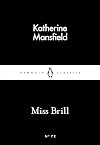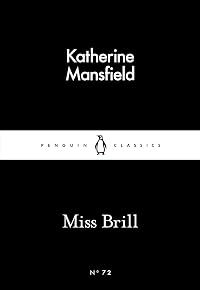
Miss Brill - 3 stories
by Katherine Mansfield
On This Page
Description
'And again, as always, he had the feeling he was holding something that never was quite his - his. Something too delicate, too precious, that would fly away once he let go.'Three sharp and powerful short stories from Katherine Mansfield, one of the genre's all-time masters.Introducing Little Black Classics- 80 books for Penguin's 80th birthday. Little Black Classics celebrate the huge range and diversity of Penguin Classics, with books from around the world and across many centuries. They show more take us from a balloon ride over Victorian London to a garden of blossom in Japan, from Tierra del Fuego to 16th-century California and the Russian steppe. Here are stories lyrical and savage; poems epic and intimate; essays satirical and inspirational; and ideas that have shaped the lives of millions. show lessTags
Recommendations













Member Reviews
It was pure coincidence that I picked No. 72 of Penguin's Little Black Classics out of the box right after finishing No. 48, but it turned out to be a happy pairing. No. 48 is Edith Wharton's “The Reckoning,” and Katherine Mansfield's lonely, dysfunctional characters in the three short stories here – “Marriage a la Mode,” “Miss Brill,” and “The Stranger” -- resonate intriguingly against Wharton's portrayals of women who, while terribly isolated, nevertheless refuse to subside in complete silence. Born about twenty years apart, the women are writing about individuals or couples inhabiting similar milieus, and Mansfield's Miss Brill and Wharton's Mrs. Manstey are particularly alike in the fragile bubbles of little show more pleasures they have created for themselves. Mansfield's two other stories here offer a starker view of couples hopelessly damaged by selfishness and loss of perspective. Mansfield's Isabel, in “Marriage a la Mode,” is much like Wharton's Julia in “The Reckoning,” but, seen at a different place along her trajectory, appears far less sympathetic (additionally, the dispositions of the women's husbands shows Julia in a softer light). The final story in the Mansfield collection, “The Stranger,” doesn't have a parallel in Wharton's book. It's an interesting story, sad, but also unsettling. show less
Fur
As a child, I spent a lot of time at my grandparents’ farm. The bedroom my little brother and I shared had two huge mahogany wardrobes with Narnia vibes: they contained a couple of fur coats and a fox stole - the latter with eyes, teeth, and tail - and little else. I would sit in the wardrobe to stroke one coat, while snuggled in another, always careful to avoid looking the fox in the eyes. I didn’t consider the ethics of wearing fur or the irony that many in the family went foxhunting. Back then, the furs were just an exotic source of mysterious comfort and pleasure. I'd almost forgotten about them: it's so long ago in time, as well as attitudes. Reading this created a disconnect between my love in memory and my revulsion in show more the present, which fits with the story.
This poignant vignette opens and closes with literal and symbolic fur, plus a contrasting one in the middle. Miss Brill’s stole - probably a fox, as teeth and tail are mentioned - lives in a dark box most of the time. It’s a smaller version of the “little dark room - her room like a cupboard”. Perhaps that’s why she relates to it and talks to it.
Sunday in the park
It’s Sunday afternoon, and Miss Brill dons her fur and goes to the Jardins Publiques for a spot of people-watching, eavesdropping, and assumptions, as is apparently her habit. She’s lonely. There’s plenty to see and surmise, even on a quiet day.
Image: “Jardins Publics” by Edouard Vuillard, featuring a solitary woman on a bench, albeit from 1894, a generation before this story (Source)
You are what you wear
Miss Brill judges people by their clothes:
“An Englishman and his wife, he wearing a dreadful Panama hat and she button boots.”
But she doesn’t recognise those like her:
“They were odd, silent, nearly all old, and from the way they stared they looked as though they’d just come from dark little rooms or even - even cupboards!”
When she spots a woman in a shabby ermine toque (white fur hat) and man in grey, in her inner monologue, she identifies them as their clothes, not by them (“the ermine toque”, rather than “the woman in the ermine toque”). The couple’s encounter is intriguingly ambiguous.
“Oh, how fascinating it was! How she enjoyed it! How she loved sitting here, watching it all! It was like a play… They were all on the stage. They weren’t only the audience, not only looking on; they were acting.”
For once, she happily feels part of something - until an incident prompts painful reflection. We're often told the importance of introspection and knowing ourselves, but a piece like this makes one realise the risks as well.
In the end, it comes back to my grandparents, this time my grandfather: one of his favourite sayings was:
“Judge not, lest you be judged.”
I later learned it was Matthew 7:1.
See also
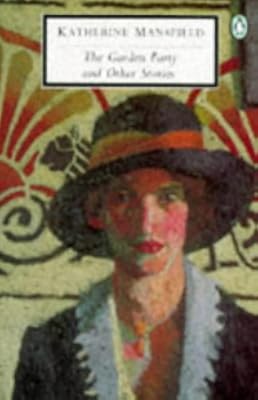
* This story is in the collection, The Garden Party. I’ve reviewed a couple of other stories from it:
- The Garden Party, HERE.
- The Daughters of the Late Colonel, HERE.
- Bliss is from a different collection, HERE.
* I loved CS Lewis’ Narnia books as a child. But not as an adult. See my review HERE.
* I could imagine a version of this story as an Alan Bennett Talking Heads monologue. See my review HERE.
* Shakespeare’s As You Like It includes the famous soliloquy, All the world’s a stage.
Quote
“Although it was so brilliantly fine - the blue sky powdered with gold and great spots of light like white wine splashed over the Jardins Publiques - Miss Brill was glad that she had decided on her fur. The air was motionless, but when you opened your mouth there was just a faint chill, like a chill from a glass of iced water before you sip, and now and again a leaf came drifting - from nowhere, from the sky.”
Short story club
I read this as one of the stories in The Art of the Short Story, by Dana Gioia, from which I'm aiming to read one story a week with The Short Story Club, starting 2 May 2022.
You can read this story here.
You can join the group here. show less
As a child, I spent a lot of time at my grandparents’ farm. The bedroom my little brother and I shared had two huge mahogany wardrobes with Narnia vibes: they contained a couple of fur coats and a fox stole - the latter with eyes, teeth, and tail - and little else. I would sit in the wardrobe to stroke one coat, while snuggled in another, always careful to avoid looking the fox in the eyes. I didn’t consider the ethics of wearing fur or the irony that many in the family went foxhunting. Back then, the furs were just an exotic source of mysterious comfort and pleasure. I'd almost forgotten about them: it's so long ago in time, as well as attitudes. Reading this created a disconnect between my love in memory and my revulsion in show more the present, which fits with the story.
This poignant vignette opens and closes with literal and symbolic fur, plus a contrasting one in the middle. Miss Brill’s stole - probably a fox, as teeth and tail are mentioned - lives in a dark box most of the time. It’s a smaller version of the “little dark room - her room like a cupboard”. Perhaps that’s why she relates to it and talks to it.
Sunday in the park
It’s Sunday afternoon, and Miss Brill dons her fur and goes to the Jardins Publiques for a spot of people-watching, eavesdropping, and assumptions, as is apparently her habit. She’s lonely. There’s plenty to see and surmise, even on a quiet day.
Image: “Jardins Publics” by Edouard Vuillard, featuring a solitary woman on a bench, albeit from 1894, a generation before this story (Source)
You are what you wear
Miss Brill judges people by their clothes:
“An Englishman and his wife, he wearing a dreadful Panama hat and she button boots.”
But she doesn’t recognise those like her:
“They were odd, silent, nearly all old, and from the way they stared they looked as though they’d just come from dark little rooms or even - even cupboards!”
When she spots a woman in a shabby ermine toque (white fur hat) and man in grey, in her inner monologue, she identifies them as their clothes, not by them (“the ermine toque”, rather than “the woman in the ermine toque”). The couple’s encounter is intriguingly ambiguous.
“Oh, how fascinating it was! How she enjoyed it! How she loved sitting here, watching it all! It was like a play… They were all on the stage. They weren’t only the audience, not only looking on; they were acting.”
For once, she happily feels part of something - until an incident prompts painful reflection. We're often told the importance of introspection and knowing ourselves, but a piece like this makes one realise the risks as well.
In the end, it comes back to my grandparents, this time my grandfather: one of his favourite sayings was:
“Judge not, lest you be judged.”
I later learned it was Matthew 7:1.
See also
* This story is in the collection, The Garden Party. I’ve reviewed a couple of other stories from it:
- The Garden Party, HERE.
- The Daughters of the Late Colonel, HERE.
- Bliss is from a different collection, HERE.
* I loved CS Lewis’ Narnia books as a child. But not as an adult. See my review HERE.
* I could imagine a version of this story as an Alan Bennett Talking Heads monologue. See my review HERE.
* Shakespeare’s As You Like It includes the famous soliloquy, All the world’s a stage.
Quote
“Although it was so brilliantly fine - the blue sky powdered with gold and great spots of light like white wine splashed over the Jardins Publiques - Miss Brill was glad that she had decided on her fur. The air was motionless, but when you opened your mouth there was just a faint chill, like a chill from a glass of iced water before you sip, and now and again a leaf came drifting - from nowhere, from the sky.”
Short story club
I read this as one of the stories in The Art of the Short Story, by Dana Gioia, from which I'm aiming to read one story a week with The Short Story Club, starting 2 May 2022.
You can read this story here.
You can join the group here. show less
‘’God forbid, my darling, that I should be a drag on your happiness.’’
Marriage a la Mode: The loving relationship of a young married couple changes when Isabel falls under the influence of a horrible woman who believes that love is weakness and a hurdle to emancipation. But neglecting your children, desiring riches and servants, and ridiculing your husband by parading your lovers inside the house HE paid for isn’t emancipation. It’s malice and ignorance. If I were William, I’d give her a good piece of my mind...Mansfield’s elegant satire demonstrates everything that is wrong with labels and extremes.
‘’Although it was so brilliantly fine - the blue sky powdered with gold spots of light like white wine splashed over show more the Jardins Publiques - Miss Brill was glad that she had decided on her fur.’’
Miss Brill: An elderly woman visits the park and watches as life and its ‘’occupants’’ pass her by. Almost imprisoned in her own notions of luxury, propriety and dignity, she fails to notice that the world has changed. A young couple forces her to come to terms with the ‘’modern times’’ that show how respect and politeness have to make way for a ‘’new’’ way of thinking aka. disrespecting everything and everyone.
‘’It seemed to the little crowd on the wharf that she was never going to move again. There she lay, immense, motionless on the grey crinkled water, a loop of smoke above her, an immense flock of gulls screaming and diving after the galley droppings at the stern. You could just see little couples parading - little flies walking up and down the dish on the grey crinkled tablecloth. Other flies clustered and swarmed at the edge. Now there was a gleam of white on the lower deck - the cook’s apron or the stewardess perhaps. Now a tiny black spider raced up the ladder on the bridge.’’
The Stranger: A woman returns to Auckland from Europe. Her husband anxiously awaits for her but all changes when she narrates the tragic death of a stranger in her arms. The green-eyed monster has appeared in a corner of the hotel room and her husband doesn’t seem to ignore it.
Katherine Mansfield’s commentary on relationships, social norms, and the fads of her era is relevant to our modern societies, a time when every kind of proportion, measure and decency has gone down the drain… show less
Marriage a la Mode: The loving relationship of a young married couple changes when Isabel falls under the influence of a horrible woman who believes that love is weakness and a hurdle to emancipation. But neglecting your children, desiring riches and servants, and ridiculing your husband by parading your lovers inside the house HE paid for isn’t emancipation. It’s malice and ignorance. If I were William, I’d give her a good piece of my mind...Mansfield’s elegant satire demonstrates everything that is wrong with labels and extremes.
‘’Although it was so brilliantly fine - the blue sky powdered with gold spots of light like white wine splashed over show more the Jardins Publiques - Miss Brill was glad that she had decided on her fur.’’
Miss Brill: An elderly woman visits the park and watches as life and its ‘’occupants’’ pass her by. Almost imprisoned in her own notions of luxury, propriety and dignity, she fails to notice that the world has changed. A young couple forces her to come to terms with the ‘’modern times’’ that show how respect and politeness have to make way for a ‘’new’’ way of thinking aka. disrespecting everything and everyone.
‘’It seemed to the little crowd on the wharf that she was never going to move again. There she lay, immense, motionless on the grey crinkled water, a loop of smoke above her, an immense flock of gulls screaming and diving after the galley droppings at the stern. You could just see little couples parading - little flies walking up and down the dish on the grey crinkled tablecloth. Other flies clustered and swarmed at the edge. Now there was a gleam of white on the lower deck - the cook’s apron or the stewardess perhaps. Now a tiny black spider raced up the ladder on the bridge.’’
The Stranger: A woman returns to Auckland from Europe. Her husband anxiously awaits for her but all changes when she narrates the tragic death of a stranger in her arms. The green-eyed monster has appeared in a corner of the hotel room and her husband doesn’t seem to ignore it.
Katherine Mansfield’s commentary on relationships, social norms, and the fads of her era is relevant to our modern societies, a time when every kind of proportion, measure and decency has gone down the drain… show less
Miss Brill is the perfect introduction to Katherine Mansfield if like me; you’re late to reading her great stories. This Penguin Little Black Classic contains three short stories from The Garden Party and Other Stories, first published in 1922. All three stories (Marriage a la Mode, Miss Brill and The Stranger) have a common theme of loneliness, mis-communication and cross purposes about them. Marriage a la Mode is about a wife who has decided to have a little fun with a set of friends whilst her husband trudges on (I’m thinking the Bloomsbury Set here). Miss Brill dusts off her fur and attends a concert each week, but it’s primarily people watching for her…but what do the other attendees think of her? The Stranger is Mrs show more Hammond, returning from a long time overseas…Mr Hammond thinks that things will be exactly the same as before she left, won’t they?
The stories reflect personal growth in some characters while other characters languish in the past and memories. The stories are beautifully told, I’m always amazed at how a talented short story writer can fit so much plot, characterisation and detail into so few words. I think Katherine Mansfield is one of the best of them. I’m not normally one for short stories, but these are as well characterised and thought provoking as any novel. Despite being written nearly 100 years ago, the prose feels fresh and the ideas expressed modern.
This was definitely worth the $2 and provides more food for thought than any chocolate bar (chocolate being the same price these days). I’ll happily read more Penguin Little Black Classics as they’re a great read over lunch, while waiting for something or as a break from a longer read.
http://samstillreading.wordpress.com show less
The stories reflect personal growth in some characters while other characters languish in the past and memories. The stories are beautifully told, I’m always amazed at how a talented short story writer can fit so much plot, characterisation and detail into so few words. I think Katherine Mansfield is one of the best of them. I’m not normally one for short stories, but these are as well characterised and thought provoking as any novel. Despite being written nearly 100 years ago, the prose feels fresh and the ideas expressed modern.
This was definitely worth the $2 and provides more food for thought than any chocolate bar (chocolate being the same price these days). I’ll happily read more Penguin Little Black Classics as they’re a great read over lunch, while waiting for something or as a break from a longer read.
http://samstillreading.wordpress.com show less
Miss Brill, the Eleanor Rigbyish protagonist of Katherine Mansfield's short story, connects with the wider world by visiting the same park each Sunday, observing the regulars, and eas-dropping on their conversations.She imagines it as a glorious play in which she is a participant. These Sunday outings served as a source of joy until her bubble burst.With her finely-tuned prose and excellent pacing, Manfield creates a compelling character study.
Thanks to GR friends Ilse and Daniel Schindler for inspiring me to read this story.
Thanks to GR friends Ilse and Daniel Schindler for inspiring me to read this story.
3 short, well written stories that share a bleak and lonely image of age and marriage.
Three short stories about relationships. Has it`s charm but not really my cup of tea.
Members
- Recently Added By
Lists

Favourite Short Stories
153 works; 9 members
Author Information

387+ Works 8,750 Members
Katherine Mansfield was born Katherine Beauchamp in Wellington, New Zealand on October 14, 1888, the third daughter of a prominent banker. She attended the Wellington College for Girls before entering Queen's College in London in 1903. Her interest in the cello led to lessons at the Royal Academy of Music, where she became secretly engaged to a show more young prodigy named Arnold Trowell, who already had a successful concert career. Upon being summoned back to New Zealand by her father in 1906, she decided to abandon music in favor of writing. She soon had three stories published in a Melbourne monthly and gained her father's consent to return to England. Once there, she became depressed when she found that Trowell no longer loved her, and she rushed into a hasty marriage to a young musician, only to leave him a few days later. She had a miscarriage, which marked the beginning of her decline in health. After returning to England in 1910, Katherine Beauchamp published her work under the name Katherine Mansfield. A collection of her stories, "In a German Pension," was published in 1911. A year later, she met John Middleton Murry, who eventually became her second husband when she was finally able to secure a divorce. By the time of this marriage in 1918, Mansfield was found to have tuberculosis. Her ill health, combined with the death of her brother in World War I, turned the focus of her work inward and on her homeland. Her memoirs, collected in a book entitled "Bliss," secured her reputation as a writer, and she followed it up with the equally acclaimed "Garden Party and Other Stories." Her lyrical style and stream of consciousness method placed her along side James Joyce and Virginia Woolf for her strength of characterization and her subtlety of detail. Katherine Mansfield died on January 9, 1923 at the Gurdjieff Institute for the Harmonic Development of Man at Fontainebleau. (Bowker Author Biography) show less
Series
Belongs to Publisher Series
Work Relationships
Contains
Common Knowledge
- Canonical title
- Miss Brill - 3 stories
- Disambiguation notice
- A volume in the Penguin Little Black Classics series containing Miss Brill and 2 other short stories by Katherine Mansfield
Classifications
Statistics
- Members
- 242
- Popularity
- 134,650
- Reviews
- 8
- Rating
- (3.97)
- Languages
- English
- Media
- Paper, Ebook
- ISBNs
- 4
- ASINs
- 3