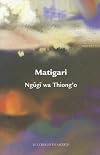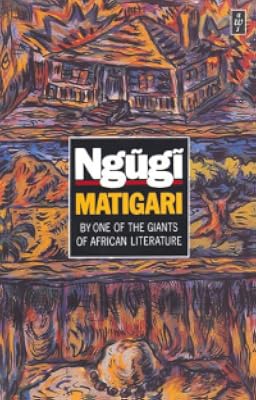
Matigari
by Ngũgĩ wa Thiong'o
On This Page
Description
A moral fable in which Martigari, a freedom fighter, emerges from the forest in the political dawn of post-independence Kenya. Searching for his family and a new future, he finds little has changed.Tags
Recommendations










Member Reviews
In the preface to this novel, Ngũgĩ informs us that Matigari was written in 1983, while he was living in exile in London. It was published in the Gĩkũyũ language in 1986, and translated into English the following year. He also tells us that copies of this book were removed from bookshops by the Kenyan police that year, due to the controversy that its release caused there.
Matigari ma Njirũũngi, which means 'the patriots who survived the bullets' in the Gĩkũyũ language, is an old man in an unnamed postcolonial African country who, after years of struggle, has finally killed his lifelong tormentor and oppressor Settler Williams and his assistant John Boy. He leaves the forest which had been his home for many years, to return to show more his home village. He intends to gather up his family and people that he left behind during the struggle for independence, in order to move into the spacious home that he built, which was stolen from him by Settler Williams.
Upon his arrival to the village, he finds a shocking amount of poverty and corruption: orphaned children live in abandoned cars, and obtain scraps of food and clothing from a dump; workers toil in factories and the fields, and do not make enough money to feed their families; a group of women prostitute themselves to survive. The country is now run by His Excellency Ole Excellence and his assistant The Minister of Truth and Justice, and a fragile peace is maintained by fear, violence and the ever present Voice of Truth radio broadcast, which informs the public of the punishment meted out to those who oppose the one party government.
Matigari finds the home that he has built, with the help of a young boy, who has rescued him from a mob of stone throwing youth, and a prostitute who he has rescued from two policemen. However, it is now occupied by the son of John Boy; he has obtained a Western education and, along with the son of Settler Williams, runs a major factory and plantation in the village. They are more corrupt and oppressive taskmasters than their hated fathers. Matigari attempts to claim his house, but he is beaten and jailed. However, he is not defeated, and soon escapes from prison. He travels throughout the village, a mysterious Christ-like figure who becomes a legend amongst the villagers, and a feared opponent of John Boy, Jr. and the government. All efforts to discredit or capture Matigari prove fruitless, as the villagers become less fearful of the government and more willing to stand up for their rights. A final and inevitable confrontation with John Boy, Jr. at the plantation home occurs, as the stability of the government hangs in the balance.
This was a tingling and fast-paced novel, which I read in one sitting, and is based in part on an African folk story. The ending was especially good, and unpredictable despite the confrontation that was obviously going to take place. It was banned by the Kenyan government, as Matigari teaches its readers that only armed struggle would result in freedom from corrupt and oppressive African dictatorships. Highly recommended! show less
Matigari ma Njirũũngi, which means 'the patriots who survived the bullets' in the Gĩkũyũ language, is an old man in an unnamed postcolonial African country who, after years of struggle, has finally killed his lifelong tormentor and oppressor Settler Williams and his assistant John Boy. He leaves the forest which had been his home for many years, to return to show more his home village. He intends to gather up his family and people that he left behind during the struggle for independence, in order to move into the spacious home that he built, which was stolen from him by Settler Williams.
Upon his arrival to the village, he finds a shocking amount of poverty and corruption: orphaned children live in abandoned cars, and obtain scraps of food and clothing from a dump; workers toil in factories and the fields, and do not make enough money to feed their families; a group of women prostitute themselves to survive. The country is now run by His Excellency Ole Excellence and his assistant The Minister of Truth and Justice, and a fragile peace is maintained by fear, violence and the ever present Voice of Truth radio broadcast, which informs the public of the punishment meted out to those who oppose the one party government.
Matigari finds the home that he has built, with the help of a young boy, who has rescued him from a mob of stone throwing youth, and a prostitute who he has rescued from two policemen. However, it is now occupied by the son of John Boy; he has obtained a Western education and, along with the son of Settler Williams, runs a major factory and plantation in the village. They are more corrupt and oppressive taskmasters than their hated fathers. Matigari attempts to claim his house, but he is beaten and jailed. However, he is not defeated, and soon escapes from prison. He travels throughout the village, a mysterious Christ-like figure who becomes a legend amongst the villagers, and a feared opponent of John Boy, Jr. and the government. All efforts to discredit or capture Matigari prove fruitless, as the villagers become less fearful of the government and more willing to stand up for their rights. A final and inevitable confrontation with John Boy, Jr. at the plantation home occurs, as the stability of the government hangs in the balance.
This was a tingling and fast-paced novel, which I read in one sitting, and is based in part on an African folk story. The ending was especially good, and unpredictable despite the confrontation that was obviously going to take place. It was banned by the Kenyan government, as Matigari teaches its readers that only armed struggle would result in freedom from corrupt and oppressive African dictatorships. Highly recommended! show less
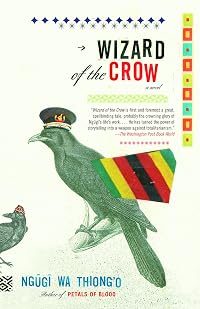
Although I've been a Ngugi fan since reading Wizard of the Crow a few years ago, I hadn't heard ofMatigari until reading recommendations of it here on LT. A satire, an allegory, and a fable, it tells the tale of Matigari, which means "the patriots who survived the bullets," who emerges out of the forests after an unseen but epic fight with the colonizers to find that his unnamed but now postcolonial country is under the thumb of the former freedom fighters in league with western corporations and the military, particularly by His Excellency Ole Excellence, the Minister for Truth and Justice, and the specialists in Parrotology. Matigari is searching for his house, the house he built but that the colonizer lived in before the and the show more colonizer and the colonizer's African flunky fled into the forest to fight.
In mythical fashion, and in accordance with oral tradition, this story is repeated in various forms throughout the book as Matigari arouses the people, is hunted and jailed by the powers that be, and struggles to promote the people's right to own the products of their labor and live in freedom. This is not a straightforward tale. Time is fluid and Matigari is mysterious -- sometimes old, sometimes young, sometimes even the resurrection of Jesus. All in all, the novel is a compelling combination of a traditional form with modern literary styles and a vivid exploration of disillusionment, hope, and the necessity to continue the struggle. show less
In mythical fashion, and in accordance with oral tradition, this story is repeated in various forms throughout the book as Matigari arouses the people, is hunted and jailed by the powers that be, and struggles to promote the people's right to own the products of their labor and live in freedom. This is not a straightforward tale. Time is fluid and Matigari is mysterious -- sometimes old, sometimes young, sometimes even the resurrection of Jesus. All in all, the novel is a compelling combination of a traditional form with modern literary styles and a vivid exploration of disillusionment, hope, and the necessity to continue the struggle. show less
Matigari is about a freedom fighter who returns from the wilderness after laying his weapons aside at the end of the wars of independence in his unnamed country. He returns to find the government changed but the status quo preserved, with European colonial types benefitting from the labour of the Africans, and African collaborators abusing their positions for a cut of the spoils. Matigari emerges from the bush as a messianic figure, dedicated to peace as he gathers disciples in the fight for the soul of his new nation. Ngugi makes several allusions comparing Matigari to Christ, as a man of peace and deliverer of his people. The book is written as part allegory, part parable and part fairy tale. He gives the reader no firm grasp on show more chronology, or the boundaries between the magical and the real. What emerges is a moving surrealistic tribute to the spirit of independence and the challenges facing newly independent nations.
This was my third Ngugi, and they have ranged between very good and excellent. One day I would love to get to know him better as a writer, because if his least read novel is this good, then there must be some treasures among them.
flag abuse show less
This was my third Ngugi, and they have ranged between very good and excellent. One day I would love to get to know him better as a writer, because if his least read novel is this good, then there must be some treasures among them.
flag abuse show less
In the preface, the author explains that this novel was intended to take place in any time or country. As it opens we are introduced to a man who just spent years in the forest tracking down the colonizers who oppressed him. Now that they are dead, he is laying down his arms and burying them under a tree. He calls himself Matigari, which means “the patriots who survived the bullets.” When he returns to his home to look for his family, he finds that things have changed drastically. The country has finally won independence from its colonizers, but the new government is even more corrupt and oppressive than the last. Matigari is tired of those who reap where they do not sow (those who live in houses they did not build while the show more builders are homeless, who grow fat while the farmers starve, who wear fine clothes while the tailors wear rags, and who grow wealthy by selling the goods made by others while the workers live in poverty). As he searches for truth and justice, he shows no fear to those with authority and inspires others to hope for better lives. The gossip about him spreads throughout the country like wildfire, and his legend takes on a life of its own as the people’s hero.
I liked everything about this book, especially the way the author wove in elements of traditional folklore. The repetition and cyclical plot were especially effective. I also think the author did a good job of making the story timeless. Certain parts of the story were difficult to read due to the subject matter, but there’s really no way around that in a book that tackles these kinds of issues. I would recommend this to others. show less
I liked everything about this book, especially the way the author wove in elements of traditional folklore. The repetition and cyclical plot were especially effective. I also think the author did a good job of making the story timeless. Certain parts of the story were difficult to read due to the subject matter, but there’s really no way around that in a book that tackles these kinds of issues. I would recommend this to others. show less
3.5 stars. Review to come
Ratings
Members
- Recently Added By
Lists

Best African Books
126 works; 46 members

1,001 BYMRBYD Concensus
723 works; 27 members
Talk Discussions
Past Discussions
Matigari by Ngũgĩ wa Thiong'o in Author Theme Reads (December 2011)
Author Information

70+ Works 7,459 Members
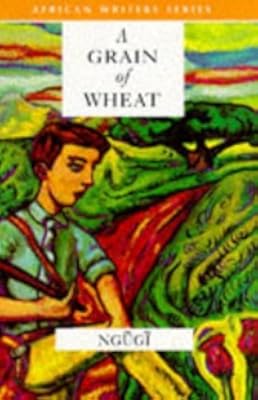
Novelist, playwright, and essayist, Ngugi wa Thiong'o was born in Kenya on January 5, 1938. He received a B.A. in English from Makerere University College in Kampala, Uganda in 1963. He is Kenya's best-known writer and one of East Africa's most outspoken social critics. His first novel, Weep Not, Child (1964), was a penetrating account of the Mau show more Mau uprising (a tribal revolt that occurred in colonial Kenya) and was the first English-language novel by an East African. Two subsequent works, The River Between (1965) and A Grain of Wheat (1967), are sensitive novels about the Kikuyu people caught between the old and the new Africa. One of his major concerns has been the lack of reading materials in native African languages. In an attempt to bring literature to African peasants and workers, he wrote and produced the play I Will Marry When I Want (1977) in his native Kikuyu language. The play, which shows the exploitation of Kikuyu workers and peasants, attracted a large audience of poor Kenyans. It also led to Ngugi's arrest and imprisonment. After his release from prison, he went into exile and is currently living in the United States. His other works include Detained (1981); Decolonising the Mind: The Politics of Language in African Literature (1986); and Matigari (1987). He received the 2001 Nonino International Prize for Literature. In 2006, Random House published his first new novel in nearly two decades, Wizard of the Crow. (Bowker Author Biography) show less
Some Editions
Awards and Honors
Series
Belongs to Publisher Series
Common Knowledge
- Canonical title
- Matigari
- Original publication date
- 1987; 1989 (English translation) (English translation)
- Important places
- Africa; East Africa; Kenya
Classifications
- Genres
- General Fiction, Fiction and Literature
- DDC/MDS
- 896.395432 — Literature & rhetoric Literatures of other languages African literatures Niger-Congo languages Bantu languages Great Lakes and other north eastern Bantu languages Kikuyu Kikuyu fiction 1960–
- LCC
- PR9381.9 .N45 .M38 — Language and Literature English English Literature English literature: Provincial, local, etc.
- BISAC
Statistics
- Members
- 294
- Popularity
- 109,638
- Reviews
- 5
- Rating
- (3.79)
- Languages
- English, German, Spanish
- Media
- Paper, Ebook
- ISBNs
- 12
- ASINs
- 3