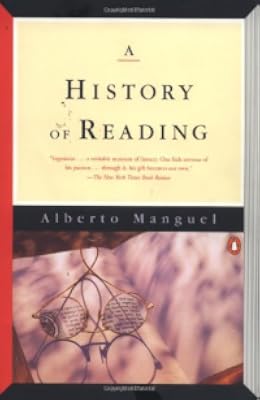
A History of Reading
by Alberto Manguel
On This Page
Description
At one magical instant in your early childhood, the page of a book - that string of confused, alien ciphers - shivered into meaning. Words spoke to you, gave up their secrets; at that moment, whole universes opened. You became, irrevocably, a reader. Noted essayist Alberto Manguel moves from this essential moment to explore the 6000-year-old conversation between words and that magician without whom the book would be a lifeless object: the reader. Manguel lingers over reading as seduction, as show more rebellion, as obsession, and goes on to trace the never-before-told story of the reader's progress from clay tablet to scroll, codex to CD-ROM. show lessTags
Recommendations
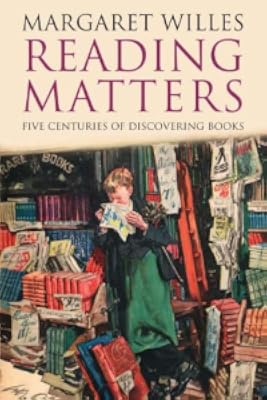
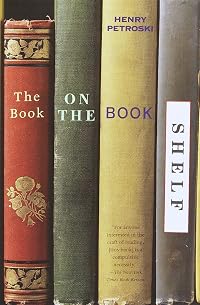
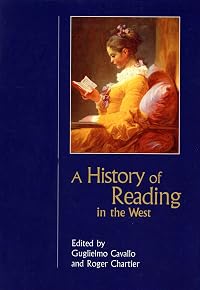

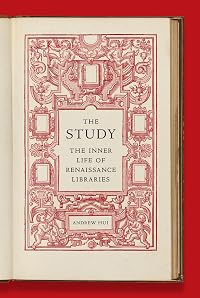

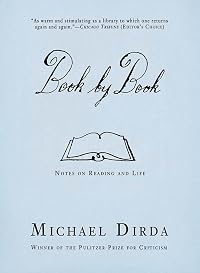
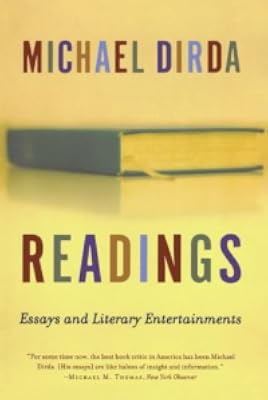
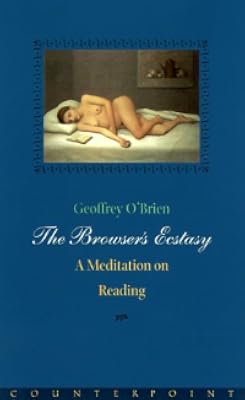
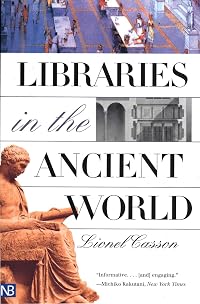


Member Recommendations

Odd Type Writers: From Joyce and Dickens to Wharton and Welty, the Obsessive Habits and Quirky Tec hniques of Great Authors by Celia Blue Johnson
CGlanovsky One a meditation on the practice and practitioners of writing, the other on the practice and practitioners of reading.
Member Reviews
In the final chapter of this book, Manguel, channeling his mentor Jorge Luis Borges, describes the experience of reading an imaginary book called The history of reading, in which the (imaginary) author covers all kinds of fascinating topics that didn't feature in the present book. He doesn't go on to add that that book ends with a chapter in which the author describes the experience of reading an imaginary book called The history of reading, but we get the point anyway. Any history of reading is necessarily incomplete, because it can't ever cover the subjective experience of every literate person's potential encounters with every text extant at that date.
This, and the indefinite article in the title, gives Manguel permission to range show more freely over topics that interest him. He talks about his own personal experience of being read to, learning to read, choosing his first books, reading aloud to Borges, and eventually building up his own private library and becoming director of a national library. But at the same time he dips in and out of telling us about the development of writing systems, books and libraries, and about particular ways of reading: public, private, constrained, forbidden, orthodox, subversive, translated, scholarly and recreational. At one moment we are learning about Socrates' opposition to written texts, at another we are watching upper-class ladies in medieval Japan use books to broaden and enrich their very constrained lives.
A thoroughly delightful book, but probably not one that serves any useful purpose. It's just such a very pleasant experience being with Manguel for the space of 300 pages or so. show less
This, and the indefinite article in the title, gives Manguel permission to range show more freely over topics that interest him. He talks about his own personal experience of being read to, learning to read, choosing his first books, reading aloud to Borges, and eventually building up his own private library and becoming director of a national library. But at the same time he dips in and out of telling us about the development of writing systems, books and libraries, and about particular ways of reading: public, private, constrained, forbidden, orthodox, subversive, translated, scholarly and recreational. At one moment we are learning about Socrates' opposition to written texts, at another we are watching upper-class ladies in medieval Japan use books to broaden and enrich their very constrained lives.
A thoroughly delightful book, but probably not one that serves any useful purpose. It's just such a very pleasant experience being with Manguel for the space of 300 pages or so. show less
Quella che racconta Alberto Manguel non è la storia della lettura, ma è, appunto, una storia della lettura: soggettiva e unica, e proprio per questo di tutti. Infatti, alla dissertazione letteraria, Manguel aggiunge annotazioni personali, passi autobiografici, aneddoti che dissacrano la letteratura in quanto scienza e che invece sanciscono la superiorità della lettura e, soprattutto, dei lettori. Così, dopo aver chiamato in causa autori come Plinio, Dante, Cervantes. Victor Hugo, Rabelais e Borges, Manguel parla della forma del libro, dei libri proibiti, del valore delle prime pagine, di cosa vuol dire leggere in pubblico e, al contrario, dentro la propria testa. E poi, ancora, del potere del lettore, della sua capacità di show more trasformare e dare vita al libro, quanto e forse più dell'autore stesso, della follia dei librai e del fuoco sacro che divora ogni vero appassionato di storie.
"Un braccio abbandonato lungo il fianco, l’altro piegato a sorreggere la testa, il giovane Aristotele legge languidamente un papiro che tiene srotolato in grembo, sui morbidi cuscini di un seggio, i piedi confortevolmente incrociati. Infilando con due dita un paio di occhiali a molla sul naso ossuto, un Virgilio inturbantato e barbuto sfoglia le pagine di un volume rilegato in un ritratto dipinto quindici secoli dopo la sua morte.
Seduto su un ampio scalino, accarezzandosi graziosamente il mento, san Domenico è assorto nella lettura del libro che tiene spalancato sulle ginocchia, dimentico del mondo. Due amanti, Paolo e Francesca, si stringono l’uno all’altra sotto un albero, leggendo il verso che segnerà il loro destino; Paolo, come san Domenico, si sfiora il mento con la mano; Francesca tiene il libro aperto, con due dita sotto una pagina che non verrà mai raggiunta. Diretti alla loro scuola di medicina, due studenti islamici si fermano per consultare un passo su uno dei libri che portano. Indicando la pagina di destra del libro che tiene in grembo, Gesù interpreta ciò che ha letto agli anziani del Tempio, i quali, attoniti e restii, sfogliano vanamente le pagine dei rispettivi tomi in cerca di una confutazione.
Bella come quando era viva, vegliata da un attento cagnolino, la nobildonna milanese Valentina Balbiani sta leggendo un libro di marmo sdraiata sul proprio sarcofago. Lontano dal tumulto cittadino, tra sabbie e spuntoni di roccia, san Gerolamo, come un vecchio pendolare in attesa del suo treno, legge un manoscritto formato tabloid mentre il paziente leone gli fa compagnia accucciato in un’angolo. Il grande umanista Erasmo da Rotterdam partecipa all’amico Gilbert Cousin un brano divertente del libro che sta leggendo, spalancato sul leggio.
Inginocchiato fra i cespugli di oleandri, un poeta indù del Seicento si tormenta la barba riflettendo sui versi che ha appena letto senza riuscire a coglierne interamente il sapore, stringendo nella sinistra un libro dalla legatura preziosa. In piedi davanti a una lunga fila di scaffali rozzamente tagliati, un monaco coreano tira fuori una delle ottantamila tavolette delle Tripitaka Koreana, antiche di sette secoli, e la tiene davanti a sé, leggendo con silenziosa attenzione. “Study To Be Quiet” è il motto inciso su una vetrata dall’ignoto artista che vi ritrasse il pescatore e saggista Izaak Walton intento a leggere un libriccino sulla sponda del fiume Itchen, presso la cattedrale di Winchester.
Completamente nuda, una ben pettinata Maria Maddalena, dall’aria assai poco pentita, sta sdraiata su un panno steso sopra una roccia nel deserto, leggendo un grosso volume illustrato. Tutto compreso del proprio ruolo, Charles Dickens impugna l’edizione tascabile di un suo romanzo, leggendolo a un pubblico ammirato. Appoggiato al parapetto di pietra del Lungosenna, un giovane è immerso nella lettura di un libro di cui ci piacerebbe conoscere il titolo. Spazientita, o forse solo annoiata, una madre tiene aperto un grosso volume davanti al figlioletto dalla rossa chioma, il quale compita le parole seguendo le righe con un dito.
Il cieco Jorge Luis Borges strizza gli occhi per seguire meglio un lettore invisibile. In un’ombrosa foresta, seduto su un tronco muscoso, un giovane regge con entrambe le mani un volumetto leggendo nella pace più assoluta, padrone del tempo e dello spazio. Sono tutti lettori, e i loro gesti sono i miei stessi gesti; io condivido con loro il piacere, la responsabilità e il potere che derivano dalla lettura."
Non sono solo… E tu, amico lettore bibliomane, come leggi? Questo blogger legge per sapere quello che pensa, ma dopo di averlo scritto. Soltanto la scrittura, infatti, riesce a mettere in moto la sua mente ... show less
"Un braccio abbandonato lungo il fianco, l’altro piegato a sorreggere la testa, il giovane Aristotele legge languidamente un papiro che tiene srotolato in grembo, sui morbidi cuscini di un seggio, i piedi confortevolmente incrociati. Infilando con due dita un paio di occhiali a molla sul naso ossuto, un Virgilio inturbantato e barbuto sfoglia le pagine di un volume rilegato in un ritratto dipinto quindici secoli dopo la sua morte.
Seduto su un ampio scalino, accarezzandosi graziosamente il mento, san Domenico è assorto nella lettura del libro che tiene spalancato sulle ginocchia, dimentico del mondo. Due amanti, Paolo e Francesca, si stringono l’uno all’altra sotto un albero, leggendo il verso che segnerà il loro destino; Paolo, come san Domenico, si sfiora il mento con la mano; Francesca tiene il libro aperto, con due dita sotto una pagina che non verrà mai raggiunta. Diretti alla loro scuola di medicina, due studenti islamici si fermano per consultare un passo su uno dei libri che portano. Indicando la pagina di destra del libro che tiene in grembo, Gesù interpreta ciò che ha letto agli anziani del Tempio, i quali, attoniti e restii, sfogliano vanamente le pagine dei rispettivi tomi in cerca di una confutazione.
Bella come quando era viva, vegliata da un attento cagnolino, la nobildonna milanese Valentina Balbiani sta leggendo un libro di marmo sdraiata sul proprio sarcofago. Lontano dal tumulto cittadino, tra sabbie e spuntoni di roccia, san Gerolamo, come un vecchio pendolare in attesa del suo treno, legge un manoscritto formato tabloid mentre il paziente leone gli fa compagnia accucciato in un’angolo. Il grande umanista Erasmo da Rotterdam partecipa all’amico Gilbert Cousin un brano divertente del libro che sta leggendo, spalancato sul leggio.
Inginocchiato fra i cespugli di oleandri, un poeta indù del Seicento si tormenta la barba riflettendo sui versi che ha appena letto senza riuscire a coglierne interamente il sapore, stringendo nella sinistra un libro dalla legatura preziosa. In piedi davanti a una lunga fila di scaffali rozzamente tagliati, un monaco coreano tira fuori una delle ottantamila tavolette delle Tripitaka Koreana, antiche di sette secoli, e la tiene davanti a sé, leggendo con silenziosa attenzione. “Study To Be Quiet” è il motto inciso su una vetrata dall’ignoto artista che vi ritrasse il pescatore e saggista Izaak Walton intento a leggere un libriccino sulla sponda del fiume Itchen, presso la cattedrale di Winchester.
Completamente nuda, una ben pettinata Maria Maddalena, dall’aria assai poco pentita, sta sdraiata su un panno steso sopra una roccia nel deserto, leggendo un grosso volume illustrato. Tutto compreso del proprio ruolo, Charles Dickens impugna l’edizione tascabile di un suo romanzo, leggendolo a un pubblico ammirato. Appoggiato al parapetto di pietra del Lungosenna, un giovane è immerso nella lettura di un libro di cui ci piacerebbe conoscere il titolo. Spazientita, o forse solo annoiata, una madre tiene aperto un grosso volume davanti al figlioletto dalla rossa chioma, il quale compita le parole seguendo le righe con un dito.
Il cieco Jorge Luis Borges strizza gli occhi per seguire meglio un lettore invisibile. In un’ombrosa foresta, seduto su un tronco muscoso, un giovane regge con entrambe le mani un volumetto leggendo nella pace più assoluta, padrone del tempo e dello spazio. Sono tutti lettori, e i loro gesti sono i miei stessi gesti; io condivido con loro il piacere, la responsabilità e il potere che derivano dalla lettura."
Non sono solo… E tu, amico lettore bibliomane, come leggi? Questo blogger legge per sapere quello che pensa, ma dopo di averlo scritto. Soltanto la scrittura, infatti, riesce a mettere in moto la sua mente ... show less
I’ve been unable to read much lately due to a house-move. It seems fitting that the writer to soothe me back into reading again should be Alberto Manguel. ‘A History of Reading’ is a lovely mixture of history, analysis, personal anecdote, and philosophical musings. It proceeds thematically rather than chronologically and, unusually for such a book, is leavened with many beautiful illustrations. I have a great fondness for Manguel’s work as I feel that he shares the same love of reading that I have, only he is able to articulate it in a manner I cannot.
I learned a great deal from this book, notably concerning the shift from reading aloud to silent reading and the genesis of the written word. The section discussing translation show more was also extremely thought-provoking. Rilke’s German translations of the French poet Louise Labé were used to illustrate this. The interpretation Rilke made of her verses produces a very different effect to the original when read. I could only properly compare the two in a literal English translation of each, which adds another layer of distance between Labé and the reader. Poetry seems to produce especial challenges to the translator, given the importance of assonance and structural characteristics as well as the sense of it.
‘A History of Reading’ also reminded me of the extent to which the reading and writing of books were explicitly or implicitly under the aegis of religion for centuries. On the other hand, Manguel also discusses the writing of books as a means of exerting freedom within oppressive institutional structures. [b:The Tale of Genji|7042|The Tale of Genji|Murasaki Shikibu|https://images.gr-assets.com/books/1401241319s/7042.jpg|2212225] (which I could have sworn I read sometime ago) is used as an example here.
Given the multiplicity of angles by which Manguel approaches the reader and the many whys and hows of their reading, I think this history would appeal to anyone keen on books. It has the same light yet profound tone of Manguel’s other writing, although perhaps not quite the same sustained passion as [b:The Library at Night|2452483|The Library at Night|Alberto Manguel|https://images.gr-assets.com/books/1328826506s/2452483.jpg|2459677], which is one of my favourite books of all time. show less
I learned a great deal from this book, notably concerning the shift from reading aloud to silent reading and the genesis of the written word. The section discussing translation show more was also extremely thought-provoking. Rilke’s German translations of the French poet Louise Labé were used to illustrate this. The interpretation Rilke made of her verses produces a very different effect to the original when read. I could only properly compare the two in a literal English translation of each, which adds another layer of distance between Labé and the reader. Poetry seems to produce especial challenges to the translator, given the importance of assonance and structural characteristics as well as the sense of it.
‘A History of Reading’ also reminded me of the extent to which the reading and writing of books were explicitly or implicitly under the aegis of religion for centuries. On the other hand, Manguel also discusses the writing of books as a means of exerting freedom within oppressive institutional structures. [b:The Tale of Genji|7042|The Tale of Genji|Murasaki Shikibu|https://images.gr-assets.com/books/1401241319s/7042.jpg|2212225] (which I could have sworn I read sometime ago) is used as an example here.
Given the multiplicity of angles by which Manguel approaches the reader and the many whys and hows of their reading, I think this history would appeal to anyone keen on books. It has the same light yet profound tone of Manguel’s other writing, although perhaps not quite the same sustained passion as [b:The Library at Night|2452483|The Library at Night|Alberto Manguel|https://images.gr-assets.com/books/1328826506s/2452483.jpg|2459677], which is one of my favourite books of all time. show less
This is an exceptional history of an activity we all love. In chapters ranging from the bird of silent reading (people used to read out loud), to reading as politics in America (factory workers often paid a public reader to read allowed during work hours, people in power off course did not like this anarchist form of self-education), to the beauty of a poetic translation of an old French poem by Rilke -- this book is all over the place and Manguel preforms these acrobatics with great skill.
Other books may do a better job of telling the chronological development of literacy , but none come as close to expressing the sheer joy of reading as this does.
More of a literary biography than a true history, Manguel intertwines his well traveled, well read life with the life of the written word and asks some pointed questions along the way.
At times I felt it was a little self indulgent and overly academic, but then the author switched from discussions of Greek philosophy to his joy at finding a set of Enid Blyton “Noddy” books in a bookstore in Cyprus, or talks about picking up a couple of manga volumes at a Japanese airport and spending the flight making up his own narrative to go with the art, and I remembered that he is show more first and foremost someone who just loves to read. show less
More of a literary biography than a true history, Manguel intertwines his well traveled, well read life with the life of the written word and asks some pointed questions along the way.
At times I felt it was a little self indulgent and overly academic, but then the author switched from discussions of Greek philosophy to his joy at finding a set of Enid Blyton “Noddy” books in a bookstore in Cyprus, or talks about picking up a couple of manga volumes at a Japanese airport and spending the flight making up his own narrative to go with the art, and I remembered that he is show more first and foremost someone who just loves to read. show less
Very much enjoyed this book. Very eclectic and free associational. Not a timeline history at all. Takes on issues like reading to self, reading aloud, stealing books. And then finishes with an afterword that is an alternative version of this book.
Manguel, one of the smartest writers you will ever read, has written a fascinating history of reading. The episodes and anecdotes he presents are well chosen. If you agree with Kafka's quote...
“I think we ought to read only the kind of books that wound or stab us. If the book we're reading doesn't wake us up with a blow to the head, what are we reading for? So that it will make us happy, as you write? Good Lord, we would be happy precisely if we had no books, and the kind of books that make us happy are the kind we could write ourselves if we had to. But we need books that affect us like a disaster, that grieve us deeply, like the death of someone we loved more than ourselves, like being banished into forests far from everyone, like show more a suicide. A book must be the axe for the frozen sea within us. That is my belief.”
... then this book is for you. show less
“I think we ought to read only the kind of books that wound or stab us. If the book we're reading doesn't wake us up with a blow to the head, what are we reading for? So that it will make us happy, as you write? Good Lord, we would be happy precisely if we had no books, and the kind of books that make us happy are the kind we could write ourselves if we had to. But we need books that affect us like a disaster, that grieve us deeply, like the death of someone we loved more than ourselves, like being banished into forests far from everyone, like show more a suicide. A book must be the axe for the frozen sea within us. That is my belief.”
... then this book is for you. show less
Members
- Recently Added By
Published Reviews
ThingScore 75
Dieses nach seinem Erscheinen mit Recht viel gelobte Buch ist das Werk eines Universalgelehrten und eines begnadeten Erzählers zugleich. Es ist keine spröde Historie des Lesens von den Anfängen bis zur Gegenwart, sondern eine kunstvoll durchkomponierte Ansammlung von Geschichten. Sie bewegt sich zwischen ganz unterschiedlichen Zeiten und Kulturen hin und her und umfaßt nicht zuletzt die show more sehr persönliche Leserbiographie des Autors. show less
added by Indy133
Lists

Books about Books
149 works; 24 members

Best books about books
209 works; 106 members

Bibliomemoirs
46 works; 8 members

CBC's 100 True Stories
100 works; 6 members

Recommend the 20 best books you've read in the last five years
2,168 works; 606 members

infjsarah's wishlist
408 works; 2 members

Art of Reading
188 works; 5 members

Books Read in 2023
5,547 works; 145 members
Author Information

127+ Works 16,348 Members
Alberto Manguel is a Canadian writer, translator, editor, and critic. Born in Buenos Aires, he has since resided in Israel, Argentina, Europe, the South Pacific, and Canada.
Some Editions
Awards and Honors
Series
Belongs to Publisher Series
Common Knowledge
- Canonical title
- A History of Reading
- Original title
- A History of Reading
- Original publication date
- 1996
- People/Characters
- Thomas a Kempis; Aristotle (384-322); Augustine of Hippo (354-430); Jorge Luis Borges; Constantine the Great; Dante Alighieri (show all 20); James VI and I, King of Scots and King of England; Plato; Salman Rushdie; Donatien Alphonse-François, Marquis de Sade; Socrates; Robert Louis Stevenson; Seutonius; William Shakespeare; Thucydides; Virgil; Oscar Wilde; Virginia Woolf; Walt Whitman; Alberto Manguel
- Important places
- Library of Alexandria, Alexandria, Egypt
- Epigraph
- "But who shall be the master? The writer or the reader?" -Denis Diderot
To Craig Stephenson,
"That day she put our heads together,
Fate had her imagination about her,My head so much concerned with outer
Yours with inner weather.
-After Robert Frost-
"Reading has a history." -Robert Darnton, The Kiss of Lamourette, 1990
"For the desire to read, like all the other desires which distract our unhappy souls, is capable of analysis." -Virginia Woolf, "Sir Thomas Browne", 1923
The reader became the book; and summer night
Was like the conscious being of the book.
-Wallace Stevens. - Dedication
- TO CRAIG STEPHENSON,
That day she put our heads together,
Fate had her imagination about her,
My head so much concerned with outer,
Yours with inner weather.
-- After Robert Frost --
To the reader
To the Reader
Reading has a history - Robert Darnton
For the desire to read, like all the other desires which distract our unhappy souls, is capable of analysis. - Virginia Woolf
But who ... (show all)shall be the master? The writer or the reader? - Denis Diderot - First words
- One hand limp by his side, the other to his brow, the young Aristotle languidly reads a scroll unfurled on his lap, sitting a cushioned chair with his feet comfortably crossed.
- Quotations
- I could perhaps live without writing. I don't think I could live without reading. Reading - I discovered - comes before writing. A society can exist - many do exist - without writing, but no society can exist without reading.... (show all) (p. 7)
"There are those who, while reading a book, recall, compare, conjure up emotions from other, previous readings," remarked the Argentinian writer Ezequiel Martinez Estrada. "This is one of the most delicate forms of adultery."... (show all) (pg. 20) - Last words
- (Click to show. Warning: May contain spoilers.)They are trying to persist against the obvious odds; they are asserting a common right to ask; they are attempting to find once again -- among the ruins, in the astonished recognition that reading sometimes grants an understanding.
- Publisher's editor
- Dennys, Louise; Graham, Nan; Hodell, Courtney; Jones, Philip Gwyn; Gorrell, Gina; Endersby, Beverley Beetham
- Blurbers
- Lopate, Phillip; Hoagland, Edward; Visser, Margaret; Kakutani, Michiko; Steiner, George; Birkerts, Sven (show all 7); James, P.D.
- Original language
- English
- Canonical DDC/MDS
- 028.9
- Canonical LCC
- Z1003
Classifications
- Genres
- History, Nonfiction, Literature Studies and Criticism, General Nonfiction
- DDC/MDS
- 028.9 — Computer science, information & general works Library & information sciences Reading and use of other information media Character of reading in libraries
- LCC
- Z1003 — Bibliography, Library Science and Information Resources General bibliography Biography of bibliographers
- BISAC
Statistics
- Members
- 4,126
- Popularity
- 3,732
- Reviews
- 61
- Rating
- (4.10)
- Languages
- 21 — Bulgarian, Catalan, Chinese, Czech, Danish, Dutch, English, French, German, Greek, Hebrew, Hungarian, Italian, Korean, Norwegian (Bokmål), Norwegian, Polish, Spanish, Swedish, Turkish, Portuguese (Portugal)
- Media
- Paper, Ebook
- ISBNs
- 67
- UPCs
- 1
- ASINs
- 9