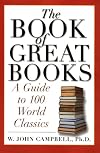
The Book of Great Books: A Guide to 100 World Classics
by W. John Campbell Ph.D.
On This Page
Description
Provides background, key characters, main themes & ideas, symbols, descriptions of style and structure, critical overview, and summary of 100 great world classic novels.Tags
Recommendations








Member Reviews
I had read about half these books but decided to read the other half for a 2012 goal. It is very heavy on Hemingway and American literature, in general. I like the diagrams that show the characters and how they interact. The summaries are good, but I don't like how the gist of the book at the beginning gives away the plot sometimes! I would suggest reading the summaries AFTER finishing a book or when you get totally stuck.
I question some of the choices, but it is good for someone wanting a basic literature course. I agree with a previous review that there are other books that dive much deeper.
I question some of the choices, but it is good for someone wanting a basic literature course. I agree with a previous review that there are other books that dive much deeper.
I probably would never have bought this book if I hadn't purchased it at a discount price. If you imagine a stack of SparksNotes bound together, you get an idea of what this book has to offer. It's useful as a general tool, especially for high school or lower-division literature studies. However, some of the information is questionable and I wonder at some of the titles selected/omitted for this book. If you can pick a copy up for a few bucks and you're interested in overviews of some major works, I'd say, 'go for it.' However, more advance literary students might turn their noses up.
More a collection of synopses of literature than literary criticsm, it is a good resource for planning the future reading.
A wonderful book. Great literature summarized and analyzed. Plot summaries, main characters, symbols, themes and ideas, background, style and structure, critical overview, and author materials present a wealth of material for every title.
A great resource for recalling info about books you have read, such as character names and basic plots, a well as to plan what to read next.
I like that it addresses many classic works. This helps me determine which books to read next.
It is a loan from Kindle Unlimited (KU), I won’t get it all read before my KU subscription expires, so here is a list of the books described in it.
Table of Contents
Aeneid: Virgil
All Quiet on the Western Front: Erich Maria Remarque
All the King's Men: Robert Penn Warren
Animal Farm: George Orwell
As I Lay Dying: William Faulkner
As You Like It: William Shakespeare
The Awakening: Kate Chopin
Beowulf: Anonymous
Billy Budd: Herman Melville
The Bluest Eye: Toni Morrison
Brave New World: Aldous Huxley
The Call of the Wild: Jack London
Candide: Voltaire
The Canterbury Tales: Geoffrey Chaucer
Catch-22: Joseph Heller
1 minute left in chapter
The show more Color Purple: Alice Walker
Crime and Punishment: Fyodor Dostoyevsky
The Crucible: Arthur Miller
Daisy Miller: Henry James
David Copperfield: Charles Dickens
Death of a Salesman: Arthur Miller
Diary of a Young Girl: Anne Frank
The Divine Comedy: Inferno: Dante
Doctor Faustus: Christopher Marlowe
A Doll's House: Henrik Ibsen
Don Quixote: Miguel de Cervantes
Ethan Frome: Edith Wharton
Euthyphro, Apology, Crito, Phaedo: Plato
A Farewell to Arms: Ernest Hemingway
Faust, Parts 1 and 2: J. W. von Goethe
For Whom the Bell Tolls: Ernest Hemingway
Frankenstein: Mary Shelley
The Glass Menagerie: Tennessee Williams
The Good Earth: Pearl S. Buck
The Grapes of Wrath: John Steinbeck
Great Expectations: Charles Dickens
The Great Gatsby: F. Scott Fitzgerald
Gulliver's Travels: Jonathan Swift
Hamlet: William Shakespeare
Hard Times: Charles Dickens
Heart of Darkness: Joseph Conrad
Henry Part 1: William Shakespeare
House Made of Dawn: N. Scott Momaday
The House of the Seven Gables: Nathaniel Hawthorne
Huckleberry Finn: Mark Twain
I Know Why the Caged Bird Sings: Maya Angelou
Iliad: Homer
Invisible Man: Ralph Ellison
Jane Eyre: Charlotte Bronté
The Joy Luck Club: Amy Tan
Julius Caesar: William Shakespeare
The Jungle: Upton Sinclair
King Lear: William Shakespeare
1 minute left in chapter
Light in August: William Faulkner
Lord Jim: Joseph Conrad
The Lord of the Flies: William Golding
The Lord of the Rings: J. R. R. Tolkien
Macbeth: William Shakespeare
Madame Bovary: Gustave Flaubert
The Mayor of Casterbridge: Thomas Hardy
The Merchant of Venice: William Shakespeare
A Midsummer Night's Dream: William Shakespeare
Moby-Dick: Herman Melville
Native Son: Richard Wright
1984: George Orwell
Odyssey: Homer
The Oedipus Trilogy: Sophocles
Of Mice and Men: John Steinbeck
The Old Man and the Sea: Ernest Hemingway
Oliver Twist: Charles Dickens
One Flew Over the Cuckoo's Nest: Ken Kesey
Othello: William Shakespeare
Paradise Lost: John Milton
The Pearl: John Steinbeck
The Plague: Albert Camus
A Portrait of the Artist as a Young Man: James Joyce
Pride and Prejudice: Jane Austen
The Prince: Niccolö Machiavelli
The Red Badge of Courage: Stephen Crane
Republic: Plato
The Return of the Native: Thomas Hardy
Richard Ill: William Shakespeare
Romeo and Juliet: William Shakespeare
The Scarlet Letter: Nathaniel Hawthorne
A Separate Peace: John Knowles
Silas Marner: George Eliot
Sons and Lovers: D. H. Lawrence
1 minute left in chapter
The Sound and the Fury: William Faulkner
Steppenwolf: Hermann Hesse
The Stranger: Albert Camus
The Sun Also Rises: Ernest Hemingway
The Taming of the Shrew: William Shakespeare
The Tempest: William Shakespeare
Tess of the D'Urbervilles: Thomas Hardy
Their Eyes Were Watching God: Zora Neale Hurston
Tom Sawyer: Mark Twain
Treasure Island: Robert Louis Stevenson
Twelfth Night: William Shakespeare
Waiting for Godot: Samuel Beckett
Walden: Henry David Thoreau show less
It is a loan from Kindle Unlimited (KU), I won’t get it all read before my KU subscription expires, so here is a list of the books described in it.
Table of Contents
Aeneid: Virgil
All Quiet on the Western Front: Erich Maria Remarque
All the King's Men: Robert Penn Warren
Animal Farm: George Orwell
As I Lay Dying: William Faulkner
As You Like It: William Shakespeare
The Awakening: Kate Chopin
Beowulf: Anonymous
Billy Budd: Herman Melville
The Bluest Eye: Toni Morrison
Brave New World: Aldous Huxley
The Call of the Wild: Jack London
Candide: Voltaire
The Canterbury Tales: Geoffrey Chaucer
Catch-22: Joseph Heller
1 minute left in chapter
The show more Color Purple: Alice Walker
Crime and Punishment: Fyodor Dostoyevsky
The Crucible: Arthur Miller
Daisy Miller: Henry James
David Copperfield: Charles Dickens
Death of a Salesman: Arthur Miller
Diary of a Young Girl: Anne Frank
The Divine Comedy: Inferno: Dante
Doctor Faustus: Christopher Marlowe
A Doll's House: Henrik Ibsen
Don Quixote: Miguel de Cervantes
Ethan Frome: Edith Wharton
Euthyphro, Apology, Crito, Phaedo: Plato
A Farewell to Arms: Ernest Hemingway
Faust, Parts 1 and 2: J. W. von Goethe
For Whom the Bell Tolls: Ernest Hemingway
Frankenstein: Mary Shelley
The Glass Menagerie: Tennessee Williams
The Good Earth: Pearl S. Buck
The Grapes of Wrath: John Steinbeck
Great Expectations: Charles Dickens
The Great Gatsby: F. Scott Fitzgerald
Gulliver's Travels: Jonathan Swift
Hamlet: William Shakespeare
Hard Times: Charles Dickens
Heart of Darkness: Joseph Conrad
Henry Part 1: William Shakespeare
House Made of Dawn: N. Scott Momaday
The House of the Seven Gables: Nathaniel Hawthorne
Huckleberry Finn: Mark Twain
I Know Why the Caged Bird Sings: Maya Angelou
Iliad: Homer
Invisible Man: Ralph Ellison
Jane Eyre: Charlotte Bronté
The Joy Luck Club: Amy Tan
Julius Caesar: William Shakespeare
The Jungle: Upton Sinclair
King Lear: William Shakespeare
1 minute left in chapter
Light in August: William Faulkner
Lord Jim: Joseph Conrad
The Lord of the Flies: William Golding
The Lord of the Rings: J. R. R. Tolkien
Macbeth: William Shakespeare
Madame Bovary: Gustave Flaubert
The Mayor of Casterbridge: Thomas Hardy
The Merchant of Venice: William Shakespeare
A Midsummer Night's Dream: William Shakespeare
Moby-Dick: Herman Melville
Native Son: Richard Wright
1984: George Orwell
Odyssey: Homer
The Oedipus Trilogy: Sophocles
Of Mice and Men: John Steinbeck
The Old Man and the Sea: Ernest Hemingway
Oliver Twist: Charles Dickens
One Flew Over the Cuckoo's Nest: Ken Kesey
Othello: William Shakespeare
Paradise Lost: John Milton
The Pearl: John Steinbeck
The Plague: Albert Camus
A Portrait of the Artist as a Young Man: James Joyce
Pride and Prejudice: Jane Austen
The Prince: Niccolö Machiavelli
The Red Badge of Courage: Stephen Crane
Republic: Plato
The Return of the Native: Thomas Hardy
Richard Ill: William Shakespeare
Romeo and Juliet: William Shakespeare
The Scarlet Letter: Nathaniel Hawthorne
A Separate Peace: John Knowles
Silas Marner: George Eliot
Sons and Lovers: D. H. Lawrence
1 minute left in chapter
The Sound and the Fury: William Faulkner
Steppenwolf: Hermann Hesse
The Stranger: Albert Camus
The Sun Also Rises: Ernest Hemingway
The Taming of the Shrew: William Shakespeare
The Tempest: William Shakespeare
Tess of the D'Urbervilles: Thomas Hardy
Their Eyes Were Watching God: Zora Neale Hurston
Tom Sawyer: Mark Twain
Treasure Island: Robert Louis Stevenson
Twelfth Night: William Shakespeare
Waiting for Godot: Samuel Beckett
Walden: Henry David Thoreau show less
Group E1
Members
- Recently Added By
Author Information
Common Knowledge
- Original publication date
- 2000
- Dedication
- For Carlos G. Costa, my shining light on this project,
here's to shutting doors and to the realms beyond. - First words
- Aeneid After many failed attempts, the Trojan hero, Aeneas, succeeds in founding the city of Rome.
- Last words
- (Click to show. Warning: May contain spoilers.)(Walden) In following his belief that the individual could lead a life of simplicity and independence apart from social organization and material civilization, he anticipated one of the major themes of contemporary America.
Classifications
Statistics
- Members
- 634
- Popularity
- 45,815
- Reviews
- 7
- Rating
- (3.79)
- Languages
- English
- Media
- Paper, Ebook
- ISBNs
- 4
- ASINs
- 2