
Anthony Arthur
Author of Literary Feuds: A Century of Celebrated Quarrels--From Mark Twain to Tom Wolfe
About the Author
Anthony Arthur (1937-2009) was a professor emeritus of literature at California State University, Northridge, and the author of five books, including Clashes of Will: Great Confrontations That Have Shaped Modern America.
Works by Anthony Arthur
Literary Feuds: A Century of Celebrated Quarrels--From Mark Twain to Tom Wolfe (2002) 219 copies, 4 reviews
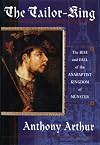
The Tailor King: The Rise and Fall of the Anabaptist Kingdom of Munster (1999) 119 copies, 5 reviews
Deliverance at Los Banos: The Dramatic True Story of Survival and Triumph in a Japanese Internment Camp (1985) 22 copies, 1 review
Tagged
Common Knowledge
- Birthdate
- c. 1936
- Gender
- male
- Agent
- Deborah Grosvenor
- Nationality
- USA
- Associated Place (for map)
- USA
Members
Reviews
I wouldn't know an Anabaptist from a Baptist, although Anna Baptist will be my drag queen name. The Tailor King helped make the distinction between Anabaptists and the rest somewhat clearer and to be honest this atheist found the Anabaptist creed rather uncontroversial. Of course, 21st Century Australia is rather different to medieval Europe in the age of Luther and anything against the grain ecumenically was stamped out with great haste.
Which brings us to the city of Munster and the show more Anabaptists who take the city and attempt to transform it into utopia, with rather mixed results. Arthur kept me engaged throughout the Tailor King and it turns out I enjoyed this foray into medieval politics, even when the inevitable dictatorial Tailor King of Munster turned out worse than the Catholics. show less
Which brings us to the city of Munster and the show more Anabaptists who take the city and attempt to transform it into utopia, with rather mixed results. Arthur kept me engaged throughout the Tailor King and it turns out I enjoyed this foray into medieval politics, even when the inevitable dictatorial Tailor King of Munster turned out worse than the Catholics. show less
A fascinating story of the powers of faith at their most powerful yet destructive, told skillfully with annotations by a historian that can walk the line between storytelling and the delivery of straight facts.
The book chronicles the brief yet amazing story of the anabaptist kingdom of Munster, from the building of tensions as millenialist preachers arrive to spread the gospel that Munster is the holy city of the second coming to the brutal collapse of what had become a corrupt city-kingdom show more ostensibly ruled by a mad young king, ending eventually in the brutal execution of Jan van Lieden, King of Munster and the Second David, at the hands of the prince-bishop of Munster who leaves the dead hanging in great iron cages that still top the cathedral of Munster to this day. show less
The book chronicles the brief yet amazing story of the anabaptist kingdom of Munster, from the building of tensions as millenialist preachers arrive to spread the gospel that Munster is the holy city of the second coming to the brutal collapse of what had become a corrupt city-kingdom show more ostensibly ruled by a mad young king, ending eventually in the brutal execution of Jan van Lieden, King of Munster and the Second David, at the hands of the prince-bishop of Munster who leaves the dead hanging in great iron cages that still top the cathedral of Munster to this day. show less
Many of us would think that David Koresh, Jim Jones or Charles Manson are modern phenomenons. Think again.
Jan van Leiden considered himself a man chosen by G-d to usher in a glorious new age of peace and godliness across Europe. Jan was an Anabaptist - one of the sects that sprouted like weeds once the Catholic Church was splintered by the Reformation. His people believed that one could only come to the Kingdom of Heaven by willingly being baptized as an adult. They also believed in some show more fairly-forward thinking ideas such as pacifism, freedom of conscience and the separation of church and state - ideas that could get you killed in the early 1530s.
Jan, from the Dutch city of Leiden, came to Münster in 1533. He had heard that the city was friendly to Anabaptists and that he'd be able to make something of himself amongst a group of fellow believers. He heard correctly.
Within months of his arrival, Jan, along with a few of his Anabaptist followers, had seized control of the city, kicking out the city's council and stacking it with fellow believers. They achieved this mostly by running around the streets in a state of half-dressed religious zeal, singing about the End of Days and the glories that awaited G-d's chosen ones. Amazingly, this worked - you have to remember that this was an age of intense religious strife and hysteria. Anyone promising a little peace and prosperity far from the blood and muck of this world was considered worth hearing out.
Unfortunately, power began to go to their heads. The 'rules' began to get a little crazy. Capital punishment without a trial started to be the order of the day. The medieval version of the ATF stepped in, surrounded the city and prepared to starve the people into submission. Eventually, some were brave enough to escape Munster and help the local Bishop storm the city and regain control.
Jan and two of his most loyal cronies were arrested and eventually executed in a most painful, slow and torturous manner. Their bodies were put on display in three cages hung from the church steeple as a 'warning' to anyone else who might try to rock the boat. If you visit the city of Munster today, you will still see the cages hanging there.
This is a fascinating book and I would highly recommend it to any history buff. show less
Jan van Leiden considered himself a man chosen by G-d to usher in a glorious new age of peace and godliness across Europe. Jan was an Anabaptist - one of the sects that sprouted like weeds once the Catholic Church was splintered by the Reformation. His people believed that one could only come to the Kingdom of Heaven by willingly being baptized as an adult. They also believed in some show more fairly-forward thinking ideas such as pacifism, freedom of conscience and the separation of church and state - ideas that could get you killed in the early 1530s.
Jan, from the Dutch city of Leiden, came to Münster in 1533. He had heard that the city was friendly to Anabaptists and that he'd be able to make something of himself amongst a group of fellow believers. He heard correctly.
Within months of his arrival, Jan, along with a few of his Anabaptist followers, had seized control of the city, kicking out the city's council and stacking it with fellow believers. They achieved this mostly by running around the streets in a state of half-dressed religious zeal, singing about the End of Days and the glories that awaited G-d's chosen ones. Amazingly, this worked - you have to remember that this was an age of intense religious strife and hysteria. Anyone promising a little peace and prosperity far from the blood and muck of this world was considered worth hearing out.
Unfortunately, power began to go to their heads. The 'rules' began to get a little crazy. Capital punishment without a trial started to be the order of the day. The medieval version of the ATF stepped in, surrounded the city and prepared to starve the people into submission. Eventually, some were brave enough to escape Munster and help the local Bishop storm the city and regain control.
Jan and two of his most loyal cronies were arrested and eventually executed in a most painful, slow and torturous manner. Their bodies were put on display in three cages hung from the church steeple as a 'warning' to anyone else who might try to rock the boat. If you visit the city of Munster today, you will still see the cages hanging there.
This is a fascinating book and I would highly recommend it to any history buff. show less

This book was actually better than I thought it would be and quite entertaining in parts. I knew quite a bit about Wilson and Nabokov and Capote and Vidal, but I really enjoyed the section on Hellman. Unfortunately I have known too many people like Hellman, but I wish I could have met McCarthy. I don't see what she saw in Wilson, unless she was dazzled by his way with words, which were amazing. Stein feuded with everyone, didn't she?, While Updike and Wolfe is hardly worth talking about, I show more found the chapter on Harte and Twain very interesting. Dreiser and Lewis both have overblown egos, and I doubt where either one of them deserved the 'Nobel'. Snow just sounds like a douche. show less
Lists
You May Also Like


Statistics
- Works
- 10
- Members
- 520
- Popularity
- #47,759
- Rating
- 3.8
- Reviews
- 15
- ISBNs
- 18