

Upton Sinclair (1878–1968)
Author of The Jungle
About the Author
Upton Sinclair, a lifelong vigorous socialist, first became well known with a powerful muckraking novel, The Jungle, in 1906. Refused by five publishers and finally published by Sinclair himself, it became an immediate bestseller, and inspired a government investigation of the Chicago stockyards, show more which led to much reform. In 1967 he was invited by President Lyndon Johnson to "witness the signing of the Wholesome Meat Act, which will gradually plug loopholes left by the first Federal meat inspection law" (N.Y. Times), a law Sinclair had helped to bring about. Newspapers, colleges, schools, churches, and industries have all been the subject of a Sinclair attack, analyzing and exposing their evils. Sinclair was not really a novelist, but a fearless and indefatigable journalist-crusader. All his early books are propaganda for his social reforms. When regular publishers boycotted his work, he published himself, usually at a financial loss. His 80 or so books have been translated into 47 languages, and his sales abroad, especially in the former Soviet Union, have been enormous. (Bowker Author Biography) show less
Image credit: George Grantham Bain Collection (Library of Congress)
Series
Works by Upton Sinclair
The Lanny Budd Novels Volume One: World's End, Between Two Worlds, and Dragon's Teeth (2016) 23 copies, 1 review
The Lanny Budd Novels Volume Two: Wide Is the Gate, Presidential Agent, and Dragon Harvest (2018) 6 copies
World's End, Book One - Book Six 2 copies
Gesammelte Romane Dritter Band 2 copies
The Book of Life, Vol. 4 2 copies
Springtime and harvest : a romance 2 copies
Three Plays 2 copies
OIL: Upton Sinclair’s Uncensored 1927 Original Edition, An American Fiction Classic (Annotated) 2 copies
Upton Sinclair on the Soviet Union 2 copies
Peregrinación de amor 2 copies
Der Parademarsch 1 copy
Teufelsernte Roman 1 copy
Weit ist das Tor Roman 1 copy
Schicksal im Osten Roman 1 copy
Welt-Ende Roman 1 copy
Die elfte Stunde Roman 1 copy
LA BUENA SED 1 copy
Acél 1 copy
Nuestra Señora 1 copy
King Coal and Other Works 1 copy
Ņujorka : romāns 1 copy
FORD 1 copy
UN PATRIOTA 100 POR 100 1 copy
The Associated Press and Labor: Being Seven Chapters From The Brass Check; a Study of American Journalism (2016) 1 copy
EL FINAL DE LA CRISIS 1 copy
Radio mentale 1 copy
Your million dollars 1 copy
A gauntlet of fire 1 copy
A soldier monk 1 copy
Saved by the enemy 1 copy
The book of love 1 copy
King Coal, Vol. 1 1 copy
King Coal, Vol. 2 1 copy
Love's Pilgrimage, Vol. 2 1 copy
Love's Pilgrimage, Vol. 1 1 copy
The lie factory starts 1 copy
Briefe an einen Arbeiter 1 copy
Summer in the City 1 copy
William Fox. Roman 1 copy
Weltende 1 copy
Markets and misery 1 copy
Az özönvíz után 1 copy
Manó-mobil meseregény 1 copy
Pamela 1 copy
Expect no peace! 1 copy
Kenilworth 1 copy
Mi se spune dulgheru 1 copy
Telling the world 1 copy
Associated Works
Fierce Pajamas: An Anthology of Humor Writing from The New Yorker (2001) — Contributor — 789 copies, 5 reviews
A Patriot's Handbook: Songs, Poems, Stories, and Speeches Celebrating the Land We Love (2003) — some editions — 568 copies, 5 reviews
The Best of the West: An Anthology of Classic Writing from the American West (1991) — Contributor — 287 copies, 1 review
This is My Best: American Greatest Living Authors Present and Give Their Reasons Why (1942) — Contributor — 213 copies
Disney Classics: The Gnome-Mobile / Darby O'Gill & The Little People / The One and Only, Genuine, Original Family Band / The Happiest Millionaire (Movies) (2012) — Author — 49 copies
Shaking the Foundations: 200 Years of Investigative Journalism in America (Nation Books) (2003) — Contributor — 45 copies
New World Writing: Eighth Mentor Selection - A New Adventure in Modern Reading (1955) — Contributor — 8 copies
The Ethnic Image in Modern American Literature, 1900-1950, Volumes 1-2 (1984) — Contributor — 1 copy
Tagged
Common Knowledge
- Canonical name
- Sinclair, Upton
- Legal name
- Sinclair, Upton Beall, Jr.
- Other names
- Ensign Clarke Fitch
- Birthdate
- 1878-09-20
- Date of death
- 1968-11-25
- Gender
- male
- Education
- New York City College (BA|1987)
Columbia University - Occupations
- novelist
politician - Organizations
- Socialist Party of America
Helicon Home Colony (Founder)
American Civil Liberties Union (Board Member)
Intercollegiate Socialist Society (Founder)
American Academy of Arts and Letters (Literature, 1944) - Awards and honors
- Chicago Literary Hall of Fame (2015)
Pulitzer Prize for Fiction (1943) - Agent
- Bertha Klausner
- Relationships
- Sinclair, Arthur (uncle)
- Nationality
- USA
- Birthplace
- Baltimore, Maryland, USA
- Places of residence
- New York, New York, USA
Pasadena, California, USA
Buckeye, Arizona, USA
Princeton, New Jersey, USA
Monrovia, California, USA - Place of death
- Bound Brook, New Jersey, USA
- Burial location
- Rock Creek Cemetery, Washington, D.C., USA
- Associated Place (for map)
- USA
Members
Discussions
1001 Group Read - November, 2012: The Jungle in 1001 Books to read before you die (November 2012)
Reviews
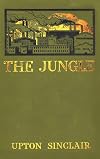
This is an astonishing book. One of the more astonishing things about it is that it was written 112 years ago. Many of the same things destroying America today, albeit in different areas today than in the meat packing industry of 1906, were already very much alive (and, unfortunately well) then. Sinclair's hope of changing the political thinking of Americans at the beginning of the 20th century did little more than encourage the passage of legislation protecting the food consumption of the show more Americans of his day. As he wrote himself, "I aimed at the public's heart, and by accident hit its stomach." Sadly, in spite of that moderate success, his socialist dream is no closer to becoming reality today than it was then. Nevertheless, Sinclair's hero, Lithuanian immigrant Jurgis Rudkus, would be proud to know that there are still people willing to fight for those ideals today, however hopeless it might seem in America at the beginning of the 21st century. show less
The Fasting Cure is a reprint of two articles written by Upton Sinclair in 1910 for Cosmopolitan Magazine magazine about his personal experience and championing of fasting as a natural cure-all. Sinclair was exceedingly open-minded towards advances in holistic medicine - he was a customer and advocate of John Harvey Kellogg's infamous Battle Creek Sanitarium - not surprising for a man who also experimented with telepathy and even built his own whites-only socialist utopia (it burned down show more under mysterious circumstances after just one year). Far from a medical treatise, the majority of The Fasting Cure is comprised of Sinclair's anecdotal experiences experimenting with fasting as a cure for his own physical ailments, and success stories from people who successfully followed his example. In between the reader letters and Sinclair-centric testimonial he briefly tackles the "science" behind fasting as a cure-all in very basic terms - bacteria in the gut causes all forms of illness, apparently - with the occasional name-drop of medical pioneers like Kellogg. Slightly reminiscent of Aldous Huxley's experimentation with LSD, The Fasting Cure is a great example of how some of our greatest literary minds were shaped by their innovative and adventurous embrace of fringe ideas and theories. An interesting read, but you might want to seek medical advice from a physician before contemplating a sixty or ninety day fast to treat your colon cancer. show less
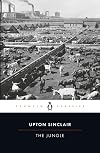
This book is widely considered a classic, and with good reason. Sinclair follows the fate of Jurgis and his extended Lithuanian family as they try to make a decent living in the Packingtown district of Chicago. They’re swindled in every sphere, and the innocent suffer the most. The book exposes the abysmal working conditions that the men in the meat-packing plants faced and the extent of the political corruption designed to keep businessmen happy and the general electorate downtrodden. show more It’s vividly written and feels relevant today, too, unfortunately.
I’m rating this a 3.5 because the content is a 4, but the book just kind of stops. show less
I’m rating this a 3.5 because the content is a 4, but the book just kind of stops. show less

Jurgis Rudkus and his family emigrate from Lithuania to the United States because they live a very hard life and were told the wages are much higher here. What they were not told is that costs are also much higher, so the family ends up typical of the poorest of the poor. After having most of their money swindled in New York, they make it to Chicago to live in a single room in a fetid boarding house, from which all the family members can get jobs. With several incomes they make the smart show more choice to buy a house in the slaughterhouse district, the only place they can afford to live and work. This proves to be another swindle, as the house is falling apart, their interest is high, and if they fail to make a single payment they will be evicted. Their jobs in the slaughterhouses are incredibly difficult and dangerous. Men have life-threatening accidents every day, and the meat is rotting and full of toxic chemicals. The workers get sick with tuberculosis and other contagious disease often, but can’t afford to take time off, even unpaid, as they will lose their job. Family members die or go missing. Jurgis ends up in prison for beating a man who raped his wife, and when he gets out his wife dies in childbirth, the family is evicted, and his other child dies. Jurgis leaves them and becomes a tramp and then a thief. He becomes a vote fixer for the Republican Party, then the Democratic Party, and then a strikebreaker for the very union he used to belong to. After another stint in prison he returns to his two remaining family members, his wife’s stepmother and cousin, to find the latter has been trafficked into prostitution. One day, when looking for a warm place to loiter, Jurgis hears a speech by a great socialist orator. The words he hears reflect Jurgis’ lived experience, unlike any politics he's heard before, and offer him hope for the future and something to fight for. After the speech, Jurgis meets the speaker, who offers him a job as a porter at a hotel run by a socialist, where he thrives.
I had not ever read this classic before, and I'm very glad that I did. The descriptions of work at the slaughterhouse that are so famous are only in about a third of the book (the first third, which makes me wonder if some readers only get that far). Overall, the book is about the plight of immigrants, the poor who work so hard for nothing, and the lie of the American Dream. Jurgis and his family frequently lament that there's no such thing as freedom if you can't afford it, and they would not have been fundamentally worse off if they had stayed in Lithuania.
After the horrible things he's been through, socialism is a light at the end of the tunnel for Jurgis. He doesn't find utopia, he just finds a system that acknowledges him and cares about people like him and gives him something to look forward to. The ending is bittersweet from a modern perspective, as the socialists are so optimistic but the reader knows what will actually happen to the reputation of socialism over the next 115 years. The book does go a bit too far in trying to overexplain the nickels and dimes of how much different people will get paid for different tasks under socialism. Quit while you're ahead!
Cynics like to point out that the only change this book catalyzed when it was published was food safety, not socialism or worker welfare or a social safety net, but that's absolutely not nothing. The upper class aren't eating the rotten tubercular pork or the beef sausage full of rats and workers’ body parts - the workers and the poor themselves are. Food safety improvements help them most.
I often find that “classics” don't hold up as well as people claim they do, but this book is great and I'm so glad I finally read it. show less
I had not ever read this classic before, and I'm very glad that I did. The descriptions of work at the slaughterhouse that are so famous are only in about a third of the book (the first third, which makes me wonder if some readers only get that far). Overall, the book is about the plight of immigrants, the poor who work so hard for nothing, and the lie of the American Dream. Jurgis and his family frequently lament that there's no such thing as freedom if you can't afford it, and they would not have been fundamentally worse off if they had stayed in Lithuania.
After the horrible things he's been through, socialism is a light at the end of the tunnel for Jurgis. He doesn't find utopia, he just finds a system that acknowledges him and cares about people like him and gives him something to look forward to. The ending is bittersweet from a modern perspective, as the socialists are so optimistic but the reader knows what will actually happen to the reputation of socialism over the next 115 years. The book does go a bit too far in trying to overexplain the nickels and dimes of how much different people will get paid for different tasks under socialism. Quit while you're ahead!
Cynics like to point out that the only change this book catalyzed when it was published was food safety, not socialism or worker welfare or a social safety net, but that's absolutely not nothing. The upper class aren't eating the rotten tubercular pork or the beef sausage full of rats and workers’ body parts - the workers and the poor themselves are. Food safety improvements help them most.
I often find that “classics” don't hold up as well as people claim they do, but this book is great and I'm so glad I finally read it. show less
Lists
scav (1)
Unread books (1)
. (1)
Out of Copyright (1)
100 (1)
. (1)
BBC Top Books (1)
AP Lit (1)
Overdue Podcast (1)
Carole's List (1)
A Novel Cure (1)
Chicago Books (1)
Awards


You May Also Like


Associated Authors
Statistics
- Works
- 246
- Also by
- 20
- Members
- 21,950
- Popularity
- #980
- Rating
- 3.8
- Reviews
- 283
- ISBNs
- 1,272
- Languages
- 18
- Favorited
- 26


