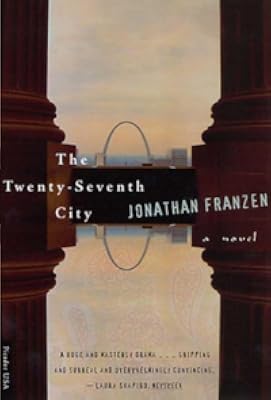
The Twenty-Seventh City
by Jonathan Franzen
On This Page
Description
St. Louis, Missouri, is a quietly dying river city until it hires a new police chief: a charismatic young woman from Bombay, India, named S. Jammu. No sooner has Jammu been installed, though, than the city's leading citizens become embroiled in an all-pervasive political conspiracy. A classic of contemporary fiction, 'The Twenty-Seventh City' shows us an ordinary metropolis turned inside out, and the American Dream unraveling into terror and dark comedy.Tags
Recommendations




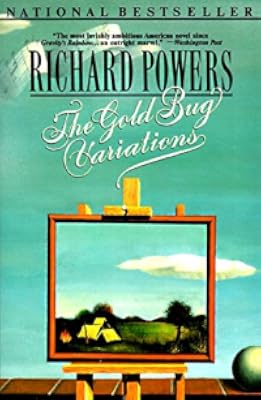




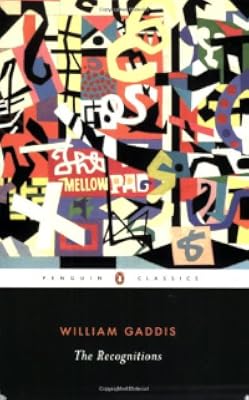
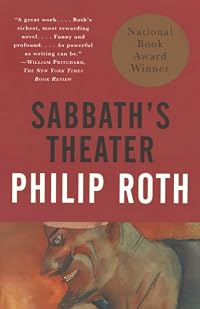
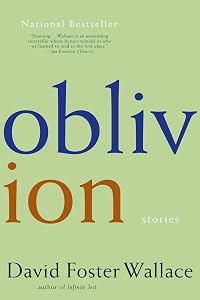



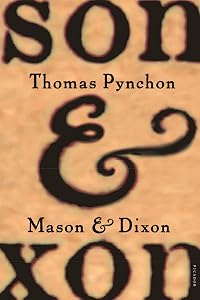
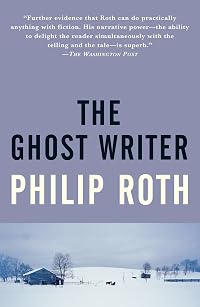

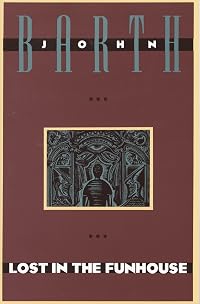

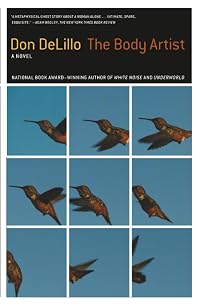



Member Recommendations

by rjuris
Member Reviews
Funeral blues
Non so perchè, ma improvvisamente ho associato una immagine alla fine delle pagine: quei funerali con la banda che intona una sorta di blues triste misto a canti gospel che oscilla lentamente, ma anche velocemente, da uno stato d'animo all'altro. E' faticoso, questo pezzo di Franzen, molto faticoso. Ti porta da un umore all'altro, lo ami, poi lo odi, poi accelera, poi si perde in particolari esasperanti quanto a volte di una bellezza lapidaria. Poi accelera di nuovo, come se dovesse recuperare del tempo, ma per dire cosa? per fare cosa? Sali e scendi sull'altalena, cerchi di afferrare qualcosa agitando le mani nell'aria, ma sei sempre lì... sull'altalena. Sei impantanato a St. Louis, fra le sue paludi morali, intricate, show more sordide e multirazziali. Perchè proprio una indiana di Bombay diventa capo della polizia, oltretutto donna, in un ruolo, in una città dove le donne sono tutt'altro che inserite in ruoli chiave? Cosa vuole ottenere facendo leva sugli intrighi ed il disfacimento morale della comunità della cittadina? Domande senza risposta. Sembra un lunghissimo serial tv, fatto di sospetti, acque torbide, finzione, falsità senza riuscire ad essere sufficientemente attraente nel solleticare le corde della lettura. E' stato difficile resistere e la lunghezza del tempo che ho impiegato a leggerlo è indicativa. Non l'ho trovato esaltante, con un finale poi mozzato in maniera approssimativa (ma è una mia opinione, forse dovuta anche alla stanchezza), ma non mi arrendo. Ho altre cartucce Franzeniane da spararmi negli occhi. A noi due! show less
Non so perchè, ma improvvisamente ho associato una immagine alla fine delle pagine: quei funerali con la banda che intona una sorta di blues triste misto a canti gospel che oscilla lentamente, ma anche velocemente, da uno stato d'animo all'altro. E' faticoso, questo pezzo di Franzen, molto faticoso. Ti porta da un umore all'altro, lo ami, poi lo odi, poi accelera, poi si perde in particolari esasperanti quanto a volte di una bellezza lapidaria. Poi accelera di nuovo, come se dovesse recuperare del tempo, ma per dire cosa? per fare cosa? Sali e scendi sull'altalena, cerchi di afferrare qualcosa agitando le mani nell'aria, ma sei sempre lì... sull'altalena. Sei impantanato a St. Louis, fra le sue paludi morali, intricate, show more sordide e multirazziali. Perchè proprio una indiana di Bombay diventa capo della polizia, oltretutto donna, in un ruolo, in una città dove le donne sono tutt'altro che inserite in ruoli chiave? Cosa vuole ottenere facendo leva sugli intrighi ed il disfacimento morale della comunità della cittadina? Domande senza risposta. Sembra un lunghissimo serial tv, fatto di sospetti, acque torbide, finzione, falsità senza riuscire ad essere sufficientemente attraente nel solleticare le corde della lettura. E' stato difficile resistere e la lunghezza del tempo che ho impiegato a leggerlo è indicativa. Non l'ho trovato esaltante, con un finale poi mozzato in maniera approssimativa (ma è una mia opinione, forse dovuta anche alla stanchezza), ma non mi arrendo. Ho altre cartucce Franzeniane da spararmi negli occhi. A noi due! show less
Bombay police commissioner S. Jammu, a member of a revolutionary cell of hazy but violent persuasion, contrives to become police chief of St. Louis. In a matter of months, she is the most powerful political force in the metropolis. Her ostensible agenda is the revival of St. Louis (once the nation's fourth-ranked city and now its 27th) through the reunification of its depressed inner city and affluent suburban country. But this is merely a front for a scheme to make a killing in real estate on behalf of her millionaire mother, a Bombay slumlord. Jammu identifies 12 influential men whose compliance is vital to achieving her ends and concentrates all the means at her disposal toward securing their cooperation. Eventually, the force of show more Jammu's will focuses on Martin Probst, one of St. Louis's most prominent citizens, and their fates become intertwined. Franzen is an accomplished stylist whose flexible, muscular, often sardonic prose seems spot-on in its rendition of dialogue, internal monologue and observation of the everyday minutiae of American manners. His imagination is prodigious, his scope sweeping; but in the end, he loses control of his material. Introducing an initially confusing superabundance of characters, he then allows some of them to fade out completely and others to become flat. The result is that the reader is not wholly satisfied. Any potential for greater resonance is left undeveloped, and this densely written work ends up as merely a bravura exercise. The longest book I have read without a point. The plot is potentially massive and the cast equally so but in the end it seems to be an exercise in self-gratification on Franzen’s part as other than personal relationships of Probst, the book goes nowhere and does nothing. show less
If you ever wondered what a political thriller would look like if written by Jonathan Franzen, look no further. This is it.
I have difficulty rating this book. Franzen knows how to write. His characters are well-developed and is able to describe a scene or an individual's inner life with telling detail. However, in this novel his gifts are put to the service of a plot that is patently ridiculous.
In brief, the book is about a cabal of Indian immigrants, led by a charismatic woman hired as police chief, who seek to take over the power structure of St. Louis. If that doesn't sound crazy enough (e.g., what does Franzen have against south Asians? And why St. Louis, of all places?), they're able to accomplish this all within a period of show more eight months. They engage in everything from terrorist attacks to seductions of the city business leaders. All this happens as if St. Louis exists in a bubble. One plot involves an attempt to blow up Busch Stadium with three tons of cordite. How was all this explosive smuggled into the stadium without anyone noticing. And how was it that after the explosion, there was no involvement of the FBI whose forensics could easily trace the perps?
And I could go on and on listing equally implausible plot-points, from developers who changed the strategic direction of their companies without any deliberation with their Boards of Directors or stockholders to completely implausible romances.
Yet strangely, I still enjoyed turning the pages. I recognize that part of my enjoyment comes from my having lived in St. Louis a few years before this story supposedly happened, making the setting very familiar to me. But it was also a pleasure to read how Franzen weaves words and picks up on details that less imaginative writers would ignore.
But that plot: it still has me shaking my head. What a doozy! show less
I have difficulty rating this book. Franzen knows how to write. His characters are well-developed and is able to describe a scene or an individual's inner life with telling detail. However, in this novel his gifts are put to the service of a plot that is patently ridiculous.
In brief, the book is about a cabal of Indian immigrants, led by a charismatic woman hired as police chief, who seek to take over the power structure of St. Louis. If that doesn't sound crazy enough (e.g., what does Franzen have against south Asians? And why St. Louis, of all places?), they're able to accomplish this all within a period of show more eight months. They engage in everything from terrorist attacks to seductions of the city business leaders. All this happens as if St. Louis exists in a bubble. One plot involves an attempt to blow up Busch Stadium with three tons of cordite. How was all this explosive smuggled into the stadium without anyone noticing. And how was it that after the explosion, there was no involvement of the FBI whose forensics could easily trace the perps?
And I could go on and on listing equally implausible plot-points, from developers who changed the strategic direction of their companies without any deliberation with their Boards of Directors or stockholders to completely implausible romances.
Yet strangely, I still enjoyed turning the pages. I recognize that part of my enjoyment comes from my having lived in St. Louis a few years before this story supposedly happened, making the setting very familiar to me. But it was also a pleasure to read how Franzen weaves words and picks up on details that less imaginative writers would ignore.
But that plot: it still has me shaking my head. What a doozy! show less
I have to admit that The Twenty-Seventh City, Jonathan Franzen's debut novel, was a book that I found difficult to get through. I picked it up the first time, read about a hundred and fifty pages, then put it down again. A year later, I picked it up again with greater determination, started over, and managed to finish it, in spurts, over the course of five months. What is it about The Twenty-Seventh City that makes it such a tough read? For many readers, it will be the difficulty of the prose. Despite the fact that Franzen is supposedly stepping away from the postmodern games of someone like Thomas Pynchon (who is briefly, gratuitously, mentioned in passing in the novel) toward a greater sense of realism, the fact is that his debut show more novel reads in many ways, like a throwback to modernism - one could easily imagine, for instance, that Andrei Bely's Petersburg (1913) was a model for this text.
I'd like to think, though, that I have enough literary muscle to handle difficult prose, so I don't think that was the only culprit. No, the thing that made the novel such a hard read for me was the way that Franzen continues to introduce new characters, even up until the very last pages. The sheer amount of names becomes impossible to keep track of, and this problem is compounded by the fact that Franzen doesn't provide enough signals from the outset as to which characters are important and which are not. Everyone is named and described in with seemingly equal importance, giving no indication about whether they will continue to be important to the plot or not.
In the end, there are two characters are elevated above the rest: Martin Probst, a local developer and community leader, and S. Jammu, an Indian woman who was unexpectedly hired as St Louis's new police chief. Once the reader realizes that these are the two figures that stand above the cacophony created by such a dizzyingly large array of characters, the novel starts to click. I am sure that rereading the novel with that knowledge would be a different, more rewarding experience.
That's not to say that other characters aren't important, including: Barbara Prost, Martin's wife, and their daughter Luisa; Luisa's older boyfriend Duane Thompson, whose relationship with Luisa begins the process of fragmenting the Prost family; Rolf Ripley, who is obsessed with Barbara despite the fact that he is married to her sister, Audrey; Jack DuChamp, an old buddy of Martin's who acts as a barometer of the "man in the street;" RC, a black cop who plays an important role in the novel's denouement; General Norris, a right-wing conspiracy theorist who smells something fishy in Jammu's dealings; Asha Hammaker, an Indian princess who marries one of St Louis's richest men and conspires with Jammu; Shanti Jammu, the police chief's controlling mother; and Jammu's various goons and pawns, most notably the handsome and ruthless Balwan Singh and the drug-addicted Barbara Prost lookalike, Devi Madan. There are more characters, many more, illustrating just how difficult it can be to keep track of which character is which in the novel.
While the pitfalls of such an approach are obvious, this vast canvas on which Franzen lays out his story also has its strengths. His deep knowledge of St Louis and its culture comes from the fact that he grew up there, but the skill with which he portrays the city in all its complexity is quite extraordinary, with the diverse array of characters on display a reflection of the city's multifaceted nature. In spite of its particular context, however, The Twenty-Seventh City has a much broader scope that transcends both its time and location. Franzen states early on that "all cities are ideas, ultimately" (p.24), and thus St Louis, itself defined by the symbol of the Arch and its connection to Manifest Destiny, is also transformed into an idea.
So it is that The Twenty-Seventh City unfolds as a political novel of ideas, a "textbook dialectic" that pits "absolute freedom" against "absolute terror, the French Revolution à la Hegel" (p.198). Probst and Jammu are the opposing terms in this dialectic, which contrasts his rigid sense of ethical "decency" with her utter ruthlessness. Probst and Jammu thus find themselves on opposite sides of the fence in the political fight to unite the city and county of St Louis, only to find in their opposition a hidden attraction that perversely brings them together.
It is when Franzen engages with these grand political ideas that The Twenty-Seventh City rises above its limitations and truly soars. Franzen does not allow himself to get carried away, in contrast to so many other American writers during the 1980s, with railing simplistically against the conservative Reagan years. There is no easy dichotomy between freedom and tyranny, for it is the sheer apathy of the St Louis public that saves the day. There is a beautiful but sad irony in the fact that this lack of interest in their own political future is what eventually saves them from the traps that Jammu lays.
Franzen's key insight is that counter-revolutionary forces are not anomalies, but an integral part of the revolution itself, an inherent problem that easily inverts the original relationship between "theory and praxis" in such a way that "praxis dictate[s] that theory, in the short run, be its apologist" - that is, the ends come to justify the means in the most vulgarly Machiavellian sense (p.394). It's a complex, clear-eyed view of politics that Franzen delivers in his debut novel that, sadly, he has been unable to sustain in his most recent work. show less
I'd like to think, though, that I have enough literary muscle to handle difficult prose, so I don't think that was the only culprit. No, the thing that made the novel such a hard read for me was the way that Franzen continues to introduce new characters, even up until the very last pages. The sheer amount of names becomes impossible to keep track of, and this problem is compounded by the fact that Franzen doesn't provide enough signals from the outset as to which characters are important and which are not. Everyone is named and described in with seemingly equal importance, giving no indication about whether they will continue to be important to the plot or not.
In the end, there are two characters are elevated above the rest: Martin Probst, a local developer and community leader, and S. Jammu, an Indian woman who was unexpectedly hired as St Louis's new police chief. Once the reader realizes that these are the two figures that stand above the cacophony created by such a dizzyingly large array of characters, the novel starts to click. I am sure that rereading the novel with that knowledge would be a different, more rewarding experience.
That's not to say that other characters aren't important, including: Barbara Prost, Martin's wife, and their daughter Luisa; Luisa's older boyfriend Duane Thompson, whose relationship with Luisa begins the process of fragmenting the Prost family; Rolf Ripley, who is obsessed with Barbara despite the fact that he is married to her sister, Audrey; Jack DuChamp, an old buddy of Martin's who acts as a barometer of the "man in the street;" RC, a black cop who plays an important role in the novel's denouement; General Norris, a right-wing conspiracy theorist who smells something fishy in Jammu's dealings; Asha Hammaker, an Indian princess who marries one of St Louis's richest men and conspires with Jammu; Shanti Jammu, the police chief's controlling mother; and Jammu's various goons and pawns, most notably the handsome and ruthless Balwan Singh and the drug-addicted Barbara Prost lookalike, Devi Madan. There are more characters, many more, illustrating just how difficult it can be to keep track of which character is which in the novel.
While the pitfalls of such an approach are obvious, this vast canvas on which Franzen lays out his story also has its strengths. His deep knowledge of St Louis and its culture comes from the fact that he grew up there, but the skill with which he portrays the city in all its complexity is quite extraordinary, with the diverse array of characters on display a reflection of the city's multifaceted nature. In spite of its particular context, however, The Twenty-Seventh City has a much broader scope that transcends both its time and location. Franzen states early on that "all cities are ideas, ultimately" (p.24), and thus St Louis, itself defined by the symbol of the Arch and its connection to Manifest Destiny, is also transformed into an idea.
So it is that The Twenty-Seventh City unfolds as a political novel of ideas, a "textbook dialectic" that pits "absolute freedom" against "absolute terror, the French Revolution à la Hegel" (p.198). Probst and Jammu are the opposing terms in this dialectic, which contrasts his rigid sense of ethical "decency" with her utter ruthlessness. Probst and Jammu thus find themselves on opposite sides of the fence in the political fight to unite the city and county of St Louis, only to find in their opposition a hidden attraction that perversely brings them together.
It is when Franzen engages with these grand political ideas that The Twenty-Seventh City rises above its limitations and truly soars. Franzen does not allow himself to get carried away, in contrast to so many other American writers during the 1980s, with railing simplistically against the conservative Reagan years. There is no easy dichotomy between freedom and tyranny, for it is the sheer apathy of the St Louis public that saves the day. There is a beautiful but sad irony in the fact that this lack of interest in their own political future is what eventually saves them from the traps that Jammu lays.
Franzen's key insight is that counter-revolutionary forces are not anomalies, but an integral part of the revolution itself, an inherent problem that easily inverts the original relationship between "theory and praxis" in such a way that "praxis dictate[s] that theory, in the short run, be its apologist" - that is, the ends come to justify the means in the most vulgarly Machiavellian sense (p.394). It's a complex, clear-eyed view of politics that Franzen delivers in his debut novel that, sadly, he has been unable to sustain in his most recent work. show less
Well, somebody has to give this book a decent review. It was a decent book. Not great but good enough to keep reading if only to wallow in the luscious prose of Jonathan Franzen. This is the third book I've read by him. I can't really say that I loved any of them but his writing is so good that I can overlook some of the plot lines that don't grab me. This one had to do with corruption that came to St. Louis in the 1980s along with the female police chief from India. It sounds bizarre and becomes even more so when her minions start doing her dirty work behind the scenes. Her major foe is Martin Probst who built the Gateway Arch and is supposedly too level-headed to be taken in by Police Chief Jammu's "charms" so his family is show more targeted.
There are way too many characters to keep straight in the book but many are bit players who come and go. It took me awhile to figure out what was going on with the buying and selling of real estate, but it all comes down to political graft which, in my opinion, is not the most scintillating topic for a novel. I will recommend the book to fans of Franzen who are interested in reading his debut novel or my friends who hail from the St. Louis area. Franzen is a local boy who knows his turf and describes the beauty and decay in great detail. show less
There are way too many characters to keep straight in the book but many are bit players who come and go. It took me awhile to figure out what was going on with the buying and selling of real estate, but it all comes down to political graft which, in my opinion, is not the most scintillating topic for a novel. I will recommend the book to fans of Franzen who are interested in reading his debut novel or my friends who hail from the St. Louis area. Franzen is a local boy who knows his turf and describes the beauty and decay in great detail. show less
I give up. I've been working on this book for over a month now and I'm only halfway through, so it's time I threw in the towel. There are too many characters and too much conspiracy; I can't keep track. I think my head was in a bad place when I picked this up, and I shouldn't hold that against the book. But really. After 250 pages I should have at least found one character I care about, right? I'll leave a bookmark in it and maybe come back to it someday, but really, I doubt I will.
I'm sorry, Mr. Franzen. I tried. And it's not you, it's me. (But it might be you.)
I'm sorry, Mr. Franzen. I tried. And it's not you, it's me. (But it might be you.)
A revealingly poor effort: absolutely polished, beaming with prosewriterly perfection, gleaming with the promise of fame. Uninteresting, overly smooth, forgettable.
Members
- Recently Added By
Lists

Llibres que he llegit el 2021
54 works; 1 member

Books Set in Missouri
29 works; 4 members
Talk Discussions
Past Discussions
June 2013: The Twenty-Seventh City in Missouri Readers (July 2013)
Author Information

34+ Works 41,216 Members
Jonathan Franzen was born in Western Springs, Illinois on August 17, 1959. He graduated from Swarthmore College in 1981, and went on to study at the Freie University in Berlin as a Fulbright scholar. He worked in a seismology lab at Harvard University's Department of Earth and Planetary Sciences after graduation. His works include The show more Twenty-Seventh City (1988), Strong Motion (1992), How to Be Alone (2002), and The Discomfort Zone (2006). The Corrections (2001) won a National Book Award and the 2002 James Tait Black Memorial Prize for fiction. Freedom (2010) is an Oprah Book Club selection. He also won a Whiting Writers' Award in 1988 and the American Academy's Berlin Prize in 2000. He is also a frequent contributor to Harper's and The New Yorker. In 2015 his title Purity made The New Yort Times and New Zealand Best Seller List. (Bowker Author Biography) show less
Some Editions
Series
Belongs to Publisher Series
rororo (23872)
Common Knowledge
- Canonical title
- The Twenty-Seventh City
- Original title
- The Twenty-Seventh City
- Original publication date
- 1988
- Important places
- St. Louis, Missouri, USA; Missouri, USA
- First words
- In early June Chief William O'Connell of the St. Louis Police Department announced his retirement, and the Board of Police Commissioners, passing over the favored candidates of the city political establishment, the black comm... (show all)unity, the press, the Officers Association and the Missouri governor, selected a woman, formerly with the police in Bombay, India, to begin a five-year term as chief.
- Last words
- (Click to show. Warning: May contain spoilers.)He jumped, turned in midair, and landed seated looking back into the empty western sky as the lorry carried him east to set him free among the other thirty million Indians named Singh.
- Original language*
- Englisch
*Some information comes from Common Knowledge in other languages. Click "Edit" for more information.
Classifications
Statistics
- Members
- 1,344
- Popularity
- 17,802
- Reviews
- 10
- Rating
- (3.20)
- Languages
- 10 — Catalan, Dutch, English, French, German, Greek, Hebrew, Italian, Spanish, Swedish
- Media
- Paper, Audiobook, Ebook
- ISBNs
- 43
- ASINs
- 20