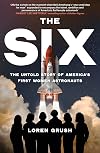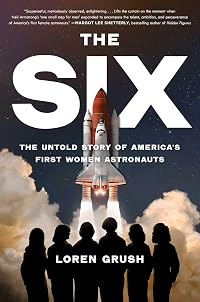
The Six: The Untold Story of America's First Women Astronauts
by Loren Grush
On This Page
Description
Tells the true story of America's first women astronauts--six extraordinary women, each making history going to orbit aboard NASA's Space Shuttle. When NASA sent astronauts to the moon in the 1960s and 1970s the agency excluded women from the corps, arguing that only military test pilots--a group then made up exclusively of men--had the right stuff. It was an era in which women were steered away from jobs in science and deemed unqualified for space flight. Eventually, though, NASA recognized show more its blunder and opened the application process to a wider array of hopefuls, regardless of race or gender. From a candidate pool of 8,000 six elite women were selected in 1978--Sally Ride, Judy Resnik, Anna Fisher, Kathy Sullivan, Shannon Lucid, and Rhea Seddon. In The Six, acclaimed journalist Loren Grush shows these brilliant and courageous women enduring claustrophobic--and sometimes deeply sexist--media attention, undergoing rigorous survival training, and preparing for years to take multi-million-dollar payloads into orbit. Together, the Six helped build the tools that made the space program run. One of the group, Judy Resnik, sacrificed her life when the Space Shuttle Challenger exploded at 46,000 feet. Everyone knows of Sally Ride's history-making first space ride, but each of the Six would make their mark. show lessTags
Recommendations


















Member Reviews
Summary: Traces the story of the first six American women astronauts from their selection, through their training and missions, along with the special media attention they received.
I grew up with the early space program. I followed the Mercury Seven. I made models of the rockets they flew. I didn’t dream of being an astronaut–maybe an engineer in the space program. I did not think at the time that there were women who thought about going into space–as an early chapter of this book states: “But Only Men Can Be Astronauts.” I didn’t know about the Mercury Thirteen–women who passed the same physical screening as the men–but were excluded from consideration. And so it would go through the Mercury, Gemini, and Apollo show more programs. But women continued to dream of going into space. When the new space shuttle program was announced, the electrifying announcement came that applications would be open to women.
Loren Grush, a space reporter for Bloomberg News, brings us a well-researched account for the first six women who won places in the program in 1978–Sally Ride, Judy Resnik, Anna Fisher, Kathy Sullivan, Shannon Lucid, and Rhea Seddon. She begins by describing their astronaut dreams and the competencies they brought to the new group of astronauts–doctors, an oceanographer, engineers, a chemist among them. We follow each of the women as they learn of the opening, their decision to apply, and then as they participate in the finalist interviews and medical testing. Then came the call from George Abbey asking, “are you still interested in coming to work for NASA?”
Grush describes the media attention, the lame jokes by Johnny Carson and the questions no male astronaut would be asked. Ironically, the men felt kind of left out for once. The training began in earnest, and, with it, the challenge to convince everyone there that they could do the job. We see the deftness of several women in manipulating the robot arms that would be crucial in launching satellites and observatory platforms. They match the men, except none can fly in the front seat of the T-38s–women had not yet been allowed to qualify as military jet pilots–and so all were mission specialists and could not pilot a shuttle.
The question though was “who would be first.” While all counted it a privilege to be on any mission, only one could be first. While all the women are covered, particularly Judy Resnik, who later died on Challenger, Grush focuses special attention on Sally Ride as the first, the media pressure she faced, her growing ability to cope with it, and the success of the mission. We learn of her troubled marriage, and her awakening to her love for Tam O’Shaughnessy, making her the first LGBTQ+ person in space, as well as America’s first woman. Ride also played key roles in the Challenger investigation, including passing along crucial engineering information she’d been given focusing attention on the flawed O-rings that led to the fatal burn-through and explosion. She also played a crucial role in redefining NASA’s mission, including a focus on studying changes to our own planet, crucial in the decades of climate change ahead.
Grush offers accounts of the missions each woman was on, including Anna Fisher’s MacGyvered fix that was used to attempt to activate a satellite that did not activate as it should have and Kathy Sullivan and Dave Leetsma’s space walk practicing a delicate satellite fueling operation. The women demonstrated that they could handle whatever was assigned them. And there was evidence that Judy Resnik was the one who activated Captain Dick Scobee’s emergency oxygen, possibly giving him some extra moments of life as the Challenger cabin tumbled to the sea.
The Challenger accident comes toward the end of the book and the reactions of each of the surviving women is described. The shuttle program was paused as boosters were re-designed and safety protocols were reviewed. The women had done their work. Additional women joined the astronaut corp subsequent to the accident, including one who would pilot a shuttle. Grush traces the subsequent careers of the surviving five.
Grush has given us an account that is combination of history and six biographies. It is an account that shows six women spotlighted because they were women who simply wanted to do a job–which they did. Some were mothers and people questioned whether it was proper for them to be astronauts–something no one asked of the men who were fathers. They were a part of a generation who went from being excluded from jobs or paid less because of their gender to moving the needle toward a greater parity, something we have not totally achieved yet. But they showed there was no reason but our prejudices to keep women from reaching for the stars. Grush helps us realize just how much these women accomplished toward that dream.
________________________________
Disclosure of Material Connection: I received a complimentary review copy of this book from the publisher. show less
I grew up with the early space program. I followed the Mercury Seven. I made models of the rockets they flew. I didn’t dream of being an astronaut–maybe an engineer in the space program. I did not think at the time that there were women who thought about going into space–as an early chapter of this book states: “But Only Men Can Be Astronauts.” I didn’t know about the Mercury Thirteen–women who passed the same physical screening as the men–but were excluded from consideration. And so it would go through the Mercury, Gemini, and Apollo show more programs. But women continued to dream of going into space. When the new space shuttle program was announced, the electrifying announcement came that applications would be open to women.
Loren Grush, a space reporter for Bloomberg News, brings us a well-researched account for the first six women who won places in the program in 1978–Sally Ride, Judy Resnik, Anna Fisher, Kathy Sullivan, Shannon Lucid, and Rhea Seddon. She begins by describing their astronaut dreams and the competencies they brought to the new group of astronauts–doctors, an oceanographer, engineers, a chemist among them. We follow each of the women as they learn of the opening, their decision to apply, and then as they participate in the finalist interviews and medical testing. Then came the call from George Abbey asking, “are you still interested in coming to work for NASA?”
Grush describes the media attention, the lame jokes by Johnny Carson and the questions no male astronaut would be asked. Ironically, the men felt kind of left out for once. The training began in earnest, and, with it, the challenge to convince everyone there that they could do the job. We see the deftness of several women in manipulating the robot arms that would be crucial in launching satellites and observatory platforms. They match the men, except none can fly in the front seat of the T-38s–women had not yet been allowed to qualify as military jet pilots–and so all were mission specialists and could not pilot a shuttle.
The question though was “who would be first.” While all counted it a privilege to be on any mission, only one could be first. While all the women are covered, particularly Judy Resnik, who later died on Challenger, Grush focuses special attention on Sally Ride as the first, the media pressure she faced, her growing ability to cope with it, and the success of the mission. We learn of her troubled marriage, and her awakening to her love for Tam O’Shaughnessy, making her the first LGBTQ+ person in space, as well as America’s first woman. Ride also played key roles in the Challenger investigation, including passing along crucial engineering information she’d been given focusing attention on the flawed O-rings that led to the fatal burn-through and explosion. She also played a crucial role in redefining NASA’s mission, including a focus on studying changes to our own planet, crucial in the decades of climate change ahead.
Grush offers accounts of the missions each woman was on, including Anna Fisher’s MacGyvered fix that was used to attempt to activate a satellite that did not activate as it should have and Kathy Sullivan and Dave Leetsma’s space walk practicing a delicate satellite fueling operation. The women demonstrated that they could handle whatever was assigned them. And there was evidence that Judy Resnik was the one who activated Captain Dick Scobee’s emergency oxygen, possibly giving him some extra moments of life as the Challenger cabin tumbled to the sea.
The Challenger accident comes toward the end of the book and the reactions of each of the surviving women is described. The shuttle program was paused as boosters were re-designed and safety protocols were reviewed. The women had done their work. Additional women joined the astronaut corp subsequent to the accident, including one who would pilot a shuttle. Grush traces the subsequent careers of the surviving five.
Grush has given us an account that is combination of history and six biographies. It is an account that shows six women spotlighted because they were women who simply wanted to do a job–which they did. Some were mothers and people questioned whether it was proper for them to be astronauts–something no one asked of the men who were fathers. They were a part of a generation who went from being excluded from jobs or paid less because of their gender to moving the needle toward a greater parity, something we have not totally achieved yet. But they showed there was no reason but our prejudices to keep women from reaching for the stars. Grush helps us realize just how much these women accomplished toward that dream.
________________________________
Disclosure of Material Connection: I received a complimentary review copy of this book from the publisher. show less
This was an impulse bookshop buy some time ago and it really turned out to be an inspiring choice. I knew something about the 1978 astronaut search from other books I've read but I'd never even stopped to think about who the other first-selection female astronauts, apart from Judy Resnik, were. This book provided an engaging opportunity to learn more about each of them and their first space shuttle flights.
"The Six" is one of the most emotionally powerful, moving, and informative books I have ever read about NASA, the Shuttle Program, and the lives of those involved.
There are always huge pieces of information of which the public is unaware about their space heroes - the astronauts, CAPCOMs, and every other person involved in the lengthy and intense process of putting together and eventually launching a space mission. Loren Grush's factual narrative grants readers a unique, behind the scenes look at what life is like as a NASA astronaut, how complicated chasing one's dreams can be, and how a singular moment in time can influence decades to come.
"The Six" is so important - not just so that names other than the usuals can be remembered, but show more so that the public can truly know what it is like to face nearly impossible odds and still come out on top. These six women were driven not by the need for fame or recognition, but for the need to know, to learn more about the world around us...and beyond us. These scientific pioneers helped change NASA as an entire organization, thereby paving the way for humanity to learn about and explore space as we do today.
Finally, this book is proof that despite impossible odds, victory is possible through imagination, hard work, determination, and perseverence. I would absolutely recommend this book to space enthusiasts, people in STEM fields, and even go as far as to suggest that it should be required/recommended reading for college students, to show that through diversity and evolution of practices, we move forward.
I found this book highly inspiring and cannot help but wish that more of the Six were as recognizable by name as Sally Ride. Each was, and remains, to this day, important for so many reasons - but at the end of the day, anything really is possible if you work hard enough and believe in your dreams.
Thank you so much to NetGalley for giving me the opportunity to immerse myself in such a phenomenal book, and thank you to Loren Grush for writing it. The Six's story must be told, and Grush had done them proud with this narrative. show less
There are always huge pieces of information of which the public is unaware about their space heroes - the astronauts, CAPCOMs, and every other person involved in the lengthy and intense process of putting together and eventually launching a space mission. Loren Grush's factual narrative grants readers a unique, behind the scenes look at what life is like as a NASA astronaut, how complicated chasing one's dreams can be, and how a singular moment in time can influence decades to come.
"The Six" is so important - not just so that names other than the usuals can be remembered, but show more so that the public can truly know what it is like to face nearly impossible odds and still come out on top. These six women were driven not by the need for fame or recognition, but for the need to know, to learn more about the world around us...and beyond us. These scientific pioneers helped change NASA as an entire organization, thereby paving the way for humanity to learn about and explore space as we do today.
Finally, this book is proof that despite impossible odds, victory is possible through imagination, hard work, determination, and perseverence. I would absolutely recommend this book to space enthusiasts, people in STEM fields, and even go as far as to suggest that it should be required/recommended reading for college students, to show that through diversity and evolution of practices, we move forward.
I found this book highly inspiring and cannot help but wish that more of the Six were as recognizable by name as Sally Ride. Each was, and remains, to this day, important for so many reasons - but at the end of the day, anything really is possible if you work hard enough and believe in your dreams.
Thank you so much to NetGalley for giving me the opportunity to immerse myself in such a phenomenal book, and thank you to Loren Grush for writing it. The Six's story must be told, and Grush had done them proud with this narrative. show less
This non-fiction story of the six trailblazing women who joined NASA in the late 1970s to become the first women astronauts read like a novel. You may know two of the six women, Sally Ride and Judy Resnick, but the other four, Anna Fisher, Kathy Sullivan, Shannon Lucid, and Rhea Seddon, made important contributions to NASA and the space shuttle program as well. I found each woman's story engaging and detailed to better understand why they wanted to become astronauts. Each woman had their own reasons and their own journey to get there, but once they became part of NASA, they each had similar sexist experiences and they handled them in their own style. These amazing women worked hard and overcame each hurdle to become a part of history show more and go into space on shuttle missions. I remember watching Sally Ride's first mission into space and Judy Resnick's catastrophic ending on those Florida shores on TV in the 1980s. It helped me believe that women can do anything. If you enjoy books that celebrate women groundbreakers, like the women in the book Hidden Figures, I highly recommend this book.
Thank you Net Galley for a complimentary copy. All opinions are my own. show less
Thank you Net Galley for a complimentary copy. All opinions are my own. show less
I couldn't put this down. It's a nonfiction account of NASA's first 6 female astronauts. Rhea Seddon, Sally Ride, Kathy Sullivan, Shannon Lucid, Anna Fisher & Judy Resnik went through so much to break the glass ceiling all the way into space. There were moments when their story was infuriating because of what they had to put up with, but I am so grateful for their fearless determination. I wish this was required reading in high schools. These brilliant women were doctors and scientists long before they joined NASA. They led full lives and their intelligence and dedication to the space prorgam paved the way for so many.
I received a complimentary copy of this book. Opinions expressed in this review are completely my own. I thoroughly enjoyed this nonfiction account of the first six female astronauts. Well-written and fast moving, it read like nonfiction. Since I wasn’t entirely familiar with the careers of these women, there was also an element of suspense about each of their missions. This was a good, necessary story well worth the time spent reading it.
Loren Grush’s The Six is an ambitious group biography of the first women admitted to America’s astronaut program: Sally Ride, Judith Resnik, Anna Fisher, Kathy Sullivan, Shannon Lucid, and Rhea Seddon. And if the reader can’t quickly name all six of them, even after finishing the book, that’s part of the problem.
Most casual followers of the program can name only Ride, the first of the group to get a Space Shuttle mission, and possibly Resnik, who perished in the Challenger disaster. Even total space junkies will have difficulty creating firm mental images of their teammates after reading this book, let alone remembering who was who.
Part of the problem, of course, is that trying to bundle all six into a single comprehensive show more volume is a huge task. The other part is that Grush has laid their backstories out like layers of a cake, sliced them up, and served them out by rote. The reader gets the brief backstory of SallyJudithAnnaKathyShannonRhea growing up in a family located wherever, then the narrative moves on what motivated SallyJudithAnnaKathyShannonRhea’s desire to join NASA, what SallyJudithAnnaKathyShannonRhea’s educational and professional background was, how SallyJudithAnnaKathyShannonRhea heard about NASA’s about-face on the subject of accepting women candidates for the astronaut program, and where SallyJudithAnnaKathyShannonRhea was when she got the news of her acceptance. There’s no throughline, and most readers will still be flipping back and forth to the slim section of photographs, even as they approach the end of the narrative, repeatedly asking themselves “now, which one was she?”
On the plus side, Grush does a good job of showing how the women navigated the training for their future missions, looks at NASA’s spotty record of adapting equipment and procedures to the needs of their new candidates, and how politics (read “budget appropriations”) and PR impacted the Space Shuttle program in general. Missions are explained with a minimum of technobabble, and the ways in which being an astronaut impacted the personal lives of The Six get a medium-depth look. Both Seddon and Fisher (go ahead – look back at the list, I know you need to) had children during their tenure as astronauts, and fielded the inevitable for-women-only questions about how they could perform their jobs and still be mommies. Ride’s bisexuality and her ultimate choice to create a long-term relationship with another woman are mentioned but not dwelt on. The post-Shuttle-era careers of The Six are covered briefly, and the changes to the program brought about by the Challenger (and later, Columbia) disasters are acknowledged.
Overall, The Six is a readable, informative overview, but it’s neither great history nor great literature. show less
Most casual followers of the program can name only Ride, the first of the group to get a Space Shuttle mission, and possibly Resnik, who perished in the Challenger disaster. Even total space junkies will have difficulty creating firm mental images of their teammates after reading this book, let alone remembering who was who.
Part of the problem, of course, is that trying to bundle all six into a single comprehensive show more volume is a huge task. The other part is that Grush has laid their backstories out like layers of a cake, sliced them up, and served them out by rote. The reader gets the brief backstory of SallyJudithAnnaKathyShannonRhea growing up in a family located wherever, then the narrative moves on what motivated SallyJudithAnnaKathyShannonRhea’s desire to join NASA, what SallyJudithAnnaKathyShannonRhea’s educational and professional background was, how SallyJudithAnnaKathyShannonRhea heard about NASA’s about-face on the subject of accepting women candidates for the astronaut program, and where SallyJudithAnnaKathyShannonRhea was when she got the news of her acceptance. There’s no throughline, and most readers will still be flipping back and forth to the slim section of photographs, even as they approach the end of the narrative, repeatedly asking themselves “now, which one was she?”
On the plus side, Grush does a good job of showing how the women navigated the training for their future missions, looks at NASA’s spotty record of adapting equipment and procedures to the needs of their new candidates, and how politics (read “budget appropriations”) and PR impacted the Space Shuttle program in general. Missions are explained with a minimum of technobabble, and the ways in which being an astronaut impacted the personal lives of The Six get a medium-depth look. Both Seddon and Fisher (go ahead – look back at the list, I know you need to) had children during their tenure as astronauts, and fielded the inevitable for-women-only questions about how they could perform their jobs and still be mommies. Ride’s bisexuality and her ultimate choice to create a long-term relationship with another woman are mentioned but not dwelt on. The post-Shuttle-era careers of The Six are covered briefly, and the changes to the program brought about by the Challenger (and later, Columbia) disasters are acknowledged.
Overall, The Six is a readable, informative overview, but it’s neither great history nor great literature. show less
Members
- Recently Added By
Lists

Science: Astronomy
62 works; 2 members

Books Read in 2024
4,727 works; 128 members
Author Information

2 Works 330 Members
Awards and Honors
Awards
Distinctions
The Guardian Book of the Day (2023-09-07)
Common Knowledge
- Original publication date
- 2023-09-12
- People/Characters
- Sally Ride; Judith Resnik; Anna Lee Fisher; Rhea Seddon; Shannon Lucid; Kathryn Sullivan
- Important events
- Space Shuttle Program; First American women in space; Challenger Disaster (1986)
- Dedication
- To the women who look up and dream of more.
- First words
- Anna Fisher sat alone inside the dim cockpit of the space shuttle Challenger, the dark midnight sky painted across the cabin's glass windows above her.
- Last words
- (Click to show. Warning: May contain spoilers.)All she's waiting on is her selection.
- Blurbers
- Shetterly, Margot Lee; Hickam, Homer; Sherr, Lynn; Vance, Ashlee; O'Brien, Keith
- Original language
- English
Classifications
- Genres
- General Nonfiction, History, Nonfiction, Science & Nature, Biography & Memoir, Sexuality and Gender Studies
- DDC/MDS
- 629.40973 — Applied science & technology Engineering Transportation Vehicles Spacecraft & Vehicles
- LCC
- TL789.8 .U5 .S59 — Technology Motor vehicles. Aeronautics. Astronautics Motor vehicles. Aeronautics. Astronautics Astronautics. Space travel
- BISAC
Statistics
- Members
- 316
- Popularity
- 101,236
- Reviews
- 9
- Rating
- (4.27)
- Languages
- English
- Media
- Paper, Audiobook, Ebook
- ISBNs
- 11
- ASINs
- 4