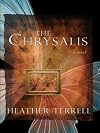
The Chrysalis
by Heather Terrell
On This Page
Description
Haarlem, Holland, seventeenth-century: The city's chief magistrate commissions a family portrait from Dutch master painter Johannes Miereveld. But when the artist sees the magistrate's daughter, Amalia, an illicit love affair begins. Miereveld creates a captivating masterpiece, The Chrysalis-a stunning portrait of the Virgin Mary, full of Catholic symbols, that outrages his Protestant patron and signals the death of his career. New York, present day: Mara Coyne is one high-profile case away show more from making partner at her powerful Manhattan law firm, and now the client that is sure to seal the deal has fallen into her lap. The prestigious Beazley's auction house is about to sell a lost masterwork, The Chrysalis, in an auction that is destined to become legendary. Standing in the way, however, is the shocking accusation that the painting belongs not to Beazley's client but to Hilda Baum, the daughter of a Dutch collector who lost his paintings-and his life-to the Nazis. The case brings an unexpected surprise when Mara discovers that Beazley's in-house attorney is Michael Roarke, a man for whom she once had an intense attraction. But the same skills that make her a brilliant litigator also make Mara suspicious, and she begins to believe that Hilda's tragic family story might be more than just heartbreaking-it might be true. And the man she's come to love might not be who she thought he was at all. Spanning centuries and continents, The Chrysalis is a brilliant, intelligent, fast-paced thriller that melds art and history into a provocative work of fiction. From the underground Catholicism in seventeenth-century Holland to the unspeakable crimes of the Nazis and the repercussions that reverberate to this day throughout the art world, Heather Terrell has created a fascinating story that will entrance readers to the very last page. show lessTags
Recommendations























Member Reviews
I chose this book because its subject matter piqued my interest: Who rightly owns a painting of questionable provenance that may have been confiscated by the Nazis? Unfortunately, despite its focus on art, the book itself is artless.
Mara Coyne, a New York lawyer, is hired by an art auction house to prove that it is the legitimate owner of a Dutch painting titled The Chrysalis and that it is not the property of Hilda Baum who claims that the Nazis stole it from her father, a Dutch art collector. Helping her with the case is Michael Roarke, the in-house attorney for the auction house, and Lillian Joyce, its provenance department chief. Besides describing the legal case and Mara’s budding romantic relationship with Michael, the book show more includes flashbacks to The Netherlands in the 1600s and the 1940s.
The pacing is uneven. The first half of the book is very slow; it details Mara’s legal research in preparation for court. The second half is very fast-paced. Mara makes a quick trip to London to get a piece of information that surely she could have been given over the phone or via email. Events happen in a short space of time. Is it likely that a person would make a quick decision to make someone a beneficiary after only a short acquaintance and for that same person to discover, in a matter of days, a “distant ancestral relationship” to a person who lived over 350 years earlier? The first part of the book reads like a romance and the second part reads like a thriller in the style of The Da Vinci Code, albeit a poor imitation of the latter.
There are so many illogical events that aggravate. Mara had had “long conversations” with a fellow student in an art class but she had never learned his name? Michael, a lawyer for an art auction house, has to be told that a relationship between client and attorney is inappropriate and has to be explained “the landscape of replevin law”? Lillian, the provenance chief for the auction house, is reluctant to give Mara her “full assistance” despite the fact that her employer needs her co-operation in a case dependent on a clean provenance? Lillian can claim a seventeenth-century artist made “masterful renderings of his subjects’ features” when she has no evidence of what those subjects looked like? Lillian has access to “still-classified World War II documents” relating to art: how would she come to have such documents in her possession and why would documents relating to Nazi looting of art be so secretive and then why would one of those documents be “dog-eared” if it has not been available for anyone to read? A map in a museum’s public guidebook would include areas designated for storage? Is it likely that a person of “eighty-odd years” would still be working, especially since she is independently wealthy? A person who “would not let [Mara] leave his sight or his touch” minutes before let her escape his grasp and she did nothing to escape? Mara has a plan to escape her captor that requires him to get an unexpected call on his cellphone? Is she prescient?
This brings to the forefront another problem with the novel: characterization. The author takes great pains to portray Mara as intelligent yet her handling of the cross-examination of Hilda Baum is inept at best. She wants to become a partner in her law firm but she risks it all to have an inappropriate sexual liaison? Mara has an opportunity to escape when her captor accosts her in a café, but instead of asking the assistance of a waitress, she accepts coffee “with gracious thanks”? Even when “threatened and afraid, Mara was moved by the soaring ceiling and weightless cupola” of a museum? And Mara is not the only problem. Her supposed best friend Sophia behaves in no way like a true friend would and her motivation is incomprehensible since Mara’s decisions would not impact Sophia’s ability to become a partner in the law firm.
It is unfortunate that the author was unable to write an interesting book given the possibilities of the topic of Nazi confiscated art. show less
Mara Coyne, a New York lawyer, is hired by an art auction house to prove that it is the legitimate owner of a Dutch painting titled The Chrysalis and that it is not the property of Hilda Baum who claims that the Nazis stole it from her father, a Dutch art collector. Helping her with the case is Michael Roarke, the in-house attorney for the auction house, and Lillian Joyce, its provenance department chief. Besides describing the legal case and Mara’s budding romantic relationship with Michael, the book show more includes flashbacks to The Netherlands in the 1600s and the 1940s.
The pacing is uneven. The first half of the book is very slow; it details Mara’s legal research in preparation for court. The second half is very fast-paced. Mara makes a quick trip to London to get a piece of information that surely she could have been given over the phone or via email. Events happen in a short space of time. Is it likely that a person would make a quick decision to make someone a beneficiary after only a short acquaintance and for that same person to discover, in a matter of days, a “distant ancestral relationship” to a person who lived over 350 years earlier? The first part of the book reads like a romance and the second part reads like a thriller in the style of The Da Vinci Code, albeit a poor imitation of the latter.
There are so many illogical events that aggravate. Mara had had “long conversations” with a fellow student in an art class but she had never learned his name? Michael, a lawyer for an art auction house, has to be told that a relationship between client and attorney is inappropriate and has to be explained “the landscape of replevin law”? Lillian, the provenance chief for the auction house, is reluctant to give Mara her “full assistance” despite the fact that her employer needs her co-operation in a case dependent on a clean provenance? Lillian can claim a seventeenth-century artist made “masterful renderings of his subjects’ features” when she has no evidence of what those subjects looked like? Lillian has access to “still-classified World War II documents” relating to art: how would she come to have such documents in her possession and why would documents relating to Nazi looting of art be so secretive and then why would one of those documents be “dog-eared” if it has not been available for anyone to read? A map in a museum’s public guidebook would include areas designated for storage? Is it likely that a person of “eighty-odd years” would still be working, especially since she is independently wealthy? A person who “would not let [Mara] leave his sight or his touch” minutes before let her escape his grasp and she did nothing to escape? Mara has a plan to escape her captor that requires him to get an unexpected call on his cellphone? Is she prescient?
This brings to the forefront another problem with the novel: characterization. The author takes great pains to portray Mara as intelligent yet her handling of the cross-examination of Hilda Baum is inept at best. She wants to become a partner in her law firm but she risks it all to have an inappropriate sexual liaison? Mara has an opportunity to escape when her captor accosts her in a café, but instead of asking the assistance of a waitress, she accepts coffee “with gracious thanks”? Even when “threatened and afraid, Mara was moved by the soaring ceiling and weightless cupola” of a museum? And Mara is not the only problem. Her supposed best friend Sophia behaves in no way like a true friend would and her motivation is incomprehensible since Mara’s decisions would not impact Sophia’s ability to become a partner in the law firm.
It is unfortunate that the author was unable to write an interesting book given the possibilities of the topic of Nazi confiscated art. show less
Ooof, this book is bad. Yet another author who can't seem to stop telling rather than showing. The prose of this book has the same cadence you would expect from a detail-oriented friend's recounting of a television episode. Mara - we are told - is a hard nosed career woman who has set aside everything extraneous in her life so she can get ahead. She doesn't have time for romantic relationships. Mere seconds after the author finishes telling us this, Mara falls for the one man she is legally obligated to remain professional with - an important client from an art dealership.
He's an old friend from college and against her better judgement (and all logic) Mara begins a torrid affair with him. Why does she fall in love with this guy? Geez, show more it's hard to say. The author doesn't seem to feel she needs to explain why a career woman would jeopardize not only her job but her ability to practice law. Afterall, Michael is really handsome... and persistent? Isn't that reason enough? Meanwhile, the case Mara is developing concerns a rare painting by a Dutch master that was supposedly looted by the Nazis during WWII. The descendant of the painting's owner wants it back, and naturally, Michael's auction house doesn't want to give it up.
The author fills pages and pages with Mara's painstaking research. And yes, it is just as thrilling as it sounds. The text is also interspersed with flashbacks to WWII and the time of the painting's creation. All of it feels very padded out, with numerous repetitions and useless details. Eventually the novel wraps up extremely anti-climatically. Through it all, Mara bumbles around, always one step behind everyone, including the reader. She also cries A LOT. Almost like punctuation. The whole book is dull and insipid. I even found myself hating the Holocaust survivor who was too much of a vehicle to add padding and emotional punch to the narrative. At one point she literally commands the protagonist to sit down and listen to a full recounting of her family history in painful detail. When the story is completed she unceremoniously casts Mara out of her apartment. Bizarre. show less
He's an old friend from college and against her better judgement (and all logic) Mara begins a torrid affair with him. Why does she fall in love with this guy? Geez, show more it's hard to say. The author doesn't seem to feel she needs to explain why a career woman would jeopardize not only her job but her ability to practice law. Afterall, Michael is really handsome... and persistent? Isn't that reason enough? Meanwhile, the case Mara is developing concerns a rare painting by a Dutch master that was supposedly looted by the Nazis during WWII. The descendant of the painting's owner wants it back, and naturally, Michael's auction house doesn't want to give it up.
The author fills pages and pages with Mara's painstaking research. And yes, it is just as thrilling as it sounds. The text is also interspersed with flashbacks to WWII and the time of the painting's creation. All of it feels very padded out, with numerous repetitions and useless details. Eventually the novel wraps up extremely anti-climatically. Through it all, Mara bumbles around, always one step behind everyone, including the reader. She also cries A LOT. Almost like punctuation. The whole book is dull and insipid. I even found myself hating the Holocaust survivor who was too much of a vehicle to add padding and emotional punch to the narrative. At one point she literally commands the protagonist to sit down and listen to a full recounting of her family history in painful detail. When the story is completed she unceremoniously casts Mara out of her apartment. Bizarre. show less
Seventeenth century Dutch art, the conflict between Catholicism and Protestantism in 17th century Europe, the Nazi occupation of the Netherlands and other European countries, and Holocaust victims and their survivors all play a part in this legal thriller. Mara Coyne, an associate in a prestigious New York law firm, is hired by auction house Beazley's to defend a challenge of ownership of a painting, the Chrysalis, that Beazley's is selling on behalf of a client. The plaintiff in the suit claims that this painting was stolen from her father by the Nazis, and that she is its rightful owner.
The plot for the novel is interesting, but the prose falls short of developing the suspense the author tried to convey. To enjoy a suspense novel, I show more need to experience a strong empathy with the protagonist in order to feel his or her confusion, uncertainty, distrust, and mounting fear. I never made that connection with Mara. I'm not sure how Mara managed to focus on her work while consuming as much alcohol as she did. After reminding herself that she needed to keep a clear head, she would proceed to drink several glasses of wine, champagne, scotch, etc. It was hard for me to believe that someone with so little willpower could have the strength of character to act on her convictions.
This book sets up the premise for a series featuring Mara Coyne. There were some threats that were not carried out in The Chrysalis. In subsequent books in the series, will these threats still be hanging over Mara, or will the author inform the readers of the way the threats were resolved? Or are they just loose threads in this book? It's hard to say. The second book in the series, The Map Thief, has already been published, but I'm not curious enough to pick it up. I would recommend reading The Chrysalis first since it explains the reason behind Mara's further pursuits. show less
The plot for the novel is interesting, but the prose falls short of developing the suspense the author tried to convey. To enjoy a suspense novel, I show more need to experience a strong empathy with the protagonist in order to feel his or her confusion, uncertainty, distrust, and mounting fear. I never made that connection with Mara. I'm not sure how Mara managed to focus on her work while consuming as much alcohol as she did. After reminding herself that she needed to keep a clear head, she would proceed to drink several glasses of wine, champagne, scotch, etc. It was hard for me to believe that someone with so little willpower could have the strength of character to act on her convictions.
This book sets up the premise for a series featuring Mara Coyne. There were some threats that were not carried out in The Chrysalis. In subsequent books in the series, will these threats still be hanging over Mara, or will the author inform the readers of the way the threats were resolved? Or are they just loose threads in this book? It's hard to say. The second book in the series, The Map Thief, has already been published, but I'm not curious enough to pick it up. I would recommend reading The Chrysalis first since it explains the reason behind Mara's further pursuits. show less
Ratings
Members
- Recently Added By
Lists

Art heist books at PPL
122 works; 1 member
Author Information

25+ Works 14,509 Members
Marie Benedict is a well established lawyer at two of the country's premier law firms. She graduated magna cum laude from Boston College with a focus on Art History and History. She is also a cum laude graduate of Boston University School of Law. Marie had a passion for unearthing the hidden historical stories of women. She followed this passion show more and began her writing career. Her first historical novel was "The Other Einstein", which recounts the story of Albert Einstein's first wife, a physicist, and the role she may have played in his theories.The other novels in this series include Carnegie's Maid, and The Only Woman in the Room. She also writes historical novels as Heather Terrell. Those titles include: The Chrysalis, The Map Thief, and Brigid of Kildare. (Bowker Author Biography) show less
Common Knowledge
- Canonical title
- The Chrysalis
- People/Characters
- Mary Coyne; Michael Roarke
- Important places
- The Netherlands
Classifications
Statistics
- Members
- 110
- Popularity
- 290,972
- Reviews
- 3
- Rating
- (2.78)
- Languages
- Dutch, English, French
- Media
- Paper, Audiobook, Ebook
- ISBNs
- 10
- ASINs
- 2