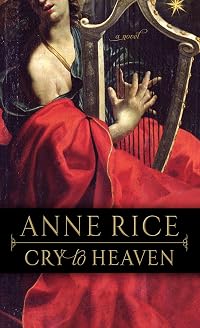
Cry to Heaven
by Anne Rice
On This Page
Description
Fantasy. Fiction. Literature. HTML:In a sweeping saga of music and vengeance, the acclaimed author of The Vampire Chronicles draws readers into eighteenth-century Italy, bringing to life the decadence beneath the shimmering surface of Venice, the wild frivolity of Naples, and the magnetic terror of its shadow, Vesuvius. This is the story of the castrati, the exquisite and otherworldly sopranos whose graceful bodies and glorious voices win the adulation of royal courts and grand opera houses show more throughout Europe. These men are revered as idols—and, at the same time, scorned for all they are not.Praise for Anne Rice and Cry to Heaven
“Daring and imaginative . . . [Anne] Rice seems like nothing less than a magician: It is a pure and uncanny talent that can give a voice to monsters and angels both.”—The New York Times Book Review
“To read Anne Rice is to become giddy as if spinnning through the mind... show less
Tags
Recommendations
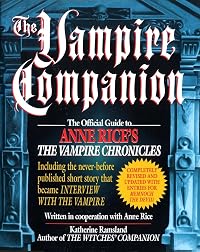
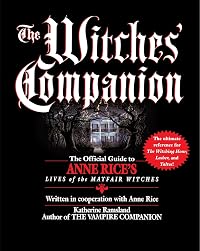
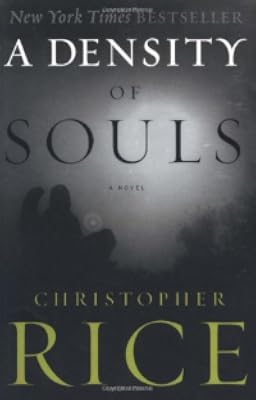
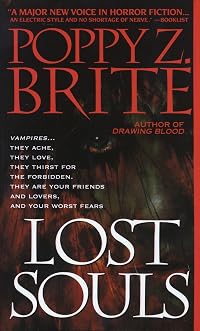



Member Reviews
This novel is everything I would expect from Anne Rice, and then some. It's filled with her elegant descriptions of time and place with commendable attention to historic detail, and the characters become familiar figures ingrained in one's mind as the story unravels. As with many of Rice's other novels, this novel features references and vivid descriptions of homosexuality. Something that I did not expect, and found a welcoming surprise, was Rice's use of genderbending throughout the novel. This is perhaps the most compelling reason that I would re-read this book (something I rarely do) and recommend this book. I cannot think of another novel that uses gender in such a beautiful way.
Melodramatic like an opera, this novel focuses on castrati, the men who were castrated as young boys in order to preserve their voices for the choirs and opera houses of Europe. Tonio is raised as a Venetian noble, but death in his family reveals that his brother is actually his father and his inheritance is in question. At his father's command, Tonio is kidnapped, castrated, and sent to study music in Naples, where he embarks on a long relationship and collaboration with Guido, a castrato master who composes music for Tonio to perform. Even as Tonio achieves success in music, he still carries the trauma of what his family did to him, which eventually leads him back to Venice. While I found the middle of this book hard to get through, show more the ending was satisfying and left one with some hope for Tonio and his future. show less
Tonio Treschi is the young son of an aging Venetian, the Grand Counsellor, he lives in his father’s great palazzo with his young mother, not knowing other children to play with. But his real love is singing, and this he enjoys with his talented mother and his tutors. Guido Maffeo has no heritage, but is simply a young boy from a large and very poor family; he has known only hardship and ill treatment. That is until his beautiful voice, a voice which at a very young age will cost him his future manhood, takes him away from all this. He is taken to Naples and trained by the finest singing masters. The lives of Tonio and Guido will eventually becoming inextricably linked when Toni’s father dies and his banished brother returns to show more claims his inheritance.
Cry to Heaven is a remarkable epic of love, betrayal and vengeance. Yet that is to put it far too simply, for the loves are complex, often unselfish but always beautiful; the betrayal is perhaps of the most shocking nature; the vengeance ultimately unsought.
Anne Rice writing with an assured hand plunges us into the flamboyant, luxurious and at times sordid world of eighteenth century Venice, Naples and Rome with an eye for detail that brings it all vividly to life. Her cast of characters is beautifully drawn, the handsome Tonio being especially appealing. Her careful research into the music and musical practices of the period lends the whole plausibility.
The result is a gripping, tale which at times luxuriates in the sheer pleasure of life, and others is drawn to the depths of despair. A tale where one act of barbarism may have even the reading needing time to come to terms with. It is a moving, at times heart-wrenching, story of triumph over adversity. show less
Cry to Heaven is a remarkable epic of love, betrayal and vengeance. Yet that is to put it far too simply, for the loves are complex, often unselfish but always beautiful; the betrayal is perhaps of the most shocking nature; the vengeance ultimately unsought.
Anne Rice writing with an assured hand plunges us into the flamboyant, luxurious and at times sordid world of eighteenth century Venice, Naples and Rome with an eye for detail that brings it all vividly to life. Her cast of characters is beautifully drawn, the handsome Tonio being especially appealing. Her careful research into the music and musical practices of the period lends the whole plausibility.
The result is a gripping, tale which at times luxuriates in the sheer pleasure of life, and others is drawn to the depths of despair. A tale where one act of barbarism may have even the reading needing time to come to terms with. It is a moving, at times heart-wrenching, story of triumph over adversity. show less
I've re-read this so many times the book is falling apart. Anne Rice is known for her paranormal series, but I loved this stand-alone, historical-fiction novel. Tonio struggles against impossible odds, wants things he can never have, and undergoes deeply moving psychological pain and emotional growth. Through his story, we get a fascinating exploration of the gender roles in 18th century Europe and the nature of masculinity. Also one of the best endings to any of the Anne Rice books I've read.
A hard sell to men, but I recommend it for anyone who enjoyed Rice's early work, and anyone who enjoys historical fiction (assuming you're aware of the usual sex/violence present in Rice's work).
A hard sell to men, but I recommend it for anyone who enjoyed Rice's early work, and anyone who enjoys historical fiction (assuming you're aware of the usual sex/violence present in Rice's work).
Why did I finish this book? Force of habit, I suppose.
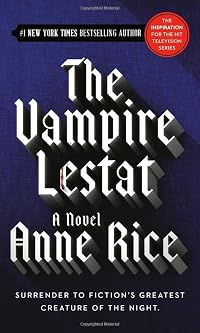
Let me tell you why I started it: because I had very much enjoyed Interview With the Vampire and because I like historical novels. I thought nothing could be as bad as The Vampire Lestat, which I didn't finish out of embarrassment for the author. Let me tell you, I was wrong. This is a bad book.
You'd think a reasonably historically accurate novel set in 18th century Italy, with lots of sex--repeat, lots of sex--would be exciting or at least interesting. It wasn't. It was boring. For one thing, it seriously challenged my suspension of disbelief; for another, it was full of the ruminations of a person whose mind ran over the same tracks again and again. Kind of a mental milk run, show more except the stops were Disgrace, Revenge, Love, Sex, Music, Disgrace, Revenge . . . .
When you're bored, you start to notice things. As, Anne Rice isn't a very good writer. Her prose is pretty flat. I think her success is due to the amped-up Byronic hero she relies on, plus the wish-fulfilling fantasies that she allows free rein, and which resonate with her readers. I started to wish for a vampire.
The other big belief bubble that she couldn't maintain was the matter of sex. Her castrati--and most of the characters were castrati--had lots and lots of sex of the more or less conventional sort. They had erections, they had orgasms. Whereas a man castrated after sexual maturity might have been able to perform, everything I know about male sexual function indicates a need for testosterone for physical development, interest, and performance.
You can tell I was bored because I wondered why no one contracted an STD.
Looking back on the other reviews, I can see I'm an outlier. Ignore me if the things I mentioned don't bother you. show less
Let me tell you why I started it: because I had very much enjoyed Interview With the Vampire and because I like historical novels. I thought nothing could be as bad as The Vampire Lestat, which I didn't finish out of embarrassment for the author. Let me tell you, I was wrong. This is a bad book.
You'd think a reasonably historically accurate novel set in 18th century Italy, with lots of sex--repeat, lots of sex--would be exciting or at least interesting. It wasn't. It was boring. For one thing, it seriously challenged my suspension of disbelief; for another, it was full of the ruminations of a person whose mind ran over the same tracks again and again. Kind of a mental milk run, show more except the stops were Disgrace, Revenge, Love, Sex, Music, Disgrace, Revenge . . . .
When you're bored, you start to notice things. As, Anne Rice isn't a very good writer. Her prose is pretty flat. I think her success is due to the amped-up Byronic hero she relies on, plus the wish-fulfilling fantasies that she allows free rein, and which resonate with her readers. I started to wish for a vampire.
The other big belief bubble that she couldn't maintain was the matter of sex. Her castrati--and most of the characters were castrati--had lots and lots of sex of the more or less conventional sort. They had erections, they had orgasms. Whereas a man castrated after sexual maturity might have been able to perform, everything I know about male sexual function indicates a need for testosterone for physical development, interest, and performance.
You can tell I was bored because I wondered why no one contracted an STD.
Looking back on the other reviews, I can see I'm an outlier. Ignore me if the things I mentioned don't bother you. show less
Tonio Treschi, an 18th century boy in his early teens from a Venetian noble family with a beautiful singing voice, is castrated in a struggle for the family inheritance. He trains to become an opera singer and plots his revenge.
There was a time I loved Anne Rice's lush baroque prose but re-reading this book after 18 or 19 years I find it rather tiresome and kept wishing she'd just get on with the story.
There were definitely times I felt she was on the verge of revealing that some of her characters were actually vampires. Despite that, it's a fascinating look at the world of the castrati.
There was a time I loved Anne Rice's lush baroque prose but re-reading this book after 18 or 19 years I find it rather tiresome and kept wishing she'd just get on with the story.
There were definitely times I felt she was on the verge of revealing that some of her characters were actually vampires. Despite that, it's a fascinating look at the world of the castrati.
Review of unabridged Audible audiobook.
Yes, it's a little trashy and yes, it's got melodrama to spare, but I still recommend this audiobook very highly. The historical detail on the livesof castrati is fascinating, and Tim Curry's narration is outstanding.
Yes, it's a little trashy and yes, it's got melodrama to spare, but I still recommend this audiobook very highly. The historical detail on the livesof castrati is fascinating, and Tim Curry's narration is outstanding.
Members
- Recently Added By
Lists

500 Great Books by Women
507 works; 60 members

Best Historical Fiction authors
41 works; 9 members
Author Information

132+ Works 189,697 Members
Anne Rice was born Howard Allen O'Brien on October 4, 1941 in New Orleans, Louisiana. She received a bachelor's degree in political science in 1964 and master's degree in English and creative writing in 1972 from San Francisco State University. She published her first short story in 1965 called October 4, 1948. Her first book, Interview with the show more Vampire, was published in 1976. It was made into a film starring Brad Pitt, Kirsten Dunst, and Tom Cruise in 1994. She wrote various series in the same genre including the rest of the Vampire Chronicles, the Mayfair Witches books, and The Wolf Gift Chronicles. Her novel, Feast of All Saints, became a Showtime mini-series in 2001. Her other works include Cry to Heaven, Servant of the Bones, and Violin. In 1998, Rice returned to the Catholic Church and for some time only wrote for Christ or about Christ. These works include Christ the Lord: Out of Egypt, Christ the Lord: The Road to Cana, and Called Out of Darkness. Anne Rice died on December 11, 2021 at the age of 80. (Bowker Author Biography) show less
Awards and Honors
Notable Lists
Series
Belongs to Publisher Series
Goldmann (44253)
Work Relationships
Common Knowledge
- Canonical title*
- Falsetto
- Original title
- Cry to Heaven
- Original publication date
- 1982
- People/Characters
- Marc Antonio Treschi; Guido Maffeo
- Important places
- Venice, Veneto, Italy; Rome, Italy; Naples, Campania, Italy
- Dedication
- This book is dedicated with love to Stan Rice and Victoria Wilson.
- First words
- Guido Maffeo was castrated when he was six years old and sent to study with the finest singing masters in Naples.
- Last words
- (Click to show. Warning: May contain spoilers.)Before the sun rose he would be with Guido and Christina. And for the first time they would truly be together.
- Original language
- English US
*Some information comes from Common Knowledge in other languages. Click "Edit" for more information.
Classifications
- Genres
- Fiction and Literature, General Fiction, Horror, Historical Fiction, Fantasy
- DDC/MDS
- 813.54 — Literature & rhetoric American literature in English American fiction in English 1900-1999 1945-1999
- LCC
- PS3568 .I265 .C7 — Language and Literature American literature American literature Individual authors 1961-
- BISAC
Statistics
- Members
- 3,417
- Popularity
- 4,931
- Reviews
- 48
- Rating
- (3.75)
- Languages
- 7 — English, French, German, Italian, Polish, Portuguese, Spanish
- Media
- Paper, Audiobook, Ebook
- ISBNs
- 25
- ASINs
- 13