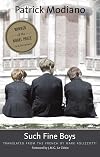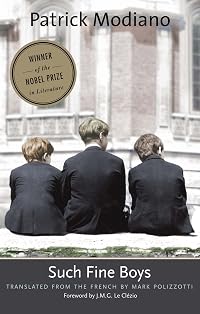
Such Fine Boys
by Patrick Modiano
On This Page
Description
"As a boarding school student in the early 1960s, Patrick Modiano lived among the troubled teenage sons of wealthy but self-involved parents. In this mesmerizing novel, Modiano weaves together a series of exquisitely crafted stories about such jettisoned boys at the exclusive Valvert School on the outskirts of Paris: abandoned children of privilege, left to create new family ties among themselves. Misfits and heroes, sports champions and good-hearted chums, the boys of Valvert misbehave, run show more away, get expelled, and engage in various forms of delinquency and disappearance. They emerge into adulthood tragically damaged, still tethered to their adolescent selves, powerless to escape the central loneliness of their lives in an ever-darkening spiral of self-delusion and grim consequence"--Back cover. show lessTags
Recommendations




















Member Reviews
Patrick Modiano explores the adult lives of former students of the Valvert School. The narrator, also an alum, intersperses stories of the school with the present lives of the students, privileged except for having been sent off to boarding school by well-to-do parents.
As with most of Modiano's writing, memory is the main theme. The memories of the school are mainly positive - no hidden ugliness there. The boys have some suspect characters in their lives - sometimes their own parents. Some become suspect characters as adults.
As with most of Modiano's writing, memory is the main theme. The memories of the school are mainly positive - no hidden ugliness there. The boys have some suspect characters in their lives - sometimes their own parents. Some become suspect characters as adults.
En los alrededores de París, el internado de Valvert, conocido como el castillo, acoge a muchachos que son «hijos del azar y de ninguna parte», más o menos abandonados por sus progenitores ricos, arruinados, inestables, cosmopolitas o turbios. Allí, entre partidos de hockey y sesiones de cine que incluyen El hombre vestido de blanco y Pasaporte para Pimlico con un proyector manejado por el joven protagonista, se forjan amistades que el tiempo inevitablemente diluirá. Muchos años después, ese joven que manejaba el proyector se ha convertido en actor y sigue pensando en los alumnos y profesores del castillo. La memoria se reactivará con algunos encuentros azarosos, como la cena con un viejo profesor en una ciudad de provincias show more después de una función teatral, el cruce fortuito con un viejo amigo en el Rally Club de París, con otro en el paseo marítimo de una ciudad de vacaciones en la costa atlántica... Pero los recuerdos del internado también incluyen las historias de antiguos alumnos que le contaron al protagonista, como la de aquel al que apodaban Johnny porque se parecía a Johnny Weissmüller y que en el París ocupado mantenía una relación clandestina con una mujer quince años mayor que él mientras se escondía por su condición de judío. show less
Jul 27, 2015Catalan
En los alrededores de París, el internado de Valvert, conocido como el castillo, acoge a muchachos que son «hijos del azar y de ninguna parte, más o menos abandonados por sus progenitores ricos, arruinados, inestables, cosmopolitas o turbios. Allí, entre partidos de hockey y sesiones de cine que incluyen El hombre vestido de blanco y Pasaporte para Pimlico con un proyector manejado por el joven protagonista, se forjan amistades que el tiempo inevitablemente diluirá.
Muchos años después, ese joven que manejaba el proyector se ha convertido en actor y sigue pensando en los alumnos y profesores del castillo. La memoria se reactivará con algunos encuentros azarosos, como la cena con un viejo profesor en una ciudad de provincias show more después de una función teatral, el cruce fortuito con un viejo amigo en el Rally Club de París, con otro en el paseo marítimo de una ciudad de vacaciones en la costa atlántica... Pero los recuerdos del internado también incluyen las historias de antiguos alumnos que le contaron al protagonista, como la de aquel al que apodaban Johnny porque se parecía a Johnny Weissmüller y que en el París ocupado mantenía una relación clandestina con una mujer quince años mayor que él mientras se escondía por su condición de judío. show less
Muchos años después, ese joven que manejaba el proyector se ha convertido en actor y sigue pensando en los alumnos y profesores del castillo. La memoria se reactivará con algunos encuentros azarosos, como la cena con un viejo profesor en una ciudad de provincias show more después de una función teatral, el cruce fortuito con un viejo amigo en el Rally Club de París, con otro en el paseo marítimo de una ciudad de vacaciones en la costa atlántica... Pero los recuerdos del internado también incluyen las historias de antiguos alumnos que le contaron al protagonista, como la de aquel al que apodaban Johnny porque se parecía a Johnny Weissmüller y que en el París ocupado mantenía una relación clandestina con una mujer quince años mayor que él mientras se escondía por su condición de judío. show less
Jan 15, 2017 (Edited)Spanish
קבוצת סיפורים התלוייים על ציר מרכזי, ילדות בפנימיה לבני עשירים עזובים (ונידחים אחרים) בצרפת של לפני המלחמה. סיפורים מוזרים, חלולים ותלושים, אך חלקם נוסך איזה קסם מיוחד.
Nov 28, 2011Hebrew
אחד הספרים הבודדים בחיי שקראתי בצרפתית. מודיאנו קל מספיק אפילו בשבילי. אולי זה אומר משהו על משקל ספריו. למרות שהוא זכה בפרס גונקור הם כמו צמר גפן.
Aug 17, 2013Hebrew
Ratings
Members
- Recently Added By
Author Information

83+ Works 11,080 Members
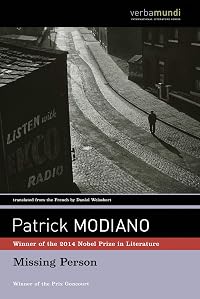
Paul Modiano is a French writer who was born on July 30, 1945, in Boulogne-Billancourt. He won the Nobel Prize for Literature in 2014 for his lifetime body of work. He previously won the Austrian State Prize for European Literature in 2012 and the Prix mondial Cino Del Duca from the Institut de France for his lifetime achievement in 2010. His show more other awards include the Prix Goncourt in 1978 for his novel Rue des boutiques obscures and the Grand prix du roman de l'Académie française in 1972 for Les Boulevards de ceinture. Modiano's works explore the traumas of the Nazi occupation of France and the puzzle of identity. His preoccupation with the theme of identity can be seen throughout many of his works including his 2005 memoir entitled Un Pedigree. Modiano was greatly influenced by his parents' relationship. His mother and father began their clandestine relationship during occupied France. Growing up, his father was absent for most of his life and his mother was away frequently while on tour acting. He was alone much of the time and went to school because of government aid. His younger brother died of a disease at age 10 and this added to his "lost identity" feelings while growing up. Modiano first came to prominence in France when he wrote the 1968 book La Place de L'Étoile. He has published over 30 works which include novels, screenplays and children's books. His other works include: La Ronde de nuit (1969), English translation: Night Rounds; Rue des boutiques obscures (1978), English translation: Missing Person; and Quartier Perdu (1984), English translation: A Trace of Malice. Although he is well known in France, only about 12 of his works have been translated into English. (Bowker Author Biography) show less
Some Editions
Series
Belongs to Publisher Series
Common Knowledge
- Canonical title
- Such Fine Boys
- Original title
- De si braves garçons
- Original publication date
- 1982
- Epigraph*
- ... Zo'n aardige jongen!
Toergenjev, "De Bezjin weide". - Dedication*
- Voor Rudy
Voor Simone - Original language*
- Frans
*Some information comes from Common Knowledge in other languages. Click "Edit" for more information.
Classifications
Statistics
- Members
- 188
- Popularity
- 173,124
- Reviews
- 5
- Rating
- (3.77)
- Languages
- 6 — Dutch, English, French, Greek, Hebrew, Spanish
- Media
- Paper, Ebook
- ISBNs
- 14
- ASINs
- 3