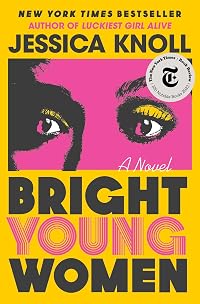
Bright Young Women
by Jessica Knoll
On This Page
Description
"The book opens on a Saturday night in 1978, hours before a soon-to-be-infamous murderer descends upon a Florida sorority house with deadly results. The lives of those who survive, including sorority president and key witness, Pamela Schumacher, are forever changed. Across the country, Tina Cannon is convinced her missing friend was targeted by the man papers refer to as the All-American Sex Killer--and that he's struck again. Determined to find justice, the two join forces as their search show more for answers leads to a final, shocking confrontation"-- show lessTags
Recommendations

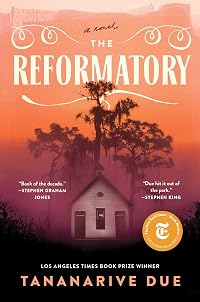
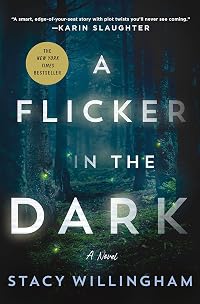
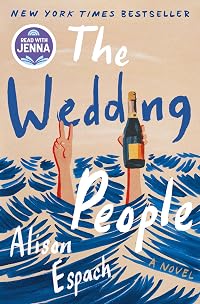
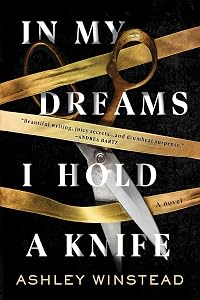



Member Recommendations

Member Reviews
10-2025
Encontrar la historia de las víctimas, novelas incluidas, es tarea imposible, porque no existen. Normalmente los protagonistas son los asesinos, los delincuentes. Hay libros de criminología, novelas, documentales, películas,etc. Por eso me llamó la atención está novela.
Basado en hechos reales, va contando la vida de las víctimas, incluidas las personas (familia, amigos, pareja) del entorno, que también son víctimas. Su vida, a partir del momento que el asesino entra en sus vidas, jamás volverá a ser igual.
Intercala diferentes periodos temporales. Las "protagonistas" son dos de sus numerosas víctimas, una estudiante que dormía en la residencia y una de las dos chicas que desapareció del lago el mismo día.
Vas show more descubriendo que el asesino no es el ser superdotado que siempre nos han vendido. Tuvo la suerte de dar con investigadores ineptos y de una sociedad que culpabilizaba a las víctimas, por el hecho de ser mujeres y hacer su vida.
Otro problema es que cada Estado es un territorio independiente, colaboraban poco y con reticencia. Eso no ayuda a la hora de relacionar unos crímenes con otros.
Las dos historias enganchan, pero en especial la de Ruth. Cuando ves que alguien lo ha pasado mal toda la vida, tanto por la familia, como por los amigos. Ves que por fin remonta, para terminar topándose con un asesino en serie y caer en sus garras, por buena persona ... Se te cae el alma a los pies.
Entretenida, engancha, recomendable. show less
Encontrar la historia de las víctimas, novelas incluidas, es tarea imposible, porque no existen. Normalmente los protagonistas son los asesinos, los delincuentes. Hay libros de criminología, novelas, documentales, películas,etc. Por eso me llamó la atención está novela.
Basado en hechos reales, va contando la vida de las víctimas, incluidas las personas (familia, amigos, pareja) del entorno, que también son víctimas. Su vida, a partir del momento que el asesino entra en sus vidas, jamás volverá a ser igual.
Intercala diferentes periodos temporales. Las "protagonistas" son dos de sus numerosas víctimas, una estudiante que dormía en la residencia y una de las dos chicas que desapareció del lago el mismo día.
Vas show more descubriendo que el asesino no es el ser superdotado que siempre nos han vendido. Tuvo la suerte de dar con investigadores ineptos y de una sociedad que culpabilizaba a las víctimas, por el hecho de ser mujeres y hacer su vida.
Otro problema es que cada Estado es un territorio independiente, colaboraban poco y con reticencia. Eso no ayuda a la hora de relacionar unos crímenes con otros.
Las dos historias enganchan, pero en especial la de Ruth. Cuando ves que alguien lo ha pasado mal toda la vida, tanto por la familia, como por los amigos. Ves que por fin remonta, para terminar topándose con un asesino en serie y caer en sus garras, por buena persona ... Se te cae el alma a los pies.
Entretenida, engancha, recomendable. show less
He would have been terrifying to her from the moment she laid eyes on him. Gone were the head-to-toe tennis whites, the plummy voice, and the handicapped act, the pleas to compliant young women for help, which we'd been conditioned from birth to answer the same way he'd been conditioned from birth to expect a woman to take care of him.
This is a novel about the victims of a famous serial killer, in which the women are centered and the promise of their lives mourned. The person who is usually centered in this story, in movies, in documentaries, in novels, and true crime podcasts, is here never named, never described except to point out how small he was, how mediocre his mind.
Pamela is the president of her sorority house at Florida State show more University. She's dedicated to running the house well, which has put her at odds with her freewheeling best friend, and on that night, when most of her sisters are out having fun, she is doing paperwork. Early in the morning hours, she goes downstairs and sees a man leaving the house. The next morning, two of the girls are found dead and two seriously injured.
Ruth is newly divorced and insecure about her looks when she meets Tina, falls in love and is learning how to extricate herself from a family horrified by what she is. On a hot summer's day, she bikes to a local lake to spend time with her girlfriend, when a man asks her for help moving his boat. She never meets up with Tina.
The victims of this murderer were bright and had promising futures ahead of them. Pamela and Tina are determined to do what they can to bring him to justice, even when that means that the men around them find them pushy and unfeminine. Even when the judge at his sentencing spends time mourning the life lost behind bars and none for the women whose futures were far brighter. I suspect this will end up on my best of list at the end of the year. show less
This is a novel about the victims of a famous serial killer, in which the women are centered and the promise of their lives mourned. The person who is usually centered in this story, in movies, in documentaries, in novels, and true crime podcasts, is here never named, never described except to point out how small he was, how mediocre his mind.
Pamela is the president of her sorority house at Florida State show more University. She's dedicated to running the house well, which has put her at odds with her freewheeling best friend, and on that night, when most of her sisters are out having fun, she is doing paperwork. Early in the morning hours, she goes downstairs and sees a man leaving the house. The next morning, two of the girls are found dead and two seriously injured.
Ruth is newly divorced and insecure about her looks when she meets Tina, falls in love and is learning how to extricate herself from a family horrified by what she is. On a hot summer's day, she bikes to a local lake to spend time with her girlfriend, when a man asks her for help moving his boat. She never meets up with Tina.
The victims of this murderer were bright and had promising futures ahead of them. Pamela and Tina are determined to do what they can to bring him to justice, even when that means that the men around them find them pushy and unfeminine. Even when the judge at his sentencing spends time mourning the life lost behind bars and none for the women whose futures were far brighter. I suspect this will end up on my best of list at the end of the year. show less
I loved the way Knoll framed this book. She truly manages to create a novel that is about a serial killer without giving undo attention to the killer. Instead, the focus is on two women and those that encircle them: Pamela, a survivor of an attack on her sorority where several girls died or were injured, and Ruth, a victim.
Though this book is based on true events, the serial killer is never named and is always referred to as "The Defendant". At the end, I didn't know how much of the book was based in reality and how much was made up to further the story, and for once I didn't care. Usually I get really uptight about what's accurate and not accurate in historical fiction. In this case, it was partially the point of the book that the show more serial killer's thoughts, feelings, motivations, etc. were way less important than remembering the victims and their own complicated lives that were cut short by this lunatic. show less
Though this book is based on true events, the serial killer is never named and is always referred to as "The Defendant". At the end, I didn't know how much of the book was based in reality and how much was made up to further the story, and for once I didn't care. Usually I get really uptight about what's accurate and not accurate in historical fiction. In this case, it was partially the point of the book that the show more serial killer's thoughts, feelings, motivations, etc. were way less important than remembering the victims and their own complicated lives that were cut short by this lunatic. show less
A fictional account of Ted Bundy's attack on a Florida sorority house told from the point of view of the eyewitness as well as of a previous victim whose body was not found (note that Bundy is purposely never named). The author's intent was clearly to deromanticize Bundy and others like him and to center their victims' stories. There is a strong feminist angle and an emphasis on how women, particularly lesbians, were treated during the 1970s. I think I would have preferred less of an obvious agenda but overall I liked the book and found the story to be engaging and moving at the end. The account that opens the book of the attack on the sorority and the description of the murder at the end were particularly well written and chilling. show more Real-life monsters are always scarier than the made-up ones. show less
I'm not a true crime fan, and obviously didn't read the blurb properly, so didn't realise that the story is based on a real life and very infamous serial killer in 1970s America. I might have cottoned on sooner, but the author took the admirable approach of only referring to the fictionalised version of the killer as 'The Defendant', while focusing on the lives of the female victims and survivors. Two women control the narrative, Ruth and Pamela, and both take a while to warm to, but I came to love all of the 'sisters'. Pamela's love for and posthumous defence of one of the victims is especially emotional, and the final words in the book are both beautiful and heartbreaking: 'Things grow differently when they're damaged, showing us how show more to occupy strange new ground to bloom red instead of green. We can be found, brighter than before.'
There are also some pertinent observations about how society views white male killers and the women they target, which are still depressingly relevant today: 'A series of national ineptitudes and a parsimonious attitude toward crimes against women created a kind of secret tunnel through which a college dropout with severe emotional disturbances moved with impunity for the better part of the seventies.' Before I realised which case the book was based on, the commentary on women being viewed as expendable or even responsible for their own deaths put me in a mind of a more local serial killer from the same era, whose victims I was recently reading about: 'We don't hear about serial killers much anymore because they target sex workers, people who get into a stranger's car as a means of survival and whose disappearances are less likely to raise alarm bells.' Any book, whether fact or fiction, which diminishes such 'sad little men' to a mere footnote in history and instead commemorates the women whose lives were cut short has my vote. show less
There are also some pertinent observations about how society views white male killers and the women they target, which are still depressingly relevant today: 'A series of national ineptitudes and a parsimonious attitude toward crimes against women created a kind of secret tunnel through which a college dropout with severe emotional disturbances moved with impunity for the better part of the seventies.' Before I realised which case the book was based on, the commentary on women being viewed as expendable or even responsible for their own deaths put me in a mind of a more local serial killer from the same era, whose victims I was recently reading about: 'We don't hear about serial killers much anymore because they target sex workers, people who get into a stranger's car as a means of survival and whose disappearances are less likely to raise alarm bells.' Any book, whether fact or fiction, which diminishes such 'sad little men' to a mere footnote in history and instead commemorates the women whose lives were cut short has my vote. show less
This was a real pleasure to read. Knoll managed to create suspense where there was none with respect to outcome (this is a real case, and we know what happened.) The suspense came with the how. How can women stay safe and be independent when the patriarchy wants us dependent and unsafe? How can mediocre white males be held accountable when by dint of their whiteness and maleness people erase their mediocrity with an agreed-upon lie that they are exceptional? How can we build a sisterhood where women support each other when everyone wants to turn every disagreement or difference of opinion into a catfight and every loving commitment to friendship into proof of sub rosa lesbianism (which is of course to be considered shameful beyond show more measure)? And how can women who do love one another romantically live when people consider the fact of their love destroys their credibility with respect to everything?
Here, The Defendant (Knoll does not use his name, and I won't either) murders two young women in a sorority house (he murdered many others before and after) and our guide, Pam, quickly becomes aware that she is living under a system that does not want the truth, especially from a woman. She needs to fight for anyone to listen to her though she is the only eyewitness. As she fights against a system that wants to minimize her she learns the truth about the world, sees everything more clearly, and becomes a formidable woman. The other part of the story is told by an earlier victim, Ruth, and by Ruth's loving grieving partner Tina. Tina has been fighting to put away the Defendant for years but everyone sees him as the victim and sees her as an abomination who besmirches all she touches. Pam and Tina have their work cut out for them, and in the face of barriers they get it done.
Knoll's decision to focus on the women, while still the exception, is not new. There have been a spate of books in recent years, some better than others, that have adopted the lens of the women, whether victims of crime or impacted by crime. This though is one of the best iterations I have read. In tone it reminded me of Notes on an Execution. I think that book was a bit better written than this, but this was still quite good. Sometimes this leans a little too much into "you go girl" territory for my liking, and it explicitly leans into the way the mother-child relationship screws people up. in this case Pam, Ruth, and The Defendant. It is pat and reductive and the book deserves better, but this is a minor part of the book, and it doesn't do too much damage.
I listened to this book very well narrated by the miraculous Sutton Foster (I admit to a giant girlcrush, but she really was great here) and the excellent Imani Jade Powers. I love that the narrators did not give in to a desire to overdramatize. These women were raised to be ladies, they were expected to weather things without drama, and so they did.
Oh yeah, and fuck the patriarchy. show less
Here, The Defendant (Knoll does not use his name, and I won't either) murders two young women in a sorority house (he murdered many others before and after) and our guide, Pam, quickly becomes aware that she is living under a system that does not want the truth, especially from a woman. She needs to fight for anyone to listen to her though she is the only eyewitness. As she fights against a system that wants to minimize her she learns the truth about the world, sees everything more clearly, and becomes a formidable woman. The other part of the story is told by an earlier victim, Ruth, and by Ruth's loving grieving partner Tina. Tina has been fighting to put away the Defendant for years but everyone sees him as the victim and sees her as an abomination who besmirches all she touches. Pam and Tina have their work cut out for them, and in the face of barriers they get it done.
Knoll's decision to focus on the women, while still the exception, is not new. There have been a spate of books in recent years, some better than others, that have adopted the lens of the women, whether victims of crime or impacted by crime. This though is one of the best iterations I have read. In tone it reminded me of Notes on an Execution. I think that book was a bit better written than this, but this was still quite good. Sometimes this leans a little too much into "you go girl" territory for my liking, and it explicitly leans into the way the mother-child relationship screws people up. in this case Pam, Ruth, and The Defendant. It is pat and reductive and the book deserves better, but this is a minor part of the book, and it doesn't do too much damage.
I listened to this book very well narrated by the miraculous Sutton Foster (I admit to a giant girlcrush, but she really was great here) and the excellent Imani Jade Powers. I love that the narrators did not give in to a desire to overdramatize. These women were raised to be ladies, they were expected to weather things without drama, and so they did.
Oh yeah, and fuck the patriarchy. show less
This is a riveting book with a fresh perspective on a familiar and chilling story. From the striking cover to the haunting narrative, it presents a compelling exploration of the Bundy crimes from a perspective rarely seen in media. Instead of glorifying The Defendant, the focus shifts to the strength and resilience of the victims and their loved ones, exposing the flaws of the judicial system and societal misogyny without once mentioning his name. Through two main perspectives across three timelines, it's a suspenseful thriller that evolves into a powerful testament to the survivors' courage. The pacing faltered at times, and the length felt slightly excessive for me, but I am so glad to have read this. I learned so much about the era show more and processes surrounding the crimes, shedding light on aspects often overlooked in previous portrayals. I went from suspense and anger to admiration for the women’s resilience. While not a light-hearted read, this book is an important one. It forces you to confront the injustices women face (from microaggressions to murders) and is a reminder of our strength. show less
Members
- Recently Added By
Lists

Books Set in Florida
25 works; 8 members

READ in 2023
244 works; 1 member

Books Read in 2023
5,547 works; 145 members

Top Five Books of 2023
767 works; 317 members

ScaredyKit 2025
13 works; 1 member

Books Read in 2025
4,091 works; 97 members

Fiction: Thriller
78 works; 1 member
Author Information

5 Works 5,425 Members
Jessica Knoll has been a senior editor at Cosmopolitan, and the articles editor at SELF. She grew up in the suburbs of Philadelphia and graduated from The Shipley School in Bryn Mawr, Pennsylvania, and from Hobart and William Smith Colleges in Geneva, New York. Her book's Luckiest Girl Alive and The Favorite Sister made The New York Times show more Bestseller List. (Bowker Author Biography) show less
Some Editions
Awards and Honors
Awards
Distinctions
Common Knowledge
- Canonical title
- Bright Young Women
- Original publication date
- 2023
- Important places
- Tallahassee, Florida, USA; Seattle, Washington, USA
- First words
- Pamela
Montclair, New Jersey
Day 15,825
You may not remember me, but I have never forgotten you, begins the letter written in the kind of cursive they don't teach in schools anymore. I read the se... (show all)ntence twice in stinging astonishment. It's been forty-three years since my brush with the man even the most reputable papers call the All-American Sex Killer, and my name has long since fallen to a footnote in the story. - Quotations
- My secretary has moonwalked her rolling chair away from her desk, and now she sits framed by my open office door with a solicitous tilt of her head.
Sometimes I think The Defendant is just another old wives' tale. That law enforcement backed up his self-purported claims of brilliance to cover up their own incompetence—in interviews they gave the media, in testimonies th... (show all)ey made before the judge—and it all cemented from there, hardening into a generational truth passed down from mother to daughter. Consider this my own warning: The man was no diabolical genius. He was your run-of-the-mill incel whom I caught picking his nose in the courtroom. More than once. (Pamela) - Canonical DDC/MDS
- 813.6
- Canonical LCC
- PS3611.N64
Classifications
Statistics
- Members
- 1,649
- Popularity
- 13,612
- Reviews
- 46
- Rating
- (3.82)
- Languages
- English, German, Spanish
- Media
- Paper, Audiobook, Ebook
- ISBNs
- 19
- ASINs
- 5