
The Longest Journey
by E. M. Forster
On This Page
Description
The Longest Journey (1907) follows the young Rickie Elliot's journey to maturity. Orphaned and lame as a child, Rickie was teased at boarding school and finds Cambridge to be a kind of paradise. He is not an intellectual, but is deeply affected by art and poetry, and is accepted within a philosophical circle of students. His new sense of belonging is challenged when he is visited by old friends from home..
Tags
Recommendations















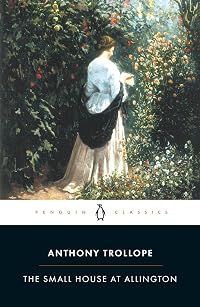
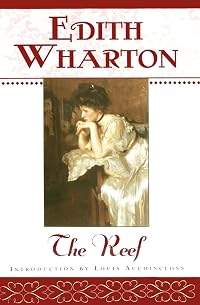

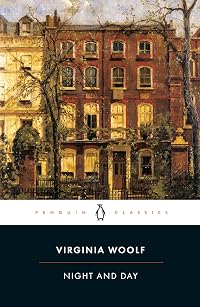


Member Recommendations
Member Reviews
I had wanted to read this novel when I heard that it was Forster's favourite among his books, amounting to a roman a cle, or veiled spiritual autobiography. It starts by capturing a time when some young men went to university and found it to be a gigantic gentleman's club of bonhomie, intellectual conversation and comfortable ease - a far cry from today's universities of distracted late teenagers, commuting in only when they have to to a physical campus, most of the time working in a job, and treating their degrees like instrumental periods leading to more money, while circling above are well paid executives with little interest in academic tradition and their eye on the international ranking boards in a quest for more fee paying kiddies.
Forster is best known for such classics as 'A Passage to India' and 'Howards End'; his other work does not get the exposure it deserves, and so 'The Longest Journey' has fallen out of its natural readership. This is a terrible shame; Forster wrote this book before he turned thirty, and yet it contains such wisdom and tact that you would expect it rather to have been the product of an older mind. But then Forster was always ahead, of himself, of his times, and of the literary world in general. I felt like I was soaking myself in culture with this novel, and adored every sentence. Remarkable.
This novel starts off in Cambridge, where the main character, Rickie, is an undergraduate. Philosophical discussions are held, and nature is appreciated. The main character is sensitive, with literary inclinations, and a partially crippled foot. After Cambridge, Rickie is followed through life and unto his death, with marriage, employment, and family goings-on filling the interval.
The emphases of the novel are nature, human nature, emotions, class, poetry, art, philosophy, and family. Though the dramatic plot and characterisation were pretty good, it is the literary style and the ideas in this book that I most enjoyed. Some novels feel like they take ages to read, but this one seemed to be gone before I knew it, and felt far shorter show more than its 300 odd pages. This is usually a good sign. show less
The emphases of the novel are nature, human nature, emotions, class, poetry, art, philosophy, and family. Though the dramatic plot and characterisation were pretty good, it is the literary style and the ideas in this book that I most enjoyed. Some novels feel like they take ages to read, but this one seemed to be gone before I knew it, and felt far shorter show more than its 300 odd pages. This is usually a good sign. show less
it is the only book that has come near to describing England. I was turning from Italy, I hadn't yet turned to the East.
E. M. Forster wrote these sentences in his memoirs in the early 1920s. Indeed, one of the most attractive things of The longest journey are descriptions of nature and the countryside, particularly Wiltshire. There are descriptions of country houses, manners and class.
Large parts of the book seem straighforward, but they are not.
the train passed through a coppice in which the grey undergrowth looked no more alive than firewood. Yet every twig in it was waiting for the spring.
The sentences before, and after these two convey nothing but the vaguest of hints. In fact, this holds true for many sentences and parts of the show more novel.
Superficially, the plot is fairly straighforward. I young man, Ricky Elliot, has a poor start in life, and is bullied at university. He gets a posting as a teacher at a second-rate school, which makes him lose some of his ideals. His marriage strands within two years, in quite a scandalous fashion. His high fidelity and loyalty to his half-brother, who is a bit of a cad, is quite surprising. Separated from his wife, he starts off on a writing career.
There are quite some similarities between E. M. Forster and Frederick Elliot. Forster had a club hand, Ricky has a club foot. Both were teased about it at school, and thus in some sense set apart. However, there are marked differences. For instance, E. M. Forester was never married.
However, while the plot seems so straighforward, the story is a poor read. It is confusing. It doesn't seem to say what is does. It is easy to lose track and interest. In fact, The longest journey is Forster's least popular novel. The third time, I basically pushed through, reading till the end.
I twice had a false start reading this novel, abandoning it after about 150 pages. The longest journey is relatively short, at 336 pages. I have read several other novels by E. M. Forster. I do not think it is because it is Forster's first novel. I think it is because Forster is trying to write a novel, but intentionally hiding his newly discovered homosexuality. The last part of the novel, after the separation from Agnes, is clearly the best, and most beautiful. There is a slight hint at attention for and attachment to men, more generally living in the company of men.
The longest journey was published in 1907. In 1906, Forester fell in love with a 17-year-old boy whom he tutored in Latin. It seems the novel is a very camouflaged attempt to write about the predicament of gay men at that time, however, in such a covered way to be unattractive to modern readers. show less
E. M. Forster wrote these sentences in his memoirs in the early 1920s. Indeed, one of the most attractive things of The longest journey are descriptions of nature and the countryside, particularly Wiltshire. There are descriptions of country houses, manners and class.
Large parts of the book seem straighforward, but they are not.
the train passed through a coppice in which the grey undergrowth looked no more alive than firewood. Yet every twig in it was waiting for the spring.
The sentences before, and after these two convey nothing but the vaguest of hints. In fact, this holds true for many sentences and parts of the show more novel.
Superficially, the plot is fairly straighforward. I young man, Ricky Elliot, has a poor start in life, and is bullied at university. He gets a posting as a teacher at a second-rate school, which makes him lose some of his ideals. His marriage strands within two years, in quite a scandalous fashion. His high fidelity and loyalty to his half-brother, who is a bit of a cad, is quite surprising. Separated from his wife, he starts off on a writing career.
There are quite some similarities between E. M. Forster and Frederick Elliot. Forster had a club hand, Ricky has a club foot. Both were teased about it at school, and thus in some sense set apart. However, there are marked differences. For instance, E. M. Forester was never married.
However, while the plot seems so straighforward, the story is a poor read. It is confusing. It doesn't seem to say what is does. It is easy to lose track and interest. In fact, The longest journey is Forster's least popular novel. The third time, I basically pushed through, reading till the end.
I twice had a false start reading this novel, abandoning it after about 150 pages. The longest journey is relatively short, at 336 pages. I have read several other novels by E. M. Forster. I do not think it is because it is Forster's first novel. I think it is because Forster is trying to write a novel, but intentionally hiding his newly discovered homosexuality. The last part of the novel, after the separation from Agnes, is clearly the best, and most beautiful. There is a slight hint at attention for and attachment to men, more generally living in the company of men.
The longest journey was published in 1907. In 1906, Forester fell in love with a 17-year-old boy whom he tutored in Latin. It seems the novel is a very camouflaged attempt to write about the predicament of gay men at that time, however, in such a covered way to be unattractive to modern readers. show less
Rickie Elliott is a Cambridge student and a struggling writer. After becoming infatuated with an engaged young woman, Agnes Pembroke, his quiet life is changed forever. The two end up married and Rickie takes a position as a schoolmaster. Soon Rickie learns Agnes' true nature, which is drastically different from his own.
The Longest Journey feels like an author's early work, full of idealistic young men and good concepts, but characters that sometimes fall flat. It was the second book Forster published and though his talent is still plainly obvious, it certainly improved with time. The characters feel more like ideas of people than individuals with complex interests and flaws. Forster also has a tendency to kill characters with little show more fanfare. If someone is going to die in one of his books there is never much warning or fuss about it.
I love the writing style, but I wouldn't recommend it for those new to Forster. If you're already a fan, pick it up, but Howard's End and A Room With a View are both better introductions to the author. show less
The Longest Journey feels like an author's early work, full of idealistic young men and good concepts, but characters that sometimes fall flat. It was the second book Forster published and though his talent is still plainly obvious, it certainly improved with time. The characters feel more like ideas of people than individuals with complex interests and flaws. Forster also has a tendency to kill characters with little show more fanfare. If someone is going to die in one of his books there is never much warning or fuss about it.
I love the writing style, but I wouldn't recommend it for those new to Forster. If you're already a fan, pick it up, but Howard's End and A Room With a View are both better introductions to the author. show less
One of the most intriguing relationships in the novel (and you're introduced to it early so, so this is not a spoiler in any way) is that Rickie shares with Stewart Ansell, who determinedly challenges -- and perpetuates -- class prejudice."To be born one thing and grow up another -- Ansell had accomplished this without weakening one of the ties that bound him to his home." And, ironically, it's Stewart who most notably rebuffs Agnes, who has come to visit Rickie, but has been completely and entirely ignored by the draper's son. The Longest Journey is filled with such contradictions and injuries, and it contains more than its share of disappointments and tragedies. Nonetheless, Lionel Trilling considered it "perhaps the most brilliant, show more the most dramatic, and the most passionate" of Forster's novels. It's also of interest to serious Forster readers for its autobiographical elements (the most obvious being Rickie's desire to write) and although it took me many months to move beyond the novel's first 100 pages (which does make this, of Forster's novels, my Longest Journey through his fiction), I'm pleased to have read it. show less
The longest (and dreariest) journey referred to is marriage, or partnership with a single woman. The title is taken from a line of the poem Epipsychidion by Shelley, one of many echoes of Shelley's life that you come across in this book. Shelley's poem was inspired by his extra-marital love for Emilia Vivani, a love which Andre Maurois suggests was for an embodied ideal rather than for the real woman. Love for the ideal rather than the actual leads to the unsuccessful marriage at the centre of this book. And yet it seemed to me that the author was not discussing only this marriage and this woman, but marriage in general. Every marriage in this book leads to disappointment. Continued
Members
- Recently Added By
Lists

20th Century Literature
1,161 works; 55 members

Favourite Books
1,820 works; 316 members

Books Read in 2014
2,344 works; 86 members

Maybe This Year? Books to Look Forward To
412 works; 9 members

SHOULD Read Books!
354 works; 9 members

Tonikat reading completed on Librarything journals
329 works; 2 members

Books Read in 2024
4,727 works; 128 members
Author Information

189+ Works 56,991 Members
Edward Morgan Forster was born on January 1, 1879, in London, England. He never knew his father, who died when Forster was an infant. Forster graduated from King's College, Cambridge, with B.A. degrees in classics (1900) and history (1901), as well as an M.A. (1910). In the mid-1940s he returned to Cambridge as a professor, living quietly there show more until his death in 1970. Forster was named to the Order of Companions of Honor to the Queen in 1953. Forster's writing was extensively influenced by the traveling he did in the earlier part of his life. After graduating from Cambridge, he lived in both Greece and Italy, and used the latter as the setting for the novels Where Angels Fear to Tread (1905) and A Room with a View (1908). The Longest Journey was published in 1907. Howard's End was modeled on the house he lived in with his mother during his childhood. During World War I, he worked as a Red Cross Volunteer in Alexandria, aiding in the search for missing soldiers; he later wrote about these experiences in the nonfiction works Alexandria: A History and Guide and Pharos and Pharillon. His two journeys to India, in 1912 and 1922, resulted in A Passage to India (1924), which many consider to be Forster's best work; this title earned the James Tait Black Memorial Prize. Forster wrote only six novels, all prior to 1925 (although Maurice was not published until 1971, a year after Forster's death, probably because of its homosexual theme). For much of the rest of his life, he wrote literary criticism (Aspects of the Novel) and nonfiction, including biographies (Goldsworthy Lowes Dickinson), histories, political pieces, and radio broadcasts. Howard's End, A Room with a View, and A Passage to India have all been made into successful films. (Bowker Author Biography) show less
Some Editions
Awards and Honors
Series
Belongs to Publisher Series
Work Relationships
Is contained in
Howards End / The Longest Journey / A Room with a View / Where Angels Fear to Tread by E. M. Forster
Howards End / The Longest Journey / The Machine Stops / A Room With A View / Where Angels Fear to Tread by E. M. Forster
Common Knowledge
- Original publication date
- 1907
- Important places
- Cambridge, Cambridgeshire, England, UK; Salisbury, Wiltshire, England, UK; Sawston, Cambridgeshire, England, UK
- Epigraph
- Fratribus
- First words
- "The cow is there," said Ansell, lighting a match and holding it out over the carpet.
- Quotations
- Rickie sat by the fire playing with one of the lumps of chalk [that had been thrown through the window]. ... As he mused, the chalk slipped from his fingers, and fell on the coffee-cup, which broke. The china, said Leighton [... (show all)footman] was expensive. He believed it was impossible to match it now. Each cup was different. It was a harlequin set
He burst into an odd passion: he would sooner starve than leave England.
"Why?" she asked, "Are you in love?" He picked up a lump of the chalk and
made no answer.
It was brave of her to persevere, lumps of chalk having come out of the night last June. For some obscure reason - not so obscure to Rickie - she had preserved them as mementoes of an episode. - Last words
- (Click to show. Warning: May contain spoilers.)He bent down reverently and saluted the child; to whom he had given the name of their mother.
Classifications
Statistics
- Members
- 1,663
- Popularity
- 13,486
- Reviews
- 16
- Rating
- (3.38)
- Languages
- 8 — Catalan, Chinese, English, French, German, Italian, Portuguese, Spanish
- Media
- Paper, Audiobook, Ebook
- ISBNs
- 99
- ASINs
- 64