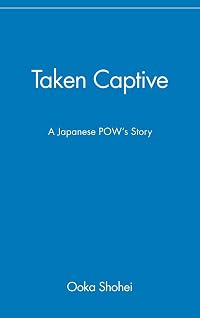
Taken Captive: A Japanese POW's Story
by Ooka Shohei (Author), Shōhei Ōoka (Author)
On This Page
Description
"On January 25, 1945, Private Ooka Shohei of the Japanese Imperial Army was captured by American forces in the Philippines. Near death from starvation and acute malaria, he was nursed back to health by his captors and shipped off to a POW camp. Taken Captive is his powerful and poignant account of life as a prisoner of war. Long regarded as a literary classic in Japan, this extraordinary memoir is appearing in English for the first time." "There are no epic battles or grand scale heroics. show more This is an intimate, gripping, and ultimately enlightening true story of a sophisticated, middle-aged scholar thrown into a primitive struggle for survival. It is filled with moments of sublime ordinariness - prisoners passing time by playing "20 Questions"--And heartstopping encounters - a lone soldier decides whether or not to shoot an unsuspecting enemy soldier." "The harsh conditions, the daily routines that occupy a prisoner's time, and above all, the psychological struggles and behavioral quirks of captives forced to live in close confinement are conveyed with devastating simplicity and candor. Throughout, the author constantly probes his own conscience, questioning motivations and decisions. What emerges is a multileveled portrait of an individual determined to retain his humanity in an uncivilized environment."--Jacket. show lessTags
Recommendations













Member Reviews
Ōoka Shōhei was thirty-five-years-old in 1944 when he was drafted into the Imperial Japanese Army, given cursory training, and sent to the front lines in the Philippines, where he served as a communications expert. By December he was suffering from starvation and severe malaria and had been left behind when his unit retreated. He was captured by the Americans and spent the next year in American POW camps. His account of his time as a POW is highly detailed and explores not only his experience, but the motivations and mindsets of those around him.
Like most Japanese soldiers, Ōoka had been instructed to never surrender and if capture was imminent, suicide was preferable. In addition, they knew how the Japanese had treated prisoners in show more Manchuria and the Philippines, and feared similar treatment. Many thoughts passed through Ōoka's mind in the days leading up to his capture, including a half-hearted suicide attempt, but in the end, acute illness render the issue of surrender moot. He was astonished when instead of torture or neglect and ill-treatment, he was sent to a POW hospital, treated for the malaria and given a special diet, as well as books and clothes. His dismay at being captured segued into relief at surviving.
Ōoka describes life in the POW camps in great detail, as well as his fellow prisoners and the American GIs that he met. He was highly perceptive and introspective. Prior to the war, Ōoka had studied French literature, translated [[Stendhal]], and learned English as well. He eventually becomes a translator in the camps and has access to all levels of the camp hierarchy. His insights are fascinating:
Surrender and attitude toward captors:
Surrender is a particular, individual act. On the verge of starvation in the jungles of the Pacific, a great many soldiers must have contemplated surrender, yet very few found the courage to actually turn themselves over to the enemy. At the same time, it would not have been the least bit implausible for a man who had never dreamed of surrender to suddenly find his hands in the air when confronted with the incontrovertible superiority of his foe. (p. 138)
Their confusion {as to how to behave toward their captors}, it seems to me, was quite understandable. Their military indoctrination prevented them from accepting the Americans' warm-heartedness with simple gratitude. Whereas they saw themselves as dishonorable captives, the Americans treated them as human beings, and this excessive kindness, so to speak, confounded them completely. (p. 53)
One thing that I found particularly interesting was that many Japanese gave fake names when they were captured, because they did not want their families back in Japan to know that they had suffered the ignominy of capture. They feared too that their families would be punished. This became a problem for both sides after the war. Some innocent soldiers were denied repatriation, because the name they had adopted at capture was on the list of suspected war criminals, and other guilty parties were released.
On the differences between professional soldiers and those who were drafted:
Being drafted was to him like going through some kind of natural disaster, and his only concern was to somehow weather it and make his way home alive. (p. 147)
We were an "over-the-hill" unit of mostly middle-agers, sent to the front after completing barely three months of basic training in early 1944, and we could hardly be called soldiers. When Mindoro became the Americans' next target after Leyte, we experienced great hardship and suffering, but again, not from anything that could really be called combat. Thus, we emerged from our experiences on the island with our civilian identities intact. We never became true "brothers-in-arms."
We may never have been proper soldiers, but we did become bona fide prisoners of war. (p. 149)
And in particular, he writes about the attitude of "anything goes" from the soldiers who had fought in China vs the conscripted soldiers in 1944 who were slightly horrified at their behavior. The professional soldiers and sailors (of whom there were many, whose ships had been sunk off the coast of the Philippines) maintained their military discipline and hierarchical authority much more than the civilian soldiers.
One thing that is conspicuously absent from Ōoka's account is any mention of the families the Japanese soldiers left behind, including his own. From a photograph on the back of the book, I know that he had a wife and two young children in 1944, but he never talks about them or of writing letters home, etc. I would have liked to have known how the soldiers were received when they returned to an occupied Japan. There is a lot of conjecture about this in the camps, but his account ends with the repatriation ships reaching the Japanese mainland.
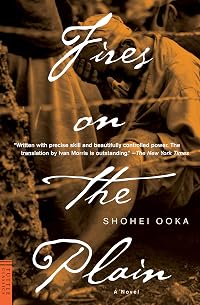
Highly recommended for anyone interested in WWII and those who have read his novel, [Fires on the Plain]. show less
Like most Japanese soldiers, Ōoka had been instructed to never surrender and if capture was imminent, suicide was preferable. In addition, they knew how the Japanese had treated prisoners in show more Manchuria and the Philippines, and feared similar treatment. Many thoughts passed through Ōoka's mind in the days leading up to his capture, including a half-hearted suicide attempt, but in the end, acute illness render the issue of surrender moot. He was astonished when instead of torture or neglect and ill-treatment, he was sent to a POW hospital, treated for the malaria and given a special diet, as well as books and clothes. His dismay at being captured segued into relief at surviving.
Ōoka describes life in the POW camps in great detail, as well as his fellow prisoners and the American GIs that he met. He was highly perceptive and introspective. Prior to the war, Ōoka had studied French literature, translated [[Stendhal]], and learned English as well. He eventually becomes a translator in the camps and has access to all levels of the camp hierarchy. His insights are fascinating:
Surrender and attitude toward captors:
Surrender is a particular, individual act. On the verge of starvation in the jungles of the Pacific, a great many soldiers must have contemplated surrender, yet very few found the courage to actually turn themselves over to the enemy. At the same time, it would not have been the least bit implausible for a man who had never dreamed of surrender to suddenly find his hands in the air when confronted with the incontrovertible superiority of his foe. (p. 138)
Their confusion {as to how to behave toward their captors}, it seems to me, was quite understandable. Their military indoctrination prevented them from accepting the Americans' warm-heartedness with simple gratitude. Whereas they saw themselves as dishonorable captives, the Americans treated them as human beings, and this excessive kindness, so to speak, confounded them completely. (p. 53)
One thing that I found particularly interesting was that many Japanese gave fake names when they were captured, because they did not want their families back in Japan to know that they had suffered the ignominy of capture. They feared too that their families would be punished. This became a problem for both sides after the war. Some innocent soldiers were denied repatriation, because the name they had adopted at capture was on the list of suspected war criminals, and other guilty parties were released.
On the differences between professional soldiers and those who were drafted:
Being drafted was to him like going through some kind of natural disaster, and his only concern was to somehow weather it and make his way home alive. (p. 147)
We were an "over-the-hill" unit of mostly middle-agers, sent to the front after completing barely three months of basic training in early 1944, and we could hardly be called soldiers. When Mindoro became the Americans' next target after Leyte, we experienced great hardship and suffering, but again, not from anything that could really be called combat. Thus, we emerged from our experiences on the island with our civilian identities intact. We never became true "brothers-in-arms."
We may never have been proper soldiers, but we did become bona fide prisoners of war. (p. 149)
And in particular, he writes about the attitude of "anything goes" from the soldiers who had fought in China vs the conscripted soldiers in 1944 who were slightly horrified at their behavior. The professional soldiers and sailors (of whom there were many, whose ships had been sunk off the coast of the Philippines) maintained their military discipline and hierarchical authority much more than the civilian soldiers.
One thing that is conspicuously absent from Ōoka's account is any mention of the families the Japanese soldiers left behind, including his own. From a photograph on the back of the book, I know that he had a wife and two young children in 1944, but he never talks about them or of writing letters home, etc. I would have liked to have known how the soldiers were received when they returned to an occupied Japan. There is a lot of conjecture about this in the camps, but his account ends with the repatriation ships reaching the Japanese mainland.
Highly recommended for anyone interested in WWII and those who have read his novel, [Fires on the Plain]. show less
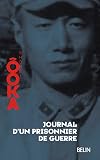
On peut se demander… Quel intérêt de lire le journal d'un prisonnier japonais à la toute fin de la guerre? Et bien cet intérêt est très grand, et l'on peut comprendre la très mince différence entre un pays agressif et un pays apaisé. Le témoignage, cru, de ôoka est très précieux.
Jan 5, 2026French
Ratings
Members
- Recently Added By
Lists

THE WAR ROOM
813 works; 24 members
Author Information

Some Editions
Common Knowledge
- Canonical title
- Taken Captive: A Japanese POW's Story
- Original title
- Furyoki
- Original publication date
- 1952 (original Japanese) (original Japanese); 1996 (English translation) (English translation)
- People/Characters
- Shōhei Ōoka
- Important places
- Philippines
- Important events
- World War II (1939 | 1945); World War II, Pacific Theater (1941-12-07 | 1945-09-02)
- Epigraph
- [It is] reasonable to represent one kind of imprisonment to another.
Daniel Defoe,
Preface to Volume III of Robinson Crusoe - First words
- On January 25, 1945, I was captured by American forces in the mountains of southern Mindoro in the Philippines.
- Original language
- Japanese
Classifications
- Genres
- Nonfiction, History, Biography & Memoir
- DDC/MDS
- 940.54 — History & geography History of Europe History of Europe 1918- Military history of World War II
- LCC
- PL835 .O5 .F813 — Language and Literature Languages and literatures of Eastern Asia, Africa, Oceania Languages of Eastern Asia, Africa, Oceania Japanese language and literature Japanese literature Individual authors and works
- BISAC
Statistics
- Members
- 33
- Popularity
- 856,332
- Reviews
- 2
- Rating
- (3.90)
- Languages
- English, French
- Media
- Paper
- ISBNs
- 2
- UPCs
- 1