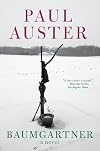
Baumgartner
by Paul Auster
On This Page
Description
"Paul Auster's brilliant eighteenth novel opens with a scorched pot of water, which Sy Baumgartner-phenomenologist, noted author, and soon-to-be retired philosophy professor-has just forgotten on the stove. Baumgartner's life had been defined by his deep, abiding love for his wife, Anna, who was killed in a swimming accident nine years earlier. Now 71, Baumgartner continues to struggle to live in her absence as the novel sinuously unfolds into spirals of memory and reminiscence, delineated show more in episodes spanning from 1968, when Sy and Anna meet as broke students working and writing in New York, through their passionate relationship over the next forty years, and back to Baumgartner's youth in Newark and his Polish-born father's life as a dress-shop owner and failed revolutionary. Rich with compassion, wit, and Auster's keen eye for beauty in the smallest, most transient details of ordinary life, Baumgartner asks: Why do we remember certain moments, and forget others?"-- show lessTags
Recommendations












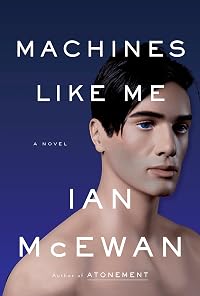
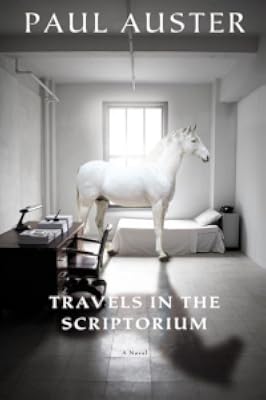
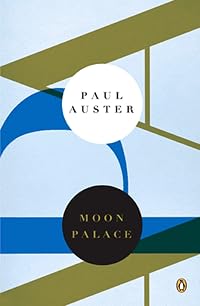
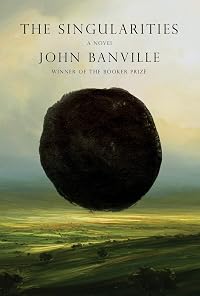

Member Reviews
I fell for this book right away. I almost always like books by this author, and in this book I felt such an affinity with the main character right from the opening pages. Baumgartner is a 70-something philosophy professor, and while working in his study one morning he finds he needs a book which is downstairs. As he heads downstairs, he remembers he had promised to call his sister. He goes into the kitchen where the phone is and smells something burning--he had left the burner on under the pot in which he had earlier cooked his poached eggs. He turns off the burner and grabs the pot, thus burning his hand. He drops the pot on the floor and rushes to put his hand under cold water to prevent blistering. He is trying to remember what he show more came into the kitchen for when the phone rings. It is the meter man to tell him that he is on the way. He hangs up and remembers he is supposed to call his sister, when the doorbell rings. It's the UPS person--he has taken to ordering books he does want because he likes to chat with the UPS person. After their chat, he heads to the kitchen again to call his sister, but before he can pick the up the phone, it rings--a problem with the cleaning lady. He ends the call when the doorbell rings again. The meter man has arrived. As he is showing the meter reader down into the basement, he falls down the stairs and is briefly stunned--did you ever have a day like this??
Anyway, Baumgartner is still deeply mourning the death of his beloved wife Anna ten years before in a freak accident at the beach. "Ten years later Baumgartner marvels at how little has changed for him since those early months of near insanity." In the novel we backtrack from the present as Baumgartner thinks back on his past, "the lost world of then." We learn of his early life and of his life with Anna, including through some of Anna's biographical writings that Baumgartner has retained and reads over.
Arriving back at the present, Baumgartner contemplates moving on--what will that consist of, what does he want to do with the rest of his life? "Time is of the essence now, and he has no idea how much of it he has left. Not just how many years before he kicks the bucket but, more to the point, how many years of active productive life before his mind or his body or both begin to fail him and he is turned into a pain-racked, imbecilic, incompetent, unable to read or think or write, to remember what someone just said to him four seconds ago...."
I loved this book, which I think may be partly autobiographical, especially in its depiction of aging and the thoughts about the effects of aging. Highly recommended.
4 stars show less
Anyway, Baumgartner is still deeply mourning the death of his beloved wife Anna ten years before in a freak accident at the beach. "Ten years later Baumgartner marvels at how little has changed for him since those early months of near insanity." In the novel we backtrack from the present as Baumgartner thinks back on his past, "the lost world of then." We learn of his early life and of his life with Anna, including through some of Anna's biographical writings that Baumgartner has retained and reads over.
Arriving back at the present, Baumgartner contemplates moving on--what will that consist of, what does he want to do with the rest of his life? "Time is of the essence now, and he has no idea how much of it he has left. Not just how many years before he kicks the bucket but, more to the point, how many years of active productive life before his mind or his body or both begin to fail him and he is turned into a pain-racked, imbecilic, incompetent, unable to read or think or write, to remember what someone just said to him four seconds ago...."
I loved this book, which I think may be partly autobiographical, especially in its depiction of aging and the thoughts about the effects of aging. Highly recommended.
4 stars show less
He is seventy year old, after all, and the time for dithering has come to an end.
from Baumgartner by Paul Auster
I turned seventy-one this year. I discovered that my knees are worn out. I fell down a step and tore a rotor cuff. We cleared out our son’s childhood toys and books and college papers this summer. With every load hauled out of the basement, it felt like I was erasing his past. Even if with his permission. Sometimes, the brevity of life left and the decades of life that has passed hits me like a brick and I shudder with recognition: I am old and have squandered my days.
Reading books about the so-called ‘elderly’ in their early seventies, dealing with physical limitations and the siren call of memories of times past is show more disconcerting. Do I even need to read them–I am living it.
“To live is to feel pain,” Sy tells himself; “and to live in fear of pain is to refuse to live.” His beloved wife Anna died tragically nearly ten years ago and he had refused to feel the pain for ten years, was dead inside.
Paul Auster’s new novel begins with Sy Baumgartner’s very bad day of forgetfulness and accidents on the first day of spring. And on this day, “the lost world of Then” came flooding back, the first time he saw Anna, their life together.
He has no idea how many years he has left, or more disconcerting, how many years of active, competent years, all which will “flit by in a blink.” He is aware that “the world is burning up,” and yet he finds solace in a beautiful September day that demands you go outdoors to enjoy it.
Sy finally decides to propose to the woman he has been seeing; it doesn’t go as he had hoped. Then, a grad student expresses interest in Anna’s writings, someone who loved her one published poetry book, and she inquires if she could have access to all Anna’s papers for research. It gives Sy new interest in the future, a way to keep his wife alive for future generations.
The novel closes with Sy surviving another accident, suggesting this is the beginning of Sy’s last chapter.
I try to keep in the present, to not regret the past or the shortening of the days. Reading prepublication books is one way I stay connected to the ‘now’, or more exactly, to the future. It is a way of proving to myself my mind is still good and I can contribute.
But, like Sy, an accidently misstep and injury brings into focus what I lose every day. And a novel like Baumgartner, expressing the wisdom one writer has garnered can help we the ‘elderly’ feel less alone and give younger readers insight into their future.
Thanks to the publisher for a free book. show less
from Baumgartner by Paul Auster
I turned seventy-one this year. I discovered that my knees are worn out. I fell down a step and tore a rotor cuff. We cleared out our son’s childhood toys and books and college papers this summer. With every load hauled out of the basement, it felt like I was erasing his past. Even if with his permission. Sometimes, the brevity of life left and the decades of life that has passed hits me like a brick and I shudder with recognition: I am old and have squandered my days.
Reading books about the so-called ‘elderly’ in their early seventies, dealing with physical limitations and the siren call of memories of times past is show more disconcerting. Do I even need to read them–I am living it.
“To live is to feel pain,” Sy tells himself; “and to live in fear of pain is to refuse to live.” His beloved wife Anna died tragically nearly ten years ago and he had refused to feel the pain for ten years, was dead inside.
Paul Auster’s new novel begins with Sy Baumgartner’s very bad day of forgetfulness and accidents on the first day of spring. And on this day, “the lost world of Then” came flooding back, the first time he saw Anna, their life together.
He has no idea how many years he has left, or more disconcerting, how many years of active, competent years, all which will “flit by in a blink.” He is aware that “the world is burning up,” and yet he finds solace in a beautiful September day that demands you go outdoors to enjoy it.
Sy finally decides to propose to the woman he has been seeing; it doesn’t go as he had hoped. Then, a grad student expresses interest in Anna’s writings, someone who loved her one published poetry book, and she inquires if she could have access to all Anna’s papers for research. It gives Sy new interest in the future, a way to keep his wife alive for future generations.
The novel closes with Sy surviving another accident, suggesting this is the beginning of Sy’s last chapter.
I try to keep in the present, to not regret the past or the shortening of the days. Reading prepublication books is one way I stay connected to the ‘now’, or more exactly, to the future. It is a way of proving to myself my mind is still good and I can contribute.
But, like Sy, an accidently misstep and injury brings into focus what I lose every day. And a novel like Baumgartner, expressing the wisdom one writer has garnered can help we the ‘elderly’ feel less alone and give younger readers insight into their future.
Thanks to the publisher for a free book. show less
Baumgartner by Paul Auster is a short novel that unpacks a lifetime in a series of flashbacks, making an elderly widower come to terms with his decade-long grief and whatever time he has left.
Some may be less enthusiastic about this because, from some perspectives, "nothing happens." I have to assume for those people that a day spent in thought, remembering the past and considering the present and the future amounts to nothingness for them. That speaks to their internal life and is not a reflection on this book. For a reader, a lot goes on since we travel back and experience events from Baumgartner's life, we come to understand how he views his life and himself. Nothingness is in the eye of the beholder, I guess.
That said, readers who show more might not like, or simply aren't in the mood for, a reflective novel that is more about humanity and how we cope with the ups and downs of life may want to put this one off until they're in the mood. Part of the joy of this work, and many of Auster's novels, is in the attention to small details and what they mean to a character.
As much as I like most of his work, I am probably the ideal reader for this since one of my favorites of his was Timbuktu, another work that is reflective and largely internal thoughts, albeit a dog's thoughts. But I love novels that tug at heartstrings and don't mind being set up for the sad moments as well as the happy ones. Yes, I am one of those who wallow in my melancholy at times.
I would recommend this to readers who like novels that tell a life story in flashback and relates it to the protagonist's present. No, this isn't full of action in the thriller or adventure style, but I don't think anyone comes to Auster for that anyway. If you're an active engaged reader, you won't be bored exploring another human being's life.
Reviewed from a copy made available by the publisher via NetGalley. show less
Some may be less enthusiastic about this because, from some perspectives, "nothing happens." I have to assume for those people that a day spent in thought, remembering the past and considering the present and the future amounts to nothingness for them. That speaks to their internal life and is not a reflection on this book. For a reader, a lot goes on since we travel back and experience events from Baumgartner's life, we come to understand how he views his life and himself. Nothingness is in the eye of the beholder, I guess.
That said, readers who show more might not like, or simply aren't in the mood for, a reflective novel that is more about humanity and how we cope with the ups and downs of life may want to put this one off until they're in the mood. Part of the joy of this work, and many of Auster's novels, is in the attention to small details and what they mean to a character.
As much as I like most of his work, I am probably the ideal reader for this since one of my favorites of his was Timbuktu, another work that is reflective and largely internal thoughts, albeit a dog's thoughts. But I love novels that tug at heartstrings and don't mind being set up for the sad moments as well as the happy ones. Yes, I am one of those who wallow in my melancholy at times.
I would recommend this to readers who like novels that tell a life story in flashback and relates it to the protagonist's present. No, this isn't full of action in the thriller or adventure style, but I don't think anyone comes to Auster for that anyway. If you're an active engaged reader, you won't be bored exploring another human being's life.
Reviewed from a copy made available by the publisher via NetGalley. show less
This short novel is reflective, and tender – a detailed character study and poignant portrayal of aging.
Septuagenarian Sy Baumgartner is an author and philosophy professor at Princeton. His life has been defined by his love for Anna, his wife who died in a swimming accident almost a decade earlier. Via his revisited memories and some of his and Anna’s writings, we learn about Sy’s youth in Newark, the background of his parents, his first meetings with Anna, and their 40-year relationship.
This novel is character-driven, not plot-driven. Not much happens. The narrative follows Sy’s recollections which do not follow a chronological order. The style, almost stream-of-consciousness, approximates how memories work. Sentences are show more often very lengthy, again suggesting the flow of memories.
I found Sy, whose full name is Seymour Tecumseh Baumgartner, a relatable character since I too am in my twilight years when there are more years behind than ahead of me. He’s intelligent and has a great sense of humour. He’s coming to terms with his past, especially the losses he has experienced, and the present and what lies ahead with the mental and physical challenges of aging.
It is Sy’s grieving of the loss of Anna that stands out. He describes himself as a human stump whose “innermost part” is dead: “a half man who has lost the half of himself that had made him whole, and yes, the missing limbs are still there, and they still hurt, hurt so much that he sometimes feels his body is about to catch fire and consume him on the spot.”
Nonetheless he still wants to live, even if “to live is to feel pain.” He knows that “to live in fear of pain is to refuse to live” so he accepts that and decides to follow his father’s wishes that he “fight the good fight.” An unexpected letter gives Sy a new lease on life; as he awaits the arrival of Beatrix Coen, whom he describes as a bookend of his life, he “is half out of his skin with anticipation, like a restless boy counting down the days until school lets out for the summer.”
Then there’s an abrupt ending; its ambiguity will leave many readers unsatisfied and perhaps even angry. I found it perfect. The last event is so ironic in light of Baumgartner’s overwhelming fears for Beatrix. And considering the central metaphor of his last book which he has just finished writing, his experiencing a “breakdown in the heart of motor city” is just so apropos.
This quiet novel with its introspective protagonist made me think of Elizabeth Strout’s novels, particularly the Amgash series featuring Lucy Barton. Readers wanting an action-filled book should look elsewhere, but readers who enjoy reflective novels which examine the complexities of relationships and the human condition are in for a treat.
Note: I received an eARC from the publisher via NetGalley.
Please check out my reader's blog (https://schatjesshelves.blogspot.com/) and follow me on Twitter (https://twitter.com/DCYakabuski). show less
Septuagenarian Sy Baumgartner is an author and philosophy professor at Princeton. His life has been defined by his love for Anna, his wife who died in a swimming accident almost a decade earlier. Via his revisited memories and some of his and Anna’s writings, we learn about Sy’s youth in Newark, the background of his parents, his first meetings with Anna, and their 40-year relationship.
This novel is character-driven, not plot-driven. Not much happens. The narrative follows Sy’s recollections which do not follow a chronological order. The style, almost stream-of-consciousness, approximates how memories work. Sentences are show more often very lengthy, again suggesting the flow of memories.
I found Sy, whose full name is Seymour Tecumseh Baumgartner, a relatable character since I too am in my twilight years when there are more years behind than ahead of me. He’s intelligent and has a great sense of humour. He’s coming to terms with his past, especially the losses he has experienced, and the present and what lies ahead with the mental and physical challenges of aging.
It is Sy’s grieving of the loss of Anna that stands out. He describes himself as a human stump whose “innermost part” is dead: “a half man who has lost the half of himself that had made him whole, and yes, the missing limbs are still there, and they still hurt, hurt so much that he sometimes feels his body is about to catch fire and consume him on the spot.”
Nonetheless he still wants to live, even if “to live is to feel pain.” He knows that “to live in fear of pain is to refuse to live” so he accepts that and decides to follow his father’s wishes that he “fight the good fight.” An unexpected letter gives Sy a new lease on life; as he awaits the arrival of Beatrix Coen, whom he describes as a bookend of his life, he “is half out of his skin with anticipation, like a restless boy counting down the days until school lets out for the summer.”
Then there’s an abrupt ending; its ambiguity will leave many readers unsatisfied and perhaps even angry. I found it perfect. The last event is so ironic in light of Baumgartner’s overwhelming fears for Beatrix. And considering the central metaphor of his last book which he has just finished writing, his experiencing a “breakdown in the heart of motor city” is just so apropos.
This quiet novel with its introspective protagonist made me think of Elizabeth Strout’s novels, particularly the Amgash series featuring Lucy Barton. Readers wanting an action-filled book should look elsewhere, but readers who enjoy reflective novels which examine the complexities of relationships and the human condition are in for a treat.
Note: I received an eARC from the publisher via NetGalley.
Please check out my reader's blog (https://schatjesshelves.blogspot.com/) and follow me on Twitter (https://twitter.com/DCYakabuski). show less
I love Auster's narrative voice. I still can't exactly put my finger on it, but right at the very first sentence I felt I was at home. Finally. A sigh of relief, and then trying to make this very short book last longer, somehow. Especially towards the end, when a sense of foreboding was added. I was expecting two kinds of ending, and one was what I got but how he was able to make it with one last sentence a completely different experience is beyond me. I know I said it before but what he achieves with words is simply on an entirely different level.
How everyday shared experiences are perfectly described, how a slow, sad flow is so beautiful I want to prolong living in it, what a complete world, multiple generations, beautiful human show more connections and embedded stories can fit into these less than 200 pages! How he made me cry so that the tears rolling down my cheeks caught me by surprise.
I read the Wolves of Stanislav, one of the embedded stories, written in the first Covid lockdown, before on Literary Hub. I wonder whether the other embedded ones had also been published somewhere earlier, and he wrote a wonderful novel around them. Several inkable sentences without ever being didactic. I can't say it any better than someone here already had: it is indeed a love letter. I hope it's not a farewell. show less
How everyday shared experiences are perfectly described, how a slow, sad flow is so beautiful I want to prolong living in it, what a complete world, multiple generations, beautiful human show more connections and embedded stories can fit into these less than 200 pages! How he made me cry so that the tears rolling down my cheeks caught me by surprise.
I read the Wolves of Stanislav, one of the embedded stories, written in the first Covid lockdown, before on Literary Hub. I wonder whether the other embedded ones had also been published somewhere earlier, and he wrote a wonderful novel around them. Several inkable sentences without ever being didactic. I can't say it any better than someone here already had: it is indeed a love letter. I hope it's not a farewell. show less
Let’s start with the good: Paul Auster still is a great author and his mastery of language is second to none. He is extremely empathetic and feels with his characters. Auster is very near to them and allows us in a masterful way to share in their feelings, ideas, and worries.
Especially the ageing Baumgartner who reads a bit like Auster’s alter ego is an amazingly life-like character who reminisces about his life - married for decades to his late wife Anna, an intensive relationship with another woman, rejection and recovery: Auster takes us on a journey through Baumgartner’s life.
And this is where the cookie - for me - crumbles: While Baumgartner is a wonderful character, he has led an unremarkable life. Not only Baumgartner show more himself but most people around him as well, it seems. Consequently, the story Auster tells us is lacking in sheer substance and is, as such, nothing very special.
I can relate to many of the aspects at the heart of this story:
»It’s just that we need to get our terms straight before we plunge in and start to talk. Yes, she would still be alive if she hadn’t gone back into the water, but then we wouldn’t have lasted together for more than thirty years if I had done things like trying to stop her from going into the water when she wanted to. Life is dangerous, Marion, and anything can happen to us at any moment. You know that, I know that, everyone knows that—and if they don’t, well, they haven’t been paying attention, and if you don’t pay attention, you’re not fully alive.«
I made numerous highlights and annotations because I loved many ideas and passages but the story itself lacked depth.
Paul Auster remains one of my favourite authors and I’ve read pretty much everything he ever wrote and intend to keep doing so, but, sadly, this novel only receives two stars from me.
»And that is all I will ever ask of you, my newborn son, in the first hours of your long journey toward becoming a man who can think and act and take part in the world—only this and nothing else: to fight the good fight.«
Blog | Facebook | Twitter | Mastodon | Instagram | Pinterest | Medium | Matrix | Tumblr
Ceterum censeo Putin esse delendam show less
Especially the ageing Baumgartner who reads a bit like Auster’s alter ego is an amazingly life-like character who reminisces about his life - married for decades to his late wife Anna, an intensive relationship with another woman, rejection and recovery: Auster takes us on a journey through Baumgartner’s life.
And this is where the cookie - for me - crumbles: While Baumgartner is a wonderful character, he has led an unremarkable life. Not only Baumgartner show more himself but most people around him as well, it seems. Consequently, the story Auster tells us is lacking in sheer substance and is, as such, nothing very special.
I can relate to many of the aspects at the heart of this story:
»It’s just that we need to get our terms straight before we plunge in and start to talk. Yes, she would still be alive if she hadn’t gone back into the water, but then we wouldn’t have lasted together for more than thirty years if I had done things like trying to stop her from going into the water when she wanted to. Life is dangerous, Marion, and anything can happen to us at any moment. You know that, I know that, everyone knows that—and if they don’t, well, they haven’t been paying attention, and if you don’t pay attention, you’re not fully alive.«
I made numerous highlights and annotations because I loved many ideas and passages but the story itself lacked depth.
Paul Auster remains one of my favourite authors and I’ve read pretty much everything he ever wrote and intend to keep doing so, but, sadly, this novel only receives two stars from me.
»And that is all I will ever ask of you, my newborn son, in the first hours of your long journey toward becoming a man who can think and act and take part in the world—only this and nothing else: to fight the good fight.«
Blog | Facebook | Twitter | Mastodon | Instagram | Pinterest | Medium | Matrix | Tumblr
Ceterum censeo Putin esse delendam show less
I am not a big fan of Paul Auster. I read a few of his books and, while the process of reading was enjoyable, getting to the end was almost invariably accompanied with a sense of disappointment. Lucid prose and intelligent delivery come to promise so much more than one gets in the end. I would compare myself to an enchanted boy finding the lamp of Aladdin - I would rub the lamp and the mighty djinn would appear and then... dissolve in the thin air.
I reached a point where I felt I would not read another novel by Paul Auster but then the great conjuror died. I found fitting to read the last book he has written. Baumgartner might just be Paul Auster's best book for this reader.
I reached a point where I felt I would not read another novel by Paul Auster but then the great conjuror died. I found fitting to read the last book he has written. Baumgartner might just be Paul Auster's best book for this reader.
Members
- Recently Added By
Lists

Five star books
1,767 works; 110 members

Books Read in 2023
5,638 works; 147 members

Top Five Books of 2023
767 works; 317 members

Llibres que he llegit el 2024
77 works; 1 member

2024. Nuestro año literario (Faustino Sánchez)
20 works; 1 member
Author Information

103+ Works 64,979 Members
Paul Auster was born on February 3, 1947, in Newark, New Jersey. He received a B.A. and a M.A. in English and Comparative Literature from Columbia University. In addition to his career as a writer, Auster has been a census taker, tutor, merchant seaman, little-league baseball coach, and a telephone operator. He started his writing career as a show more translator. He soon gained popularity for the detective novels that make up his New York Trilogy. His other works include The Invention of Solitude; Leviathan; Moon Palace; Facing the Music; In the Country of Last Things; The Music of Chance; Mr. Vertigo; and The Brooklyn Follies. His latest novels are entitled, Invisible and Sunset Park. In addition to his novels, Auster has written screenplays and directed several films. He is the recipient of a fellowship from the National Endowment for the Arts and a French Prix Medicis for Foreign Literature. (Bowker Author Biography) show less
Some Editions
Awards and Honors
Awards
Distinctions
Series
Belongs to Publisher Series
Common Knowledge
- Original title
- Baumgartner
- Original publication date
- 2023
- First words*
- Baumgartner est assis à son bureau dans la pièce du premier étage qu'il désigne parfois comme son bureau, son cogitorium ou son trou.
*Some information comes from Common Knowledge in other languages. Click "Edit" for more information.
Classifications
Statistics
- Members
- 561
- Popularity
- 52,821
- Reviews
- 29
- Rating
- (3.79)
- Languages
- 12 — Catalan, Danish, Dutch, English, Finnish, French, German, Italian, Portuguese, Spanish, Swedish, Turkish
- Media
- Paper, Audiobook, Ebook
- ISBNs
- 37
- ASINs
- 15