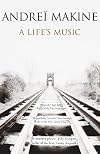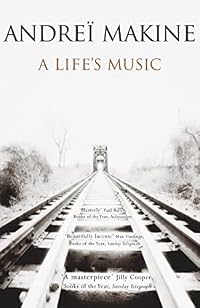
A Life's Music
by Andreï Makine
On This Page
Description
His father is a dramatist, his mother an opera singer. But during Stalin's reign of terror in the 1930s, both parents are arrested. Alexei Berg flees, and begins his endless journey until he lands, two decades later, in a snowbound train station in the Urals, where he relates his harrowing saga to the novel's narrator.Tags
Recommendations














Member Recommendations

Member Reviews
Exquisite writing. Limpid, crystalline…lyrical descriptions that call Proust to mind. A well-crafted story: a pianist on the eve of his début in Stalinist Russia when his parents are “exposed” and arrested. He flees Moscow for the remote countryside where he eventually assumes the identity of a dead soldier (this is World War II). Most of what follows is the story of his life under this assumed identity, focusing on broken lives, the meaning of self, and the costs of our choices. The story is compelling and all-enveloping, the prose—as I suggested—is lyrical and captivating. Makine is, undeniably, gifted as a stylist. But as beautiful as the writing is, as powerful as the story is, somehow the writing and the story combined show more to produce a book that is inexplicably less than the sum of its parts. I enjoyed it; I will undoubtedly read more of his work. But somehow, and I’m honestly not quite sure how to explain it, ultimately I found the book left me wanting. show less
I love a thin book. The small problem with this one is that I immediately began to read it again. First, to find out at what point Makine seamlessly switched from the present (on a train) to the narrative of a life.
But they had been recounted in a confusion fashion amid the sounds of a train arriving at a great, dark, frozen city. And that was doubtless how they had been lived through, in the disconcerting simplicity with whih broken lives ae lived.Second, to savour the rich layers of a deceptively simple tale. That I had been introduced to Alexander Zinoviev was the icing on the cake.
This is the story of a thwarted life told to a stranger on a train. And there's a fair amount of time to tell it. The train runs from Siberia to Moscow, but still, considerable compression is necessary. The book is short and the end is always near. I stared into space a good 15 minutes once it came. I had to get my bearings again.
This is a story that could have been mired in all kinds of sentimental cliché. The man was, after all, almost a concert pianist. And at least 2 moments occur in the tale where I was willing him to shock everybody and play that piano in the room. Show them, Alexei! Show them you aren't that rude scarred soldier they think you are. Show them! Because we all love that moment when it is revealed that someone is show more of finer stuff than we ever imagined.
At one point, Makine even winks at this cliché, "They examined the hole, touched it, laughed at it. Then went across the road to collect the German's rifle. Alexei stopped beside the piano, let his hand come down on the keyboard, listened, closed the lid again. His joy at not feeling within himself the presence of a young man in love with music was very reassuring. He looked at his hand, the fingers covered in scars and scratches, the palm with its yellowish calluses. Another man's hand. In a book, he thought, a man in his situation would have rushed to the piano and played it, forgetting everything, weeping perhaps. He smiled. Such a thought, such a bookish notion, was probably the only link that still bound him to his past."
It is a fine tension that is very well played in this book, without a lead foot on the damper or an inappropriate emphasis on rubato. Makine writes with class, the story coming out in exquisite morceaux, like the flowers that fall out of old poetry books. The mystery of the owner's life no longer resides in the unturned pages but lives instead in those lowly pressings picked up from a kitchen floor. show less
This is a story that could have been mired in all kinds of sentimental cliché. The man was, after all, almost a concert pianist. And at least 2 moments occur in the tale where I was willing him to shock everybody and play that piano in the room. Show them, Alexei! Show them you aren't that rude scarred soldier they think you are. Show them! Because we all love that moment when it is revealed that someone is show more of finer stuff than we ever imagined.
At one point, Makine even winks at this cliché, "They examined the hole, touched it, laughed at it. Then went across the road to collect the German's rifle. Alexei stopped beside the piano, let his hand come down on the keyboard, listened, closed the lid again. His joy at not feeling within himself the presence of a young man in love with music was very reassuring. He looked at his hand, the fingers covered in scars and scratches, the palm with its yellowish calluses. Another man's hand. In a book, he thought, a man in his situation would have rushed to the piano and played it, forgetting everything, weeping perhaps. He smiled. Such a thought, such a bookish notion, was probably the only link that still bound him to his past."
It is a fine tension that is very well played in this book, without a lead foot on the damper or an inappropriate emphasis on rubato. Makine writes with class, the story coming out in exquisite morceaux, like the flowers that fall out of old poetry books. The mystery of the owner's life no longer resides in the unturned pages but lives instead in those lowly pressings picked up from a kitchen floor. show less
At 106 pages, this is a very short novel, but a very powerful and haunting one - Makine is a master at finding emotion in small details.
This book opens with a narrator who is forced to spend a snowy night at a crowded station in the far east of the Soviet Union. He stumbles on an old man at a piano going through the motions of playing but barely touching the keys. This man helps him find a way on to the train and describes his life story over the course of the train journey to Moscow.
Like the first Makine book I read (The Life of an Unknown Man) this is a tale of survival told by an old man. This one's life as a concert pianist was curtailed when his family were caught up in one of Stalin's purges - he escapes from Moscow and steals show more the identity of a dead soldier, but is found out when his love of music betrays him. Makine's writing is luminous and elegiac throughout - I have yet to find anything by Makine that isn't worth reading. show less
This book opens with a narrator who is forced to spend a snowy night at a crowded station in the far east of the Soviet Union. He stumbles on an old man at a piano going through the motions of playing but barely touching the keys. This man helps him find a way on to the train and describes his life story over the course of the train journey to Moscow.
Like the first Makine book I read (The Life of an Unknown Man) this is a tale of survival told by an old man. This one's life as a concert pianist was curtailed when his family were caught up in one of Stalin's purges - he escapes from Moscow and steals show more the identity of a dead soldier, but is found out when his love of music betrays him. Makine's writing is luminous and elegiac throughout - I have yet to find anything by Makine that isn't worth reading. show less
The more I read Makine the more I get convinced that he is an undisputed master of content and form. This book is about how a burgeoning life can be ruthlessly broken by a tyrannical regime (Stalin's, in this case), a life that - but for that regime - could have flourished and, through its talent, could have brought joy to thousands of people, but instead had to be dwarfed into some semblance of an existence. Makine's thoughts on "Homo sovieticus" run alongside this sad story.
--
--
A short lyrical novel - snapshots of a man's life in Soviet Russia during World War Two and afterwards, as he gives up music and goes into hiding. In this translation, Makine's prose is beautiful and elegant. It is a novel that finds beautiful music in the horrors, disappointments and hopes of a difficult life.
Ooh, so what you wanna do, be what you wanna be, yeah
The question that drew me to this book arose out of a review by our GR reader Ilse. See: https://www.goodreads.com/review/show/4112096463
To paraphrase, it goes like this – does our inner self survive a long change in our identity?
I suspect we all mask who we are in one way or another, perhaps only under certain threatening circumstances. It’s all about survival.
The setting, survival in war, the great patriotic war in this case drew me in. It’s personal. My family survived occupation in that same war, though a little south where it was still thought of as the second world war. My reading especially of my father’s life – his formative years from 10-19 were spent in war, show more occupation, civil war. As a child he watched - down the end of his street - the last withdrawal of Australian and New Zealand forces from his port city after a battle. After that occupation was oppressive, starvation a constant. The child grows up faster than it wants to. In fact, a childhood disappears under the transformation brought by survival. So, here, the story of a Russian piano student who flees Stalin’s goons becomes a story of survival of self.
It’s a good story, I liked the struggle. It all felt very human, very real. Of course you do what you can to survive. Identity transformation is essential to survive; we all know it. It seems a little cowardly at times, like hiding, except that few of us have real choices when faced with circumstances such as a dictator’s wrath on the one hand and a ruthless army on the other. We put on a suit, dress the part of daily life, wear a smile, walk into the office, adopt its rules. Our little self is still in there waiting to walk through the front door of home at night and wake up in our own world on the weekend. Our identity is always traded like that. But does is it subsumed? Are we ourselves on the weekend, or after hours? How long does it take to revert to who we are, or think we are?
We struggle with technologies looking for the expression of our true self. Look for books, films TV shows, activities, groups, anything that says ‘this is me’. We carefully craft the lives of our children to reflect values we hold true. In that crafting is culture or something else, the imagined self we want, free of encumbrances. We design that self.
I recently watched two films streamed on our local film festival. One was titled La Veronica about a social media influencer who daily curates her life to fit on a tiny phone screen. In fact, the entire film is shot with the central character in frame, pursuing her mediated interests. I kept wondering as I watched whether the screens self is the real self or a constructed self. And where is the self? What happens as this film unfolds, Veronica needs a couple of million followers to realise her ambitions, is not unlike the fate of Macbeth Lady Macbeth in that unnameable play.
The other was a documentary-fictional hybrid ostensibly a music documentary about the artist St Vincent. On stage she is all energy, exudes a powerful, dynamic persona of contemporary womanhood, making her own choices, being, free to be the onstage performer. Off stage, questions arise as to whether there is a credible equivalent person behind the stage presence. But, she eats organic food, the bus on tour stops at farmer’s markets, there’s no banter, sexual dynamics, loathing or artistic tensions among the crew and band members. Off stage, St Vincent is banal, normal, she could be a soccer mom if she had a family. In the efforts to tweak this persona, a demonic performative force is unleashed. As she goes down the rabbit hole of transformation, the film moves to the absurd, the sense of self is lost, only an imagined self is possible and it is unhinged.
We want our true self to win out, that is freedom, isn’t it. Our story teller is an old man at a country train station, telling his story many decades after it happened to someone he encounters. It nicely dovetails the current (1970s or 80s) fate of the Russian people who Makine seems to have a strange disdain for. This old man is spent, wasted, despairing.
The story starts with what we are told is a typical Soviet day - the citizenry huddled around a train station in freezing weather during a delay that could take hours or days. All those elements of western impressions – the communist hordes, the stunted nation, the inefficient methods, the debilitating weather are all there. The train has broken down and it may take hours or a day to fix.
The human mass sleeps on…For in these small towns a thousand leagues from civilisation this is what life consists of: waiting, a resignation, hot stickiness in the depths of your shoes.
These masses are ready to endure another war, if announced on loudspeaker.
the whole mass of them would set off, ready to endure the war as a matter of course, ready to suffer, ready to sacrifice themselves with an utterly natural acceptance of hunger, of death, or of life in the filth of the station
I found this all a little heavy handed. This would be a kind of recurring twitter meme today if the USSR hadn’t disbanded over 30 years ago. Makine introduces us to the running soviet joke of Homo Sovieticus – the mentality of the generic citizen who accepts all this and simply survives it all, or doesn’t depending on fate. It was obviously an unutterable phrase that everyone knew.
The Russian people are always “The Masses”. Occasionally individuals emerge with a story. Enter Alexei Berg, our storyteller survivor of war and soviet indoctrination.
Alexei Berg was a pianist, from an intelligentsia family. He tells his story or rather, a narrator tells his story as it was told to him, while they wait among this frozen throng of humanity at train station in freezing weather. Think trains and snow in Russia and you easily get tragedy brought about by collectivisation and persecution. That is Berg’s story, and his parent’s story in Stalin’s pre-war 1930s.
My problem here is this, Makine has written an elaborate propaganda story, extolling the individual over the ground up masses which to him are simple background fodder, not only for communism, but his own values. I felt as though I was back in the cold war, the 1980s, when dissidents were the pearls of proof of capitalism and democracy always on show for us and we are dazzled by their struggles under an oppressive regime. So with the victory over communism now 30 years old, what happened to our inner self?
A third film at the film festival from Egypt called Souad, tells the story of a teenager emerging into womanhood who has secretly constructed on her phone an online self with everything she aspires to - romance, love, intrigue, freedom of expression. She has paramours (what else to call them?) and life feels dynamic, she argues with them, plays out online sexual games and seems free to be herself. But that is the point, the self is somewhere, but we cannot exactly know. And she has gone so far into this self, that she loses it too.
The title comes from the lines of a song It's Because I Love You by the 1960s Australian band, The Master's Apprentices.
https://www.youtube.com/watch?v=oKE2hmgzUgo show less
The question that drew me to this book arose out of a review by our GR reader Ilse. See: https://www.goodreads.com/review/show/4112096463
To paraphrase, it goes like this – does our inner self survive a long change in our identity?
I suspect we all mask who we are in one way or another, perhaps only under certain threatening circumstances. It’s all about survival.
The setting, survival in war, the great patriotic war in this case drew me in. It’s personal. My family survived occupation in that same war, though a little south where it was still thought of as the second world war. My reading especially of my father’s life – his formative years from 10-19 were spent in war, show more occupation, civil war. As a child he watched - down the end of his street - the last withdrawal of Australian and New Zealand forces from his port city after a battle. After that occupation was oppressive, starvation a constant. The child grows up faster than it wants to. In fact, a childhood disappears under the transformation brought by survival. So, here, the story of a Russian piano student who flees Stalin’s goons becomes a story of survival of self.
It’s a good story, I liked the struggle. It all felt very human, very real. Of course you do what you can to survive. Identity transformation is essential to survive; we all know it. It seems a little cowardly at times, like hiding, except that few of us have real choices when faced with circumstances such as a dictator’s wrath on the one hand and a ruthless army on the other. We put on a suit, dress the part of daily life, wear a smile, walk into the office, adopt its rules. Our little self is still in there waiting to walk through the front door of home at night and wake up in our own world on the weekend. Our identity is always traded like that. But does is it subsumed? Are we ourselves on the weekend, or after hours? How long does it take to revert to who we are, or think we are?
We struggle with technologies looking for the expression of our true self. Look for books, films TV shows, activities, groups, anything that says ‘this is me’. We carefully craft the lives of our children to reflect values we hold true. In that crafting is culture or something else, the imagined self we want, free of encumbrances. We design that self.
I recently watched two films streamed on our local film festival. One was titled La Veronica about a social media influencer who daily curates her life to fit on a tiny phone screen. In fact, the entire film is shot with the central character in frame, pursuing her mediated interests. I kept wondering as I watched whether the screens self is the real self or a constructed self. And where is the self? What happens as this film unfolds, Veronica needs a couple of million followers to realise her ambitions, is not unlike the fate of Macbeth Lady Macbeth in that unnameable play.
The other was a documentary-fictional hybrid ostensibly a music documentary about the artist St Vincent. On stage she is all energy, exudes a powerful, dynamic persona of contemporary womanhood, making her own choices, being, free to be the onstage performer. Off stage, questions arise as to whether there is a credible equivalent person behind the stage presence. But, she eats organic food, the bus on tour stops at farmer’s markets, there’s no banter, sexual dynamics, loathing or artistic tensions among the crew and band members. Off stage, St Vincent is banal, normal, she could be a soccer mom if she had a family. In the efforts to tweak this persona, a demonic performative force is unleashed. As she goes down the rabbit hole of transformation, the film moves to the absurd, the sense of self is lost, only an imagined self is possible and it is unhinged.
We want our true self to win out, that is freedom, isn’t it. Our story teller is an old man at a country train station, telling his story many decades after it happened to someone he encounters. It nicely dovetails the current (1970s or 80s) fate of the Russian people who Makine seems to have a strange disdain for. This old man is spent, wasted, despairing.
The story starts with what we are told is a typical Soviet day - the citizenry huddled around a train station in freezing weather during a delay that could take hours or days. All those elements of western impressions – the communist hordes, the stunted nation, the inefficient methods, the debilitating weather are all there. The train has broken down and it may take hours or a day to fix.
The human mass sleeps on…For in these small towns a thousand leagues from civilisation this is what life consists of: waiting, a resignation, hot stickiness in the depths of your shoes.
These masses are ready to endure another war, if announced on loudspeaker.
the whole mass of them would set off, ready to endure the war as a matter of course, ready to suffer, ready to sacrifice themselves with an utterly natural acceptance of hunger, of death, or of life in the filth of the station
I found this all a little heavy handed. This would be a kind of recurring twitter meme today if the USSR hadn’t disbanded over 30 years ago. Makine introduces us to the running soviet joke of Homo Sovieticus – the mentality of the generic citizen who accepts all this and simply survives it all, or doesn’t depending on fate. It was obviously an unutterable phrase that everyone knew.
The Russian people are always “The Masses”. Occasionally individuals emerge with a story. Enter Alexei Berg, our storyteller survivor of war and soviet indoctrination.
Alexei Berg was a pianist, from an intelligentsia family. He tells his story or rather, a narrator tells his story as it was told to him, while they wait among this frozen throng of humanity at train station in freezing weather. Think trains and snow in Russia and you easily get tragedy brought about by collectivisation and persecution. That is Berg’s story, and his parent’s story in Stalin’s pre-war 1930s.
My problem here is this, Makine has written an elaborate propaganda story, extolling the individual over the ground up masses which to him are simple background fodder, not only for communism, but his own values. I felt as though I was back in the cold war, the 1980s, when dissidents were the pearls of proof of capitalism and democracy always on show for us and we are dazzled by their struggles under an oppressive regime. So with the victory over communism now 30 years old, what happened to our inner self?
A third film at the film festival from Egypt called Souad, tells the story of a teenager emerging into womanhood who has secretly constructed on her phone an online self with everything she aspires to - romance, love, intrigue, freedom of expression. She has paramours (what else to call them?) and life feels dynamic, she argues with them, plays out online sexual games and seems free to be herself. But that is the point, the self is somewhere, but we cannot exactly know. And she has gone so far into this self, that she loses it too.
The title comes from the lines of a song It's Because I Love You by the 1960s Australian band, The Master's Apprentices.
https://www.youtube.com/watch?v=oKE2hmgzUgo show less
Members
- Recently Added By
Author Information

32+ Works 4,451 Members
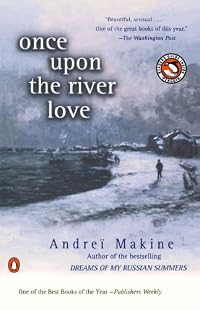
Andrei Makine was born in Siberia in 1957. Although raised in the Soviet Union, he learned about France and came to love that country through the stories told by his French grandmother. He now lives in Paris himself, having been granted political asylum by France in 1987, and writes in French. His grandmother figures prominently in the show more autobiographical novel, "Dreams of My Russian Summers," for which Makine received both the Goncourt Prize and the Medicis Prize, becoming the first author to simultaneously receive both of these prestigious French awards. In the U.S., the English translation of "Dreams of My Russian Summers" has also received recognition, including the Boston Book Review Fiction Prize and the Los Angeles Times Best Book of the Year award. Andrei Makine is also the author of "Once Upon the River Love" and "The Crime of Olga Arbelina." (Bowker Author Biography) show less
Some Editions
Awards and Honors
Awards
Series
Belongs to Publisher Series
Arcipelago [Einaudi] (38)
Common Knowledge
- Canonical title
- A Life's Music
- Original title
- La musique d'une vie
- Alternate titles
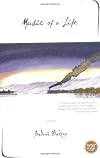
- Music of a Life
- Original publication date
- 2001
- Original language
- French
Classifications
Statistics
- Members
- 443
- Popularity
- 68,896
- Reviews
- 15
- Rating
- (3.86)
- Languages
- 12 — Dutch, English, Estonian, Finnish, French, German, Italian, Norwegian (Bokmål), Portuguese, Romanian, Spanish, Swedish
- Media
- Paper, Audiobook, Ebook
- ISBNs
- 28
- UPCs
- 1
- ASINs
- 8